



Greenish glow of interstellar visitor Comet 3I/ATLAS revealed in new Gemini North image
A new image of only the third interstellar visitor to our solar system — now on its journey out of our neck of the woods in the universe — was recently captured by a Hawai’i telescope after its re-emergence from behind the sun.
It revealed the comet is now emitting a faint greenish glow — a perfect holiday hue as it makes its closest pass by Earth tonight (Dec. 19).
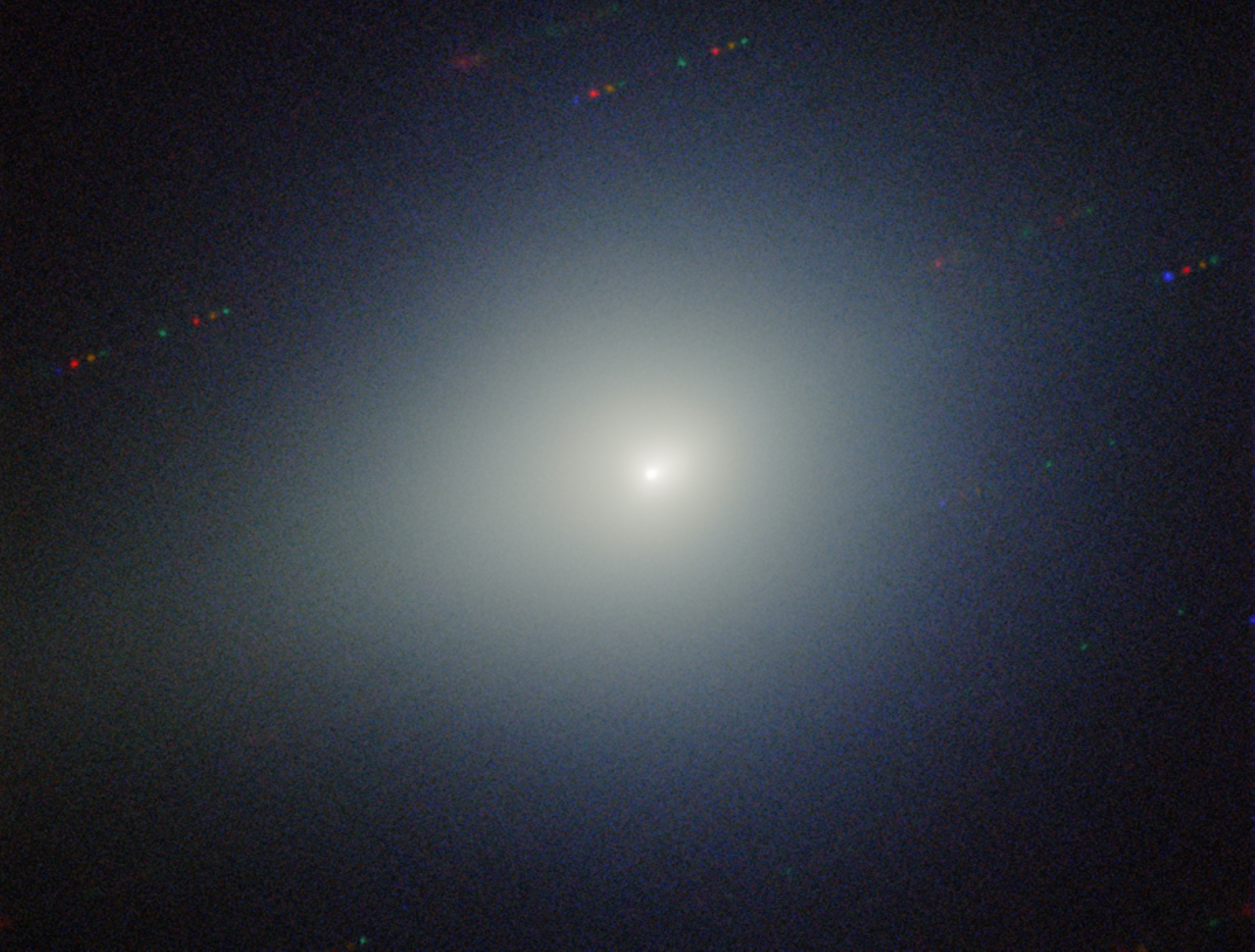
The image of Comet 3I/ATLAS was caught by Gemini North telescope atop Mauna Kea on the Big Island during a Shadow the Scientists session — a unique outreach initiative that invites students around the world to join researchers as they observe the universe on the world’s most advanced telescopes.
Scientists used the Gemini Multi-Object Spectrograph on Nov. 26 to image the interstellar visitor. The new observations showed how the comet changed after making its closest approach to the sun.
Gemini North is half of the International Gemini Observatory, which is partly funded by the National Science Foundation and operated by National Science Foundation NOIRLab.
Comet 3I/ATLAS reappeared in the sky close to Zaniah, a triple-star system located in the constellation Virgo, after emerging from behind the sun, and the image was taken as part of a public outreach initiative organized by NOIRLab in collaboration with Shadow the Scientists.
Shadow the Scientists was created to connect the public with scientists to engage in authentic scientific experiments — such as astronomy observing experiences on world-class telescopes.
The program was led by Eureka Scientific research scientist Bryce Bolin.
As the exposures — taken through four filters of blue, green, orange and red — composing the image are taken, the comet remains fixed in the center of the telescope’s field of view. However, the positions of the background stars change relative to the comet, causing them to appear as colorful streaks in the final image.
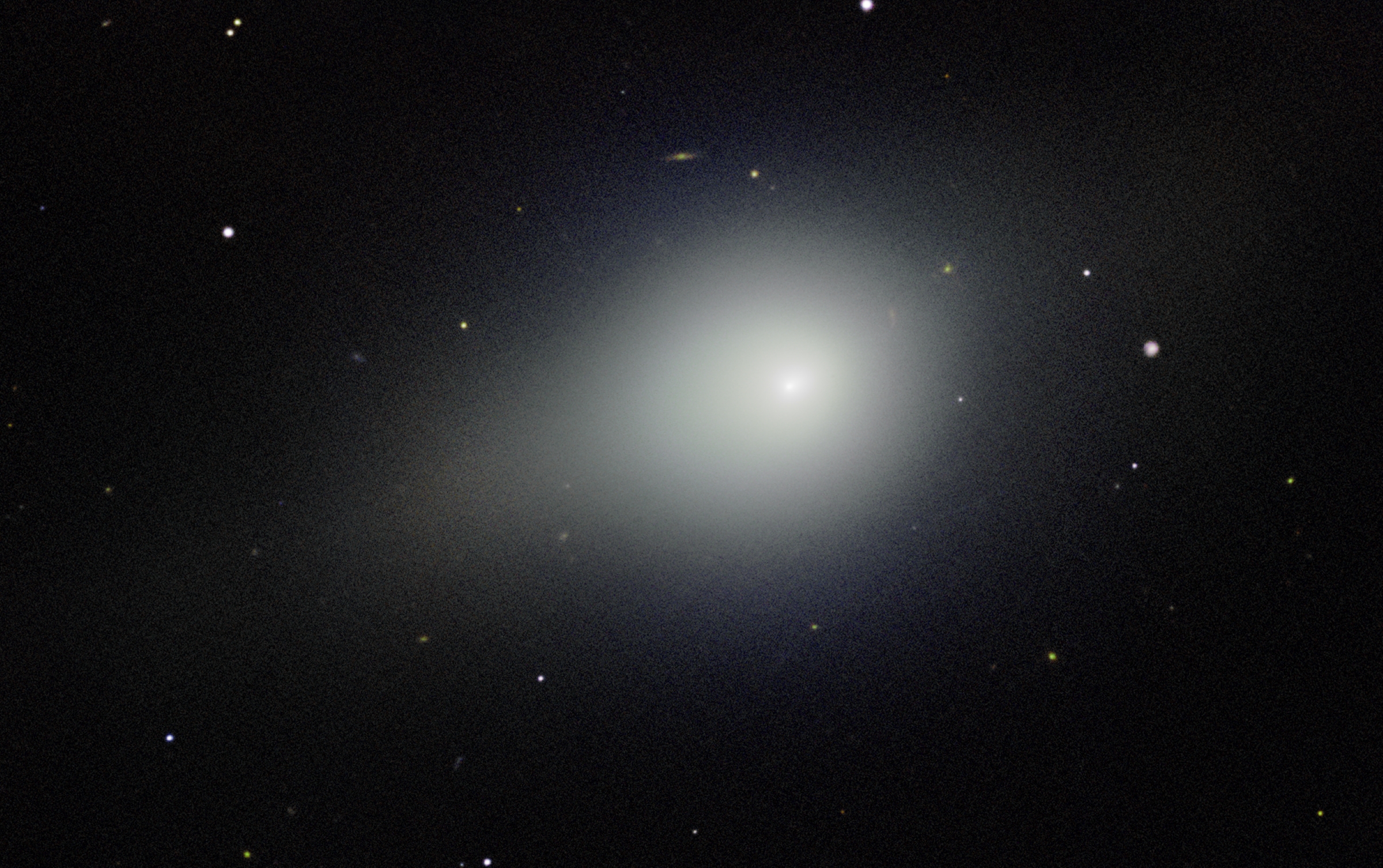
Interestingly, earlier images of 3I/ATLAS — captured during a Shadow the Scientists session hosted by Gemini South in Chile — showed the comet sporting another popular Christmas color, with it appearing red.
The seasonal spectrum switch happened because of light emitted by gases in the comet’s coma — the fuzzy, temporary atmosphere of gas and dust that forms around its icy nucleus as it nears the sun — that are evaporating as the comet heats up, including diatomic carbon.
It’s a highly reactive molecule of two carbon atoms that emits light at green wavelengths.
What remains unknown is how the comet will behave as it leaves the sun’s vicinity and cools down. Many comets have a delayed reaction in experiencing the sun’s heat because of the lag in time it takes for heat to make its way through the interior of the comet.
A delay can activate the evaporation of new chemicals or trigger a comet outburst.
Gemini continues to monitor the comet as it makes its exit from our the solar system, detecting changes in its gas composition and outburst behavior.
This collaboration with Shadow the Scientists builds on NOIRLab’s tradition of combining cutting-edge science with public engagement, ensuring that remarkable cosmic events — such as the visit by 31I/ATLAS — are shared as widely as possible.
By involving learners directly in observing sessions and data collection, programs like this one not only advance knowledge but also inspire the next generation of explorers.
“Sharing an observing experience in some of the best conditions available gives the public a truly front-row view of our interstellar visitor,” said Bolin in a NOIRLab release. “Allowing the public to see what we do as astronomers and how we do it also helps demystify the scientific and data collection process, adding transparency to our study of this fascinating object.”
Sponsored Content


Subscribe to our Newsletter
Comments