


UPDATE No. 5: National Weather Service cancels ashfall advisory for Big Island
Update No. 5 at 7:53 a.m. Jan. 25, 2026: Forecasters at the National Weather Service office in Honolulu have canceled the ashfall advisory that was previously set to last until 6 p.m. today.
Satellite imagery and web cameras no longer show significant ash falling near Kīlauea volcano because of Episode 41 of lava fountaining in the ongoing episodic summit eruption.
Eastern, southern, southeastern and interior potions of the island were included in the advisory, which was issued after an ashfall warning was downgraded Saturday evening.
Episode 41 lasted more than 8 hours before abruptly ending just before 7:30 p.m. Saturday (Jan. 24). Tephra, ash and even the glass strands of Pele’s hair were carried by the wind as far as Hilo and coastal areas of Puna.
Update No. 4 at 9:59 p.m. Jan. 24, 2026: National Weather Service forecasters in Honolulu downgraded the ashfall warning that was previously in place for much of the Big Island to an ashfall advisory, now in effect until 6 p.m. Sunday (Jan. 25).
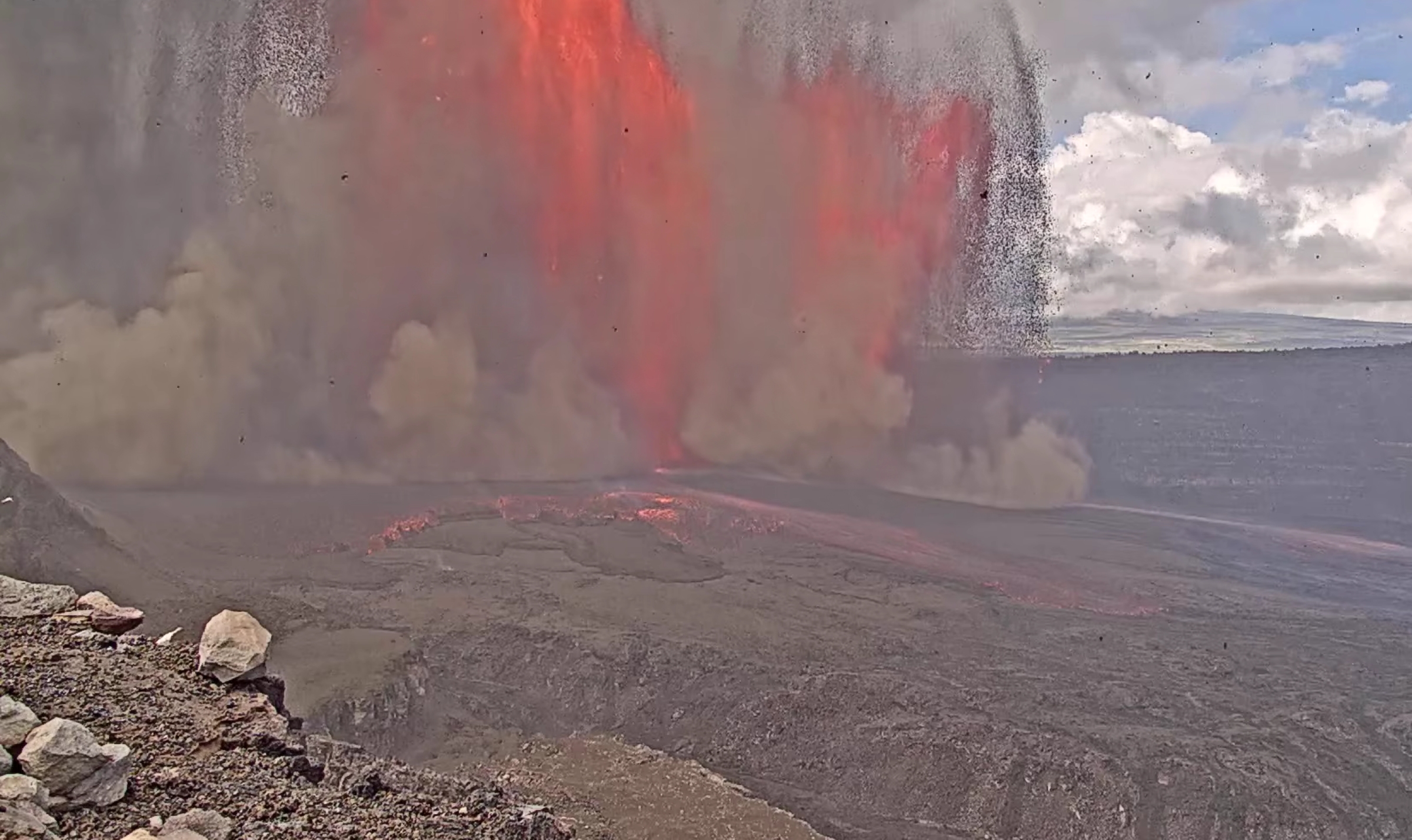
The warning was issued following the onset of Episode 41 lava fountaining today (Jan. 24) in the ongoing episodic summit eruption of Kīlauea within Halemaʻumaʻu Crater inside the volcano’s caldera at Hawaiʻi Volcanoes National Park.
Episode 41 ended abruptly just before 7:30 p.m. today, after more than 8 hours of lava fountaining.
“Kīlauea eruption has ended. However, small amounts of tephra and ash from this large eruption will continue to persist near the ground level and be blown around by the low level winds through Sunday,” said forecasters in their advisory notification.
The advisory is for the same locations as the warning — eastern, southeastern, southern and interior portions of the Big Island — and impacts from the continuing ashfall and tephra fallout include possible damage to crops, animals, minor equipment and infrastructure.
Visibility also could be reduced, and widespread cleanup might still be necessary.
People with respiratory illnesses or problems should remain inside to avoid inhaling the volcanic particles. All people outside should cover their mouth and nose with a mask or cloth.
Hawaiian Volcano Observatory reported maximum molten rock geyser heights were estimated at just less than 1,600 feet tall, with widespread tephra fall seen within the national park and surrounding areas.
Communities to the north of the park — including as far away as Hilo and coastal areas of Puna — reported fine ashfall.
Fountains from the north and south eruptive vents in the southwest portion of Halemaʻumaʻu Crater remained relatively close in size during the eruption before beginning to slowly decline after 1 p.m. today.
Visit the Hawaiian Volcano Observatory website for additional Kīlauea status updates.
Update No. 3 at 8:14 p.m. Jan. 24, 2026: Hawaiian Volcano Observatory reports Episode 41 of the ongoing Halemaʻumaʻu Crater episodic eruption within the summit caldera of Kīlauea volcano on the Big Island ended abruptly at 7:29 p.m. after more than 8 hours of continuous lava fountaining.
Small particles of volcanic glass strands called Pele’s hair and ash could be remobilized in areas downwind of the two eruptive vents.
Widespread tephra fall also was reported in Hawaiʻi Volcanoes National Park and surrounding areas, including communities to the north, with fine ash falling as far away as Hilo and coastal areas of Puna.
Hawaiian Volcano Observatory said additional details about the most recent eruptive episode will be provided in its next official report.
Update No. 2 at 7 p.m. Jan. 24, 2026: Hawaiʻi Volcanoes National Park reports in a Facebook post that the park’s entrance and Crater Rim Drive West to Kīlauea Military Camp are open.
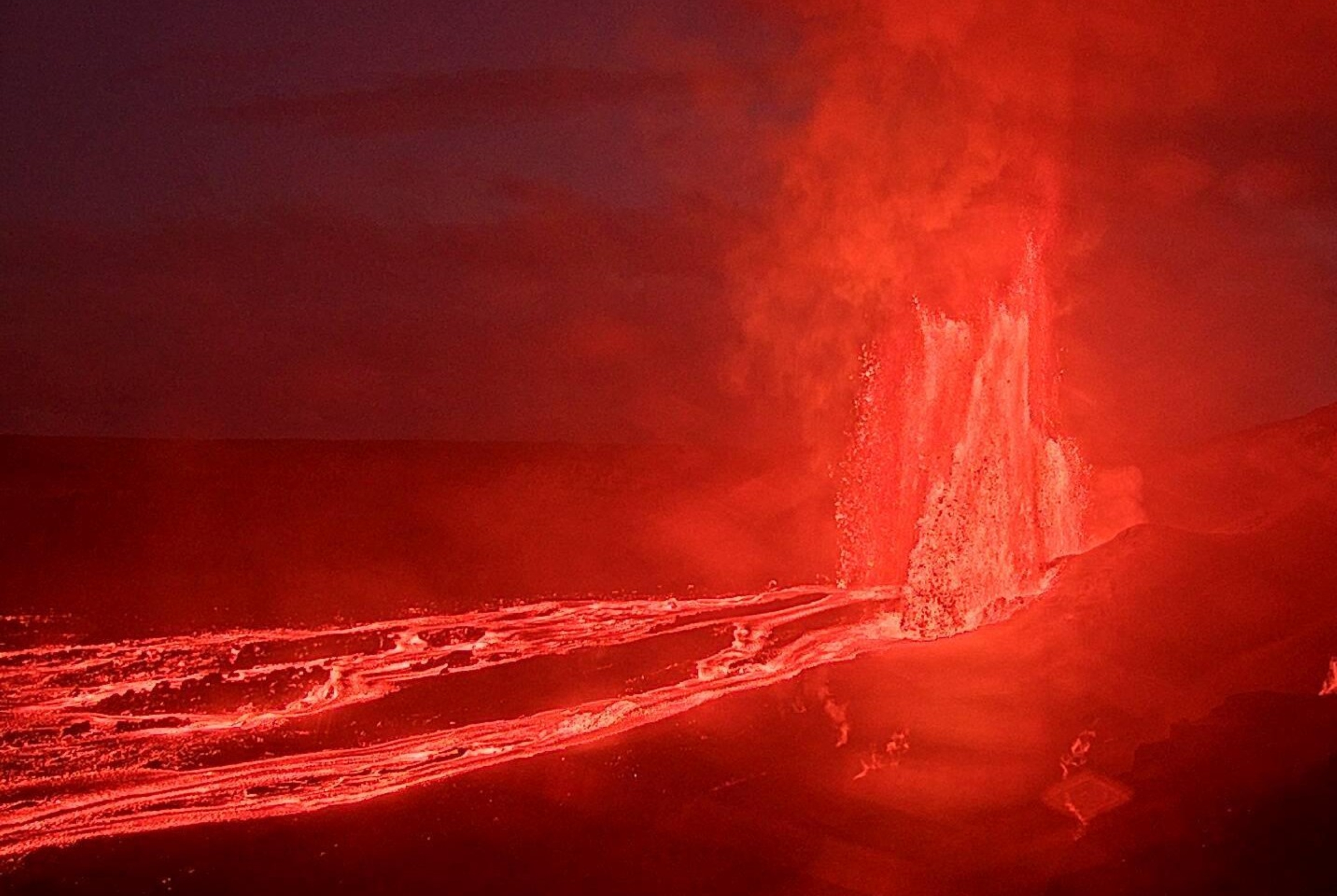
However, Crater Rim Drive East and other areas remain closed because of large amounts of volcanic debris on roads. Motorists are advised to drive with extreme caution.
Other areas will reopen as the park clears roads of that volcanic debris.
“Light tephra continues to fall around the summit area,” says the park’s post. “The safest place to observe Episode 41 is on the [U.S. Geological Survey] webcams.”
Park rangers remain on duty. Visitors to the park are urged to obey all posted signs, closures and ranger directions.
Update at 6:24 p.m. Jan. 24, 2026: The office of Hawaiʻi County Mayor Kimo Alameda reports that Highway 11 near Volcano Village is now open after being closed earlier Saturday because of ashfall and tephra from Kīlauea volcano.
Hawaiʻi County Civil Defense also reports that Hawaiʻi Police Department says the highway is open to all traffic near Hawaiʻi Volcanoes National Park.
Original story last updated at 1:30 p.m. Saturday, Jan. 24, 2026: This story was updated at 1:30 p.m. Saturday, Jan. 24, 2026, with updates about highway and park closures because of the ashfall from Episode 41 of the ongoing Kīlauea summit eruption.
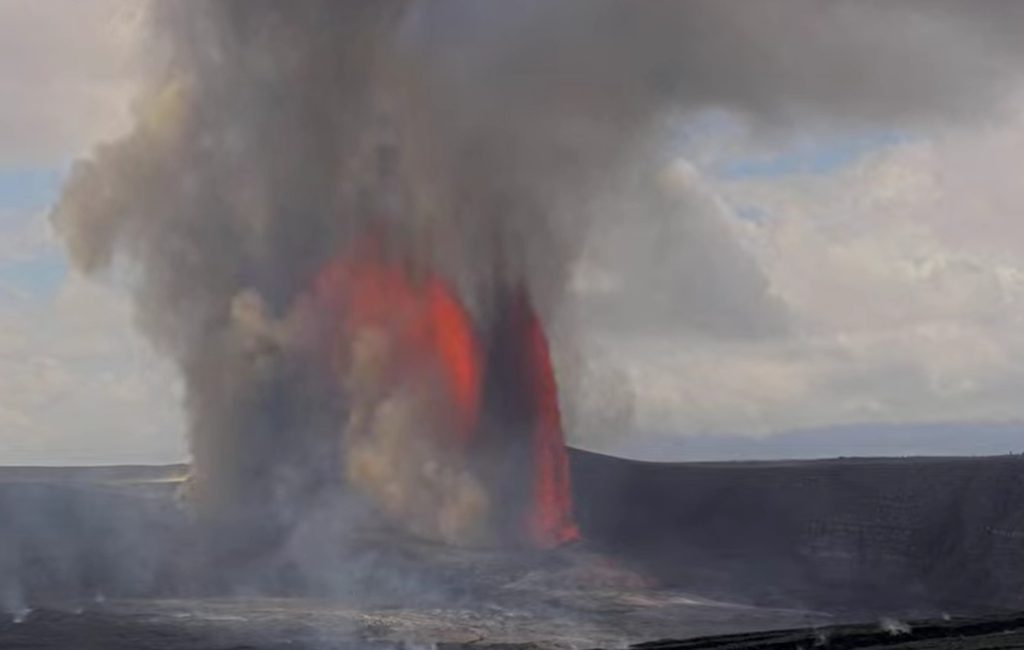
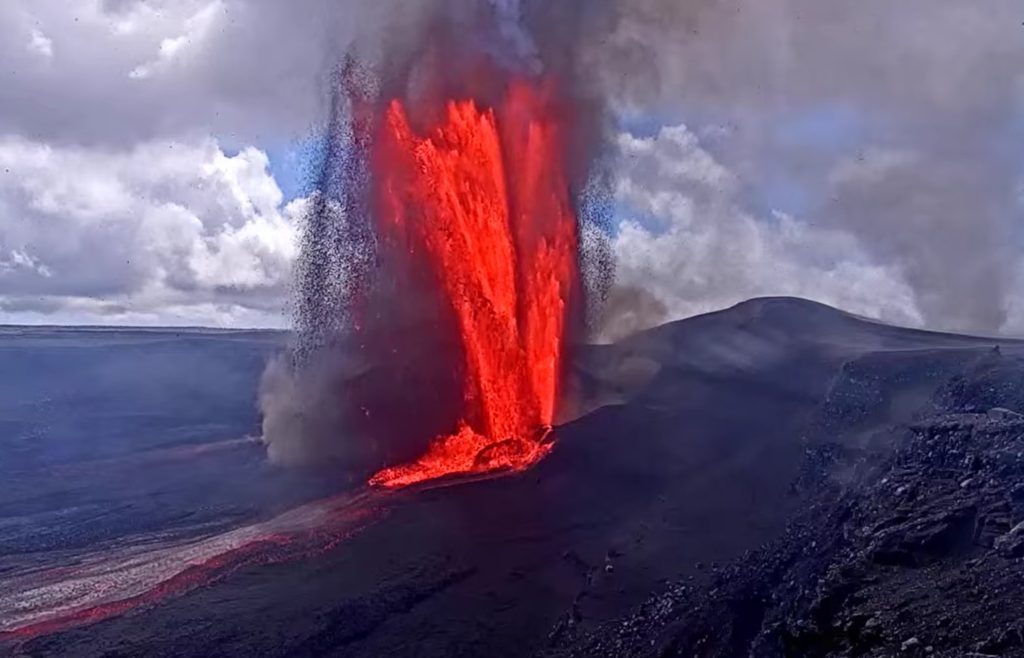
Episode 41 of lava fountaining to more than 1,600 feet high as part of the ongoing episodic summit eruption of Kīlauea volcano — within Halemaʻumaʻu Crater inside the summit caldera at Hawaiʻi Volcanoes National Park — began at 11:10 a.m. today (Jan. 24), bringing with it the threat of significant ashfall for much of the island.
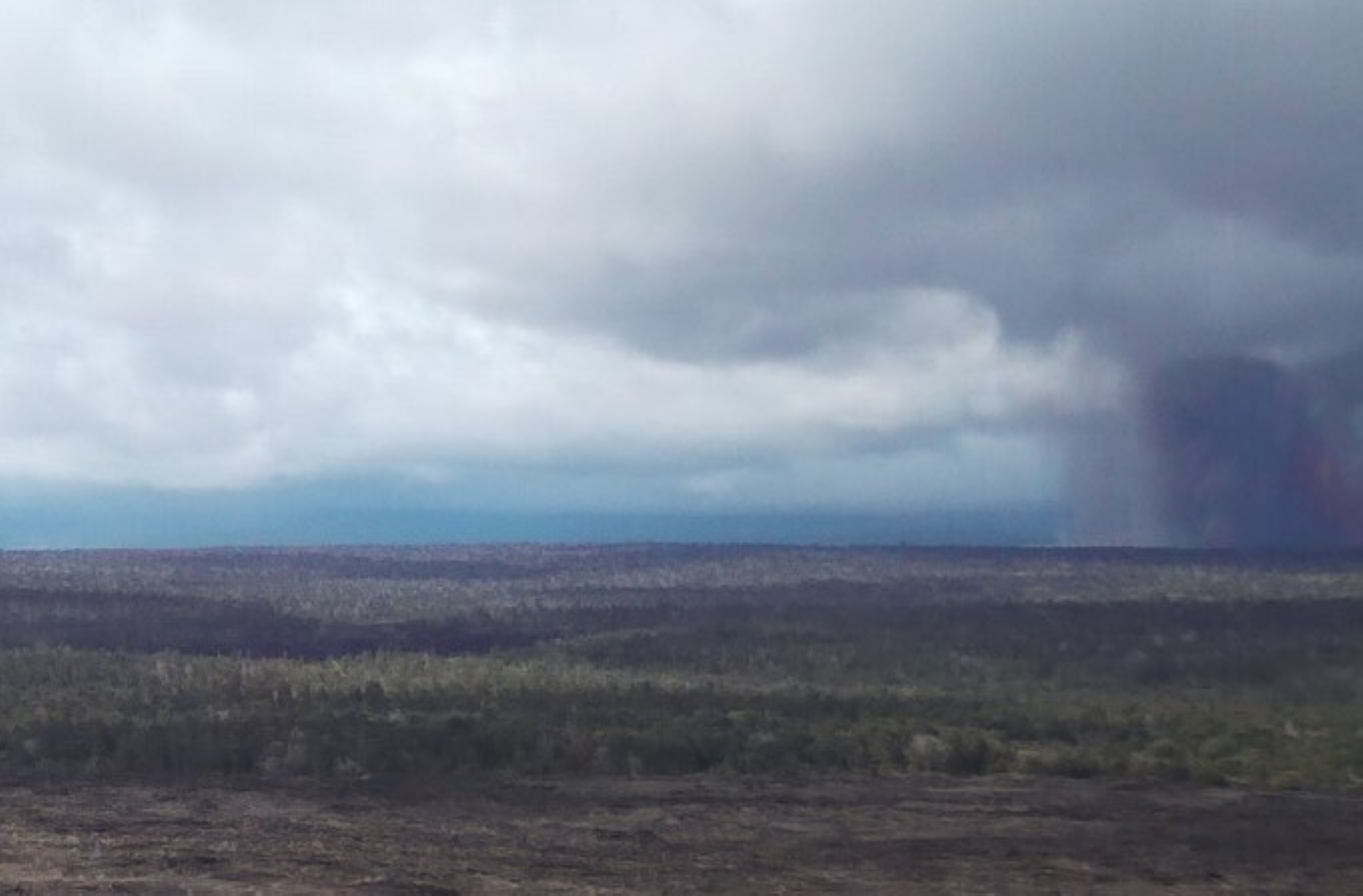
National Weather Service forecasters in Honolulu first issued an ashfall advisory but then later upgraded it to an ashfall warning — in effect until 6 a.m. Sunday (Jan. 25) — for most eastern, southeastern, southern and interior portions of the island.
Hawaiʻi County Civil Defense reports that Hawaiʻi Police Department says Highway 11 is closed in both directions near the 24.5-mile marker at the solid waste transfer station and at the 32-mile marker in Hawaiʻi Volcanoes National Park in Puna and Kaʻū because of ashfall.
Hawaiʻi Volcanoes National Park is also closed at this time.
Motorists should avoid the area and use alternate routes. Updates will be issued as conditions change.
“Kilauea is undergoing a eruption and we have received reports of moderate ashfall and significant amounts of tephra,” says the Honolulu forecast office warning. “We have also received reports of debris as large as a foot near Kīlauea. Satellite imagery shows a large volcanic plume drifting towards [the] Glenwood and Pāhoa area.”
Video by and courtesy of Dan Dennison/Conservation Communications
Disruption of services and utilities — including water, sewer and electric — is possible. Ash removal efforts also could become significant.
Forecasters advise the public to:
- Seal windows and doors.
- Protect electronics.
- Cover air intakes and open water sources.
- Avoid driving.
- Remain indoors unless it is absolutely necessary to go outside.
- Use extreme caution clearing rooftops of ash.
- Listen for further announcements.
Hawaiian Volcano Observatory reports tephra fall was reported in public viewing areas within Hawaiʻi Volcanoes National Park, Volcano Village, Mauna Loa Estates and ʻŌhiʻa Estates in Puna.
North and south vent fountains were higher than 1,640 feet tall — the highest recorded since the eruption started more than a year ago — as of 12:10 p.m.
Hawaiian Volcano Observatory reports ground-level sensors near the eruptive vents in the southwest portion of Halemaʻumaʻu Crater indicate winds are light and blowing from the south-southeast, which suggests volcanic gas emissions and volcanic material could be distributed to the north and northwest of Halemaʻumaʻu.
Winds also are forecast to be light and variable during the next several hours.
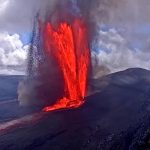
 Image of lava fountains and large amounts of tephra (volcanic material) being ejected from the north and south vents within Halemaʻumaʻu Crater inside the summit caldera of Kīlauea volcano. This image was captured from the V3cam livestream just after 12:30 p.m. Saturday, Jan. 24, 2026, a little more than an hour after Hawaiian Volcano Observatory reported Episode 41 of the ongoing summit eruption began. The National Weather Service in Honolulu has issued an ashfall warning for much of the island.
- Image of lava fountains and large amounts of tephra (volcanic material) being ejected from the north and south vents within Halemaʻumaʻu Crater inside the summit caldera of Kīlauea volcano. This image was captured from the V2cam livestream just after 12:30 p.m. Saturday, Jan. 24, 2026, a little more than an hour after Hawaiian Volcano Observatory reported Episode 41 of the ongoing summit eruption began. The National Weather Service in Honolulu has issued an ashfall warning for much of the island because of the large amount of material being ejected that is expected to be carried east and north.
- Image of lava fountains from the north and south vents within Halemaʻumaʻu Crater inside the summit caldera of Kīlauea volcano. This image was captured from the V1cam livestream just after 12:30 p.m. Saturday, Jan. 24, 2026, a little more than an hour after Hawaiian Volcano Observatory reported Episode 41 of the ongoing summit eruption began.
The plume in past episodes reached up to or above 20,000 feet above ground level, driven by incandescent lava fountains up to or higher than 1,500 feet.
Most volcanic ash and pumice — also known as tephra — typically falls within about 1 mile of the eruptive vents during eruptive episodes.
Lower concentrations of finer volcanic particles — such as ash and the fine glass strands called Pele’s hair — can be transported greater distances downwind of the vent, however, sometimes up to 20 miles.
Sulfur dioxide emission — the main driver of volcanic fog, or vog — is typically 50,000 to 100,000 tonnes per day during an eruptive episode.
All eruptive activity is confined to Halemaʻumaʻu crater in Hawaiʻi Volcanoes National Park.
Most lava fountaining episodes since the eruption started Dec. 23, 2024, continued for a day or less.
KPcam and MKcam provide views of the plume height, and there are three webcams that provide livestream video showing eruptive lava fountains at the Kīlauea summit.
Additional short updates as Episode 41 progresses will be posted on the Hawaiian Volcano Observatory website.
You can contact the observatory via email at askHVO@usgs.gov for additional information or with any questions. Also, be sure to visit the Hawaiʻi Volcanoes National Park website before you go.
No changes have been detected in the East Rift Zone or Southwest Rift Zone.
Kīlauea’s Volcano Alert Level remains at Watch and its Aviation Color Code is still at Orange.
Hawaiian Volcano Observatory continues to monitor Kīlauea volcano closely and will update the public if and when any changes to eruptive activity happen.
News reporter Nathan Christophel contributed to this story.