

Hawai‘i Senate leaders announce priorities for this legislative session
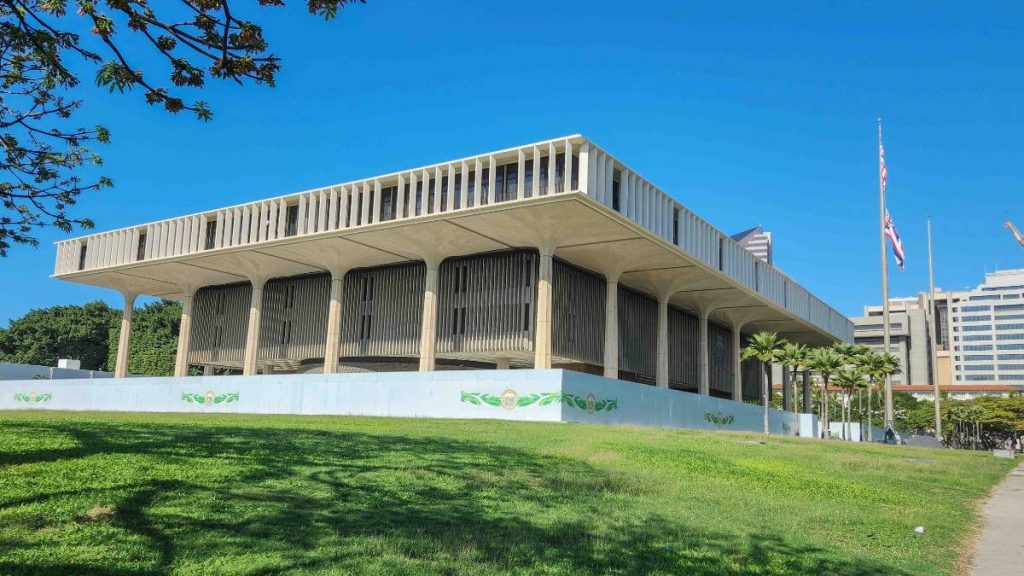
The Hawai’i Senate Majority has identified a myriad of priorities as lawmakers gear up for the Hawaiʻi State Legislative session, which begins on Jan. 21.
Many of the topics have been discussed over the past several sessions, including housing, healthcare, education, food security and more.
“As Hawaiʻi continues to face rising costs and economic uncertainty, the Hawaiʻi Senate Majority is advancing a legislative agenda centered on affordability, resilience, and equity,” said Senate Majority Leader Dru Mamo Kanuha. “These priorities reflect our responsibility to protect essential services, support working families, and ensure a sustainable future for our State.”
Kanuha, who represents the Big Island, said the priorities reflect a “collective vision grounded in affordability, opportunity, shared responsibility, and trust in the democratic process.” The senator encouraged residents across the state to participate in the legislative session to help guide their work.

See below for the full list of priorities the senate will focus on this year:
Housing and Affordability
Housing and affordability remain a key priority for the Senate and will address the state’s housing crisis by advancing proposals that expand the supply of affordable housing through streamlined development processes, according to a news release from the Senate. These efforts include providing financial subsidies, tax credits, and general excise tax exemptions, as well as supporting workforce housing, the Department of Hawaiian Homelands and homeownership programs.
The Senate will pursue measures to make homeownership assistance programs more accessible and attractive to prospective buyers, while strengthening the authority and resources of the Hawaiʻi Housing Finance and Development Corporation and the Hawaiʻi Public Housing Authority, including support for staff recruitment and retention. These efforts will be complemented by initiatives to convert underutilized commercial properties into housing, modernize the landlord-tenant code, strengthen housing finance tools, and establish fast-revolving funds to accelerate housing production statewide.
The Senate will also focus on providing financial relief to residents from rising property insurance and maintenance costs affecting high-rise condominium owners. The Senate will also work to establish intergovernmental state-county coordination of housing incentives and reports regarding available housing for Hawaiʻi’s local workforce.
Workforce Development and Economic Diversification
The Senate plans to prioritize investments in workforce development initiatives that strengthen education-to-career pathways and align training with current and emerging workforce needs. These efforts include supporting education and industry partnerships, expanding career and technical education pathways, and advancing teacher recruitment and retention programs to ensure a strong and sustainable talent pipeline across sectors.
The Senate will also consider policies that support economic diversification, including Enterprise Zone expansion, advanced manufacturing, and technology-driven industries. The Senate will also prioritize regional economic development initiatives and small business procurement programs to foster local entrepreneurship, expand economic opportunities, and create jobs statewide.
Health Care and Public Safety
The Senate will examine policies to safeguard health care and public safety services, including mitigating the impacts of federal funding reductions to programs such as Med-QUEST and emergency management funding through Federal Emergency Management Agency and the Hawaiʻi Emergency Management Agency. The Senate will prioritize supporting provider recruitment and retention efforts, exploring a medical residency program on Maui, and expanding telemedicine services in rural areas. The Senate will also support the development of a health care technology enterprise program to attract research funding and innovation.
In addition, the Senate will address shortages in law enforcement and first responder personnel through recruitment, retention, and streamlined hiring processes, invest in public safety infrastructure and emergency response capabilities, and consider measures to address serious firearm-related offenses.
Education and Higher Education
The Senate remains committed to increased funding for K–12 and higher education to improve academic achievement and provide continued support for early learning opportunities. The Senate will support policies to provide optimal learning environments, ensure access to nutritious school meals through expansion of the Hawaiʻi Farm to School Initiative, and maintain school facilities to reduce deferred maintenance and improve campus safety and functionality. The Senate will also work to mitigate the impacts of federal funding reductions affecting early education, K–12, higher education, and special education programs.
To enhance student engagement and workforce readiness, the Senate will support curriculum and partnerships with local businesses and community organizations that connect education to real-world career opportunities. The Senate will also advance initiatives to strengthen teacher pathways beginning in middle and high school, and support teacher recruitment, retention, and professional development. In higher education, the Senate will consider policies related to name, image, and likeness opportunities for University of Hawaiʻi (UH) student-athletes, explore ways to improve student housing, and evaluate potential reforms to the structure and governance of the UH system.
Food Security, Agriculture and Environment
The Senate will prioritize strengthening food security by supporting farm-to-table programs, maintaining access to the Supplemental Nutrition Assistance Program, and providing continued support for food banks statewide. The Senate will also advance measures to enhance biosecurity, improve agricultural infrastructure, and strengthen transportation systems that support local food production and distribution.
To support Hawaiʻi’s agricultural sector and increase local food production, the Senate will promote workforce recruitment initiatives for young farmers and support policies that strengthen agricultural viability and sustainability. The Senate will also support policies that advance circular economy practices and promote healthy soil initiatives.
In addition, the Senate will explore measures to promote climate resilience and adaptation, including sea-level rise mitigation and nature-based coastal solutions. It will also consider reforms to the functions and structure of the Commission on Water Resource Management and will incentivize increased redemption of the HI-5 program to strengthen recycling efforts and reduce waste.
Infrastructure, Transportation, and Community Support
The Senate remains committed to improving the state’s transportation systems, including highways, airports, and airline connectivity, to support economic activity, mobility, and public safety. It will also prioritize increasing transportation support for Asset Limited, Income Constrained, Employed households to improve access to jobs, education, and essential services. In addition, the Senate will support transit-oriented development initiatives aimed at reducing transportation costs and improving traffic safety.
The Senate will also continue to prioritize social services and community support by expanding outreach and housing assistance for vulnerable populations, including houseless individuals, kūpuna, and those living with mental illness. These efforts will leverage federal resources, such as the Temporary Assistance for Needy Families surplus, and foster collaborative partnerships among government agencies, nonprofits, foundations, and ʻohana groups to develop neighborhood-level support systems for houseless residents, those near financial breakpoint, at risk from severe weather, or with limited mobility.
Government Reform and Operations
The Senate will continue exploring ways to improve transparency and efficiency in government operations, including insurance regulation, state hiring, energy governance, and oversight of agricultural and aquaculture programs. It will also review the roles and responsibilities of agencies involved in Mauna Kea stewardship and resource enforcement, seeking clarity and coordination in management.
Additionally, the Senate will consider policies related to naming rights for state facilities, evaluating approaches that balance public benefit, operational needs, and potential partnerships with private or nonprofit entities.