



‘Episode 43 produced some serious tephra’: Fallout from Kīlauea lava fountains blown as far as Hilo
This story is brought to you today by the letter T and the number 43.
T is for tephra — volcanic material such as ash, glass strands called Pele’s hair, reticulite and other particles — that covered portions of Hawai‘i Volcanoes National Park and was blown as far as Hilo on Tuesday (March 10).
The number 43 is for Episode 43 of the ongoing Kīlauea volcano episodic summit eruption that ejected that tephra during just more than 9 hours of sustained high lava fountaining that began shortly after 9 a.m. and ended just before 6:30 p.m.
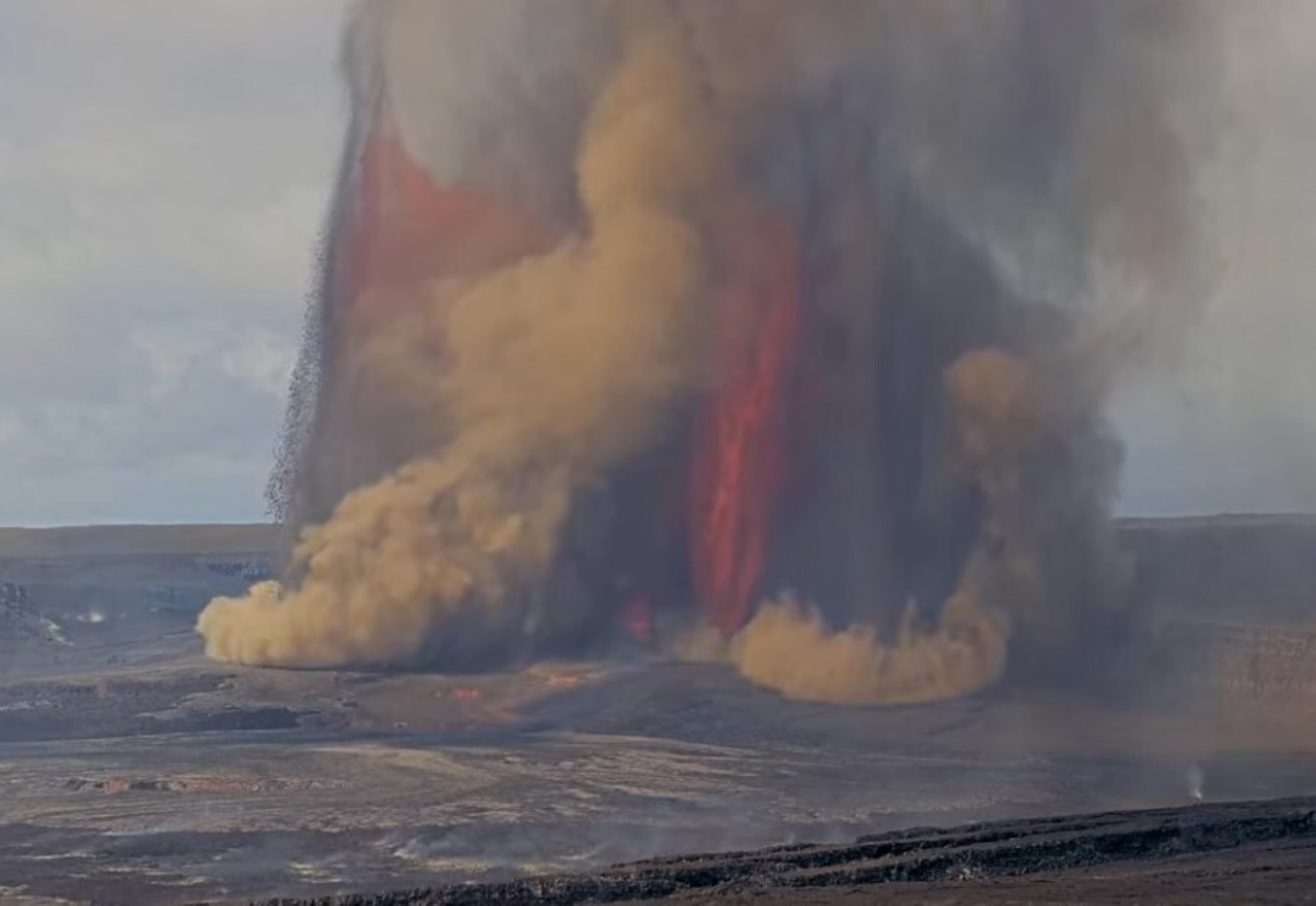
More than a quarter of an inch of tephra accumulated within the first few hours of fountaining Tuesday, with some large fallout reported at lookouts within the national park, which eventually closed the summit areas and evacuated visitors.
Hawai‘i County opened an emergency shelter in Pāhala for residents and visitors impacted by the falling volcanic materials or closure of a 16-mile portion of Highway 11 — from the 24-mile marker to the 40-mile marker on each side of the national park — as a result of the fallout.
Tephra fall affected at least one Volcano area school that is closed today (March 11) for cleanup.
It forced the closure of NAS Swimming Pool and Charles “Sparky” Kawamoto Swim Stadium in Hilo and Pāhoa Community Aquatic Center until further notice to allow for cleanup of volcanic materials from the pools.
Hawaiʻi County Civil Defense, partnering with American Red Cross and Community Emergency Response Team, are providing a tephra information center in Volcano Village today and Thursday (March 12) for residents to learn how to clean up tephra from their homes, protect water catchment tanks and request assistance.
Hawai‘i News Now reported the fallout also led to the cancellation or rerouting of several flights to Ellison Onizuka Kona International Airport from Hilo International Airport.
Tephra even knocked out the new livestreaming V1cam — that now has sound — at the summit.
“Episode 43 produced some serious tephra,” said a Facebook post just before 2 p.m. Tuesday by Epic Lava. “The Volcano Golf Course is covered.”
Sherri Dean Traylor reported in another Facebook post at just before noon that the tephra fall was “bad at [Kilauea Military Camp]” and that Hawai‘i Volcanoes National Park — where Kīlauea summit is located and the eruption confined — was closing.
“Wow, giant pieces of tephra!” exclaimed Sue Maloney in reply to a post in the Hawai‘i Tracker Facebook group.
Hawaiian Volcano Observatory reported Tuesday night a few hours after the episode ended that tephra fall was observed outside the closed area of the national park along the north rim of Kaluapele — the volcano’s summit caldera — and in adjacent communities, including Volcano Village about 2 miles east of the park.
“The sky is falling. The sky is falling!!!” commented CeCe Fox Nasland, replying to the Hawai‘i Tracker group post.
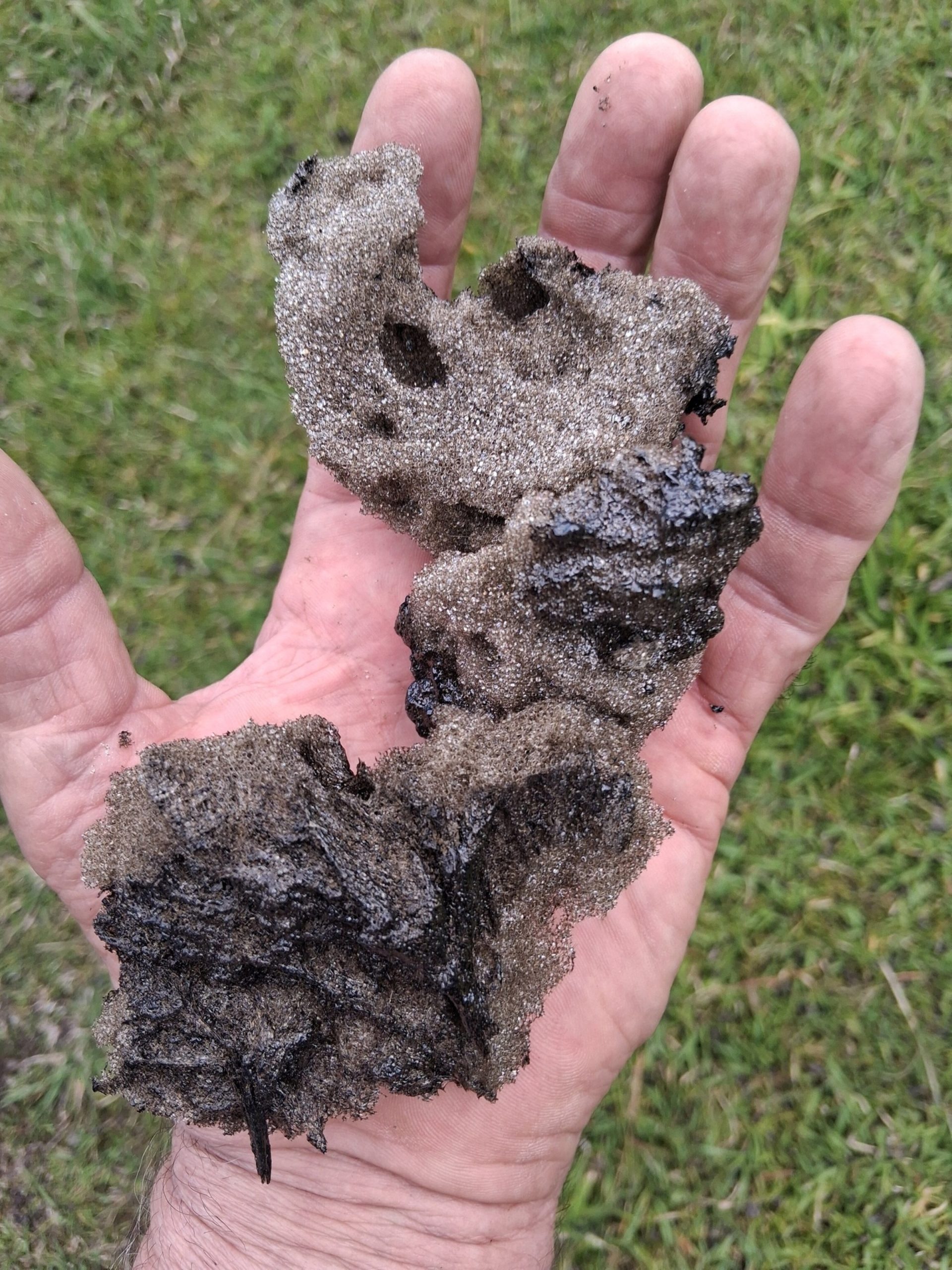
Volcano — especially near the golf course — was perhaps the hardest hit location other than and outside Hawai‘i Volcanoes National Park. It was covered by a blanket of tephra, with pieces up to several inches in diameter.
Tephra as large as 6 inches was reported at Volcano Golf Course.
“Well our Volcano Pele is blowing her guts up into the air,” wrote William McKnight in a Facebook post shortly before 6 p.m. Tuesday that included a photo of him holding several pieces of volcanic rock that fell. “Here’s a few of the medium to large air stones that are raining all over Volcano Village where my parents live.”
“I’m not so upset about the dust that we got in the Acres when I see that,” replied Tu Wright, speaking about other tephra fall over Hawaiian Acres in Puna.
“All the way down in Hilo, too,” commented Linda Alice on the post in the Hawai‘i Tracker group. “Gust of wind hit the roof then me. Felt like I was in a sandstorm.”
Significant tephra fall was also seen in Mauna Loa Estates with lighter tephra as far as Royal Hawaiian Estates, about 6 miles northeast of the erupting vents within Halema‘uma‘u Crater.
Ash and Pele’s hair were reported from Mountain View and finally as far as Hilo, Hawaiian Paradise Park and places just north of Hilo along the Hāmākua Coast as Episode 43 progressed.
Light winds produced tephra fallout similar to but not as great as Episode 41 on Jan. 24.
That eruptive phase had lava fountains up to nearly 1,600 feet — the highest since the ongoing eruption started Dec. 23, 2024 — and what Jake Kunukau on social media called the tephra falling Tuesday, “Hawaiian snow,” blown by east and north upper-level winds, causing more widespread fallout to areas north, east-northeast and east of the summit.
Light southwest winds at lower elevations pushed the eruption plume of Episode 43 — which included tephra and volcanic gases — to the north and east.
The heaviest tephra fall Tuesday was recorded at Uēkahuna Overlook inside Hawai‘i Volcanoes National Park, with 2-inch tephra and about 4 to 7 inches of total accumulation, as well as Kīlauea Military Camp, where 4- to 5-inch tephra fell and a total of about 2 inches of accumulation was recorded.
V1cam became the second livestream webcam in the summit region interrupted or worse by tephra fallout.
The original V3cam was buried and destroyed by volcanic debris during Episode 38 of the eruption Dec. 6, 2025.
 Falling tephra from Episode 43 of the ongoing episodic summit eruption of Kīlauea volcano is captured Tuesday, March 10, 2026, by the V1cam livestream webcam before it was “clobbered” and knocked down. (Image shared on Facebook by Hawai‘i Pacific Parks Association)
- Screenshot from V1cam at 11:13 a.m. Tuesday, March 10, 2026, after tephra fall from Episode 43 of the ongoing episodic summit eruption of Kīlauea volcano “clobbered” the new livestream webcam at the volcano’s summit, knocking it down. (Screenshot from video shared on Facebook by Rayan Holmboe)
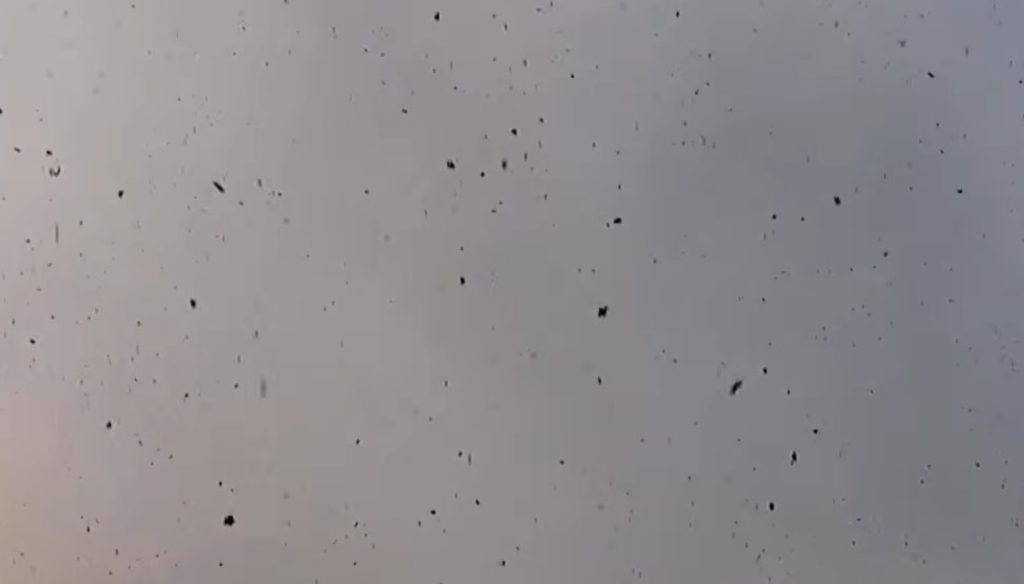
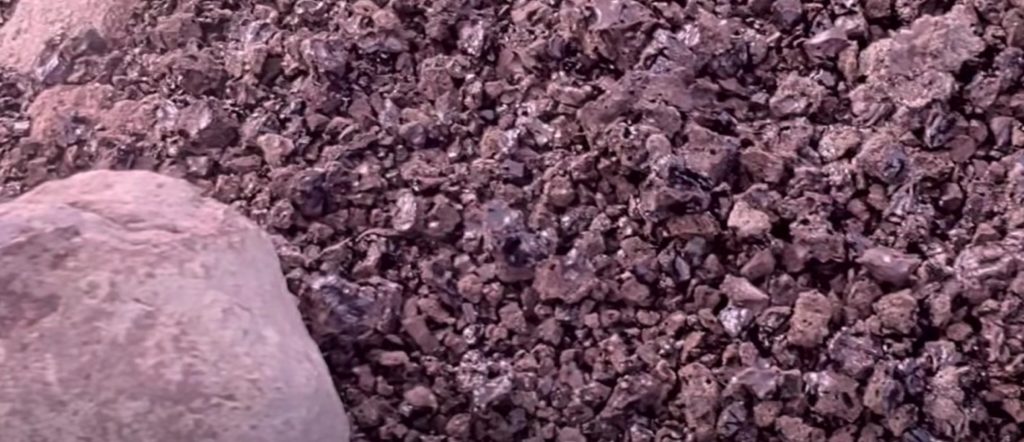

Ryan Holmboe reported Tuesday in a post with an attached video in the Hawai‘i Tracker group that the new V1cam “got clobbered” by falling tephra just before 11:15 a.m., bumping it so hard it fell over and started filming the ground beneath it.
“They can’t catch a break!” replied Holmboe in a later reply to his post. “Staff was trying to correct the aim remotely and the camera got smacked again at about 11:32 [a.m.] After that hit, the camera became blurry, can’t seem to focus.”
Fortunately, it wasn’t destroyed like it’s previous cousin, which is great news for Hawaiian Volcano Observatory and everyone now enjoying the sounds of the volcano captured by the camera.
“Wow! #KīlaueaVolcano webcam V1 HAS SOUND,” wrote Hawai‘i Pacific Parks Association in a Tuesday morning Facebook post before the camera was knocked out. “Check out the sound of all kinds of tephra and ejecta raining down on the surrounding landscape … and the camera!”
“It’s so cool to hear it!” replied Sarah Gauron to another commenter on Holmboe’s post.
Hawaiian Volcano Observatory said the V1cam was indeed knocked over during Episode 43 and crews will attempt to repair it during the next few days, weather permitting.
Several people on social media commented the falling tephra was like hail, an interesting comparison as a powerful Kona low storm bears down on the state, bringing the chance for possible severe thunderstorms able to produce the actual frozen ice balls.
One commenter said the volcanic “snow” was a message in advance from the Hawaiian volcano goddess herself, warning about the storm.
“Pele telling everyone to go home because the storm is coming,” Sarah Nohealani Coito replied to the post in Hawai‘i Tracker. “Everyone be safe, especially on the roads!”
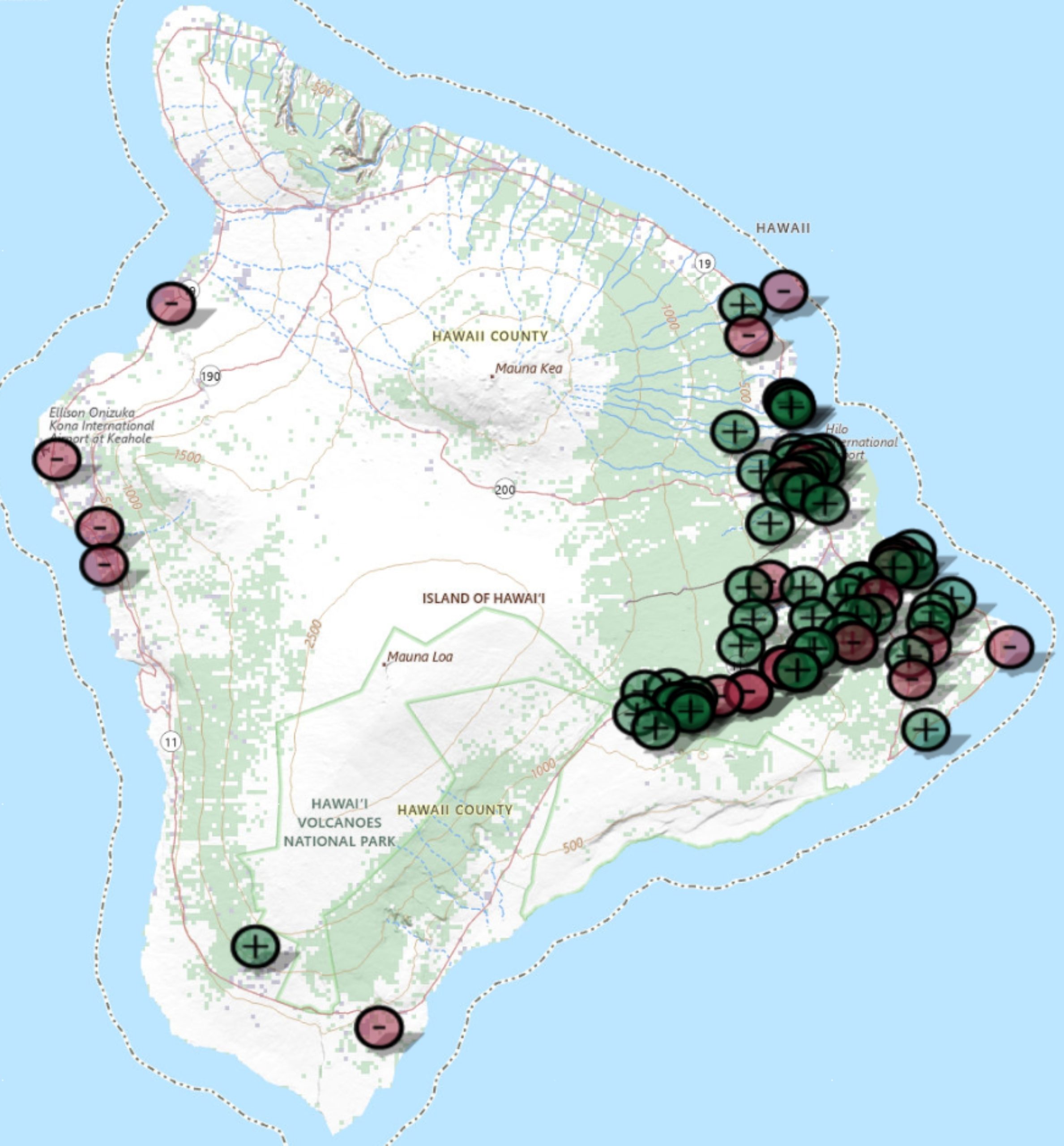
A map of tephra fallout Tuesday can be found online. It showed 200 not yet verified reports made to Hawaiian Volcano Observatory within the previous 24 hours as of just before midnight today.
Those who want to report tephra fall can click here.
Kīlauea’s Volcano Alert Level was raised from watch to warning less than 2 hours after Episode 43 began, reflecting the potential for hazards — including tephra fallout — to surrounding communities and avaiation. It was later changed back to watch after the hazard threat diminished, shortly before the episode ended.
National Weather Service forecasters in Honolulu issued an ashfall warning just before 11:30 a.m. Tuesday, taking the place of an earlier ashfall advisory. Hawai‘i Volcanoes National Park closed at about the same time.
Forecasters later lowered the ashfall warning back to an advisory, then canceled the advisory shortly after Episode 43 ended.
The park entrance and Crater Rim Drive Drive West reopened Wednesday morning and tephra cleanup is ongoing. Parkgoers should expect temporary closures of other areas.
Highway 11 was also reopen to both lanes of traffic by Wednesday morning.
Episode 43 was comparable in size to Episodes 41 and 42, with the north and south vents within Halema‘uma‘u Crater both active for most of this eruptive episode.
The highest peak lava effusion rate of 1,000 cubic yards per second was recorded at about 10:30 a.m. Tuesday. Episode 43 ended with an average effusion rate of 400 cubic yards per second.
An estimated 16 million cubic yards of lava erupted and covered about 50% of Halemaʻumaʻu Crater floor. Total erupted volume since the episodic eruption began is now close to 325 million cubic yards — or just less than 99,400 Olympic-size swimming pools.
North and south vent lava fountain heights peaked shortly after 11 a.m., just less than 2 hours after Episode 43 began, with maximum fountain heights estimated to be at least 1,300 feet from both vents.
South vent fountaining remained consistently about 10% to 30% higher than the north vent fountains for the majority of the eruptive phase. They had decreased to about 700 feet and 600 feet, respectively, by 5 p.m.
The dual fountains produced significant heat and ash, creating a plume that reached 10,000 feet above sea level by 10:10 a.m., less than an hour after Episode 43 started, and growing to more than 20,000 feet by 11:30 a.m.
By just before 11 a.m. the plume reached to more than 25,000 feet above sea level, with a maximum height exceeding 30,000 feet by 11:30 a.m.
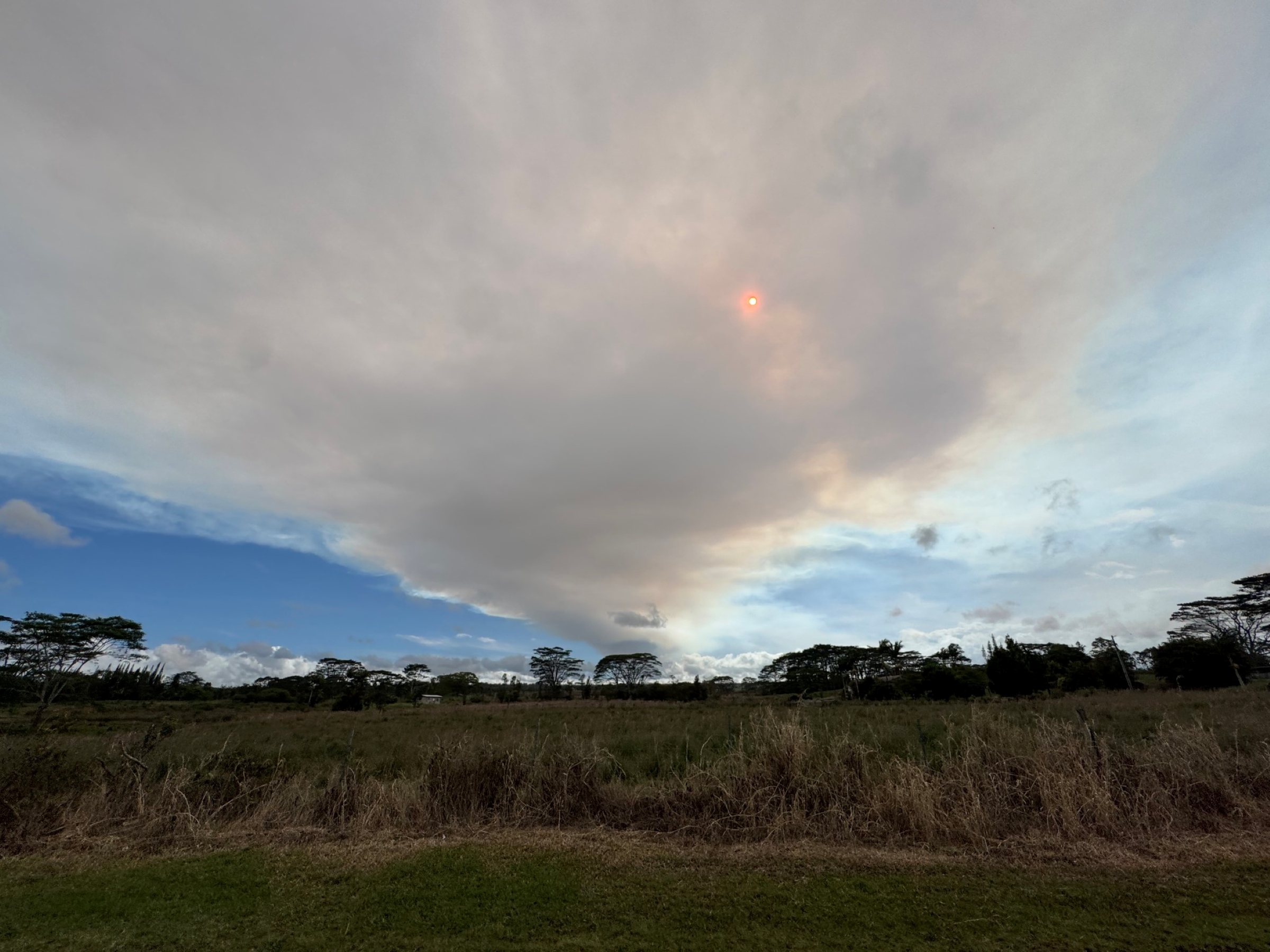
Clouds of volcanic gases mixed with tephra fallout combined into the plume that shrouded the afternoon sky, creating somewhat of an eerie ambiance as the sun turned red or reddish-orange while shined through the dirty atmosphere.
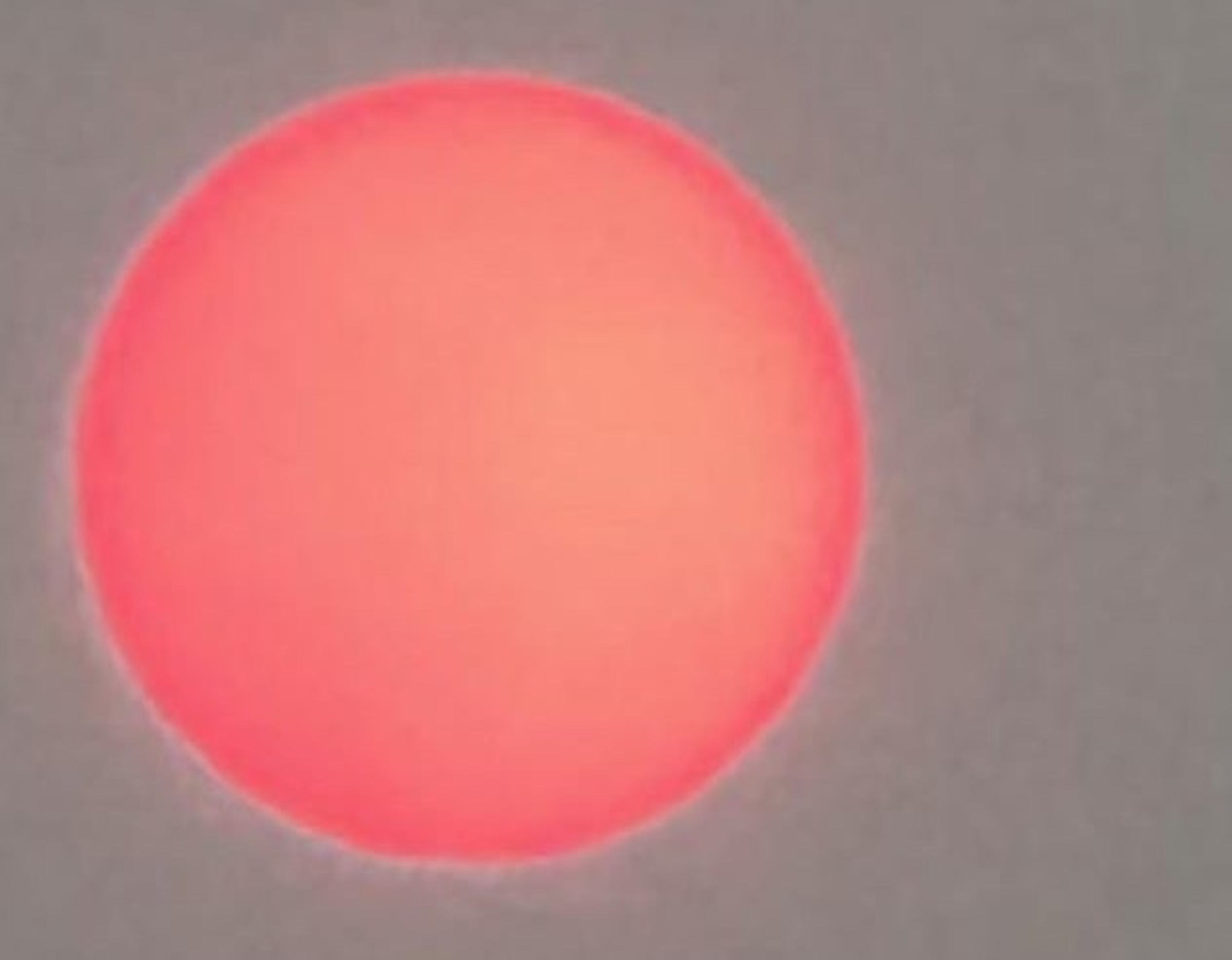
“Sun looking like a big red blood moon down in Mountain View [right now],” said Mona Black in a 3:42 p.m. post with a picture attached in the Hawai‘i Tracker group.
“Volcano sun was trippy all day, too,” replied Tim Toomey to another Facebook post Tuesday afternoon.
The south fountain dropped suddenly at 6:18 p.m. and began irregular jetting, with lava fountains from both vents suddenly stopping less than 5 minutes later.
Rapid rebound of inflation and continued strong glow from both vents indicate another fountaining episode is likely; however, Hawaiian Volcano Observatory scientists don’t have enough information at this time to develop a forecast window for Episode 44.
Based on deflation associated with Episode 43 and preliminary models though, the next fountaining episode will likely take place between the end of March and first half of April.
Sulfur dioxide emission rates from the summit typically average 1,000 to 1,500 tonnes per day during eruptive pauses.
Today’s National Weather Service forecast for the Kīlauea summit region calls for winds from the southwest at 11 to 16 mph, with gusts as high as 22 mph. Those winds will push the sulfur dioxide plume from the summit vents generally to the northeast, bringing volcanic air pollution called vog — created when sulfur dioxide reacts in the atmosphere — over East Hawai‘i.
Vog can cause respiratory and other problems at high concentrations.
Hawaiian Volcano Observatory continues to closely monitor Kīlauea and is in contact with Hawai‘i Volcanoes National Park and Hawai‘i County Civil Defense about eruptive hazards.
Keep up with the ongoing episodic summit eruption of Kilauea with daily updates by visiting the Hawaiian Volcano Observatory website.
Sponsored Content

_1770333123096.webp)

Subscribe to our Newsletter
Comments