



Hawaiʻi House advances bill to increase DUI penalties for highly intoxicated drivers
The Hawai‘i House Committee on Transportation passed a measure with amendments that would make a second DUI offense with a blood alcohol content above .15% — and that is within 10 years of a driver’s first DUI conviction — as a class C felony.
On Tuesday, the nine-member committee gave House Bill 1708 seven ayes with no reservations. Representatives Elle Cochran and Elijah Pierick were excused. The bill next will be heard in the House Judiciary and Hawaiian Affairs committee.
The legal blood alcohol content for driving in the state of Hawai‘i is .08%. Another House bill that would lower the legal BAC to .05% also was introduced this session, and now is headed to committee hearings.
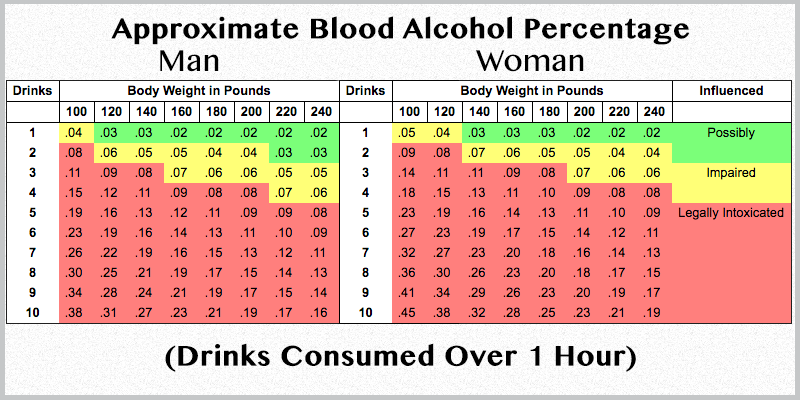
Written testimony submitted for the Tuesday hearing showed overwhelming support for the measure, which initially proposed also upgrading the first DUI offense with a BAC above .15% to a class C felony.
Hawai‘i County prosecuting attorney Kelden Waltjen submitted this amendment, which was accepted by the House committee.
- A first conviction as a highly intoxicated driver would be a misdemeanor offense, instead of a felony, and punishable by either 10 days jail and statutory provisions or 1 year probation with no less than 5 days in jail and statutory provisions.
Waltjen also submitted another amendment, which also was approved by the House Committee:
- A second conviction as a highly intoxicated driver within 10 years of the first DUI conviction would be a class C felony offense and punishable by either a five-year prison term or four years probation with no less than 30 days jail and statutory provisions.
The first draft of the bill made a first DUI conviction as a highly intoxicated driver a class C felony, which required no less than 48 hours to five days in jail. For a second offense that occurred within 10 years of a prior conviction, no more than 30 days in jail.
Statutory provisions, or requirements, include revocation period of a driver’s license, community service and attending a substance abuse program.
According to the University of Toledo, a person with a BAC higher than .15% is very drunk, with symptoms than can include nausea, disorientation, dizziness, increased motor impairment, blurred vision, judgment further impaired and strong state of depression.
With a BAC of .08 to .10%, a person is legally impaired with symptoms that can include euphoria, fatigue, impairment in balance, speech, vision (particularly peripheral), reaction time, and hearing, judgment and self-control impaired.
With a BAC of .05 to .07%, a person is “buzzed” with symptoms that can include relaxation, euphoria, lower inhibitions, minor impairment of reasoning and memory, exaggerated emotions both positive and negative.

Anyone now pulled over with a BAC of .15% or above can face a highly intoxicated driver charge, which currently is a petty misdemeanor with enhancements that include additional fines, minimal jail time, and an additional driver’s license revocation period.
“These enhancements are not sufficient to address the concerns and deter this hazardous conduct,” the bill states.
According to DUI statistics published by the Hawai‘i Island Police Department weekly, the Big Island has had 76 DUI arrests this year. According to the department’s Traffic Services Section, there were 119 major crashes, a 21.43% increase compared to last year, when 98 major crashes were reported.
Information was not available about how many of the 76 DUI arrests involved drivers with a BAC over .15%
According to the National Highway Traffic Safety Administration, 67% of alcohol-impaired driving fatalities in the country involved a driver with a BAC of 0.15 or higher in 2021.
The federal agency also reported that in March 2023 all states — except Hawaiʻi, Alaska, Arkansas, Connecticut, Mississippi and Vermont — had increased penalties for drivers with high blood alcohol content levels.
That data alone, Waltjen said, is exactly why the state needs to increase the penalty structure for this type of behavior that puts the public at risk.
“Clearly, what we’re doing right now isn’t working,” he told the committee via Zoom. “These are not momentary lapses in judgment. Driving while highly intoxicated demonstrates extreme disregard for the safety of others on our roadways and the tragic results.”
Waltjen said this bill is a step in the right direction to hold people accountable.
Rep. Darius K. Kila, the transportation committee chair, said he thought the committee should move forward and adopt the draft because it has strong deterrents, specifically having the possibility to serve 10 days in jail for a first offense.
“Ten days is missing work,” Kila said. “Ten days is missing scheduled things that you plan.”
And he added: “Obviously, folks aren’t learning.”
The Hawai‘i State Office of Public Defender provided the sole opposition to the measure. William Bento provided oral testimony to the committee, saying that while he understands the .15 BAC is a scary number, he added: “There are other reasons why a person might go to the machine or take a blood test and have that high number. It’s not really a reflection on their poor driving.”
Written testimony from the public defender’s office stated that it fully supports efforts to promote roadway safety and prevent impaired driving, adding this bill represents a “significant and unwarranted expansion of felony criminal liability that will not meaningfully improve public safety, will exacerbate existing inequities in the criminal justice system, and will impose substantial fiscal costs on the State of Hawaiʻi without clear evidence of effectiveness.”
The public defender’s office also noted in its testimony that there is already existing law recognizing “highly intoxicated” driving through enhanced penalties such as mandatory minimum jail time beyond standard penalties and extended driver’s license revocation periods (without the possibility of early termination of the revocation period).
At the committee hearing, Bento told committee members that he understands the concern about public safety.
“We drive on the roads, too,” he said. “We all have families as well. But this is a crime of misjudgment, not really a crime of criminal intent, so to speak.”
Bento said he would view change through public education and a stronger push toward others taking responsibility to keep intoxicated people off the street, “by being a friend, driving them home, taking away their car keys, all of those kinds of things that can be done. Because misjudgment is something that’s really hard to legislate.”
The Hawai‘i State Judiciary also provided testimony, informing the committee that this proposed legislation would increase the caseloads in circuit court by an average of 128 cases per year in the First Circuit on O‘ahu, 68 cases per year in the Third Circuit on Hawai‘i Island, 18 cases per year in the Fifth Circuit on Kaua‘i, and two cases per year in the Second Circuit on Maui.
Given this anticipated statewide increase in jury trials, and in light of the constitutional right of all defendants to a speedy trial, the Judiciary would likely require an additional circuit court judge (and statutory authorization for the same) and full staff on Oʻahu, possibly additional resources in other circuits, and additional funding for probation services.
Waltjen said he supports the judiciary in getting the additional judge and services to address this issue.
Sponsored Content

_1770333123096.webp)

Subscribe to our Newsletter
Comments