



Hawai‘i Island’s leading astronomy education program reaches 3,000 students this year
Hawaiʻi Island’s largest astronomy education program, Journey Through the Universe, hosted its 22nd year of classroom visits, career panels, and community events in Hilo last week.
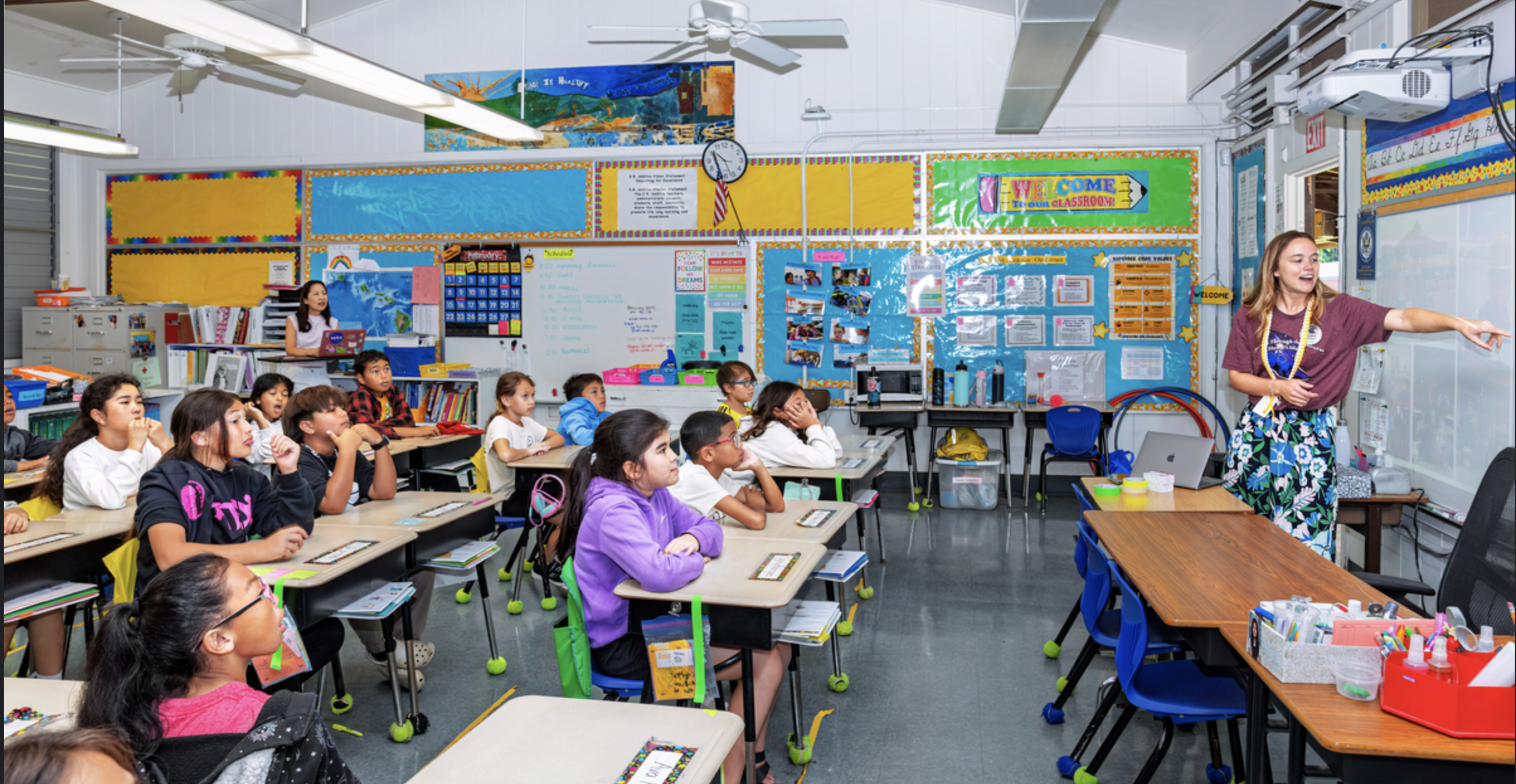
From Feb. 2 to Feb. 6, 46 volunteer educators from the Maunakea Observatories, the National Aeronautics and Space Administration (NASA), various universities, and more shared hands-on experiences at local schools in hopes of inspiring more than 3,000 students to explore science, technology, engineering, art, and math in classrooms ranging from second to 12th grade.
Each year, the International Gemini Observatory and the Department of Education Hilo-Waiākea Complex Area partner to foster curiosity about the universe, create awareness about diverse careers, and share the cutting-edge research and technology taking place on Maunakea.
“Journey Week” kicked off on Saturday, Jan. 31, with an exclusive stargazing event for Hilo-Waiākea teachers, students, and families at Hale Pōhaku on Maunakea.
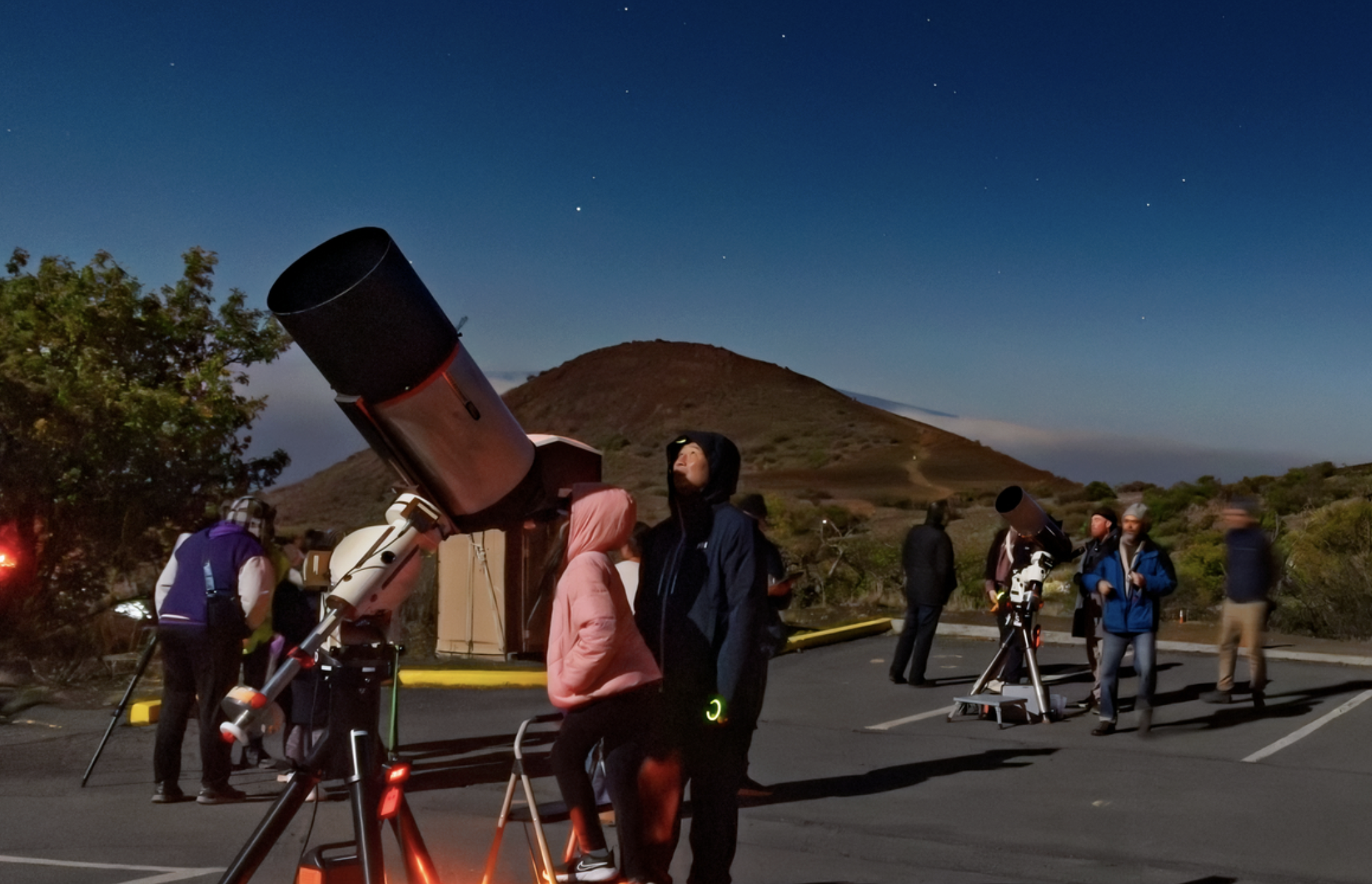
The evening opened with traditional Hawaiian protocol for entering sacred space, led by Leilehua Yuen, Hawaiʻi Culture and Language Resident at Gemini. While the moon rose over nearby puʻu (hills), attendees peered through telescopes and listened to a variety of star stories told by Yuen and Dr. Jacelle Ramon-Sauberon, Education Liaison at Kitt Peak National Observatory.
“Creating safe and engaging spaces for ʻohana to immerse themselves in cultural and scientific learning is critical to our work at Gemini,” said Leinani Lozi, Hawaiʻi Education and Engagement Manager at Gemini. “For some keiki (kids) and mākua (parents), this is their first time seeing the details in the craters of the moon. For others, this is the first they hear the story of ʻIole saving Makahiki. And for nearly all of us, it was the first time we learned the Tohono Oʼodham story of Coyote creating the Milky Way.”
On Monday, Feb. 2, Spring Journey Week began with classroom visits and career panels at 13 Hilo-Waiākea public schools.
Sage Constantinou, a Ph.D. student at the University of Hawaiʻi Institute for Astronomy and Waiākea High School alumna, visited a classroom of fourth graders at Waiākeawaena Elementary and taught students about spectroscopy and rainbows.
On Tuesday, Feb. 3, Justine Schean, Arizona Education and Engagement Manager at the National Optical-Infrared Astronomy Research Laboratory (NOIRLab), taught keiki how to build their own small robots with paper clips and batteries at De Silva Elementary.
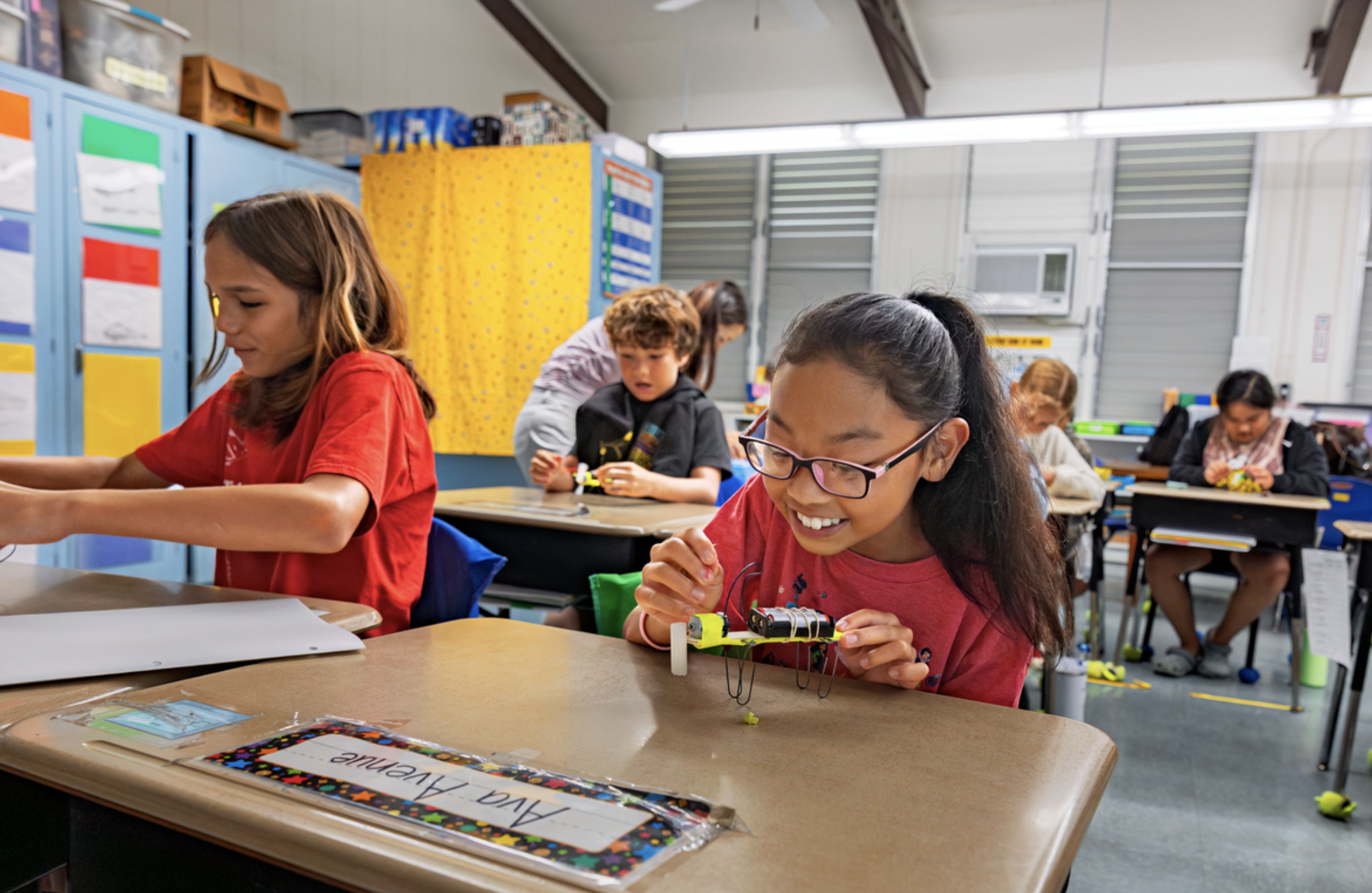
The activity highlighted the extensive engineering and technical skills needed at ground-based observatories and emphasized the complexity of controlling unmanned rovers on other planets.
On Wednesday, Feb. 4, ʻImiloa Astronomy Center hosted a special screening of the locally produced planetarium show “Messengers of Time and Space,” which explores the collaborative outcomes between the traditional astronomy of using telescopes, and multi-messenger astronomy, which utilizes “invisible messengers” like gravitational waves.
The screening was followed by a panel conversation with astronomers who discussed the show and the future of astronomy.
“We’re very excited to support the Journey program this year,” said Devin Chu, an astronomer in residence at ʻImiloa. “Journey helped foster my career in astronomy as a student at Hilo High, and I’m honored to contribute to its ongoing legacy.”
This year, Journey Through the Universe will include field trips for high school students to the Gemini North Telescope on Maunakea in March and April 2026 for the first time.
To learn more about the program and public events, visit the Journey Through the Universe website.
Sponsored Content


Subscribe to our Newsletter
Comments