



Residents should remain vigilant, seek assistance if needed following fallout from Episode 41 of Kīlauea eruption
Hawai‘i County Civil Defense reports in its post-ashfall update message that Episode 41 of the ongoing summit eruption within Halema‘uma‘u Crater in the caldera of Kīlauea volcano produced significant volcanic debris Jan. 24 downwind, especially in neighboring communities near Hawai‘i Volcanoes National Park.
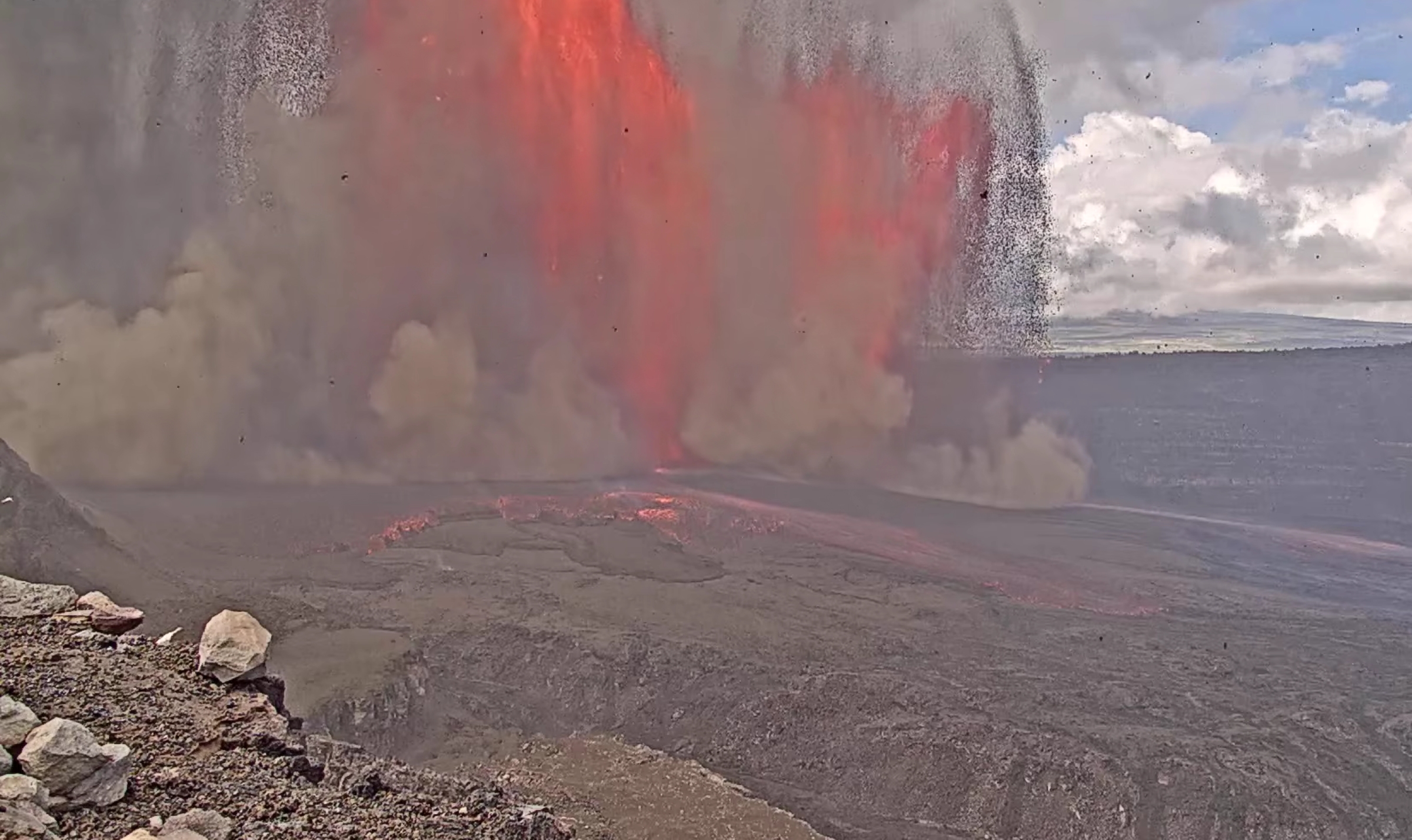
Tephra, strands of volcanic glass called Pele’s hair and ash that fell as far away as Hilo and communities along the Puna Coast are volcanic particles can irritate the skin, eyes and respiratory system.
Residents with volcanic debris on their roof or have a water catchment system should take this time to disconnect their catchment tank and clear the volcanic debris from the roof and gutter.
Residents who need additional assistance should complete a Community Needs Assessment and Request for Assistance Survey.
Those who need assistance but do not have access to the online survey can call Hawai‘i County Civil Defense at 808-961-8011.
There are no roads closed or any other threats to the community at this time. Civil Defense officials will update the public should conditions change.
The ashfall advisory — a downgrade from the ashfall warning that was in place most of Jan. 24 — also was canceled earlier today by the National Weather Service forecast office in Honolulu.
Visit the online Hawai‘i County Hazard Impact Map for additional information.
Hawaiian Volcano Observatory reported this morning (Jan. 25) that Episode 41 lava fountaining began shortly after 11 a.m. Jan. 24 and ended more than 8 hours later, just before 7:30 p.m.
Lava geysers from both eruptive vents — where the volcanic activity is focused — reached maximum heights of about 1,500 to 1,575 feet.
They were the tallest fountains to date in the ongoing episodic summit eruption that began Dec. 23, 2024.
Tephra was reported to have fallen in communities including Volcano Village, Mauna Loa Estates, ʻŌhiʻa Estates, Mountain View, Fern Acres, Kurtistown, ʻĀinaloa, Hilo, Hawaiian Paradise Park, Hawaiian Beaches and Pāhoa.
Dan Dennison of Conservation Communications, who captured the scenes from Jan. 24, 2026, in the video above, said it was “hard to have a meeting in a metal roo[f]ed building when it sounds like a major hail storm,” as larger chunks of tephra fell during Episode 41 lava fountains in the ongoing summit eruption of Kīlauea volcano.
Tephra fall in more distant communities — such as Mountain View, Fern Acres, Kurtistown, ʻĀinaloa, Hilo, Hawaiian Paradise Park, Hawaiian Beaches and Pāhoa — consisted of fine-grained ash and Pele’s hair.
Falling tephra can pose a health hazard and can contaminate catchment water supplies.
Visit the Hawaiʻi Department of Health website for additional health information.
Hawaiian Volcano Observatory also reports preliminary data indicate the onset of the next lava fountaining episode is likely about 2 to 3 weeks away.
No significant activity has been noted along Kīlauea’s East Rift Zone or Southwest Rift Zone.
Sponsored Content


Subscribe to our Newsletter
Comments