



Hawaiʻi County Civil Defense advises precaution because of volcanic ashfall, tephra
Hawaiʻi County Civil Defense advises Big Island residents and visitors to take precautions in areas impacted by falling ash and tephra from Kīlauea volcano.
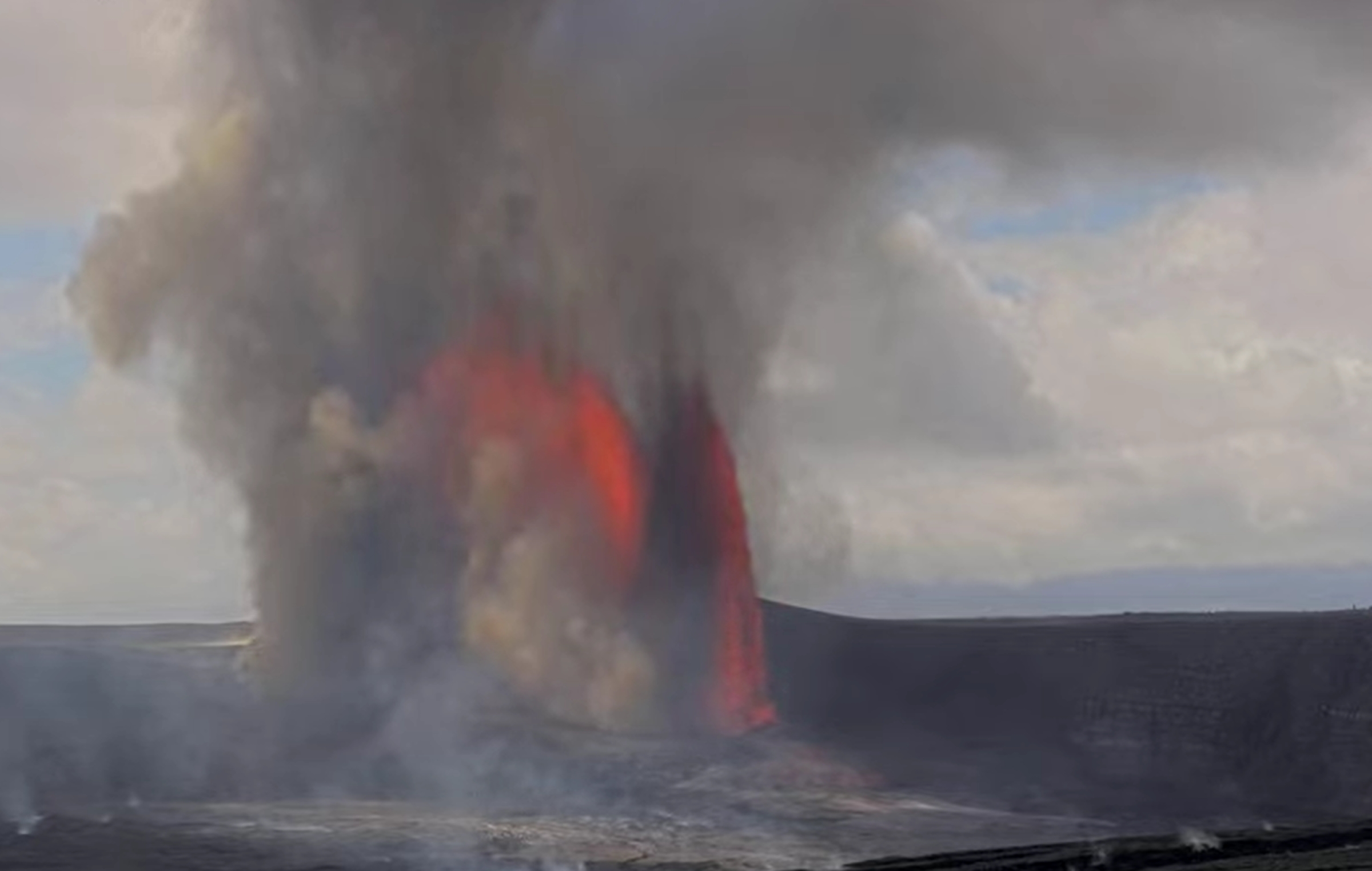
Episode 41 lava fountains as part of the volcano’s continuing episodic summit eruption began shortly after 11 a.m. Saturday (Jan. 24), with significant amounts of ashfall and tephra reported shortly after.
National Weather Service forecasters in Honolulu subsequently issued an ashfall warning in effect through 6 a.m. Sunday (Jan. 25) for eastern, interior and south/southeast portions of the island.
Volcanic ash and tephra, including glass strands of Pele’s hair, had fallen as far away as Hilo and at least Pāhala by early Saturday evening.
Larger-sized volcanic clasts — some up to grapefruit size, according to Hawaiian Volcano Observatory — fell in several areas close to Hawai’i Volcanoes National Park, which is where the eruption is confined.
As a result, the national park was closed and Highway 11, between mile markers 25.5 and 32, is also closed.
Local and emergency vehicles are only allowed now on that portion of the highway.
Ashfall can create eye and upper airway irritation; therefore, county Civil Defense officials advise the public to take necessary precautions to limit exposure.
General safety information
- Avoid contact with ash if you have any breathing issues, illnesses or diseases. Stay inside until it is safe to go outside.
- Close doors and windows, where and when possible.
- Consider wearing safety glasses and dust masks when in contact with ash.
- Do not drive in heavy ashfall.
- Temporarily disconnect the gutters feeding into your water catchment system tank, if applicable. Do not reconnect the system until the volcanic hazards — such as ash, laze, Pele’s hair, etc. — pass and ash and debris are washed off the roof, out of the gutters and the tank.
- Use caution when clearing ash from rooftops.
Resources
- Sign up for Hawaiʻi County Civil Defense emergency alerts at the agency’s website.
- How to protect water catchment systems during volcanic activity.
- Monitor air quality levels.
Continue to listen for Civil Defense alerts and trusted news sources for updates, and remember: if you’re ever in doubt, don’t venture into the fallout.
Sponsored Content


Subscribe to our Newsletter
Comments