



Volunteers prepare for anything during animal rescue and recovery training in Hilo
“River left!” “River right!” “River up!” Slowly marching up the hill, a group of five worked together to navigate rushing waters in their imagination.
They were first practicing skills they learned about how to navigate flood waters to reach an animal in need of rescue during an emergency or disaster event. This land exercise was followed by the group going to the river by Kulaniapia Falls to use these same skills in the water.
It all was part of an intensive training program for 20 volunteers that was conducted this past week by Code 3 Associates, a leading animal rescue organization.

The Hawaiʻi Animal Kuleana Alliance hosted Code 3 Associates to train volunteers on how to professionally and technically take part in animal rescue and recovery services during man-made or natural disasters.
Hawaiʻi Animal Kuleana Alliance has been planning this training for years and was finally able to make it happen through partial funding from Hawaiʻi County’s Kīlauea Recovery Grant Program.
Code 3 instructors traveled from Colorado to instruct the volunteers through a 5-day, 40-hour Disaster Response Overview Program, a training course tailored for first responders, animal control officers, law enforcement and other professionals involved in emergency or disaster response where animals are affected.
The course provides a comprehensive introduction to the complexities of rescuing animals with instructors chosen for their expertise, experience in the field and dynamic style of teaching.
Code 3 has all its curriculum backed by Colorado State University.
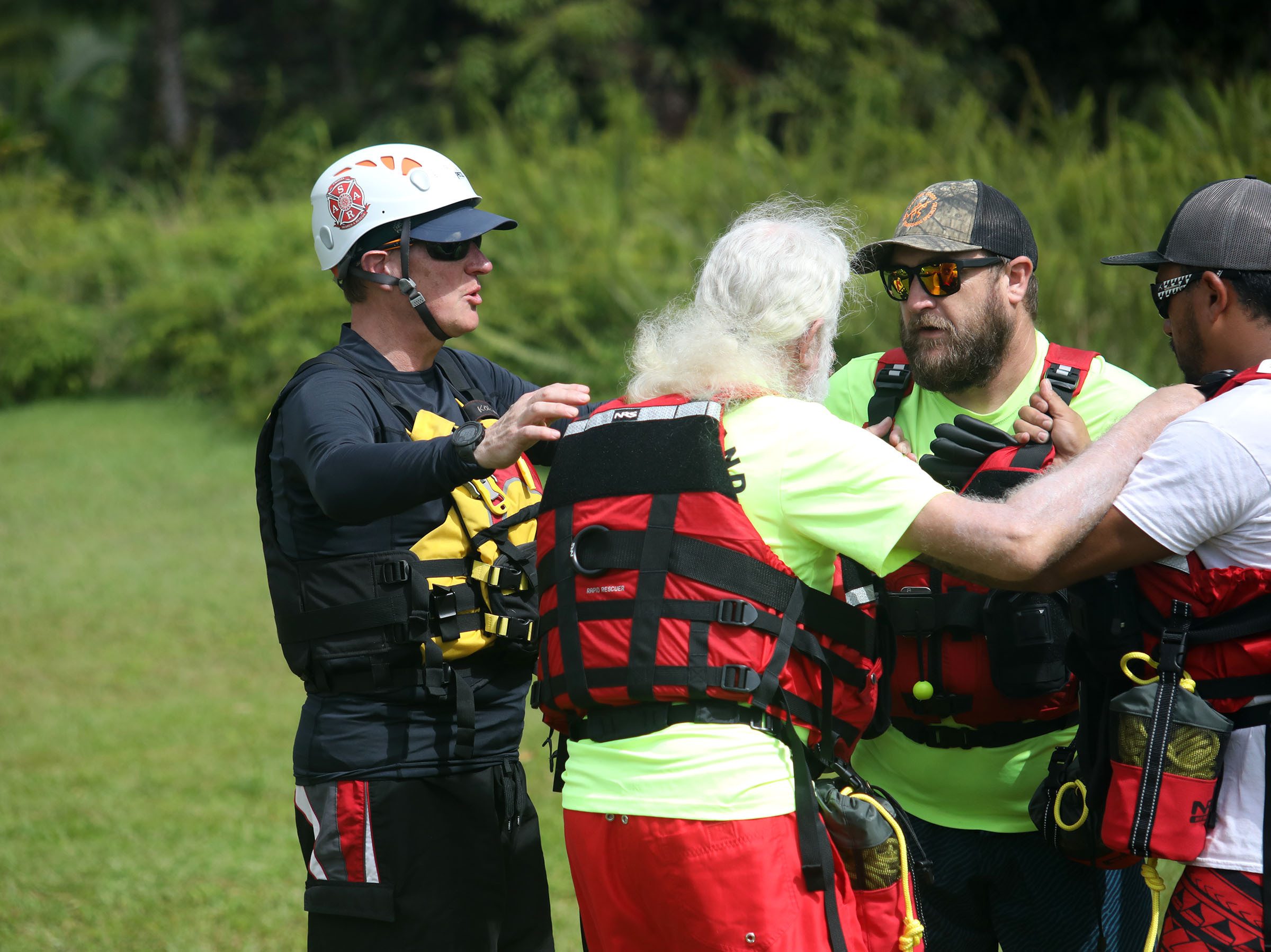
Garret Leonard, an educational coordinator for Code 3, said the training includes fire awareness, search and rescue operations and using ropes to gather animals or get to difficult places.
The volunteers also were taught standard techniques about how to approach, restrain and extract animals safely, including large ones. There are methods for keeping animals calm, such as making a harness that will keep an animal immobile during extraction.
They also learned the terminology and inner workings of a command structure, which is important because it “allows for smoother experiences when an out-of-state organization helps during a disaster event,” Leonard said.
“This is the first time we’ve brought instructors to the state of Hawaiʻi for a rescue and recovery program, so this is exciting and necessary for the islands,” Leonard said.
For the Hawaiʻi County training, the 20 volunteers ranged in age and experience levels dealing with animal rescues. Hawaiʻi Animal Kuleana Alliance asked those who participated for a two-year commitment due to the time and resources that went into providing the training.
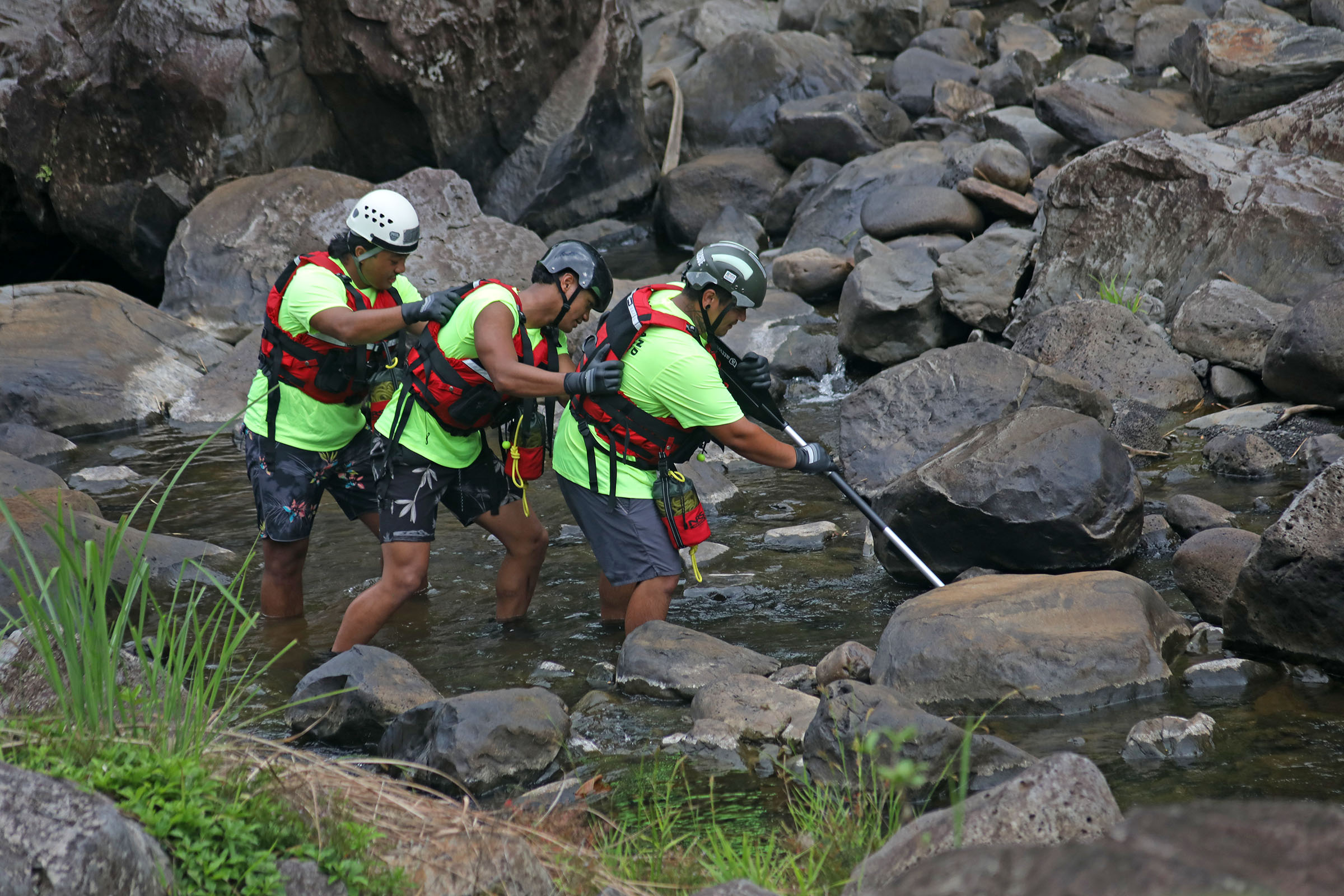
Kainalu Lyman, 21, said he participated in the training because he had the time to try something new and wanted to make sure he could help others when emergencies or disasters hit.
“I think growing up and living here, most of us would just jump into the water to save an animal, but during this training, I’m seeing that it takes a lot to keep the animals and yourself safe,” he said. “The physical training has been fun and the instructors know how to keep us engaged. Everything has been surprising for me to learn and it’s been a fun time.”
Volunteers also included animal safety officers from County of Hawaiʻi Animal Control since they often respond to animal welfare situations in which people and animals could be in danger.
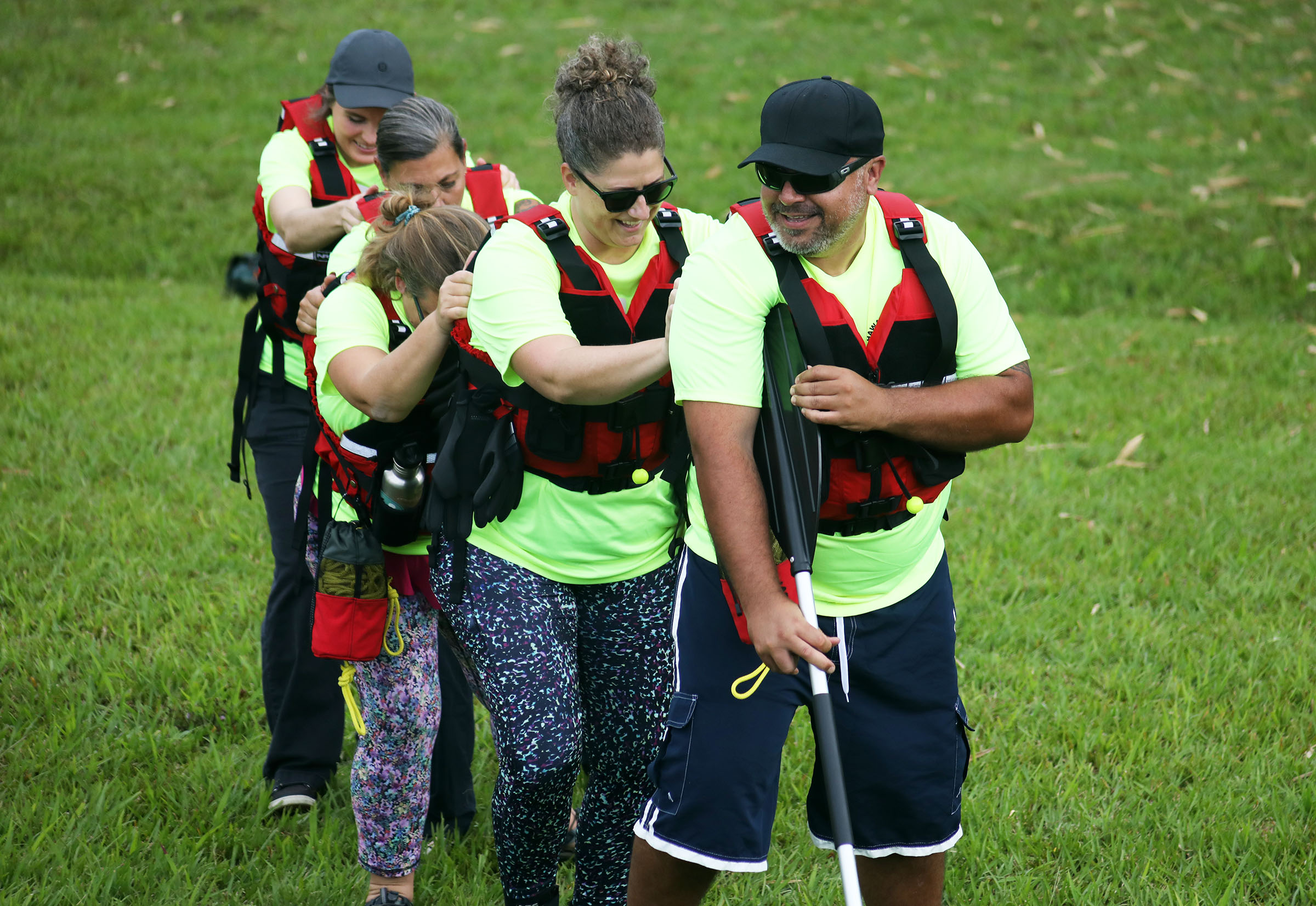
The format of the training starts with time in a classroom, followed by a test about each chapter. On Thursday, volunteers learned how to respond to calls for animal rescue during a flooding event.
After classroom work, they spent the afternoon at Kulaniapa Falls to physically practice crossing a body of rushing water with the correct equipment, terminology and technique.
“We focus on training, because we understand that with more people in the field, the less likely we will be called to come here,” Leonard said. “If we were called, it would take days to get teams out there. So, if we can train local people and organizations, they can almost instantly respond when called upon to do animal search and rescue and sheltering. And, more animals will be saved.”
To learn more about different course and training options and to see upcoming opportunities, visit the Code 3 Associates website.
To volunteer or learn more about past rescue and recovery efforts, visit the Hawaiʻi Animal Kuleana Alliance website.
Sponsored Content

_1770333123096.webp)

Subscribe to our Newsletter
Comments