

Coalition launches statewide campaign to break down barriers for Hawai‘i residents with criminal records
Supporters say a Clean Slate Hawaiʻi law would boost the state’s economy by expanding the workforce and removing barriers to employment, housing, and educational opportunities.
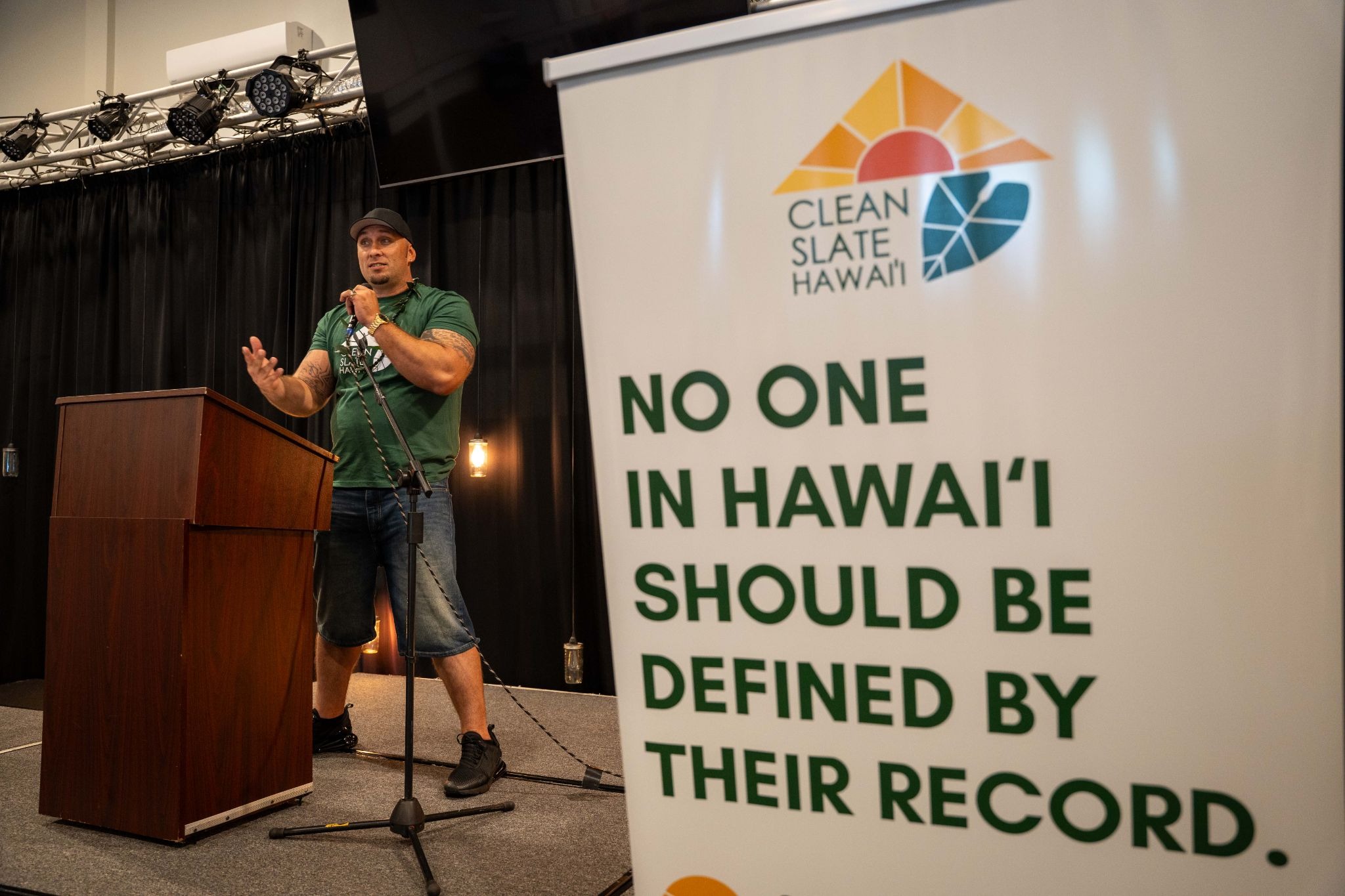
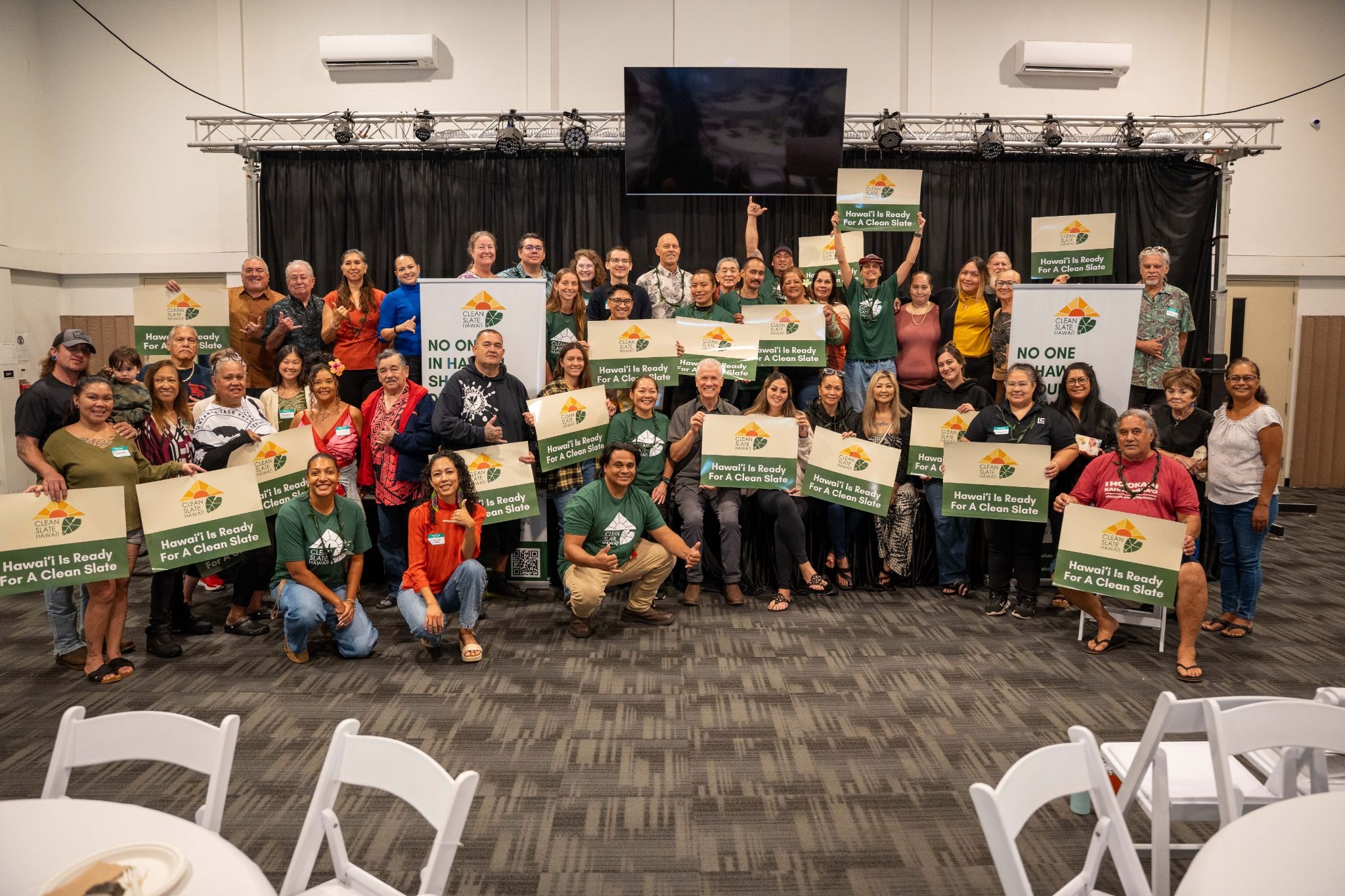
More than 60 advocates gathered in Hilo on Tuesday, Nov. 17, to urge state legislators to pass a law in the upcoming legislative session that would expand opportunities for residents with criminal records who have earned their second chances.
Advocates with Clean Slate Hawaiʻi launched a statewide campaign to pass a Clean Slate law in the 2027 legislative session. The law would streamline the process of shielding eligible arrest or conviction records for people who have completed their sentences and remained crime-free. Members of the Clean Slate Hawaiʻi coalition say the law would boost the state’s economy by expanding the workforce and removing barriers to employment, housing, and educational opportunities.
“People with records experience stigma and discrimination that prevents them from getting hired or renting a home,” a news release from Clean Slate Hawai‘i states. “A record-shielding law in Hawaiʻi would mean certain types of past arrest or conviction records no longer appear on online background checks, while law enforcement agencies would retain access.”
More than one in four Hawaiʻi adults has an arrest or conviction record that appears on standard background checks, according to data provided by the coalition.
Hawai‘i Island Rep. David Tarnas plans to work with other legislators to advance this bill in the upcoming session.
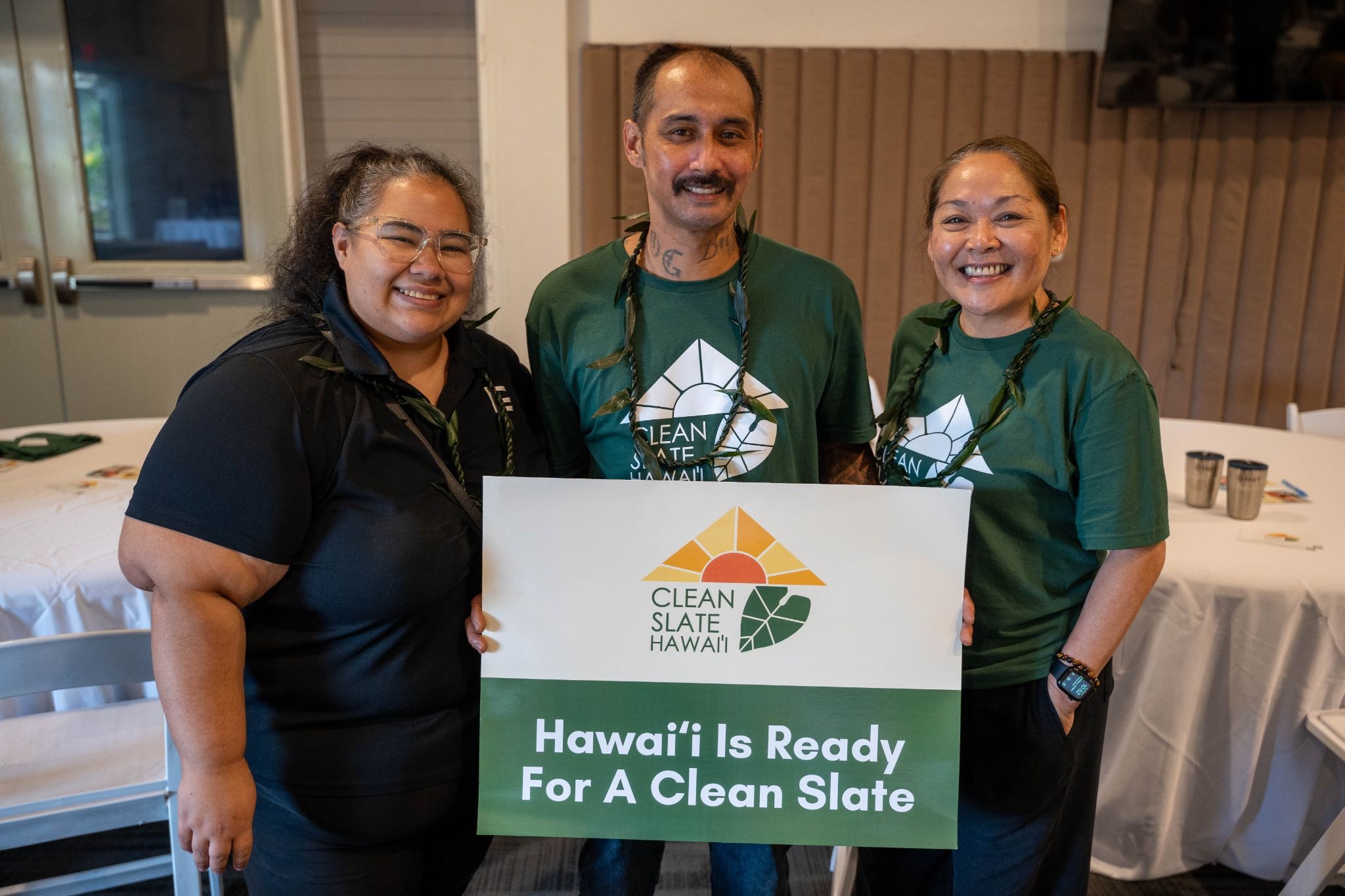
“This is a major issue that affects more than 315,000 people in our state. These are our families, friends, and neighbors,” Tarnas said, who also chairs the Hawaiʻi House Committee on Judiciary and Hawaiian Affairs. “Having a criminal record prevents someone from getting a job and being part of Hawaiʻi’s workforce. For our state’s economy to succeed, we need everyone to participate fully, not be held back. Passing a Clean Slate law modernizes our state’s justice system and supports our economy.”
Hawaiʻi law already allows some records to be shielded, but only through a petition process that is complex, expensive, and out of reach for many people who qualify, the coalition stated in its news release. A Clean Slate law would enable the use of technology to identify eligible records and automate shielding, with human oversight.
New research from The Clean Slate Initiative, a national bipartisan nonprofit organization, finds that arrest and conviction records are associated with $440 billion in lost annual earnings nationwide. In Hawaiʻi, these earnings losses total an estimated $2.2 billion each year.
“Like many of us here, I have served my time, demonstrated accountability, and rehabilitated my life. A Clean Slate law would create a pathway for people like me to have a fair shot at earning a living wage, supporting our families, and contributing to our communities,” said Michelle Manalo, a member of the Clean Slate Hawaiʻi coalition.
Manalo also serves on the Hawaiʻi Clean Slate Expungement Task Force, which was established by the Legislature in 2024 to make recommendations on a state-initiated record-shielding law. The task force is expected to deliver its recommendations ahead of the 2027 legislative session.
“A Clean Slate law in Hawaiʻi would help employers by unlocking a large, underutilized segment of the workforce, helping fill open positions during tight labor markets,” said Hillary Lapre, Director of Operations at Little Caesars Hawaiʻi. “It would also help individuals in my position to evaluate candidates based on current skills rather than past mistakes.”
To date, 14 states and Washington, D.C., have passed Clean Slate laws, making more than 18 million people eligible for full or partial record relief across the United States. Data from these states show that state-initiated record relief helps people go back to school, find better-paying jobs, and improve family stability.