


Due Process Roadshow educates county agencies, police about Hawaiʻi’s new immigrant justice laws
On Thursday, members of the Campaign for Immigrant Justice coalition held two meetings on the Big Island to discuss the six news laws that strengthen immigrant rights and due process protections statewide.
About 200 people have been detained by U.S. Immigration and Customs Enforcement in Hawaiʻi so far this year, according to The Legal Clinic.
In reaction to the ramped up enforcement under the Trump administration, the Hawai’i State Legislature passed six major immigration bills earlier this year that strengthen protections for Hawai‘i’s immigrant community.
In preparation for the rollout of the laws in 2027, the Campaign for Immigrant Justice that advocated for the new laws has embarked on a “Due Process Roadshow,” which seeks to educate local organizations and law enforcement about them.
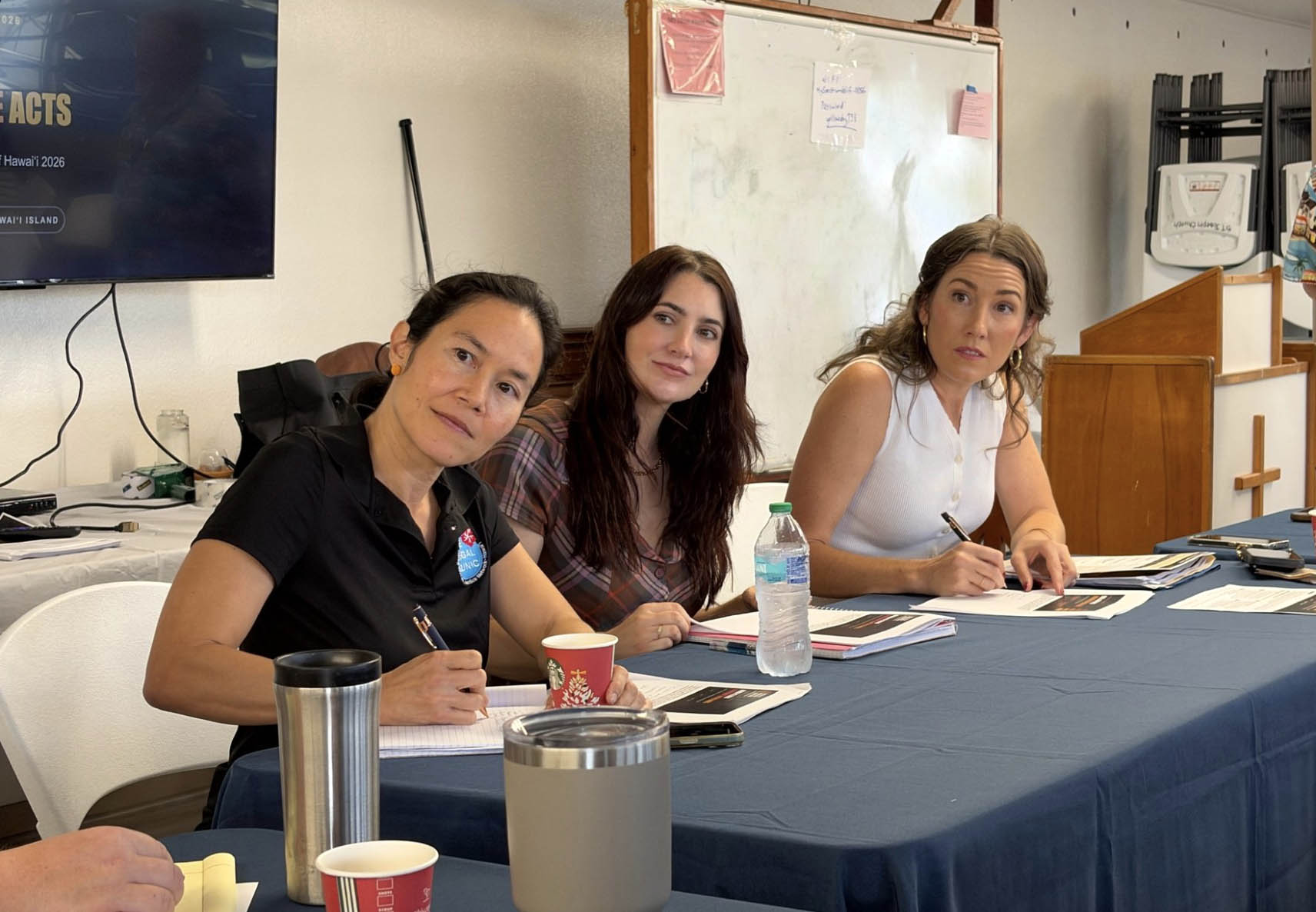
On Thursday, the roadshow arrived on the Big Island, hosted by Hawaiʻi County Council member Jenn Kagiwada.
“It’s very important to have all the information on these new laws for our local officials and the community who may not be aware just yet,” Kagiwada said. “I hope this helps open a dialogue between the community and government entities when it comes to these changes.”
The roadshow included representatives from the Hawaiʻi Coalition for Immigrant Rights, the ACLU of Hawaiʻi and The Legal Clinic, an organization that offers high-quality immigration legal services, education, and advocacy for low-income immigrants and migrants in Hawaiʻi.
Liza Ryan Gill, executive director for the Hawaiʻi Coalition for Immigrant Rights, said it is important that individuals, agencies and departments “really understand how these new laws need to be implemented on the ground. That is why we are here.”
According to the coalition, the six bills that were signed this year came from about 42 bills relating to immigration and due process that were introduced this year in the last legislative session.
The six immigration bills that were passed this year:
- Act 141: Prohibits any law enforcement agency or official from entering a federal agreement that permits state or county agencies to engage in immigration enforcement. Prohibits certain immigration-related actions except under limited circumstances.
- Act 142: Establishes uniform statewide requirements for U and T visa certifications for noncitizen victims of crime, consistent with federal law. Every state and county certifying entity must adopt an aligned, timely, transparent policy and process.
- Act 143: Limits the maximum term of imprisonment for misdemeanors that are not crimes of violence to 364 days. Allows individuals previously sentenced to one year for non-violent offenses to apply for sentence reconsideration.
- Act 161: Requires state and county law enforcement to notify any individual in custody of their rights before any interview with federal immigration authorities about civil immigration violations can begin. Makes records of federal immigration access to detained individuals public records.
- Act 162: Requires all state and county agencies operating protected community locations — schools, hospitals, courthouses, libraries, shelters — to identify nonpublic areas and post written policies by January 1, 2027. Establishes warrant verification procedures, prohibits collection of certain immigration-status data, and requires annual training.
- Act 179: Establishes a Language Access Education and Workforce Development Program at the University of Hawaiʻi and positions and funds at UH Mānoa, Leeward Community College, and Kapiʻolani Community College. Builds a pipeline of certified interpreters for state services in Hawaiʻi’s most-spoken languages.
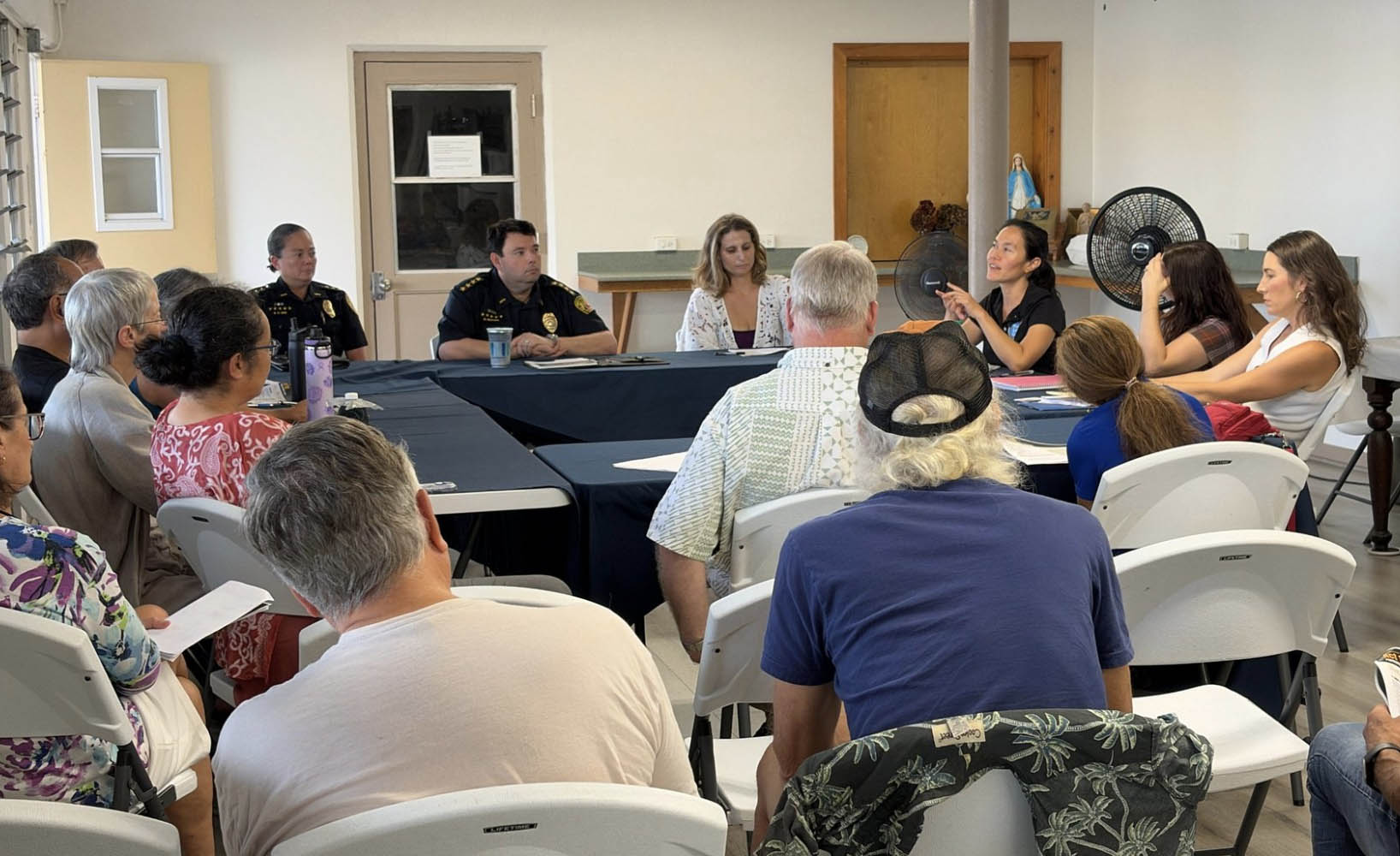
Kagiwada said the state laws establish consequences and consistent policy that should be followed by state and county agencies.
For example, Act 141 — which prohibits any law enforcement agency or official from entering a federal agreement that permits state or county agencies to engage in immigration enforcement —passed because Hawaiʻi had no statewide rule. Each agency was left to decide how to responded to ICE, including whether to sign an agreement that would deputize officers for immigration functions. The bill gives Hawaiʻi’s agencies one consistent policy of noncooperation.
While the Hawaiʻi Police Department does not have any outstanding formal agreements with ICE, there have been reports of informal cooperation with civil immigration enforcement.
Act 142 involves the protection of crime survivors and encourages cooperation with law enforcement. It establishes a set certification practice for U visas, which were created for victims of certain serious crimes who help law enforcement, and T visas, which were created for survivors of human trafficking.
“Survivors of crimes are more willing to come forward when they trust the legal system and know they can cooperate without fear of immigration consequences,” Gill said.
Act 143 shortens Hawaiʻi’s maximum misdemeanor sentence from one-year to 364 days due to the life-altering immigration consequences that are triggered once a lawful permanent resident, an undocumented resident or even residents under the Compact of Free Association (from Micronesia, Marshall Islands and Palau) reaches a 365 day sentence.
Reducing the maximum by a single day removes that trigger without changing the seriousness of the offense.
The Hawaiʻi County Office of the Prosecuting Attorney should now apply the 364-day maximum in charging, plea and sentencing, and courts should prepare for sentence-modification applications from people sentenced before the Act and adjust any publicly available information about sentencing modification.
Act 161 requires that people in state or county custody must be told their rights, in a language they understand, before any federal civil immigration interview, including the right to have their attorney present and to decline the interview. ICE is granted access only with the person’s written consent.
Violations can be brought to the Attorney General or county prosecutors; people whose due process rights are violated may sue.
“If ICE breaks any of these laws, then the person involved has a much better case to fight against detainment or deportation,” said Bettina Mok, executive director for The Legal Clinic. “This bill ensures that everyone has the right to due process despite any language barriers.”
This bill requires the state and counties to prepare rights-notice forms with translations in the languages commonly encountered in each facility. It also requires the establishment of a protocol for how ICE interview requests are received, logged and routed.
According to the Hawaiʻi Coalition for Immigrant Rights, Act 162 requires the most action from county agencies and law enforcement. The bill requires protected community locations to identify nonpublic areas, set procedures for warrant verification, prohibits collecting immigration data, requires annual staff training and requires the posting of multilingual notices.
“Before the second Trump administration, the Department of Homeland Security did not conduct operations at sensitive locations, like hospitals, schools, weddings, libraries, shelters and churches,” said Mandy Fernandes, policy director for ACLU Hawaiʻi. “They threw that out and we had a few incidences of ICE going into K to 12 spaces and hospitals, so this bill is a response to that.”
The Attorney General must publish model policies for state and county agencies to adopt, and for private operators like schools and churches to adopt voluntarily.
“We cannot stop ICE from going into a school, but we can have somebody that has been appointed the person to review whatever the document is that they’re coming with and ascertain whether or not it is a judicial warrant,” Fernandes said. “We’re also asking that state and county facilities designate what is a private space and what is a public space. As an example, the front desk of a health center is public, the exam rooms are private.”
According to the coalition, this type of legislation has been passed in at least 10 states, so they are gathering the best kind of uses for it and the Hawaiʻi Attorney General will be putting out guidelines before January 1.
“I’ll be trying to talk to different departments and the mayoral administration about the counties role in offering training and what we can do to help with these sensitive locations,” Kagiwada said.
Then, Act 179 passed because agencies often cannot find enough qualified interpreters and translators, and interviews of victims and witnesses, domestic violence calls, traffic stops, and rights advisements all depend on accurate communication.
The law requires language access education and workforce development program at the University of Hawaiʻi with priority for high school graduates who earn the Department of Education’s Seal of Biliteracy and for community members with demonstrated biliteracy.
The program will train in ethics, standards, best practices, specialized instruction and opportunities in public service settings. Funding will be divided among UH Mānoa, Leeward Community College and Kapiʻolani Community College.
One of the 42 bills that did not pass the legislative session was the creation of infrastrucutre and funding to support the right to a public defender in immigration court.
At the federal level, the Immigration and Nationality Act does not give individuals in removal proceedings the right to be represented by an attorney for free, but only at their own expense.
As a result, most people who cannot afford an attorney – including an estimated 70 percent of those in immigration detention – are left to fend for themselves in navigating the complexities of immigration law while facing highly-trained government attorneys.
“At the state and county level, there are ways to support access to justice and make sure those who are facing deportation or seeking asylum have pathways to legal status,” Fernandes said. “However, there are maybe a dozen immigration attorneys statewide and we know we need to build that network. The Legal Clinic is one of the few pro bono services available for low-income immigrants.”

Hawaiʻi County is working to combat the lack of immigration lawyers by making immigration specialists available in East Hawaiʻi and West Hawaiʻi.
“We did have an East Hawaiʻi public defender here earlier and he was saying that makes a huge difference from him personally since he is not an immigration specialist,” Kagiwada said. “He needs the resources in his office so when these things come up with this clients, he can make sure he’s doing the right thing for them.”
The Immigration Information Office provides assistance on immigration related issues and concerns to the constituents of Hawaiʻi County, disseminates immigration forms, acts as a resource office, and serves as a liaison to the United States Citizenship and Immigration Services.
There is currently an Immigration Information Office in Hilo.
According to Kagiwada, the County of Hawaiʻi is currently searching for a part-time immigration specialist for West Hawaiʻi, but believes there is a need to have at least one full-time employee available.
In addition to the public presentations, coalition organizers are planning to meet separately with leaders of the agencies charged with implementing these new laws, including county police, prosecutors, corporation counsel and administrators.
For more information on the work done by Hawaiʻi Coalition for Immigrant Rights, ACLU Hawaiʻi and The Legal Clinic and the six immigration justice laws, visit the Campaign for Immigrant Justice website.