


FEMA denies individual aid to Hawai‘i, Kaua‘i counties impacted by hurricanes
These denials come after the federal agency granted individual aid following the South Kona earthquake in May and the Kona low storms in March.
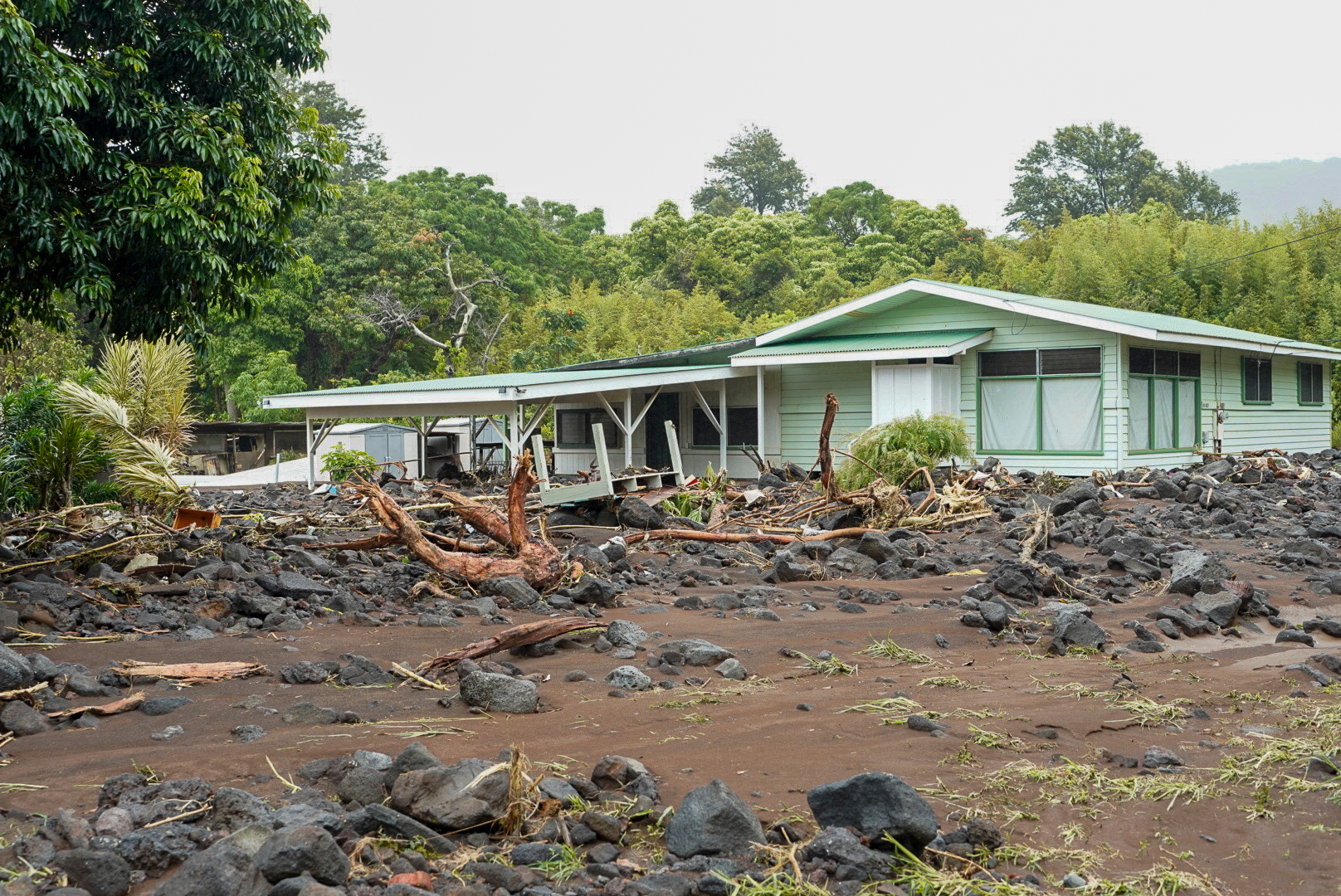
The Federal Emergency Management Agency denied individual aid for Hawai‘i and Kaua‘i residents who were impacted by Hurricane Lala in August and Hurricane Lowell in September.
These denials come after the federal agency granted individual aid following the South Kona earthquake in May and the Kona low storms in March. Hawaiʻi County officials received word about FEMA’s decision regarding Lala on Oct. 22 and plans to appeal.
“We’ve had no less than three federally declared impacts or disasters in the last eight months, starting with the Kona Low, the (South Kona) earthquake, and now Lala,” said Darryl Oliveira, acting administrator of Hawai‘i County Civil Defense Agency. “Our island has been hit very hard with these events. In some cases, the Kona Low, as well as Lala, affected almost the same communities.”
As of Tuesday morning, Oliveira said the county was talking with some of the Hawai‘i Island delegates to the state legislature, some of whom were also impacted by Lala.
“They didn’t realize how important it was to even just submit the damage claim,” Oliveira said. “Even if they were not interested in seeking federal reimbursement, it still adds to the total damage that our community experienced.”
The estimated cost of the damage to Hawai‘i County facilities and infrastructure is about $53 million. This includes damage to 3,000 linear feet of water mains. Twenty-seven homes were destroyed, 60 had major damage, 79 had minor damage and another 51 were affected.
Lala did not directly hit Hawaiʻi Island, but it passed close to the south as a Category 1 storm bringing winds around 80 mph and much higher at high elevations and torrential rain, including a daily maximum record of 32.1 inches at the Laupahoehoe station in Hāmākua. The rain led to the flash flooding. The combination of severe weather also left many county properties and utilities in shambles.
The Wai’ōhinu Park was inundated with mud and a house was floated off its foundation and came to rest at the park. The Nā‘ālehu Park was damaged and graves were unearthed at the county-owned Nā‘ālehu Cemetery.
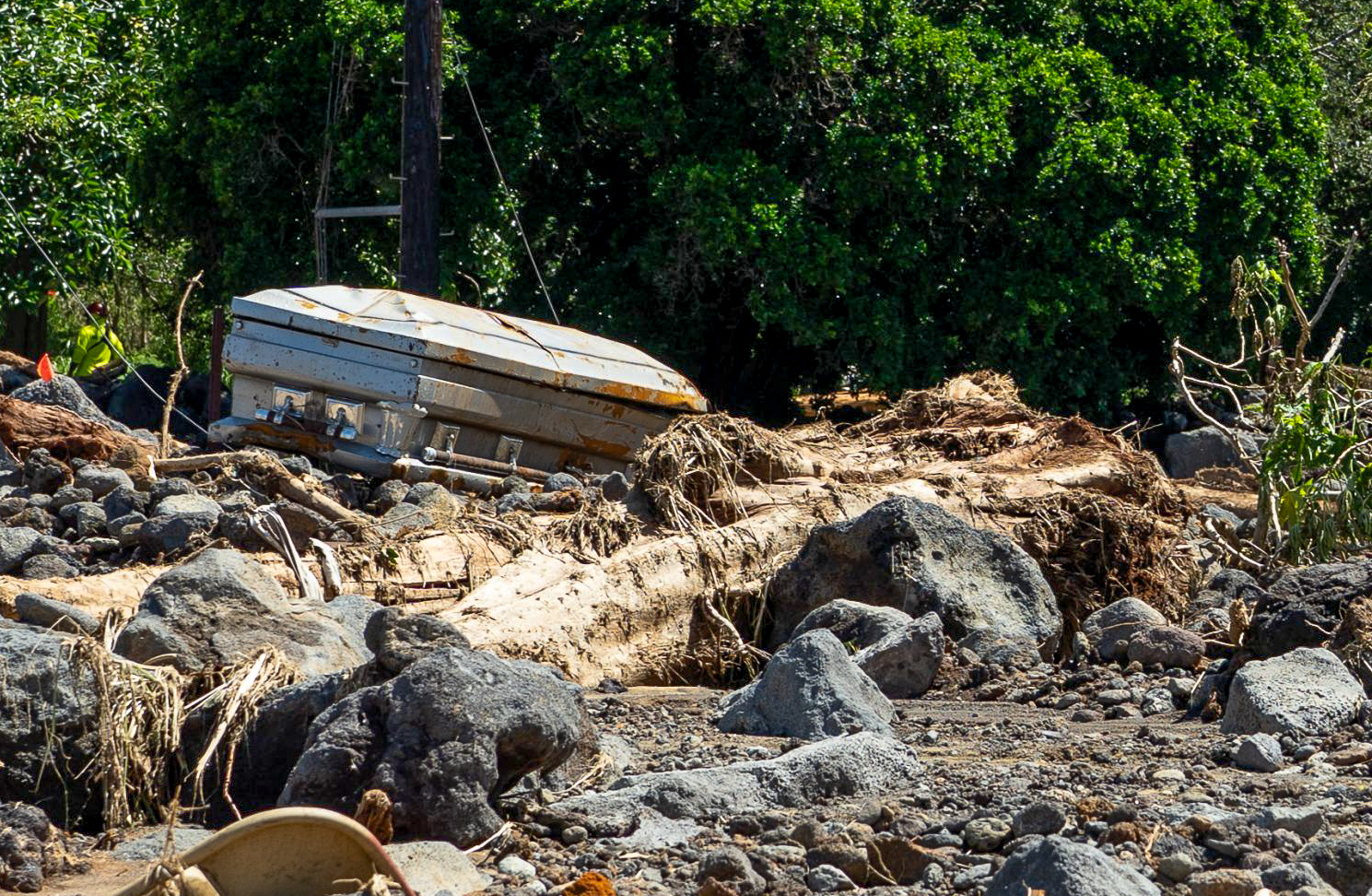
Oliveira said the FEMA disaster coordinator came to the Big Island last week and took the Region 9 Director Bob Fenton around to the affected areas.
Oliveira said the damage didn’t meet FEMA’s threshold for destroyed or major damage reported.
FEMA didn’t provide specifics as to why they denied individual aid for Lala. In an email to Big Island Now, a FEMA spokesperson stated:
“FEMA follows the Stafford Act and its regulations to support the determination process on whether federal assistance is warranted to supplement state, local or territorial efforts and capabilities provided by Hawai‘i. The law and regulations require FEMA to review each request closely and consider the unique circumstances of disaster-caused damages as well as state and local capacity.”
The email goes on to state that FEMA assesses a number of factors to determine the severity, magnitude and impact of a disaster event.
“The factors considered when a Major disaster declaration request is being reviewed include estimated cost of the assistance, localized impacts, insurance coverage in force, hazard mitigation, recent multiple disasters, programs of other federal assistance, state fiscal capacity and resource availability, uninsured home and personal property losses, disaster-impacted population profile, impact to community infrastructure, casualties, and disaster-related unemployment,” according to the FEMA statement.
Oliveira said he did take the FEMA representatives to the cemetery where they recognized the severity of that situation.
“I’m hopeful, very hopeful, that we can submit a solid appeal in partnership with HIEMA and maybe get approval second round,” Oliveira said.
Oliveira said the financial threshold is based on the state and county ability to recover from the disaster, “so it may not be a hard and fast number, but more one of impact and what’s within the capabilities of the state and the county to recover.”
Oliveira said the county is already in communication with Hawai‘i Emergency Management Agency. And in further discussions with FEMA, he said he is having the Civil Defense team go back through the damage claims or damage assessments and make sure they didn’t miss anything.
“We’re following up with some of the residents to see what their status is with having insurance versus uninsured or underinsured,” Oliveira said. “If they did file claims, what were some of the explanations given to them by insurance? So we’re trying to go back and appeal, focusing on some of the qualitative information rather than quantitative.”
Oliveira said the Civil Defense will also look at household income, household size, demographics and age groups.
“We’re trying to really paint a picture of the difficulties that some of these households will have with repairing or replacing their structures, if not provided with some form of assistance, especially if they were underinsured or uninsured,” he said.
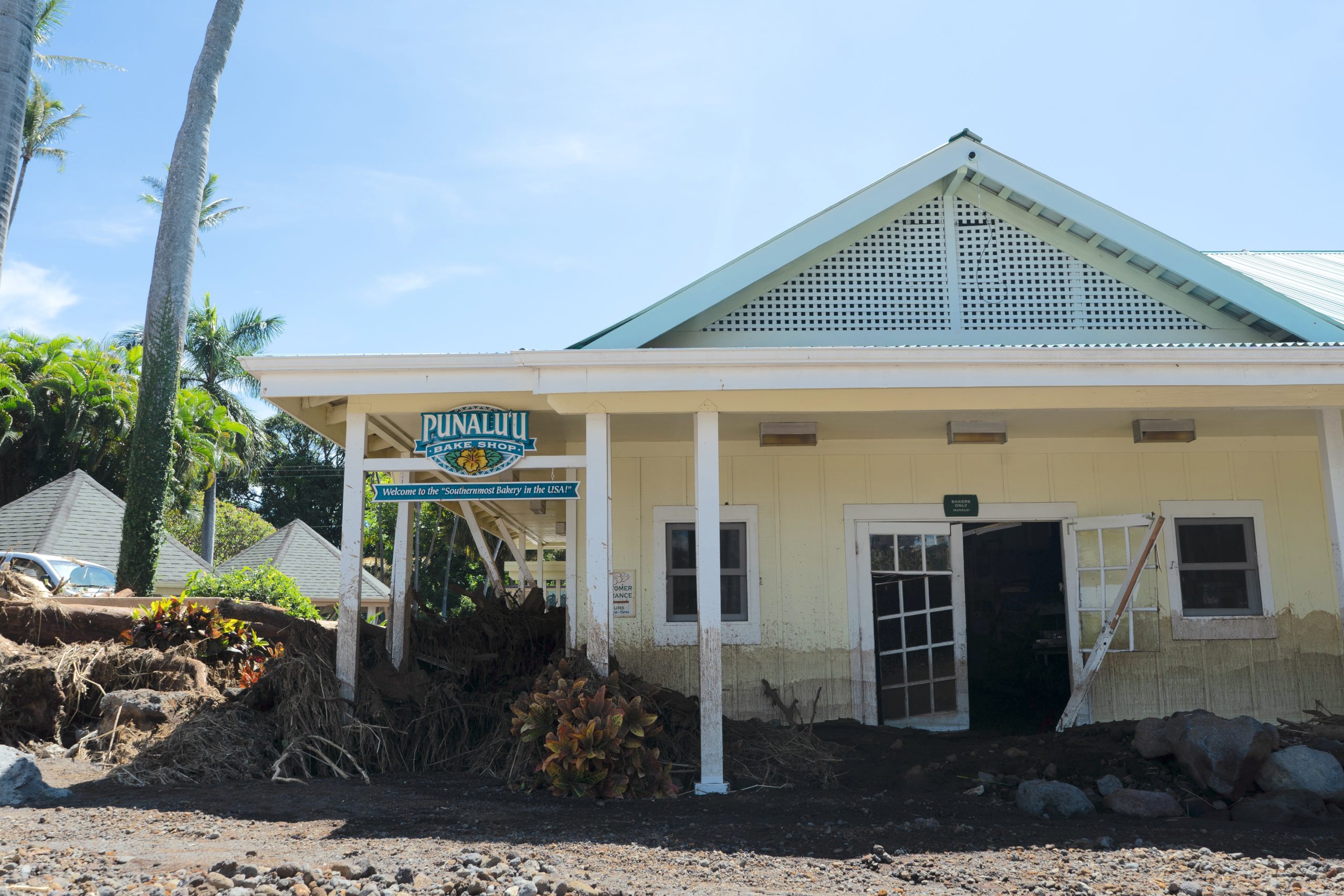
Lala’s impact was not isolated to individual homes. Oliveira said the Ka‘ū community was crippled economically after businesses were also forced to close because of damage sustained in the storm. One of the biggest employers in the area, Punalu‘u Bake Shop, was buried in mud and is working on repairs.
“We’re trying to really look at this thing more holistically, rather than just the numbers of destroyed and damaged, but really the impact that those events have had, to include the psychological impact and trauma with the cemetery,” Oliveira said.
The decision comes as the Trump Administration has cut staff to FEMA and FEMA’s grant funding, and is working on shifting major responsibilities of disasters to state governments.