

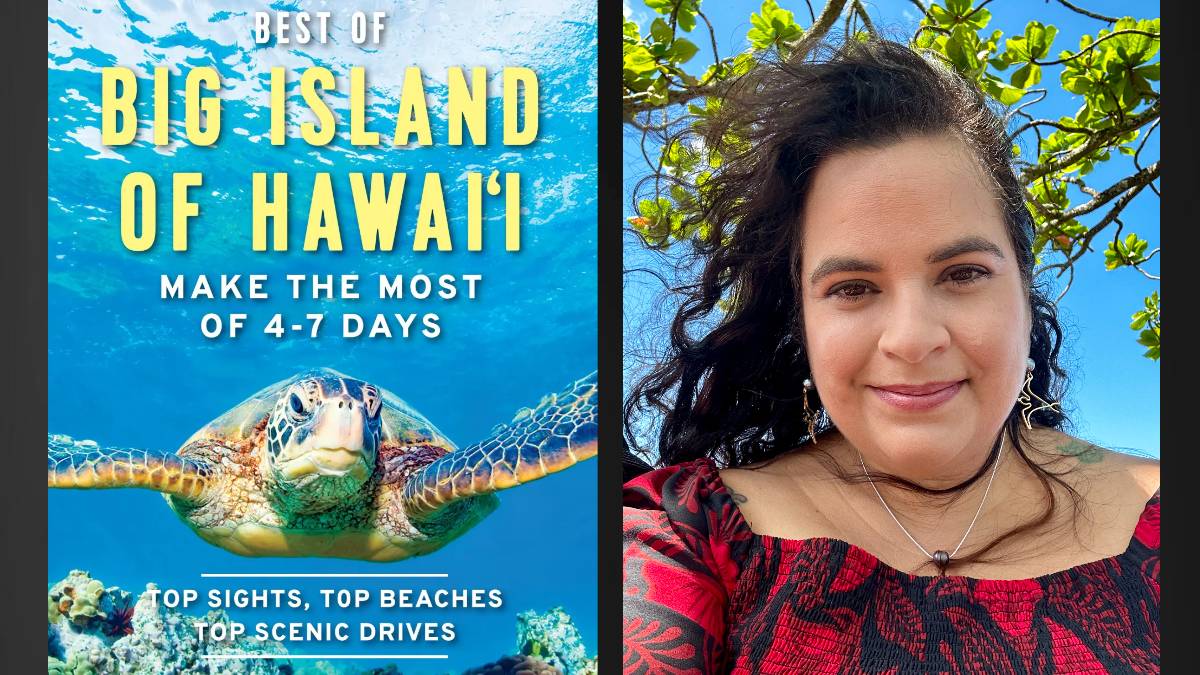
Big Island author publishes guidebook with a fresh perspective
"Moon Best of Big Island of Hawaiʻi" is a new guidebook that offers curated itineraries, must-see sites, sustainable local businesses, and the nuanced relationship between tourism and Native Hawaiian heritage.
Although she has lived on the Big Island for 15 years, Laurie Lyons-Makaimoku was surprised to see the 224-by-100-foot stone Puʻukoholā Heiau, one of the largest restored temples on the Kohala Coast.
The heiau was built by Kamehameha the Great, who was born in North Kohala, and dedicated to the war god Kūkāʻilimoku to aid his efforts to unite the Hawaiian Islands between 1790 and 1791.
It is believed that the lava rocks used to build the structure were passed hand by hand in a human chain from Pololū Valley, about 25 miles away.
This Big Island experience is one of many that Lyons-Makaimoku writes about in “Moon Best of Big Island of Hawaiʻi,” a new guidebook that offers flexible and strategic itineraries, authentic experiences, important background information, and colorful, informative photographs and maps for visitors to the island.

“I had never been to Puʻukoholā before, and that was a big highlight for me,” Lyons-Makaimoku said. “Being able to connect with real, tangible history was a wonderful experience, and I couldn’t believe I had never been there.”
She said for the book, it made sense to write about pairing a trip to the heiau with a day at Spencer’s Beach in Kohala.
“That is just one example of a perfect day on the Big Island that I share in the book,” she said.
Lyons-Makaimoku collaborated with publisher Moon Travel Guides to create the book as part of its “Best of” series covering the Hawaiian Islands.
Lyons-Makaimoku, 47, has lived on the Big Island since 2011 and currently works as a freelance writer, which has given her the opportunity to write updates for some guidebooks in Hawaiʻi. However, this is the first time she has been able to write a full guidebook with her own words and ideas from start to finish.
“A friend of mine sent me this job posting from Moon and I jumped on the opportunity,” Lyons-Makaimoku said. “It has been a while since I had been to several of the areas featured in the book, so it was an awesome way to experience the entirety of Hawaiʻi Island again. It never gets old.”
Since the series focuses on flexible itineraries and local suggestions tailored to shorter trips, Lyons-Makaimoku made sure to keep that in mind every time she visited different areas and districts.
In addition to highlighting authentic, can’t-miss Big Island experiences like hiking volcanic landscapes, snorkeling with manta rays, and visiting ancient temples and petroglyph fields, she also guides travelers to support local and sustainable businesses around the island.
“This is a ‘Best of’ book, so it won’t include everything, but each chapter lists the ‘best’ of everything,” Lyons-Makaimoku said. “The lists can be subjective, but this came together with consideration of my experiences, my family’s experiences, advice from Native Hawaiians and longtime residents, and discussions with the publisher.”
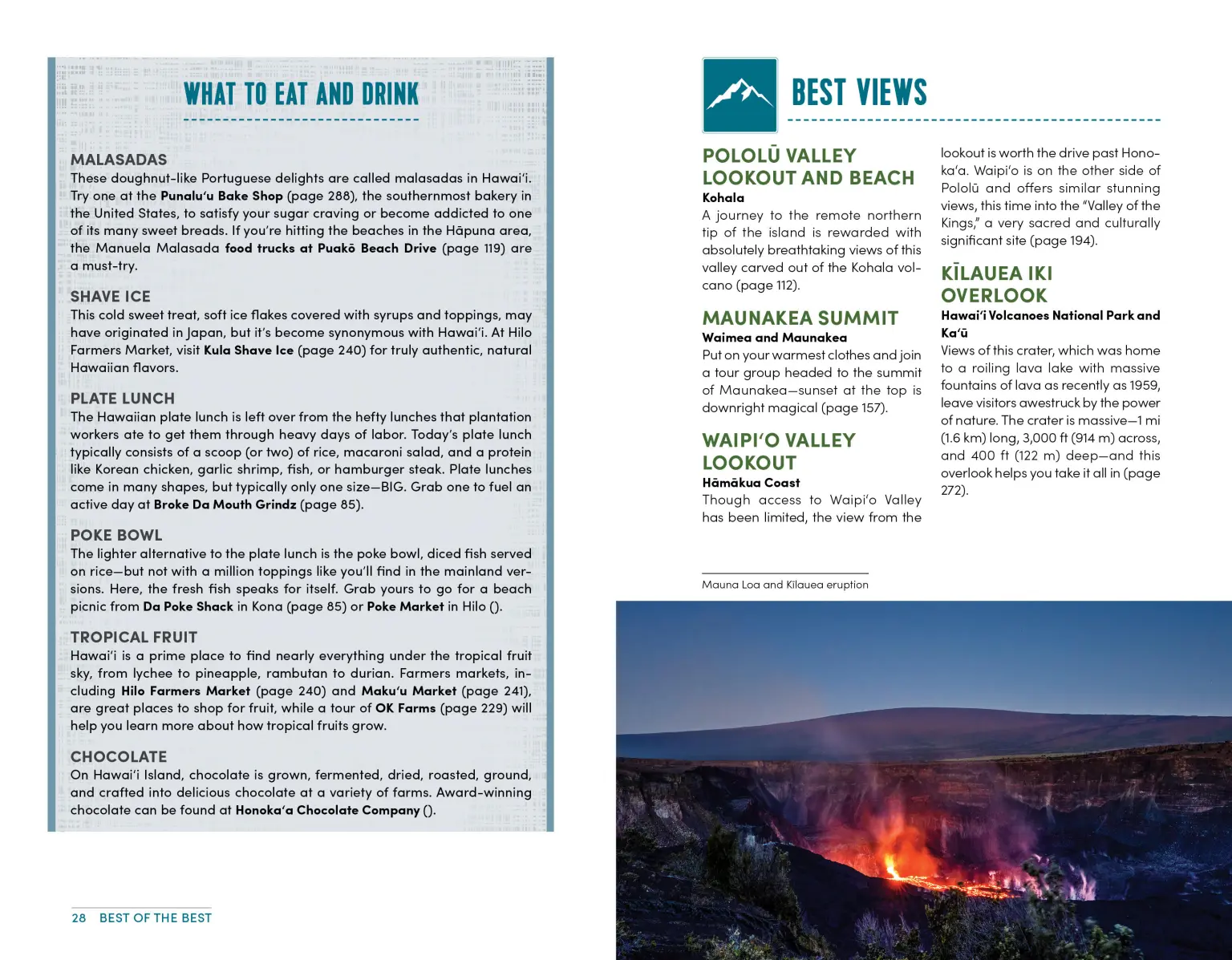
The book has lists of the best beaches, hikes, food and drink, views, scenic drives, snorkeling and diving, surfing, family fun and adventure sports.
Along with the “best of” categories, the book also includes chapters that are organized geographically and include:
- Kailua-Kona and the Kona Coast
- Kohala
- Waimea and Maunakea
- Hāmākua Coast
- Hilo and Pāhoa
- Hawaiʻi Volcanoes National Park and Kaʻū
Each chapter includes sections on planning, highlights, scenic drives, beaches, hikes and walks, food, bars and nightlife, and lodging. Then there are variations to each of the chapters since the districts are much different.
For example, in the Waimea and Maunakea chapter, there is a section on birdwatching while the Kailua-Kona and Kona Coast chapter has a section on dolphin and whale watching.
“It was a process writing this book, but a fun one,” Lyons-Makaimoku said. “I took my family on some research missions, which was wonderful, and I got to visit places I hadn’t been to in a long time.
“One thing important to me was not writing about areas that have been overtouristed or should be off-limits to tourists. Ensuring I shared culturally and environmentally friendly destinations was always my priority.”
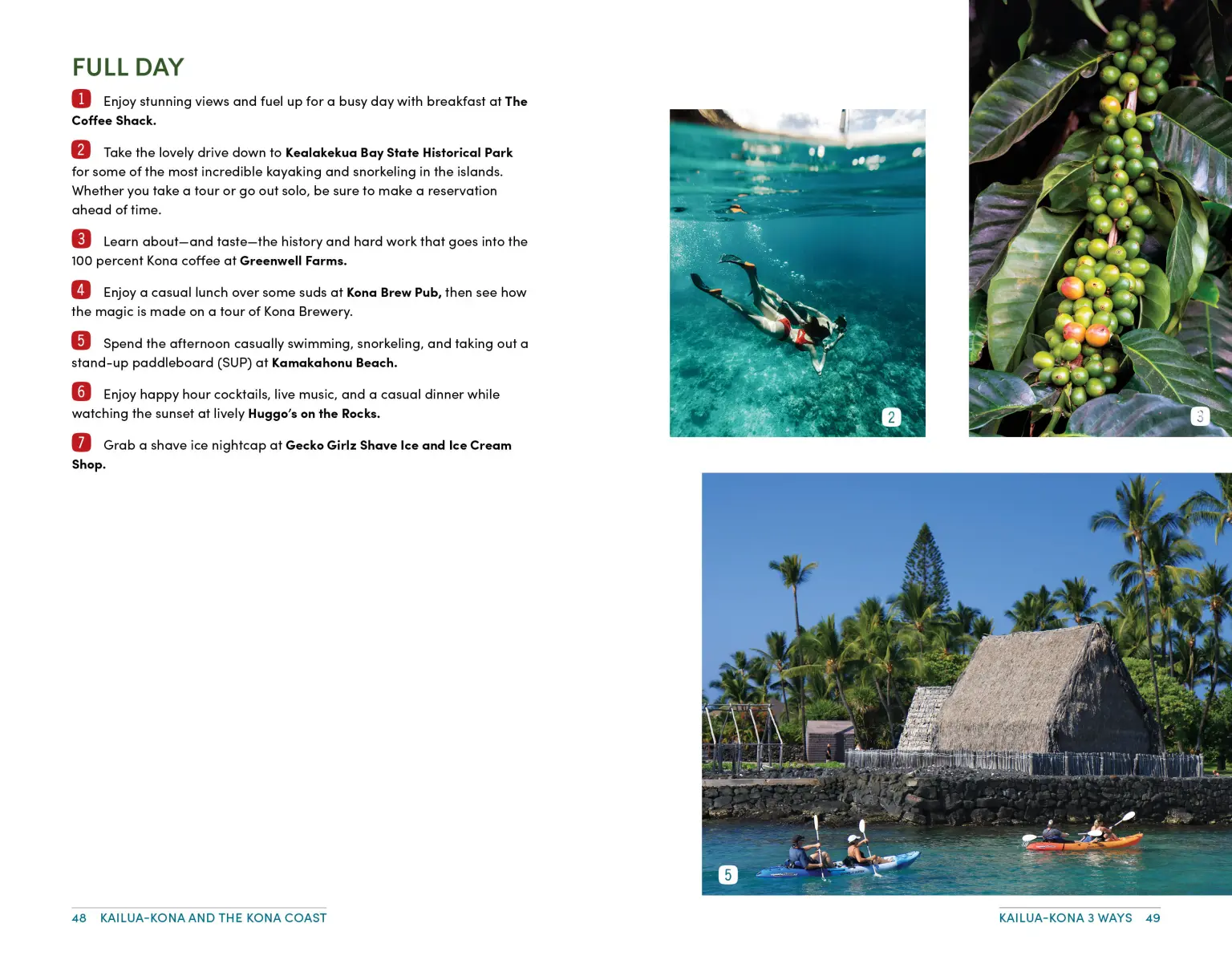
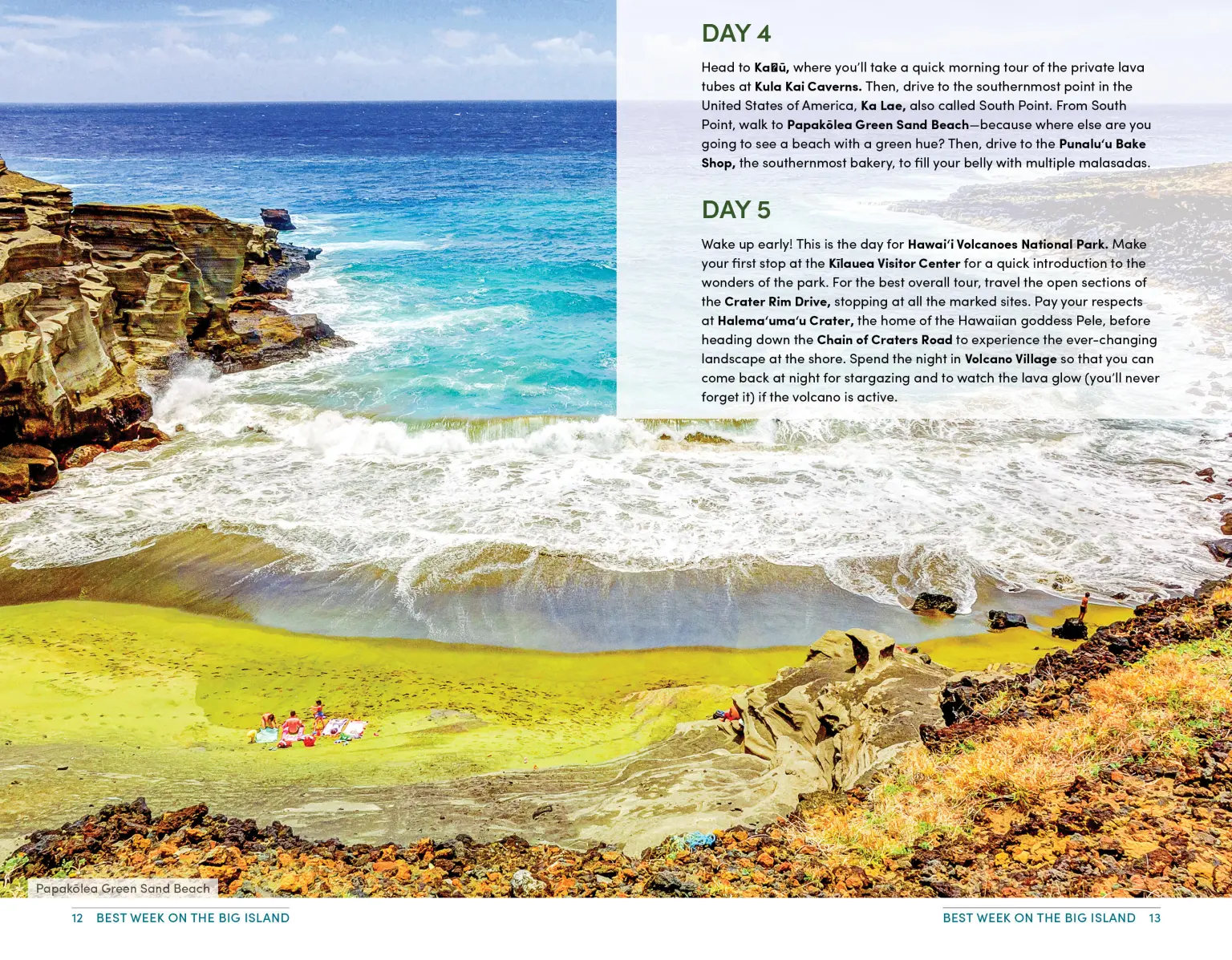
A full day itinerary is listed with pictures for Kailua-Kona. The chapters also include tables, colorful photos, detailed maps and three itineraries –– one for a full day, one for a half day and one that avoids the crowds.
For the Hilo and Pāhoa half day, the itinerary lists three activities:
- “Catch the sunrise at Richardson Ocean Park. Be one of the first in the water as the sun climbs into the sky and youʻll be rewarded with beautiful underwater views.”
- “Grab a coffee and bagel at a local spot like Just Cruisin Coffee before heading to Rainbow Falls and Boiling Pots, two river vantage points with postcard-perfect views.”
- “Enjoy an elevated spin on Hawaiian food at Lehua at ʻImiloa, one of Hilo’s newest gems. If you have some extra time after lunch, pay for admission to the museum to check out the displays that highlight the intersection of Hawaiian culture and astronomy.”
“One thing I liked about putting this guidebook together was forming experiences that are at a slower pace and don’t have the visitor bouncing around to 1,000 different places,” Makaimoku-Lyons said. “The Big Island is so large that you can’t complete it like a checklist. Visitors can decide what areas connect with them and take the time to truly enjoy the experience.”
In one section, she wrote about the overthrow of the Hawaiian Kingdom and its impact on future generations as well as the importance of sustainable travel and protecting Hawaiʻi’s fragile ecosystems.
“I think it is important to discuss tourism and why it is a touchy subject for Native Hawaiians,” Lyons-Makaimoku said. “Tourists should understand why a lot of people have an anti-visitor sentiment; there is a lot of baggage surrounding the topic. I don’t think people should come here just for the beach. Hawaiʻi Island is a very special place with a deep, rich history that many people in the U.S. know very little about.”
Although the book was released in August, Lyons-Makaimoku already has updates she plans to share in a blog post since the book won’t be updated for two years.
Since she turned in the copy before Hurricane Lala, Lyons-Makaimoku wrote about the Punaluʻu Bakery, which will be closed for the foreseeable future as it continues to repair the extensive damage from the storm.
“I’m sure there will be more things to update in two years, but some things I definitely want to include in the next iteration are regenerative tourism options and volunteer opportunities,” Lyons-Makaimoku said. “If I can, I want to use this opportunity to facilitate better tourists who don’t act entitled, and including those authentic experiences is really important to understanding Hawaiʻi Island.”
“Moon Best of Big Island of Hawaiʻi” is available in bookstores and online retailers for $21.99. For more information or additional books, visit the Moon Travel Guides website.