


Youngest planet outside our solar system discovered hiding in Keck Observatory data
The planet, known as Elias 2-24 b, is still gathering material from the disk of gas and dust surrounding its young host star, allowing scientists to study a giant planet that is growing.
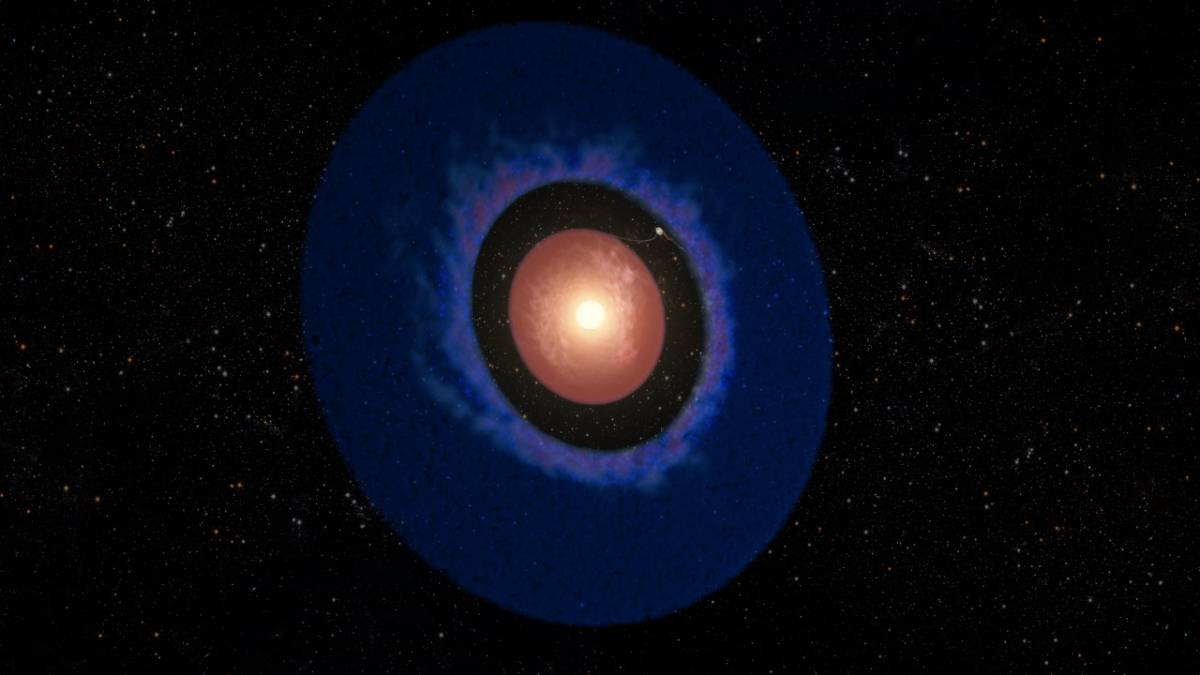
Astronomers have confirmed the youngest detected planet outside our solar system, offering a rare glimpse into the earliest stages of planetary formation, according to a news release from the W.M. Keck Observatory on the Big Island.
The planet, known as Elias 2-24 b, is still actively gathering material from the disk of gas and dust surrounding its young host star, allowing scientists to study a giant planet while it is still growing.
The study, led by Diego Portales University in Chile and published in The Astrophysical Journal Letters, combines observations from Keck Observatory, the Atacama Large Millimeter/submillimeter Array known as ALMA, and the European Southern Observatory’s Very Large Telescope.
The findings support the standard scientific theory of giant planet formation and provide strong evidence linking gaps in protoplanetary disks, a rotating disk of dense gas and dust surrounding a young newly formed star to planets forming within them.
“What makes Elias 2-24 b so remarkable is its age,” said Andrea Bernardi, a doctoral student at Diego Portales University and lead author of the study. “This is the youngest planet detected so far, and because it is still actively accreting material from its surroundings, we’re able to observe a stage of planet formation that is rarely seen directly.”
Seeing a planet in the making
Young stars are often surrounded by rotating disks of gas and dust. Over time, material within these protoplanetary disks collects and grows into planets.
In recent years, ALMA has produced striking images of these disks, revealing rings and dark gaps in the surrounding material. Many astronomers suspected that emerging planets were carving those gaps as they formed, but direct evidence remained limited.
Elias 2-24 b provides one of the clearest examples yet of a planet occupying one of these gaps.
“We can now connect the presence of gaps in protoplanetary disks to the presence of planets with much greater confidence,” Bernardi said.
The finding also supports a specific stage of the core accretion model, the leading theory of giant planet formation. According to the team’s analysis, the planet is currently undergoing a brief but critical growth phase during which it rapidly accumulates gas from the surrounding disk and builds its atmosphere.
“In a way, we’re observing a much younger version of a planetary system like our own,” said Lucas Cieza, co-author of the study and professor at Universidad Diego Portales. “Because our solar system is billions of years old, we can only reconstruct how it formed. Systems like Elias 2-24 b allow us to study that process while it is still underway.”
Alice Zurlo, a professor at Universidad Diego Portales and one of the study’s authors, conducted the initial research on the system in 2018.
“This planet is a rare gem, as it is currently undergoing a stage of its evolution for which theoretical models still struggle to reliably predict its mass, entropy (dispersal of energy) and, consequently, its expected luminosity,” Zurlo said. “This system will therefore provide key insights once we are able to further constrain its dynamical mass, helping us refine and recalibrate evolutionary models for young planets.”
A decade-long search and a discovery in the archive
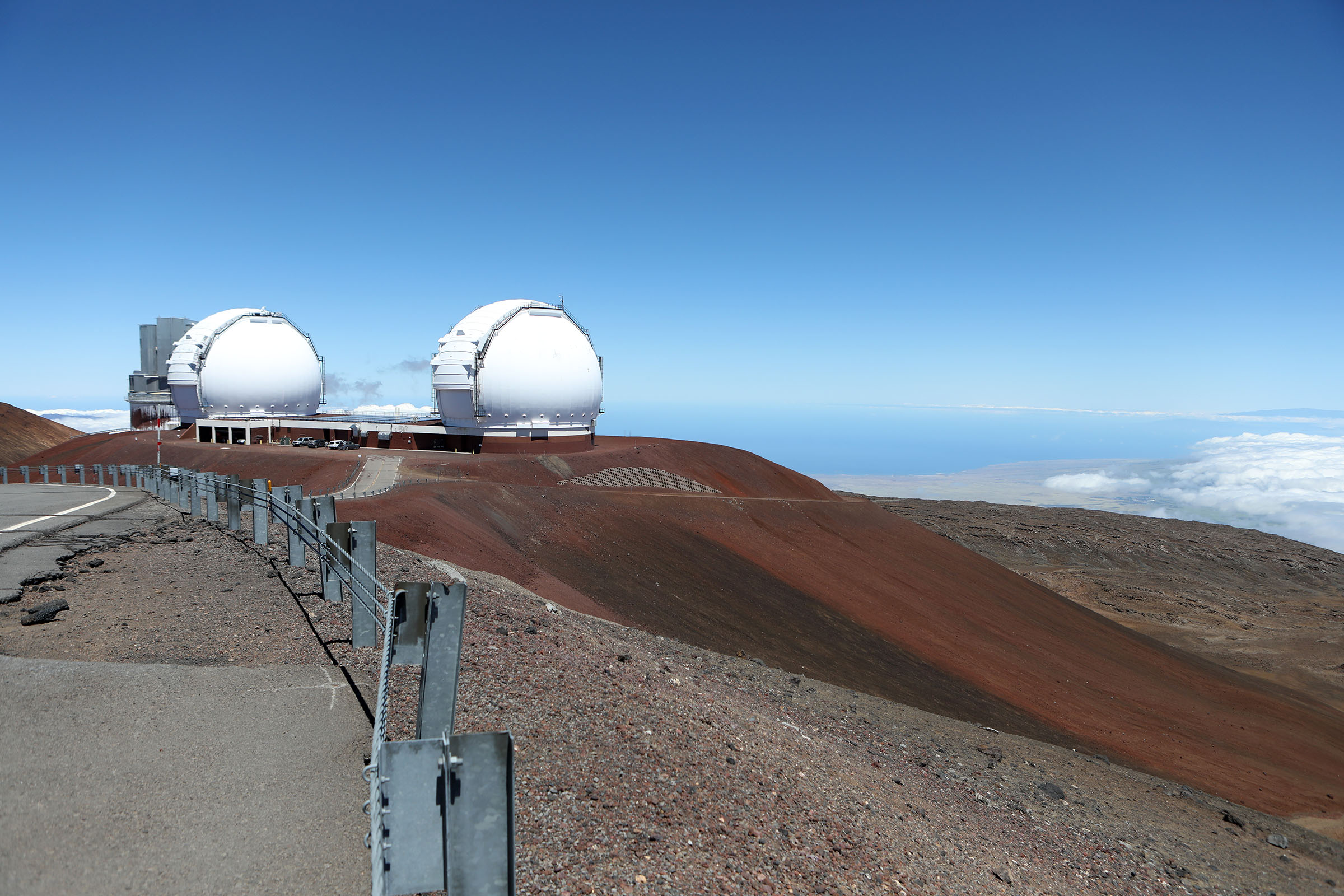
The discovery began with observations conducted at Keck Observatory in 2018.
That year, Zurlo, then part of the research team studying young stars with structured protoplanetary disks, observed Elias 2-24 with Keck’s Near Infrared Camera 2. At the time, the observations revealed a faint signal, but not enough evidence to identify it as a planet.
Years later, Bernardi returned to the data through the Keck Observatory Archive, a NASA-funded partnership between Keck Observatory and the NASA Exoplanet Science Institute at Caltech/IPAC. The archive serves all data taken at Keck Observatory, making it available for new scientific research long after the observations were originally obtained.
By reanalyzing the 2018 observations with new data-processing techniques, Bernardi identified a signal consistent with a forming planet. Additional archival Keck observations obtained in 2020, together with independent observations from the Very Large Telescope and supporting evidence from ALMA, helped confirm the discovery.
“This object sits right at the limit of what current technology can detect,” Cieza said. “It was the combination of observations from multiple observatories that allowed us to show the planet is really there.”
The discovery also highlights the scientific value of preserving astronomical observations for future researchers.
“Astronomical data can have a remarkably long shelf life,” Keck Observatory Chief Scientist John O’Meara said. “The observations existed for years, but new techniques, improved models and a fresh look at the data revealed something extraordinary.”
Looking ahead
The research team continues to study the planet and hopes to obtain spectroscopy and other measurements that could reveal more about its atmosphere, temperature, mass and ongoing growth.
For now, Elias 2-24 b offers a rare opportunity to witness a giant planet in the midst of formation.
“This system has become a laboratory for understanding how planets form,” Cieza said. “Every new observation helps us piece together one of the most complex puzzles in modern astrophysics, the origin of planetary systems like our own.”