


Economic impact of U.S. military in Hawai‘i detailed in new factbook
Hawai‘i Military and Community Relations Office recently released the “Military in Hawai‘i Economic Impact Factbook,” a comprehensive, community-focused resource outlining the military’s role in the state’s economy, workforce and everyday life.
It is the office’s first statewide factbook dedicated to presenting this economic data in a clear, accessible format for the public.
The factbook is designed for residents, policymakers and business leaders.
It includes easy-to-read charts and explanations covering personnel spending, contracting, federal assistance, community programs and the broader economic effects of defense activity throughout all islands.
Factbook key highlights
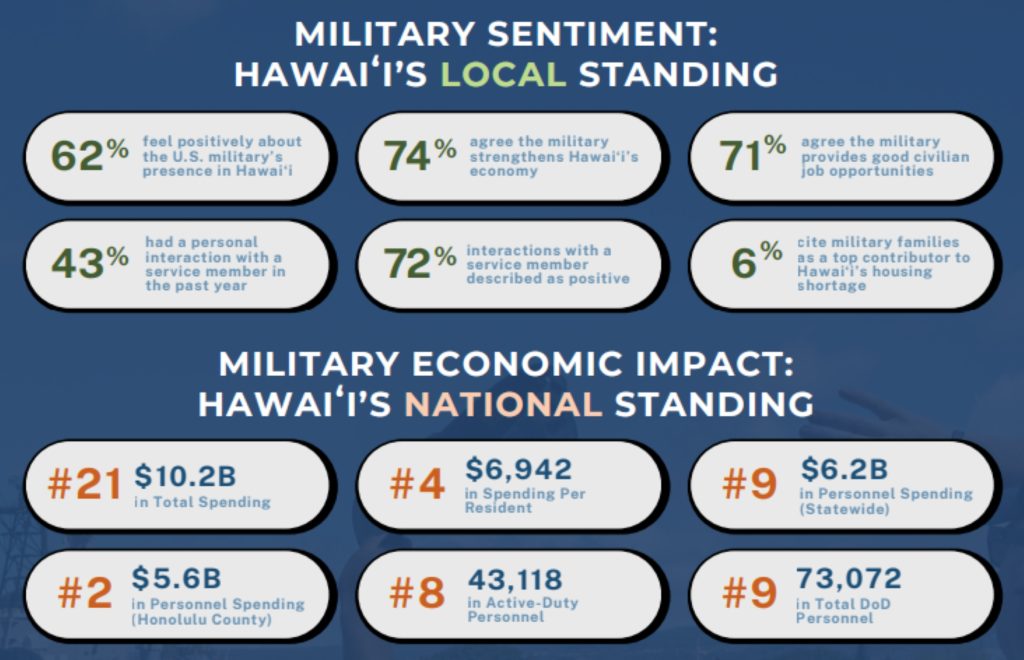
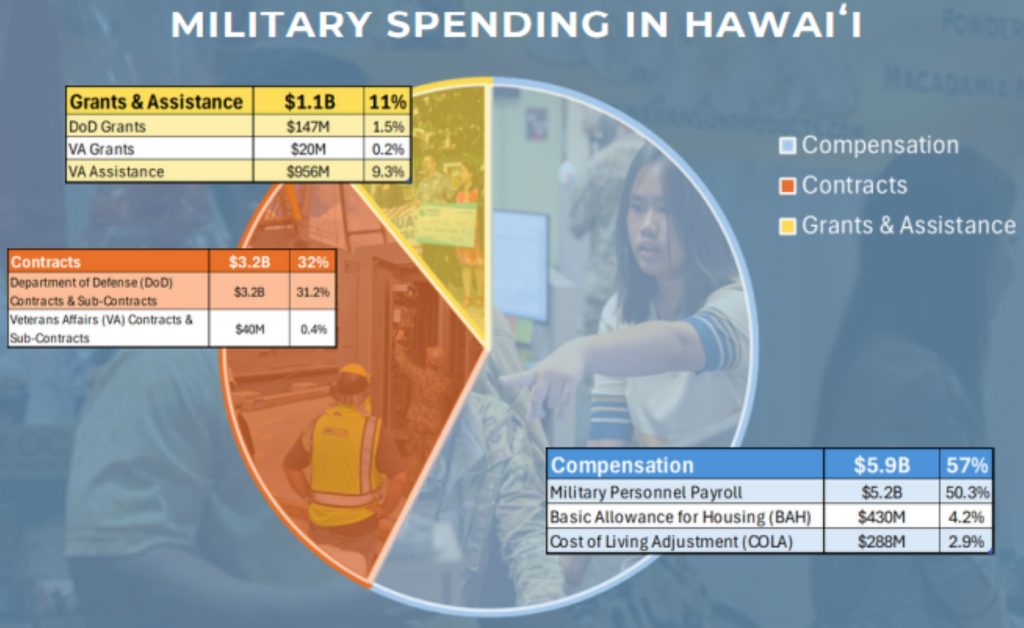
- $10.2 billion in total defense spending in 2023 flowed into Hawai‘i, ranking the state 21st nationally.
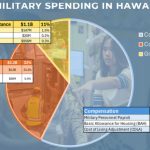
- $6.2 billion* in personnel spending statewide, including $5.6 billion in Honolulu County alone.
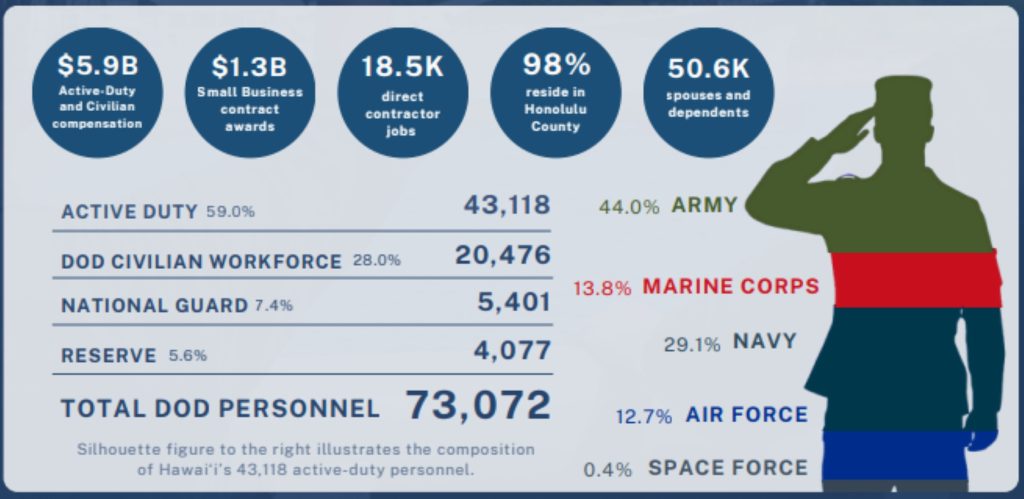
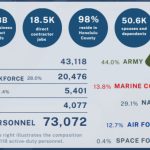
- The military supports 73,072 total personnel in Hawai‘i, including 43,118 active-duty service members.
- Small businesses received $1.3 billion in U.S. Department of Defense contracts, including:
- $190 million to woman-owned businesses.
- $199 million to veteran-owned businesses.
- $233 million to Native Hawaiian organization-owned firms.
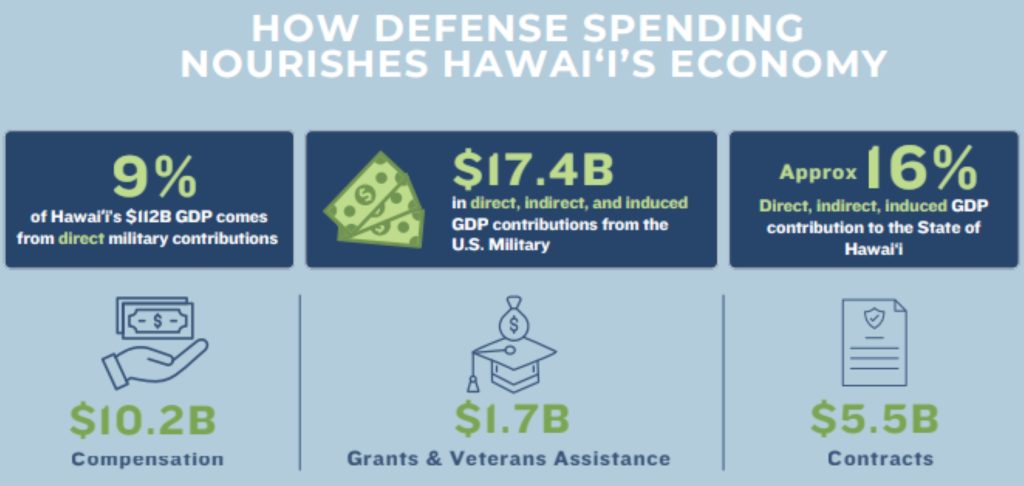
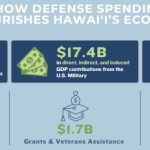
- Direct defense activity accounts for an estimated 9% of Hawai‘i’s gross domestic product, with $17.4 billion* in statewide economic contributions when direct, indirect and induced effects are included.
- An estimated 17% of all jobs in Hawai‘i are tied, directly or indirectly, to defense spending.
* These data points were updated Jan. 15 to reflect corrected information.
Tool for public understanding
The factbook arrives as the state and federal government continue dialogue surrounding military land use, modernization, economic diversification and the well-being of civilian and military families throughout the islands.
“This factbook is meant to support informed, community-centered conversation,” said Hawai‘i Military and Community Relations Office Executive Director Laurel Moore in a release about the new publication. “It provides a clear, factual foundation for Hawai‘i’s communities, leaders and partners to understand what the military means for our economy and for the people who live here.”
Moore said beyond the spending figures are tens of thousands of service members, veterans, civilian workers, educators, small-business owners and families whose lives are interwoven with Hawai‘i’s story.
This new resource helps illuminate that broader picture.
The factbook also highlights how defense spending supports essential programs beyond direct economic contributions, including public school aid, environmental and cultural stewardship programs and small business growth initiatives.
These community benefits — visible on installations statewide — help sustain local services and opportunities for civilian and military families.
 Graphic Courtesy: “Military in Hawai‘i Economic Impact Factbook”
- Graphic Courtesy: “Military in Hawai‘i Economic Impact Factbook”
- Graphic Courtesy: “Military in Hawai‘i Economic Impact Factbook”
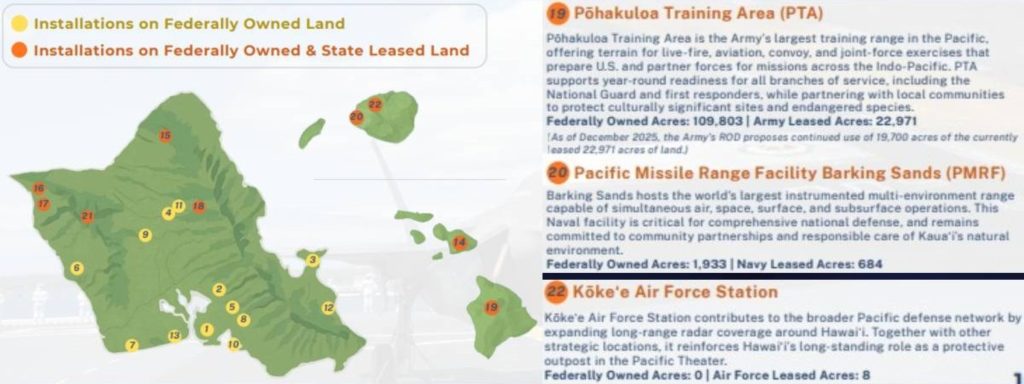
- Graphic Courtesy: “Military in Hawai‘i Economic Impact Factbook”
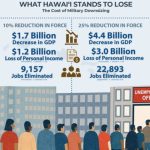
- Graphic Courtesy: “Military in Hawai‘i Economic Impact Factbook”
“This is one of the most consequential planning periods in decades,” Moore said. “Shared facts help us build trust. They strengthen relationships. And they help ensure that community voices play a meaningful role as Hawai‘i navigates important decisions, modernization needs and long-term economic diversification.”
“Military in Hawai‘i Economic Impact Factbook” is available online at the Hawai‘i Military and Community Relations Office website.
Printed copies will be distributed to partner organizations, community groups and elected officials statewide.