


Kīlauea revving up for Episode 40 as dome fountaining, lava spattering increase
Kīlauea seems to be revving up for its next lava fountaining episode.
Hawaiian Volcano Observatory reported in its daily update that lava overflowed intermittently overnight Friday into today (Jan. 9-10) from the north and south vents within Halemaʻumaʻu Crater inside the Big Island volcano’s summit caldera, with only short breaks between flows.
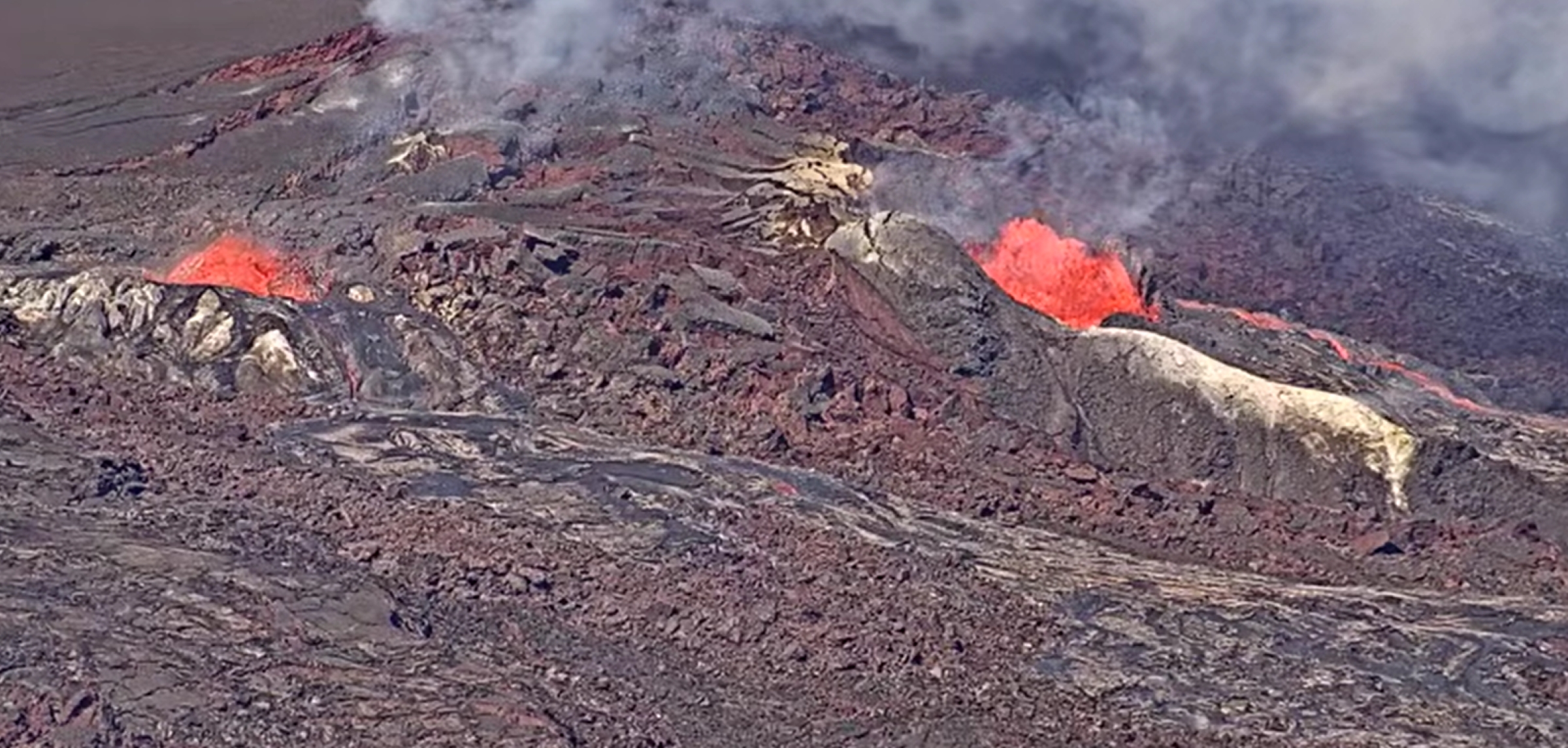
Dome fountaining and lava spattering also increased this morning, along with tremor.
Kīlauea’s summit region also showed some overnight inflation, but changed to a slight deflation with the onset of dual overflows this morning.
Rapid rebound of inflation and low-level volcanic tremor after Episode 39 indicate another lava fountaining episode is likely.
Nearly continuous overflows of the north vent overnight coupled with overflows from both vents this morning suggest the onset of Episode 40 is close.
Increased intensity of fountaining not associated with drainbacks, indicating the magma is becoming progressively more gas rich.
Forecast models suggest the window for Episode 40’s onset of fountaining remains between today and Jan. 14; however, current activity suggests it could start anytime and is highly likely to begin no later than within the next 12 to 24 hours at the most.
Four lava overflows that began Thursday afternoon (Jan. 8) from the south vent transitioned to nearly continuous overflows from the north vent most of last night and this morning.
Overflows started again just after 5 a.m. today from the south vent fed by 10 foot dome fountains, while north vent flows diminished, with continued spattering.
Both vents began overflowing together at about 7 a.m., with intermittent pauses of 5 to 10 minutes. Activity increased just before 7:30 a.m. Fountains roughly doubled in size to 20 feet and have remained constant since then.
Seismic tremor increased at about 7 a.m. when both fountains became active and again at 7:30 a.m. as fountaining intensity increased.
Fountain heights and tremor have remained relatively constant since then.
The Kīlauea summit has inflated by 23 microradians since the end of Episode 39 on Christmas Eve, Dec. 24, 2025, including an increase of at least 1.3 microradians within the past 24 hours.
Slight deflation happened at about 5 a.m. today when the south vent overflowed, then increased somewhat at 7 a.m. when both vents became active.
Deflation continues at that rate, but one tiltmeter in the summit region continues to show inflation, possibly influence by the deeper south caldera magma chamber.
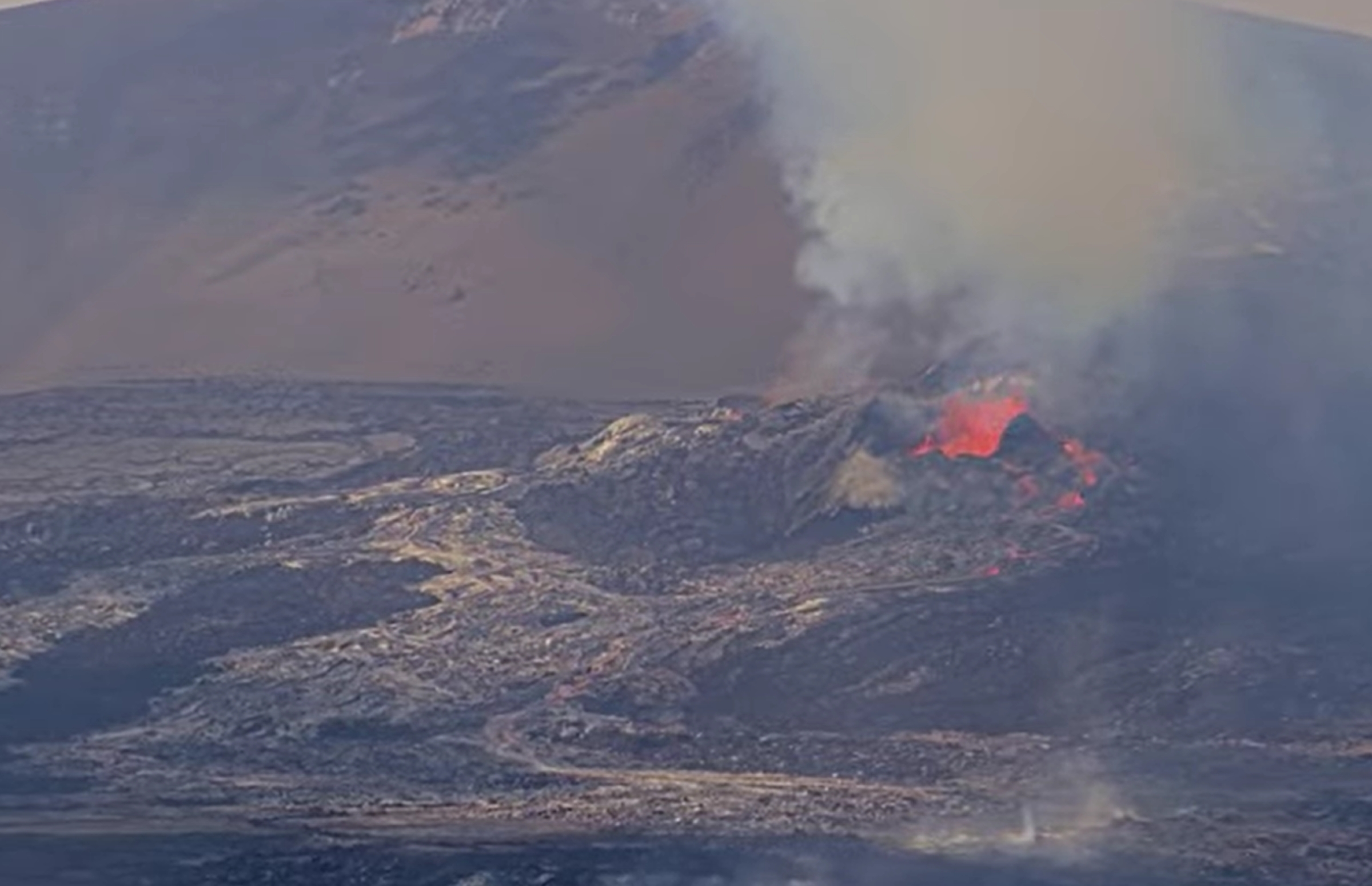
Volcanic gas emission rates decreased significantly after the end of Episode 39, but probably remain in the range of 1,000 to 5,000 tonnes of sulfur dioxide per day, as has been typically observed during previous eruptive pauses.
Winds are light out of the north — less than 10 mph — and were forecast to become more easterly as the morning progresses. The plume is moving to the south-southwest of Halemaʻumaʻu.
Kīlauea has erupting episodically since Dec. 23, 2024, primarily from the north and south vents in Halema‘uma‘u.
Eruptive episodes have generally lasted less than 12 hours and separated by a pause in activity for as long as more than 2 weeks.
Click on the links below for more information about the eruption:
- Eruption resources, including the most recent map and a timeline of eruption episodes since Dec. 23, 2024.
- Three Kīlauea summit livestream videos that show eruptive lava fountains are available here.
- Summit eruption webcams.
- “Volcano Watch” article about gas pistons.
Hawaiian Volcano Observatory continues to closely monitor Kīlauea and is in contact with Hawai‘i Volcanoes National Park and the Hawai‘i County Civil Defense about eruptive hazards.
A volcanic activity notice will be issued at the onset of Episode 40 sustained lava fountaining.
Short messages tracking the evolution of the fountains and eruptive activity can be found here.