


U.S. Senate passes fiscal year 2026 defense bill that includes key Hirono-led provisions
The U.S. Senate voted this week — including U.S. Sen. Mazie Hirono, a Hawai‘i Democrat, senior member of the Senate Armed Services Committee and ranking member of the Subcommittee on Readiness and Management Support — to pass the fiscal year 2026 National Defense Authorization Act.

Hirono was able to secure several key provisions for Hawai‘i and Indo-Pacific region, U.S. military servicemembers and maintenance and modernization of U.S. Department of Defense infrastructure within the bill.
Those provisions include:
- More than $1.1 billion for infrastructure projects in Hawai‘i.
- $10 billion to support allies and strengthen deterrence throughout the Indo-Pacific region.
- Authorizes funding to support a 3.8% pay raise for military servicemembers and Department of Defense civilian employees.
An additional $25 million for the Defense Department’s Readiness and Environmental Protection Integration Program to avoid land use conflicts near military installations is included in the bill, which also address environmental restrictions that would limit military activities and increase resilience of military installations.
Senators passed the measure 77-20. It now goes to President Donald Trump desk for his signature.
“Investments in [Department of Defense] infrastructure, military readiness and support for our servicemembers are all crucial to bolstering our national security,” said Hirono in a press release discussing the vote and her provisions included in the new defense bill. “This year’s [National Defense Authorization Act] makes those critical investments, including funding to facilitate the permanent closure of Red Hill, as well as over $1.1 billion to support infrastructure projects in Hawai‘i.”
She also is proud the bill does not provide Department of Defense with any additional authority to condemn state land — despite a last-minute push by the U.S. Army.
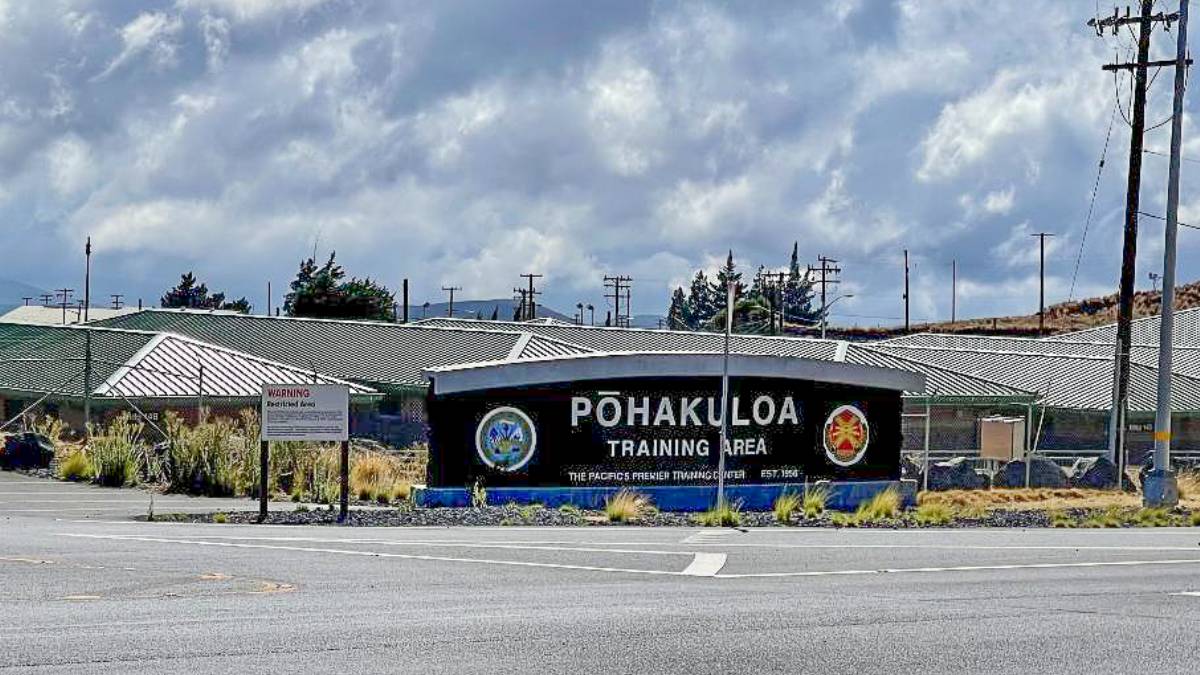
Instead, it includes language encouraging the Army to fully develop and communicate its plans for leased training lands — such as those at Pōhakuloa on the Big Island — to all stakeholders and work in good faith with the state and U.S. Congress going forward.
“While it’s unfortunate Republicans chose to force through partisan provisions that will undermine national security just to advance their far-right agenda, I will continue working with my colleagues to ensure the [Department of Defense] continues to support its servicemembers and their families, while holding this regime accountable for its decisions that may threaten our international partnerships or hinder our national security,” Hirono said.
Hirono — as ranking member of the Senate Subcommittee on Readiness and Management Support — prioritizes modernizing Defense Department infrastructure in Hawai‘i and throughout the country.
The fiscal year 2026 National Defense Authorization Act includes numerous provisions secured by Hirono focused on infrastructure, delivering for communities in Hawai‘i, supporting servicemembers and their families as well as prioritizing sustainability within the Department of Defense.
Hirono’s provisions deliver for Hawai‘i
- Continue the Hawai‘i delegation’s work to safely and expeditiously close the Red Hill Fuel Facility on O‘ahu by adding $10 million to support additional environmental restoration and remediation efforts, plus $4.5 million to continue ongoing community engagement as the U.S. Navy works to close the facility permanently by 2028.
- Provide $141.6 million for the next increment of funding for the new water treatment plant at Joint Base Pearl Harbor-Hickam on O‘ahu.
- Do NOT provide Department of Defense with any additional authority to condemn state late. Instead, the bill contains report language encouraging the department to develop and communicate a coordinated, whole-of-government plan for Pōhakuloa Training Area land lease negotiations on the Big Island and advancing good-faith negotiations for any condemnation. The report also affirms that the U.S. Army does not have the authority to acquire such lands and attempting to do so would be contrary to congressional intent. Furthermore, it calls for continued coordination with the state of Hawai‘i, U.S. Congress and the other services.
- Add $5 million above Trump’s budget for the Pacific Intelligence and Innovation Initiative, which creates a local skilled workforce to meet Department of Defense demand for intelligence, information technology and cyber professionals in Hawai‘i.
- Provide $2 million increase for the Pacific Disaster Center, which mitigates the large program cuts from Trump’s budget.
- Provide $241.86 million for the High-Performance Computing Modernization program and additional infrastructure capability to support increased artificial intelligence demand.
- Prevent the Navy from retiring or decommissioning oceanographic research vessels, including the KILO MOANA, a 186-foot multi-purpose oceanographic research vessel owned by the Navy and operated by the University of Hawai‘i.
- Modify the national missile defense policy to reflect Golden Dome for America by requiring the deployment and maintenance of a next-generation missile defense shield to deter and defend the United States, including Hawai‘i, against the threat of foreign attack by ballistic, hypersonic and cruise missiles as well as other advanced aerial threats.
- Establish a new authority to fund ordnance disposal through intergovernmental support agreements, allowing state and local governments in Hawai‘i and nationally to assist in the demining of formerly used defense lands.
- Require the secretary of Defense to develop a report and brief the Armed Services Committees about the department’s plan to increase accessibility and affordability for small businesses seeking to comply with the Cybersecurity Maturity Model Certification program.
- Require an annual briefing and report to Congress about how the special advisor to commandant of the U.S. Coast Guard for tribal and Native Hawaiian affairs will be incorporated into Coast Guard governance and structure, including a timeline for incorporation.
Hirono’s provisions also invest in critical infrastructure
Invest more than $1.1 billion for military construction projects in Hawai‘i:
- $492.7 million for the next increment of funding for Dry Dock 3 replacement at Joint Base Pearl Harbor-Hickam on O‘ahu.
- $65.7 million for airfield pavement upgrades at Pacific Missile Range Facility Barking Sands, Kaua‘i.
- $141.6 million for the next increment of funding for the water treatment plant at Joint Base Pearl Harbor-Hickam.
- $83 million for DDG-1000 destroyer ship support infrastructure upgrades at Joint Base Pearl Harbor-Hickam.
- $49.26 million for the entry gate at Marine Corps Base Hawai‘i on O‘ahu.
- $15.69 million for Electrical Distribution Modernization at Marine Corps Base Hawai‘i.
- $37.35 million for the next increment of funding for the water reclamation facility compliance upgrade at Marine Corps Base Hawai‘i.
- $147.55 million for 460 Air Force housing units at Joint Base Pearl Harbor-Hickam.
- $5 million in planning and design funds for a new Air Force Operations Building at Joint Base Pearl Harbor-Hickam.
- $2.1 million in planning and design funds for a new Wildland Fire Station at Schofield Barracks on O‘ahu.
The provisions also:
- Requires each military service secretaries to develop and annually update a 20-year Infrastructure Improvement Plan.
- Directs Department of Defense to implement the recommendations of the Government Accountability Office’s report about information sharing to improve oversight of military construction projects, including the documentation of after-action reviews and validation of lessons learned.
- Improves the Defense Department’s facility management of joint bases by reassessing requirements to maintain facilities in good working order, identify workforce gaps and require a strategy to address any gaps and funding needs.
- Requires the incorporation of digital infrastructure and platforms into the Shipyard Infrastructure Optimization Program, which expands existing reporting requirements to consider and include digital infrastructure into the shipyard infrastructure program to improve the efficiency and throughput of Navy shipyards.
Find more about the provisions in the fiscal year 2026 National Defense Authorization Act on Hirono’s website.