


New ‘Produce Prescription’ study provides patients with money to buy fruits, vegetables
A new research study through the University of Hawai‘i seeks to find out if those struggling with high blood pressure and food insecurity will choose a “produce prescription” if they have the education about the foods that can help their ailment, and the funds to buy them.
The National Institutes of Health awarded a $2.8 million grant to researchers at the University of Hawaiʻi at Mānoa’s College of Tropical Agriculture and Human Resilience.
They will study patients at three health centers – one on the Big Island and two on Oʻahu.
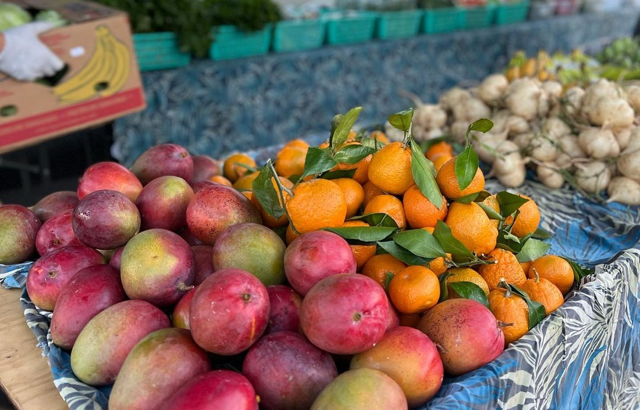
Hawai‘i has already been leading the way in produce prescription theory. Its Medicaid health program was the first state in the nation to include a provision that local produce be a priority for these programs, according to a news release from the university.
The study is expected to kick off next year with approximately 250 patients – including up to 70 from Hāmākua-Kohala Health on the Big Island, said head researcher Monica Esquivel.
Patients who go to these health clinics will be selected to participate in the program that provides $100 food vouchers monthly to buy fruits, vegetables and poi at local farmers’ markets and food hubs.
Results of the study will be measured by monitoring changes in patients who struggle with hypertension, which can lead to heart attacks or strokes if not treated.
Esquivel, an associate professor in the university’s Department of Human Nutrition, Food, and Animal Sciences, wasn’t specific about the foods that help with hypertension, adding anything that can be found at farmer’s market from mangos to apple bananas to peppers would be good for this produce prescription because they all carry good minerals and vitamins.
“What we really want to answer is how the community health worker can work with participants in strengthening the program,” Esquivel said. “More than just giving a person a voucher, they’re going to need guidance.”
The study will run for four years.
Catherine Marquette, medical director at Hāmākua Health Center, said she hopes to implement the program at their three locations in Waimea, Honoka‘a and Kohala.
Marquette said she thinks it’s a struggle for patients who are feeding a family, or don’t have enough money to buy those healthier foods.
“It’s cheaper to buy five candy bars than a bag of apples,” Marquette said. “We want to focus on making good food choices.”
Patients can make a different choice and afford them if they have the means, Marquette said. However, she added, patients often don’t have the resources to make that better decision.
And that’s where the food vouchers come in, along with the education and support from health care workers.
Being a small, rural community, Marquette is excited to participate in the study because she hopes it will result in a healthier population.
Esquivel, a registered dietician, said this also puts investment into Hawai‘i’s food system because the funding is for purchasing local foods.
“I’ve been raised to believe that food is medicine,” Esquivel said. “What we’re seeing right now is a shift in health care where you’re seeing health care wanting to take money and invest in food insecurity and prevention.”
Esquivel and other doctors felt frustrated because they didn’t have the right tools to help their patients reach their health goals. This grant is the next step in creating those tools.
While there are no plans at this time to roll out the study to include additional health centers, Esquivel hopes that will happen in the future.