






Puna Geothermal Venture to start ‘Repower Project’ to boost renewable energy use, lower prices
Puna Geothermal Venture’s long-awaited Repower Project was approved by the Hawaiʻi Public Utilities Commission, enabling the plant to increase its electricity production while reducing its emissions footprint and energy costs to customers, the company announced Wednesday.
“Today, we have 12 generating units that have been in service since 1991 or 1993 and are over 30 years old,” Senior Director Michael Kaleikini said during the quarterly update meeting in Pāhoa. “The plan is to install three modern, more efficient generating units, which will replace the 12 that have been here for three decades.”
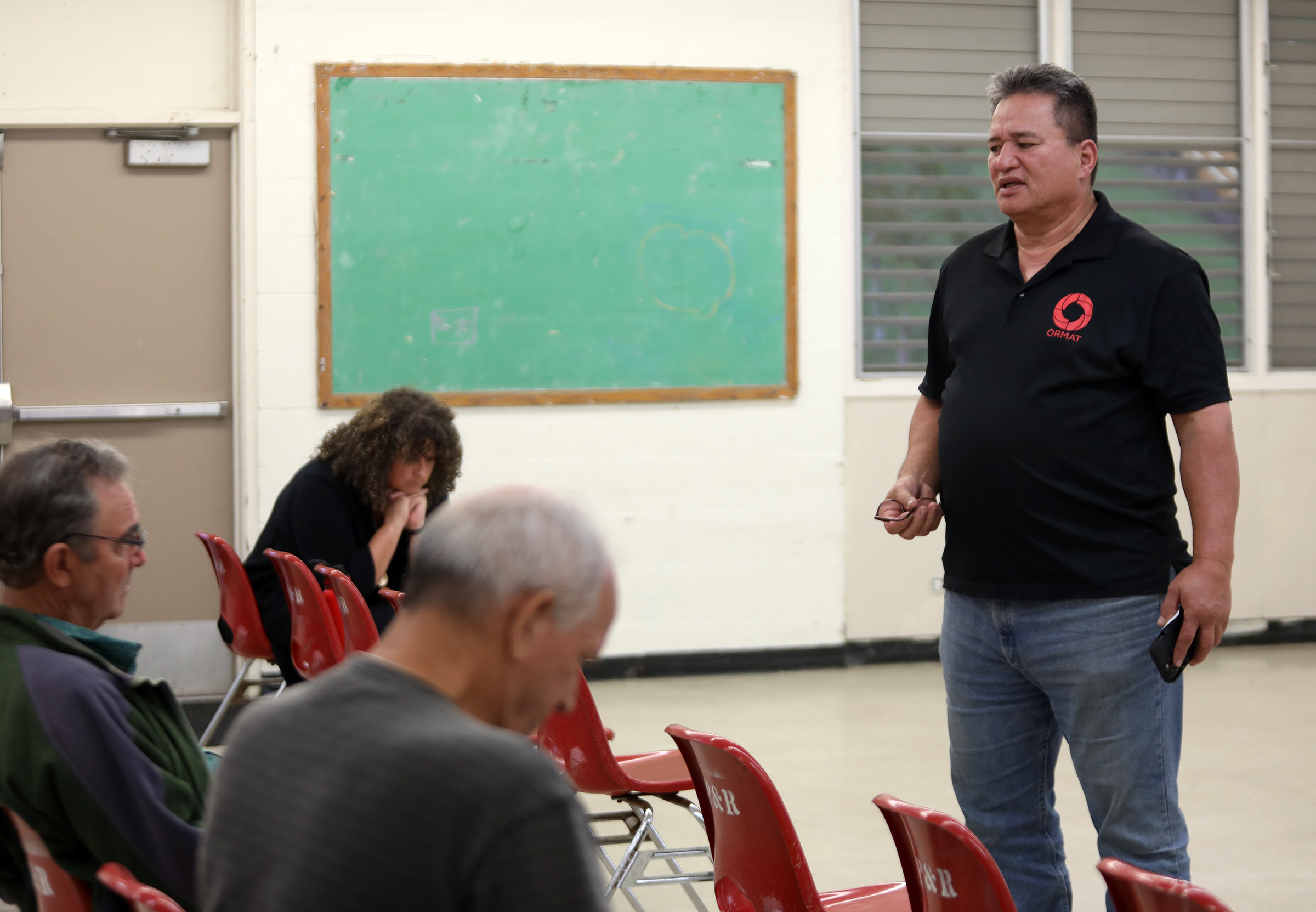
The three modern units will be able to produce 46 megawatts compared to the 38 megawatts now being produced by the 12 old generating units, he said.
This increase would mean that 68% of electricity on Hawaiʻi Island would come from renewable energy sources. As of 2024, nearly 59% of Hawaiʻi Island’s electricity generation comes from renewable sources.
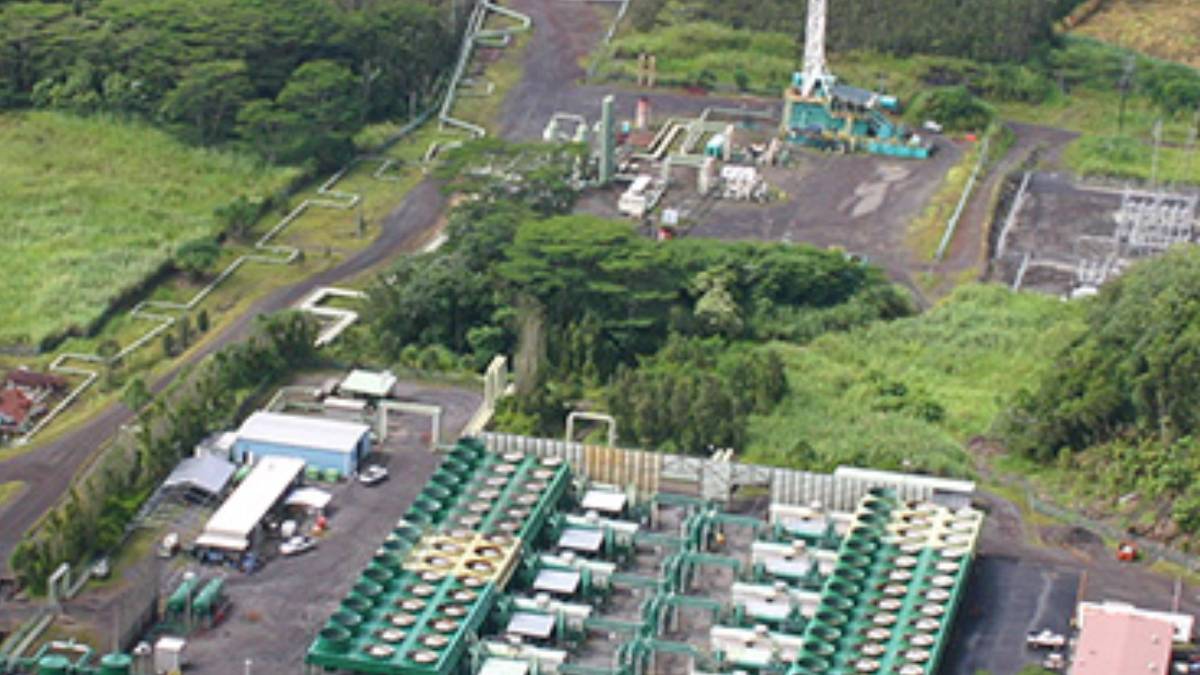
Puna Geothermal Venture is an energy conversion power plant that utilizes the geothermal energy from volcanic heat stored beneath the Earth’s surface. Underground reservoirs of water heated by volcanic activity can be tapped for steam to generate electricity, which is sold to Hawaiian Electric Co. and distributed to customers on the Big Island.
Hawaiian Electric Co. said with the change in generating units, the average residential customer consuming 500 kilowatt-hours per month will see a $23.62 per month decrease on their electric bill.
Since Puna Geothermal will be downsizing, the Repower Project also will result in more efficiency and a smaller footprint.
“With the improvement to efficiencies, the three units will result in less rotating equipment, which means less noise, and less piping, which results in less potential geothermal emissions,” Kaleikini said. “We have been working on getting this project approval since 2022, and we’re very excited to be able to move ahead. All of it is an improvement.”
In a study that examined the lifecycle emissions for all parts of the expanded project, conducted by the Hawaiʻi Public Utilities Commission, it was determined that the greenhouse gas intensity would be one of the lowest for any renewable energy project in Hawaiʻi.
Puna Geothermal is currently undergoing an environmental assessment and has been grading the land for the future equipment. The plan is to use the new equipment by the end of 2026. Until then, the plant will continue to provide updates during quarterly meetings as the project progresses.
To watch past and future public meetings, visit the Puna Geothermal Venture website.
Sponsored Content



Subscribe to our Newsletter
Comments