


Scientists, cultural practitioners continue to learn while collaborating to save coral reefs
Scientists and cultural practitioners are working to protect coral reefs and further understand the organisms foundational to life on Earth.
According to the Kahaluʻu Bay Education Center through the Kohala Center, the health of the world’s coral reef ecosystems is vital to the global food supply, medicines, protection from storm surges, and coastal economies.
However, coral reefs are struggling to survive due to climate change, unmanaged tourism, pollution, overfishing, and unsustainable coastal development.

More than 400,000 people visit Kahaluʻu Bay to snorkel due to its nearshore reef, home to diverse marine life and ancient coral colonies. However, the wahi pana (sacred and storied place) closes for a week to allow coral to spawn without human interference.
This year, the County of Hawaiʻi Department of Parks and Recreation announced that Kahaluʻu Beach Park in Kailua-Kona will be closed from Sunday, May 11, through Monday, May 19, due to cauliflower coral spawning. The park will reopen on May 20.
According to the County of Hawaiʻi, asking the public to refrain from swimming, snorkeling, and surfing in Kahaluʻu Bay annually has had a profoundly positive impact on the health of the reef.
Yearly rest periods were initiated in 2018 after marine heatwaves in 2015 and 2019 caused catastrophic bleaching and mortality of more than 90 percent of the cauliflower coral population in Kahaluʻu Bay.
While only six mature cauliflower coral colonies were left in Kahaluʻu in 2017, there are now hundreds—potentially thousands—of colonies growing on the reef, providing critical habitat and coastal protection.

“We fully support this voluntary measure as natural reproduction events are critically important,” said Brian Neilson, Division of Aquatic Resources administrator. “Kahaluʻu Bay is a vital nursery for corals and an outstanding example of the kind of work underway to perpetuate these ocean foundations.”
Through generations of kilo, or intentional observation, and National Oceanic and Atmospheric Administration (NOAA) research conducted around coral spawning, the spawning of cauliflower coral and other coral species can be accurately predicted. Research has shown that it can take as little as 24 hours for cauliflower corals to reproduce and resettle in new reef areas.
The Kohala Center’s ReefTeach Program has been a key partner with the County of Hawaiʻi in efforts to protect and restore Kahaluʻu Bay.
“It has been amazing to see the community come together to care for Kahaluʻu Bay during the rest periods,” said Cindi Punihaole, the Kohala Center’s director of ʻĀina Advocacy. “To see the bay at rest and the new corals growing on the reef is a testament to what is possible when we work together to care for ʻāina.”
The Kumulipo, a Hawaiian creation chant, chronicles the significance and sacredness of ʻuku koʻa (coral polyps) as the first living organism and the foundation of all life on Earth.
“It is essential that we protect our coral ancestors and all of their descendants because their health and well-being are inextricably connected to our own,” Punihaole said.

Last week, The Nature Conservancy renewed Hawaiʻi’s coral reef insurance policy for 2025 with Munich Re Group, highlighting the growing need for collaboration and cross-sector approaches to address the impacts of climate change.
The Nature Conservancy convened an emergency reef restoration coalition, which has since coalesced into the Hawaiʻi Emergency Reef Restoration (HERR) Network. The network then developed statewide guidance for rapid response and established local teams to respond in the event of a disaster.
“Pioneering a reef insurance policy for Hawaiʻi has been an essential and exciting first step, but we also need to be prepared to implement reef repair and restoration,” said Ulalia Woodside Lee, executive director, The Nature Conservancy, Hawaiʻi and Palmyra. “It’s exciting to see how new partnerships are transforming a potential climate disaster into a stronger community and ocean.”
Last year, the HERR Network put its plans into action with two coral recovery projects on Hawaiʻi Island.
For one project, a collaboration of conservation divers successfully removed and relocated nearly 11 years’ worth of coral growth from a decommissioned offshore fish farm pipe ring, which was towed into this busy harbor as part of a HERR Network project.

The dive teams collected hundreds of healthy colonies and brought them to ʻĀkoʻakoʻa Coral Restoration Nursery, which opened last May and is the first large, land-based coral nursery on Hawaiʻi Island. They were then returned to the ocean and affixed to existing reef structures with special marine epoxy.
“It’s great to respond to something in a positive way where, you know, these corals would die otherwise. We think that we can save a fair number of them by working together,” said Dr. Grace Klinges. “This is such a massive effort. We didn’t even know how big it would be until we got in the water and saw it. But I think we’ve made a monumental impact. The coral that we’ve been able to move to the nursery so far, they’re doing pretty well, and we hope they’ll continue to thrive over there.”
The network is committed to responding to other damaging events and reef emergencies. Their next steps include continuing and expanding training for emergency reef response, refining response protocols, and establishing long-term governance and a sustainable funding structure.
“Having seen the devastation and helped with the removal of many truckloads of man-made debris off our coral reefs after Hurricanes Iniki and Iwa, I’m relieved to know we now have a statewide network prepared to respond to future hurricanes and other emergencies,” said Captain Tara Leota, marine biologist and member of the HERR Network. “I’m grateful we now have trained teams that can not only clean up the reefs but also repair them.”
The renewed insurance policy is the same as last year’s coverage of the main Hawaiian Islands. The policy is triggered when tropical storm winds of 50 knots or greater pass through the core zone. The maximum payout total is $2 million over the year-long policy period and $1 million per storm.
As the policyholder, TNC will disburse funds to partners for reef damage assessments and rapid restoration after qualifying storms trigger payouts.
While coral reefs have been a consistent topic for scientists and cultural practitioners, new research has only recently uncovered just how chemically diverse the reefs are.
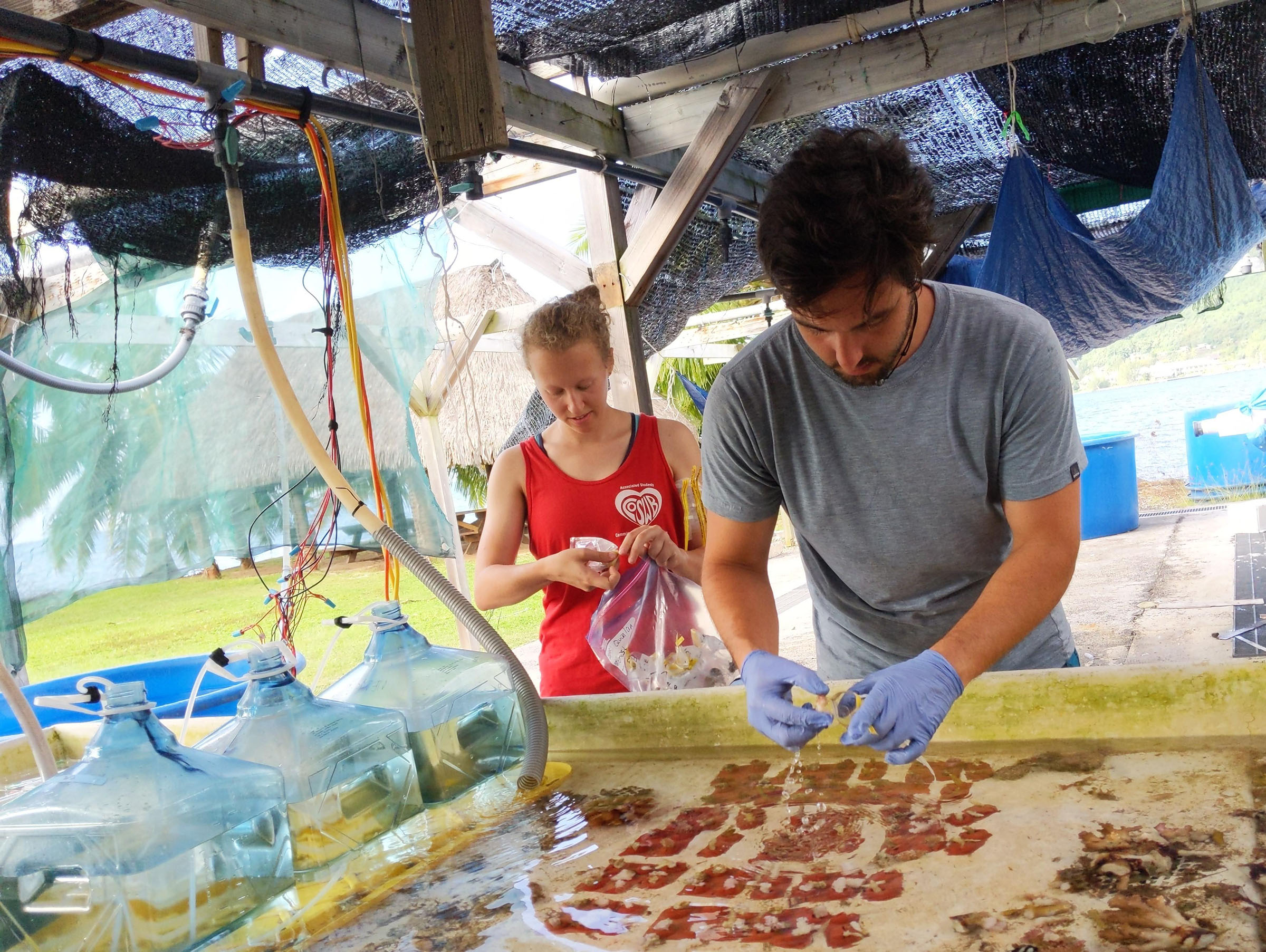
An international team led by University of Hawaiʻi at Mānoa and Scripps Institution of Oceanography scientists found that thousands of different substances released by tropical corals and seaweeds aren’t just floating away—they serve as food for tiny ocean microbes that break them down and recycle them.
The study, published recently in “Environmental Microbiology,” provides crucial insights into the intricate relationships between coral reefs, marine microorganisms, and the carbon cycle. In the future, the team aims to continue discovering how chemical features can inform coral reef management and advance coral restoration success.
Coral reefs are busy, efficient ecosystems—especially in nutrient-poor waters where nothing goes to waste. Microbes play a starring role, breaking down and recycling what other organisms leave behind.
“We’ve known that some of the substances exuded on coral reefs, termed exometabolites, are available for microbial metabolism,” said Craig Nelson, professor in the UH Mānoa School of Ocean and Earth Science and Technology. “However, in this study, we discovered that the number and variety of exometabolites that microbes find useful is much higher than previously considered and includes hundreds of compounds spanning most of the broad chemical classifications.”
The ocean holds an enormous reservoir of dissolved organic material—including what’s released by coral reefs—and it stores as much carbon as the entire atmosphere. How microbes process this material plays a big role in the global carbon cycle.
When there is a shift in the types of organisms living on a reef, from stony corals to fleshy seaweeds, the chemistry of the seawater also changes. In addition to their detailed study of what chemicals are being released on the reef, the research team also conducted experiments to determine whether microbes preferred substances from stony corals or seaweed.
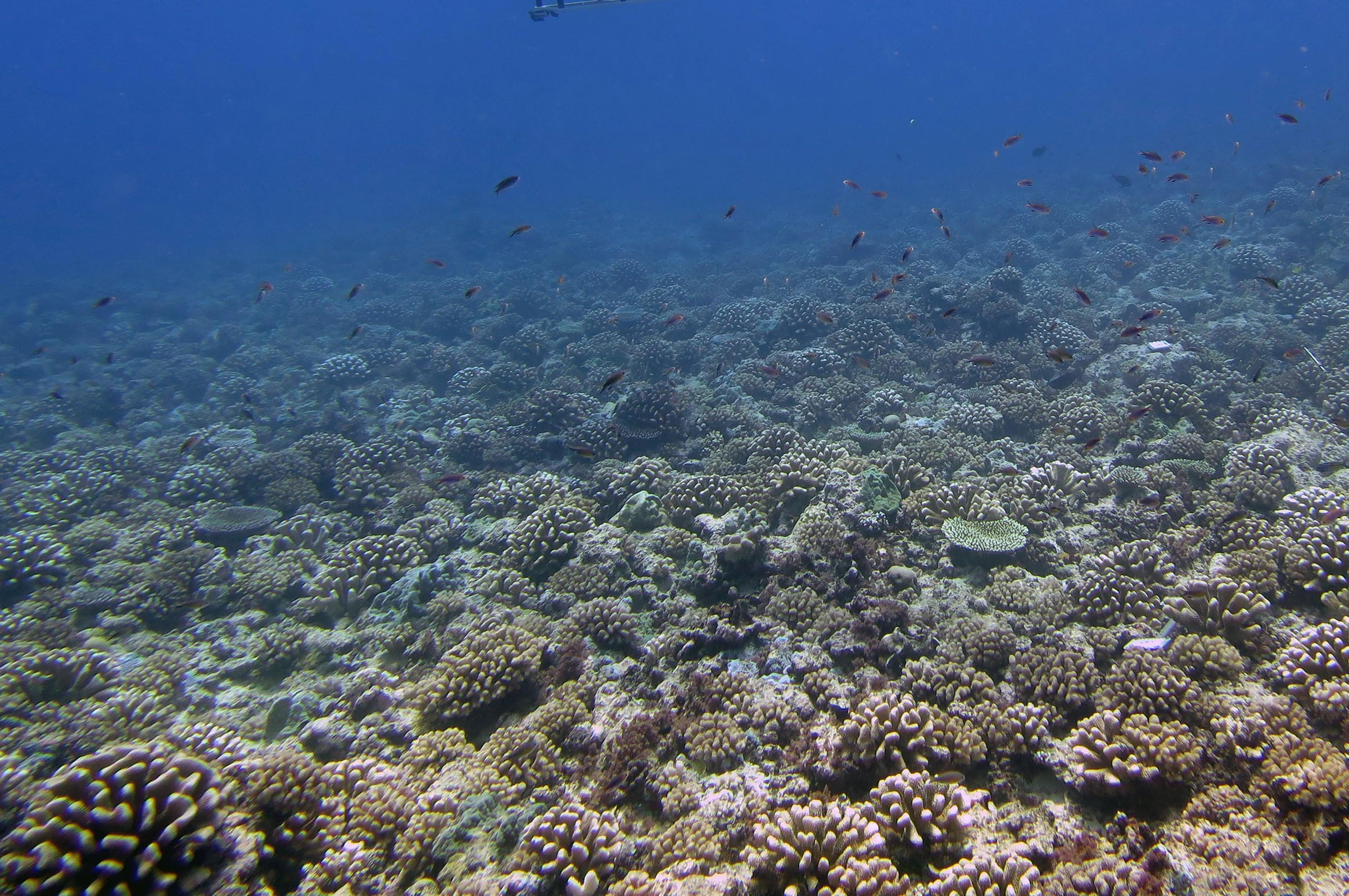
“We observed that coral and algae can selectively facilitate the growth of specific microbial communities by exuding distinct chemicals that can be used by specific types of microbes,” said Linda Wegley Kelly, senior author on the study and associate researcher at SIO. “Our results highlight how shifting from coral-dominated to algae-dominated reefs can alter reef ecosystem function and impact the system’s resilience, potentially making it more susceptible to disease or bleaching.”