


State health officials urge caution as volcanic gas emissions remain elevated
Hawaiʻi Department of Health urges residents and visitors to take precautions as elevated volcanic gas emissions from the recently paused Kīlauea episodic summit eruption continue to produce vog, or volcanic smog, the hazy air pollution caused by volcanic emissions that can result in poor air quality throughout the islands.
Kīlauea’s Episode 57 lava fountaining — the most recent of the eruption that began nearly 2 years ago — ended Nov. 23. Strong volcanic gas emissions continue from the north and southwest eruptive vents in Halemaʻumaʻu Crater, despite another pause in the eruption.
High levels of volcanic gas can create vog conditions that affect areas far downwind of the summit and can be hazardous to human health, particularly for sensitive populations.
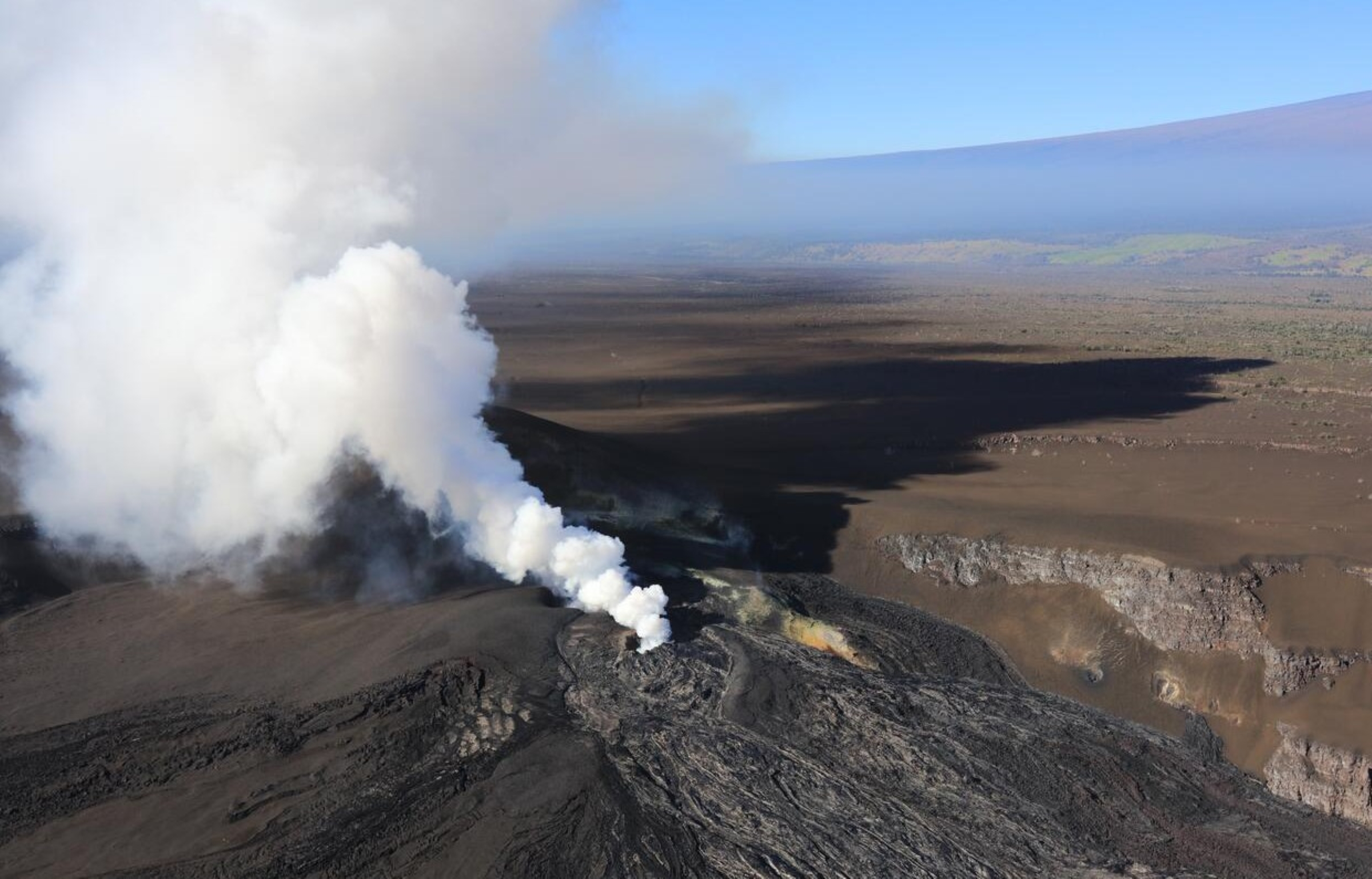
Additional eruption hazards also can include windblown volcanic glass, known as Pele’s hair, as well as volcanic rock fragments and ash that can affect surrounding communities.
Air quality can change quickly depending on the amount of volcanic emissions, wind direction and other weather conditions.
Readings since the eruption started Dec. 23, 2024, at several monitoring stations on Hawaiʻi Island, Maui and Oʻahu have varied, with periodic increases in sulfur dioxide and fine particulate matter. While most stations reported good or moderate air quality, monitoring stations in southern Hawaiʻi Island at times recorded unhealthy air quality levels.
The Hilo air monitoring station early Wednesday reported air quality in the “Unhealthy for Sensitive Groups” category. Winds have been light and variable were expected to shift, potentially carrying the volcanic gas plume toward the northeast.
Short-term exposure to elevated levels of sulfur dioxide and fine particulate matter can cause temporary eye, nose or throat irritation, coughing and increased mucus production. At higher concentrations or with prolonged exposure, particularly among sensitive populations, more serious respiratory symptoms such as difficulty breathing or worsening of existing lung conditions, are possible.
Click here for more information about the potential health effects of vog.
Recommendations during vog conditions
- Contact a healthcare provider if symptoms develop or worsen.
- Keep medications readily available.
- Reduce outdoor activities. Stay indoors and close windows and doors.
- Set air conditioners to recirculate indoor air.
- Use a high-efficiency particulate air (HEPA) cleaner, if available, to reduce indoor particulate matter. HEPA filters do not remove sulfur dioxide gas.
- State health officials do not recommend members of the general public use respirators to protect against volcanic gases.
Especially vulnerable populations include
- People with pre-existing respiratory conditions, such as asthma, bronchitis, emphysema and other chronic lung or cardiovascular diseases.
- Children and infants.
- Older adults.
- People who work or exercise outdoors.
- Pregnant women.
Guidance for short-term cleanup activities
- For residents in areas that received volcanic ash, Pele’s hair or Pele’s tears, the Hawaiʻi Department of Health recommends wearing a well-fitting N95 or equivalent mask to help protect against volcanic ash during cleanup.
- Residents should also wear heavy-duty gloves, long clothing such as long sleeves and pants, closed-toe shoes and eye protection.
- Masks are designed to filter particles and do not protect against toxic gases. Avoid sweeping, using blowers or operating other mechanical devices that can stir ash back into the air.
More resources
Latest air quality reports:
- Clean Air Branch | Hawaiʻi Ambient Air Quality Data
- Vog Information Dashboard |IVHHN
- Volcano activity updates
- Hawaiʻi Department of Health Clean Air Branch