


UH researchers breed new tropical hybrids to reduce reliance on imported flowers
University of Hawaiʻi at Mānoa researchers have successfully bred new “tropical” pincushion protea hybrids that will reduce reliance on imported flowers.
The College of Tropical Agriculture and Human Resilience announced the floriculture breakthrough in a news release.
Pincushion proteas are native to South Africa and need cool night temperatures to grow their famous flower buds. The newly bred varieties bloom near sea level in warmer, coastal environments that do not require cool mountain nights.
“These new genetic combinations allow growers at all elevations to harvest flowers nearly year-round,” said professor Kenneth Leonhardt of the Department of Tropical Plant and Soil Sciences. “They also make colorful contributions to urban, commercial and resort landscapes.”
Hawaiʻi’s commercial protea production was previously limited to elevations between 2,500 and 4,000 feet, primarily in Upcountry Maui and on Hawaiʻi Island’s high-elevation areas. This agricultural land is scarce and expensive, pricing many local cut-flower growers out of the protea market.
Leonhardt and his research team conducted years of warm-temperature tolerance trials, as well as trials at low elevations such as Two Bee’s Protea Farm on Oʻahu’s North Shore.
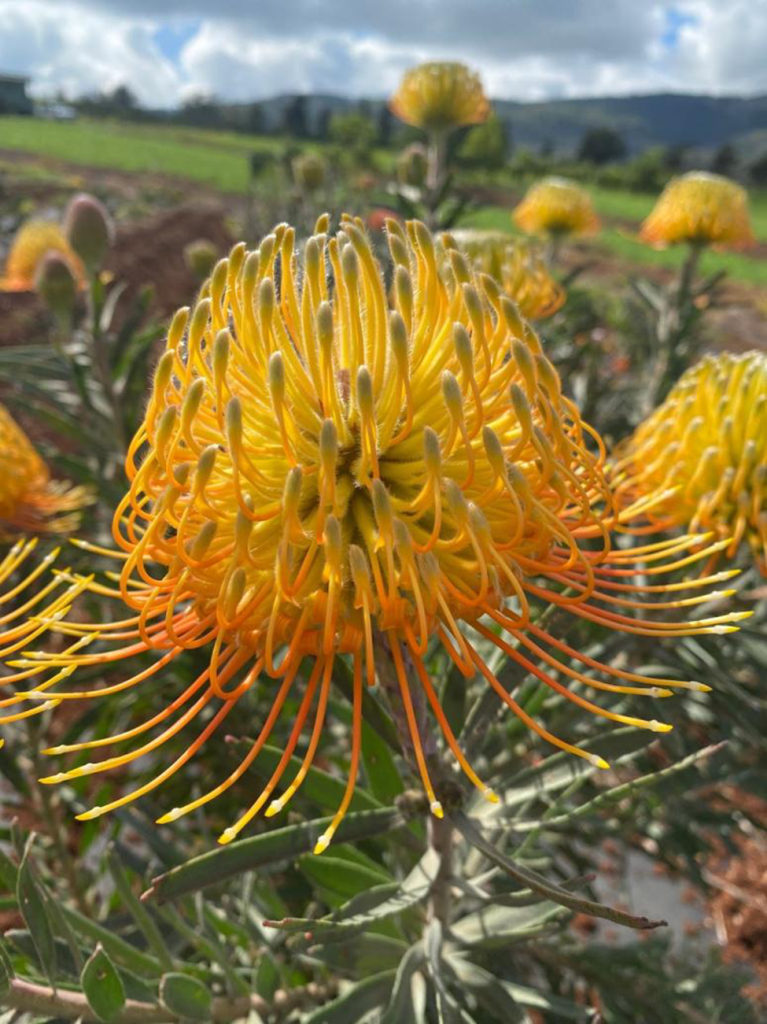
The team identified three seldom-used species as key sources of heat resistance, insight that helped researchers achieve a successful, years-long breeding program.
The college and its partners have distributed more than 11,000 plants to nearly three dozen Big Island farms in collaboration with the Hawaiʻi Tropical Flower Council’s Import Replacement Program.
Leonhardt and his team are also working with producers of container landscape plants to establish the new tropical proteas in home gardens and commercial and resort landscapes.