


Subaru Telescope to join NASA’s Roman Space Telescope on Maunakea for international partnership
Hawaiʻi Island observatory will contribute 100 nights to international space research.
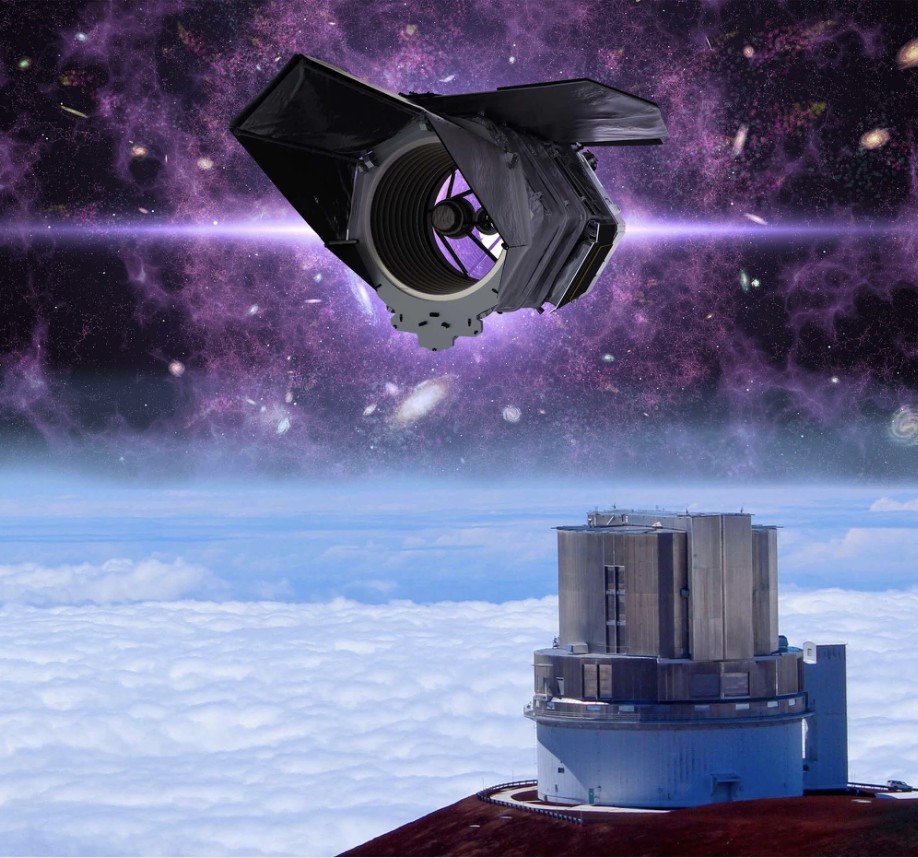
The Subaru Telescope on Maunakea will contribute 100 nights of observations to a new international partnership with NASA’s Nancy Grace Roman Space Telescope that was launched Aug. 30.
Maunakea’s high elevation, dry atmosphere, dark skies and location above much of Earth’s weather make it one of the world’s premier sites for astronomy.
The partnership highlights the scientific importance of Maunakea and the role Hawaiʻi Island plays in international space research, a news release said.
The Subaru Telescope, which has explored the universe from Maunakea for more than 25 years, is an 8.2-meter optical-infrared telescope operated by the National Astronomical Observatory of Japan. From approximately 10,000 feet above sea level, Subaru can gather information that complements observations made by a spacecraft in orbit.
The Nancy Grace Roman Space Telescope — named after NASA’s first chief astronomer, the “mother of the Hubble Space Telescope” — is a 2.4-meter space observatory designed to conduct wide-field surveys of the universe in optical and infrared wavelengths.
The two telescopes will observe the universe from different locations using complementary capabilities. Coordinated observations are expected to begin in 2027 or later.
Roman’s position above Earth’s atmosphere will allow it to conduct sensitive infrared surveys. Subaru’s mirror and wide-field instruments can provide information about selected objects.
Subaru’s ʻŌnohiʻula Prime Focus Spectrograph can observe approximately 2,400 objects at once. This will allow astronomers to follow up on large numbers of galaxies and other objects identified by Roman.
By combining observations from space and from Maunakea, scientists can learn more than either telescope could reveal alone. Roman may identify distant galaxies and other objects; Subaru can help determine what they are, how far away they are and how they fit into the larger story of the universe.