


UH-Hilo students monitor water quality of Hilo Bay and impact of storms, agricultural runoff
Since 2011, a water quality buoy has been sending data from Hilo Bay to the Pacific Islands Ocean Observing System to monitor short-term and long-term changes to ocean conditions.
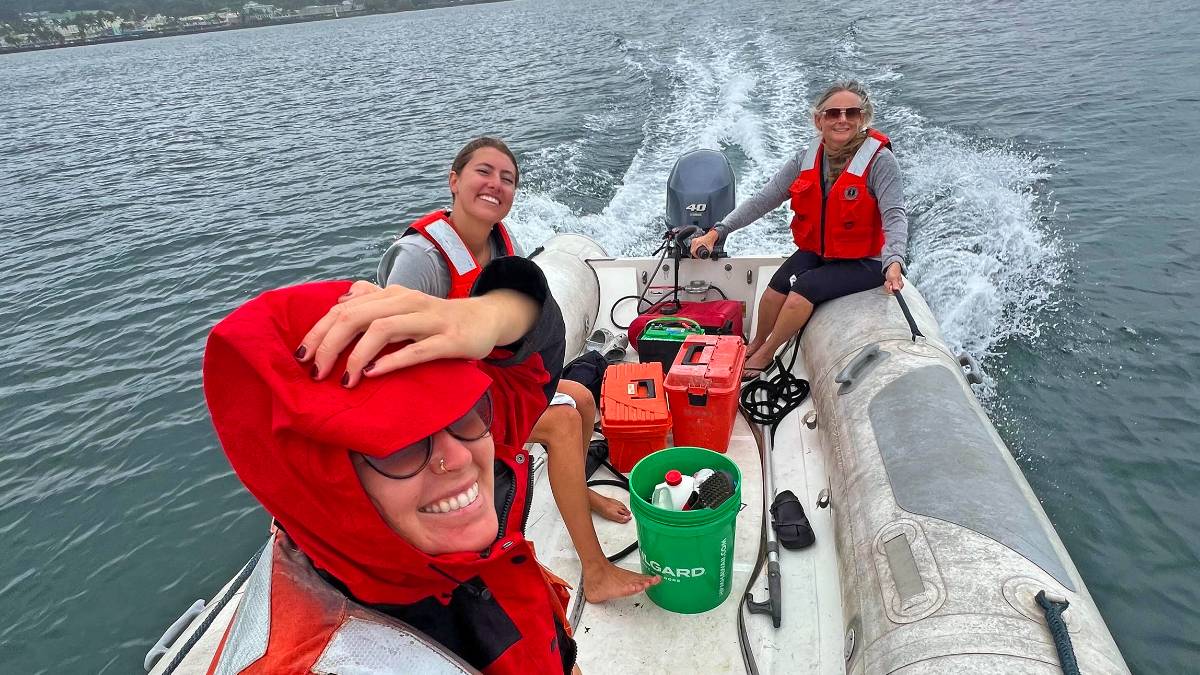
When Erin Smith decided to pursue a bachelor’s degree in marine biology, she never envisioned it would lead to obtain a boat license to drive a small vessel and monitoring a water quality buoy in Hilo Bay.
Smith is a senior at the University of Hawaiʻi at Hilo and works with a team of students and faculty to study the water quality of near-coastal waters for marine science projects and general community knowledge.
As a water quality buoy technician for the Pacific Islands Ocean Observing System (PaciOOS), Smith’s job is to analyze real-time data from the buoy by measuring water temperature, salinity, chlorophyll-a, turbidity and oxygen levels.
“We’re not the ones measuring fecal bacteria, which can be a misconception,” Smith said. “We are looking at these quantitative measurements that can tell you about what’s going on in the bay at a particular time.”
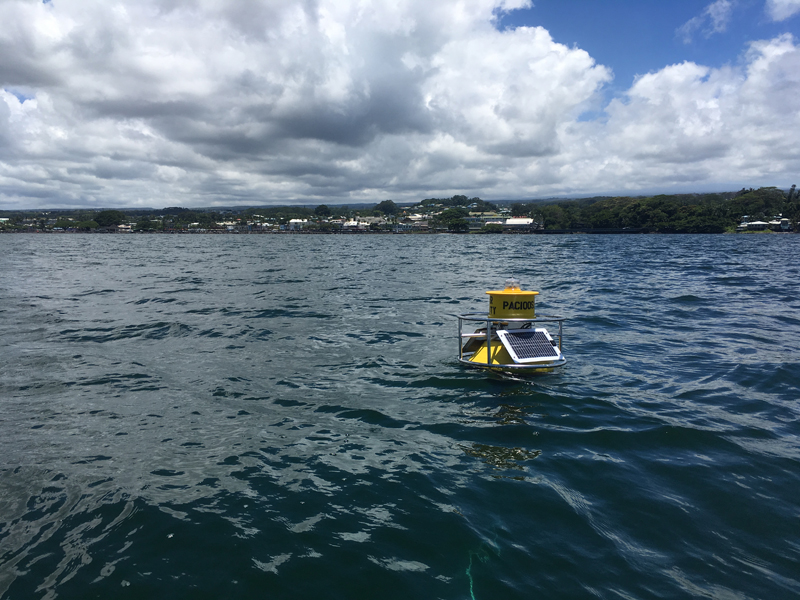
The PaciOOS water buoys send data readings every 15 minutes.
Salinity measures the concentration of dissolved salt in the ocean. Reduced levels are usually measured after periods of excessive rainfall.
Chlorophyll-a indicates the concentration of marine algae and cyanobacteria, which are microscopic plants in the water. Elevated levels often point to an influx of nutrients from agricultural runoff or coastal development.
Turbidity measures the cloudiness or haziness of seawater, caused by suspended solid particles that scatter and block light. Higher levels can result from coastal storms, strong currents and river runoff stirring up the seafloor.
“I’m looking at this data to make sure the numbers are in a range we might expect given the type of rainfall we’ve been having, or not having,” Smith said. “Sometimes little critters get inside the sensor of the buoy and they make the numbers get a little wacky. When that happens, we may take the boat out to do a cleaning sooner than we normally would.”
To work as a water quality technician, Smith had to pass a small boat class to go out to clean the buoy or replace parts when necessary.
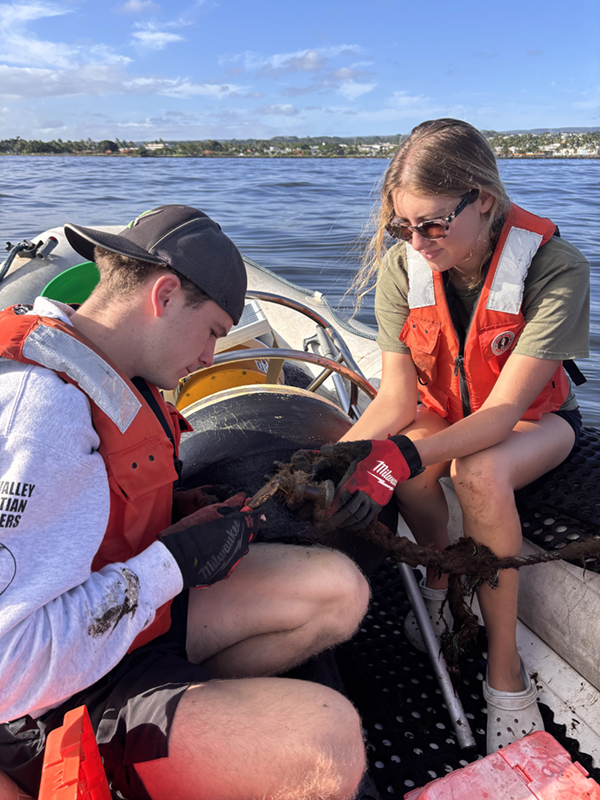
“The biggest challenge is the biofouling that happens,” said Steve Colbert, professor of marine science at UH Hilo and co-investigator at Paci-OOS. “There’s a lot of nutrients that come down the river and into the bay and grow on hard surfaces. The buoy attracts its own little ecosystem that is neat to see. We’ll see these huge populations of barnacles that are thriving on the buoy.”
Recently, there have not been many critters on the buoy due to recent big storms. After Hurricane Nolo, the salinity dropped significantly and was on par with some of the groundwater springs, according to Colbert.
While the buoy collects data for short-term knowledge, the PaciOOS team is also looking at the long-term record of how the water quality has changed over the years. For Hilo Bay, that record began in 2011.
“One long-term change we’ve recorded in general is an increase in turbidity and high chlorophyll-a in Hilo Bay,” Colbert said. “What we would hope to see is that these levels would go down when improvements are made to the Hilo watershed, like getting rid of cesspools or stopping as much sediment from getting into our rivers.
“Unfortunately, we have not had too many of those changes just yet.”
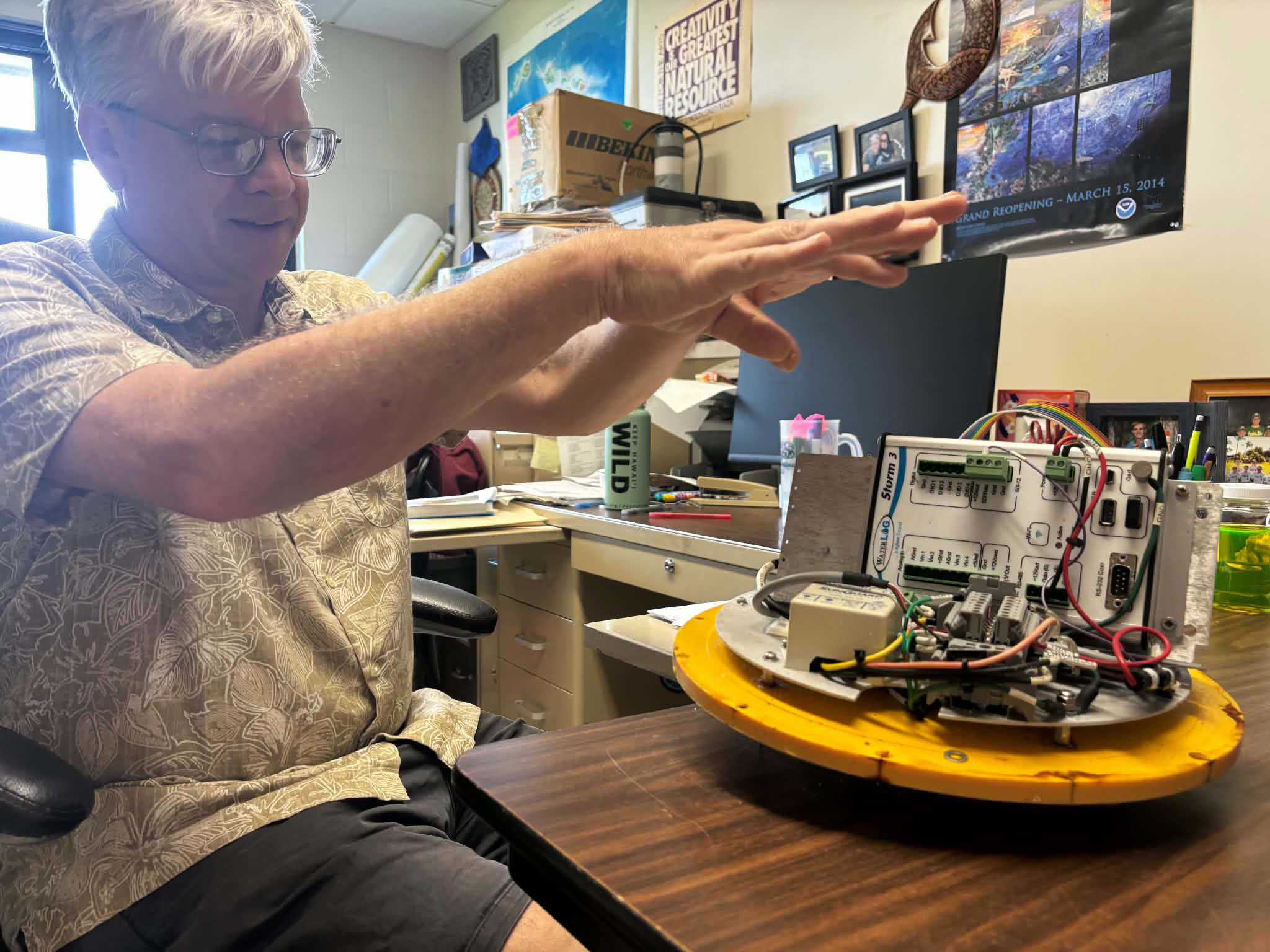
Colbert also oversees a water quality buoy in Pelekane Bay in Kawaihae on the west side of the Big Island. It currently is out of the water for maintenance, but was seeing improvement in the impact of ungulates (hooved animals) and the level of sediment in the water. Since 85% of the Pelekane Watershed is dedicated to cattle grazing and ranching operations, agricultural runoff was the largest issue to manage.
To help mitigate the runoff of the Pelekane Watershed, the Kohala Center installed 15,129 feet of fence to divide a 2,052-acre paddock into two smaller, more secure paddocks to allow for rotational cattle grazing and established a new cattle watering trough away from one of the streams.
While there hasn’t been much movement to manage or improve the Hilo Bay watershed, the Hawaiʻi County Department of Research and Development has used a $2 million grant to complete the Hilo Bay Resilience and Watershed Management Plan, which will help restore the ocean water quality.
“On the inside and outside of the Hilo breakwater, there are these really nice coral reefs that are much more impacted by this sediment and algae growing in the bay,” Colbert said. “I’m excited that the county is working on the watershed management plan for Hilo and identifying the actions that can be taken.
“Actions that remove the excess nutrients and sediments are going to have the biggest impacts on the bay.”
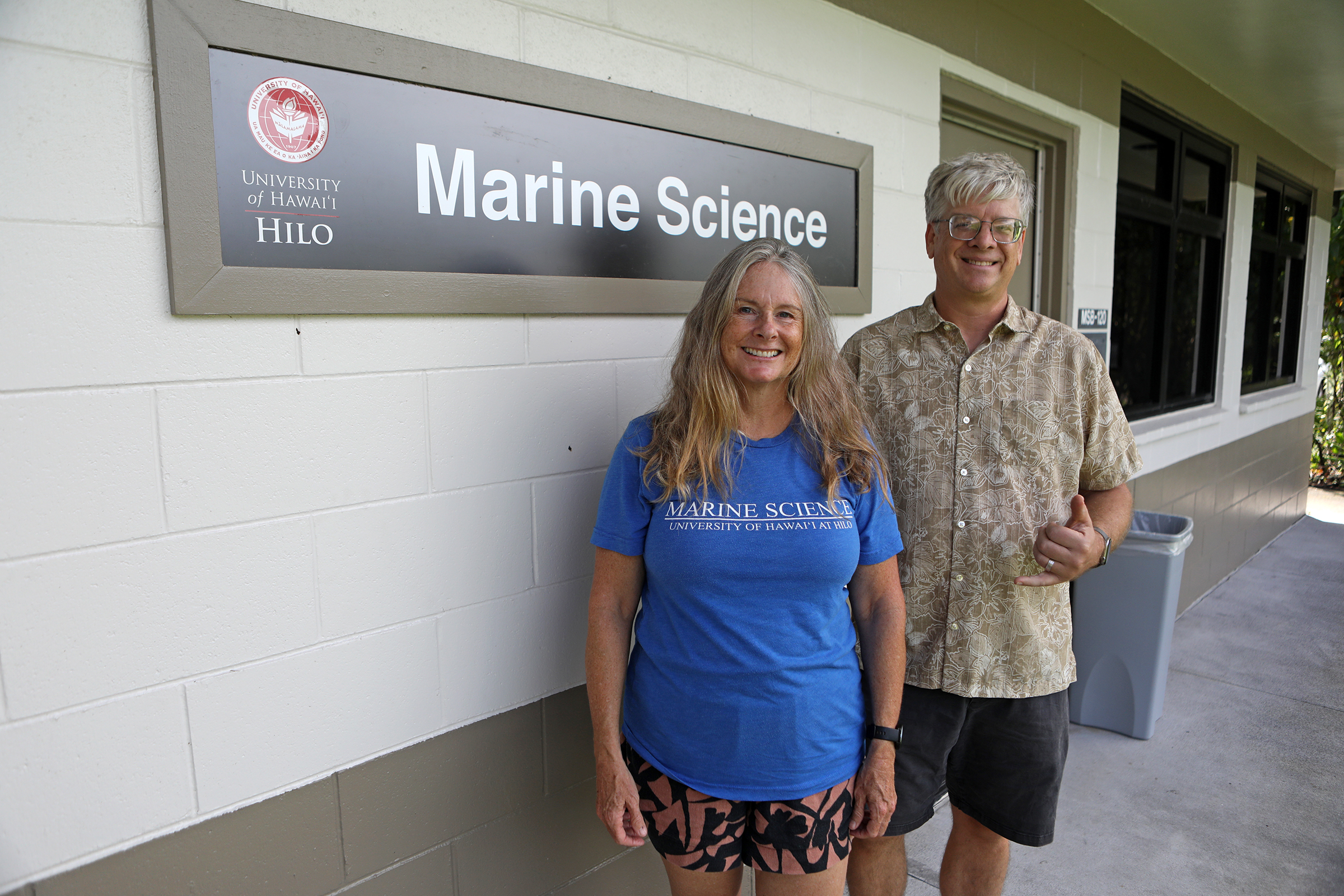
As an undergraduate, Smith has been happy to be part of this work in water quality and restoration, even though it wasn’t initially why she decided to pursue marine sciences.
“You start off being in love with whales, manta rays and turtles, but it turns out I am just as much in love with little coral polyps, water quality and working with communities like Keaukaha,” Smith said. “There are these fishponds down there where it is so important to measure water quality. I also never thought I’d be driving a boat by myself, which is really cool.”
Colbert manages the grants and funding that make it possible to purchase the necessary buoy equipment and allows undergraduate students to have the opportunity to do this kind of work.
“UH Hilo has these unique opportunities for underclassmen that are so important, but are usually only available to graduate students elsewhere,” Colbert said. “The water quality buoys also provide great data that is available to all students and faculty working on marine science projects or research.”
After graduation, Smith plans to attend graduate school at the University of Hawaiʻi at Hilo; however, she is not sure what her emphasis will be.
“I’m at the part of my education where I just love so many parts of marine science, so it’s hard to choose a lane,” Smith said. “Right now, I’m working on my thesis that incorporates water quality because it is about coral health, water temperature and coral bleaching.”
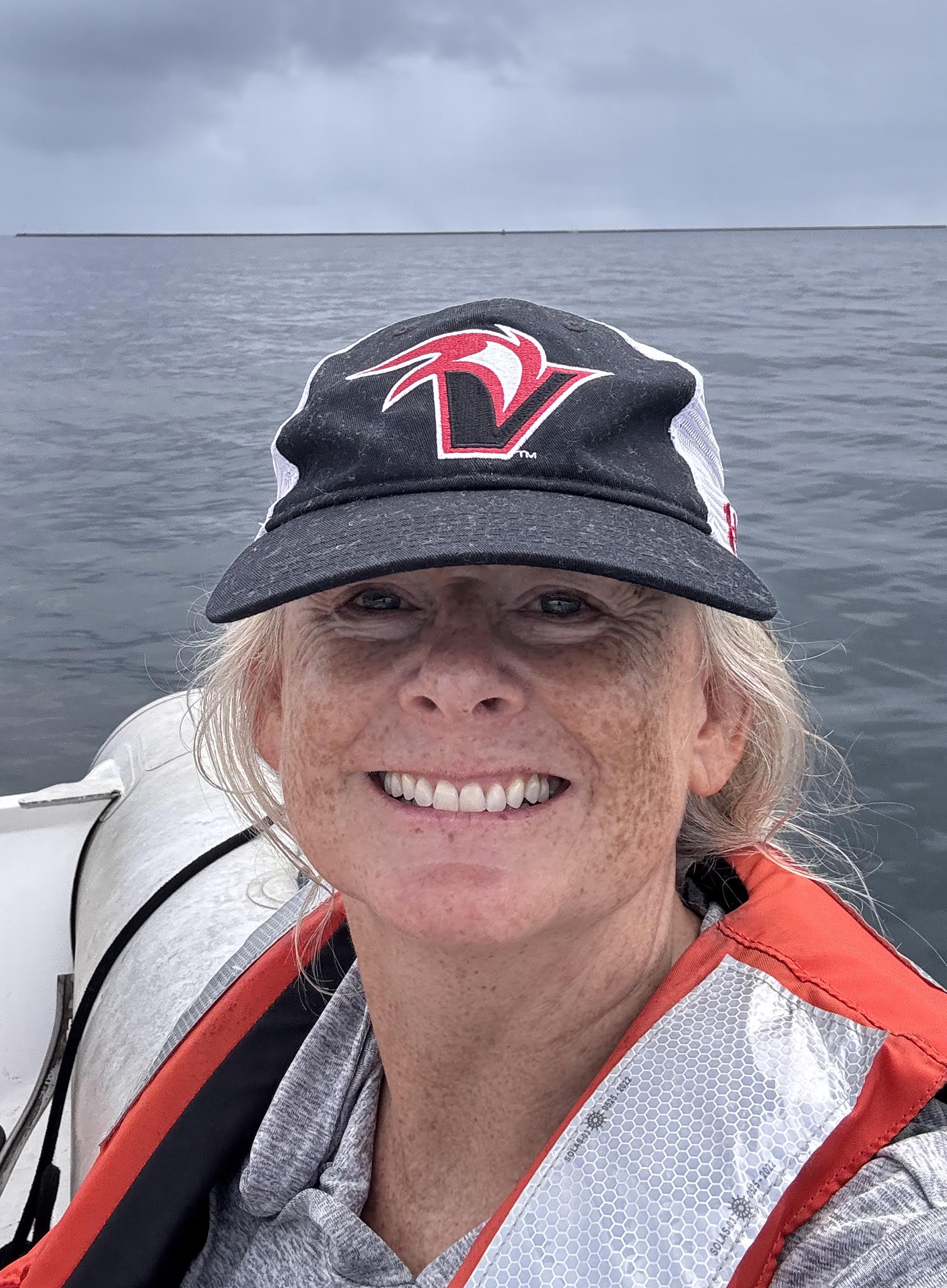
This week, Smith plans to reattach broken coral fragments that were damaged from the recent storms and rehabilitated at the coral nursery at the University of Hawaiʻi at Hilo’s Pacific Aquaculture and Coastal Resources Center.
For Colbert, he and his colleague, Tracy Wiegner, recently started a study that will be testing the water quality of four areas of Hawaiʻi Island to see the impacts of cesspools on the fish ponds and near-coastal areas of the island.
While this study is ongoing, Colbert encourages the public to view the Hilo Bay data on the PaciOOS website for their own knowledge. According to Colbert, the most useful parts of the data to look at before getting in the water are the water temperature and the turbidity.
“What I would love to see is water quality reports that are similar to the weather reports we get on our phones or online,” Colbert said. “You just click on the weather app and swipe to see the water quality report.”