


UH Cancer Center secures $3M grant to study breast cancer disparities in Hawaiʻi
The study aims to understand, which early-stage pre-invasive breast cancers may become invasive for some patients and not others.

As Breast Cancer Awareness Month begins this October, University of Hawaiʻi Cancer Center researchers have been awarded a $3 million National Cancer Institute grant to investigate why early-stage breast cancer becomes invasive in some patients but not others.
Led by Lenora Loo, a researcher in the Cancer Biology Program, and Brenda Hernandez, a researcher in Cancer Epidemiology and Principal Investigator for the Hawaiʻi Tumor Registry, the five-year study focuses on Hawaiʻi’s unique population, particularly Asian American and Native Hawaiian/Pacific Islander patients historically underrepresented in cancer research.
The study examines ductal carcinoma in situ, which accounts for 20% of new U.S. breast cancer diagnoses.
Ductal carcinoma in situ can progress to invasive cancer, but a subset of cases never does. This unpredictability makes it challenging for clinicians to determine who needs aggressive treatment versus less intensive care. To address this, the team will evaluate lifestyle, health, social factors, and tumor biology, comparing ductal carcinoma in situ and invasive tumors from the same patients.
In Hawaiʻi, breast cancer is the most diagnosed cancer among women and the second leading cause of female cancer deaths, averaging 172 deaths and thousands of invasive diagnoses annually.
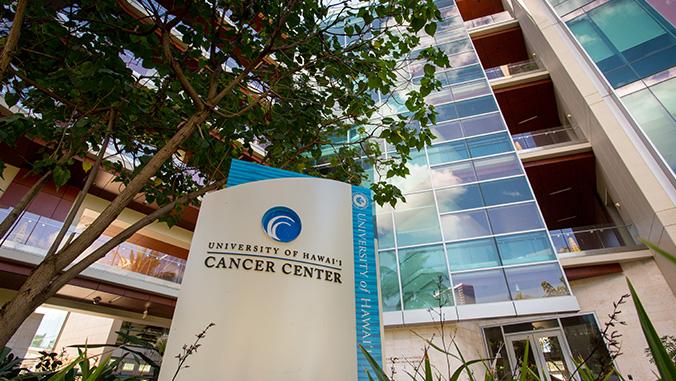
Cancer is the second leading cause of death (after cardiovascular disease) in Hawai‘i. Nearly 76,000 people in Hawai‘i are living with cancer, and each year an average of 2,519 Hawai‘i residents die of cancer, says the center’s “Hawai‘i Cancer at a Glance” report.
Prior research by Loo and Hernandez that used data from the University of Hawaiʻi Cancer Center’s Multiethnic Cohort Study revealed that Native Hawaiian, Filipino, and Japanese ductal carcinoma in situ patients face a higher risk of developing invasive breast cancer in the same breast compared with White patients.
By identifying the biological mechanisms behind progression, researchers hope to improve risk identification and enable tailored treatment plans so patients receive care appropriate to their specific risk level.