

Invasive little fire ants prefer cooked beef, seeds over tuna
If you are trying to detect or bait little fire ants in your backyard, scientists at the University of Hawaiʻi at Mānoa suggest swapping tuna for cooked beef and sunflower seeds.
The study, published in the Journal of Applied Entomology, by researchers at the University of Hawaiʻi at Mānoa College of Tropical Agriculture and Human Resilience (CTAHR) revealed that the little fire ant’s (Wasmannia auropunctata) preferred diet is not what scientists and homeowners previously thought.
In laboratory food-choice tests, the tiny, stinging pests overwhelmingly chose cooked beef and sunflower seeds over water-packed tuna.
The findings can help researchers and agencies managing invasive ants refine the food lures used for surveillance and bait development for little fire ants, one of the world’s top 100 most damaging invasive species.
Little fire ants are established on Oʻahu, Hawaiʻi Island, Maui and Kauaʻi, where they sting adults, keiki and kūpuna, damage food crops, and cause painful eye injuries in pets.
Community members often use food lures by placing chopsticks dabbed with peanut butter or tuna around yards to test for infestations. However, if the lure is less appealing than other competing food sources, fewer ants would be attracted to it, leading people to underestimate the infestation’s size.
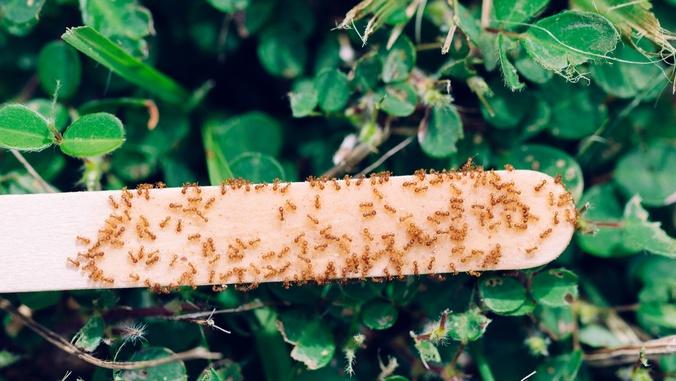
The research team from CTAHR’s Department of Plant and Environmental Protection Sciences evaluated worker ant behavior across 24 foods rich in protein-lipid, carbohydrates or fatty lipids in laboratory choice experiments to identify top attractants:
- Cooked beef and raw sunflower seeds were by far the favorites.
- Honey dominated the carbohydrate category.
- Water-packed tuna and peanut butter with the oil removed performed the worst.
The study shows that oil-depleted versions lack the critical lipids (fats) that little fire ants prefer.
“These findings build on and expand the food-lure approaches currently used in Hawaiʻi,” said Jia-Wei Tay, associate professor of urban entomology in Department of Plant and Environmental Protection Sciences.
The research was led by Aradhana Shrestha, a master’s student in Department of Plant and Environmental Protection Sciences, and Tay, and funded in part by the Hawaiʻi Invasive Species Council and the U.S. Department of Agriculture National Institute of Food and Agriculture.