

Office of Hawaiian Affairs delivers supplies to isolated Kaʻū communities
The Office of Hawaiian Affairs ensured that 1,500 pounds of essential supplies was delivered to severely impacted Native Hawaiian communities underserved by existing relief efforts.
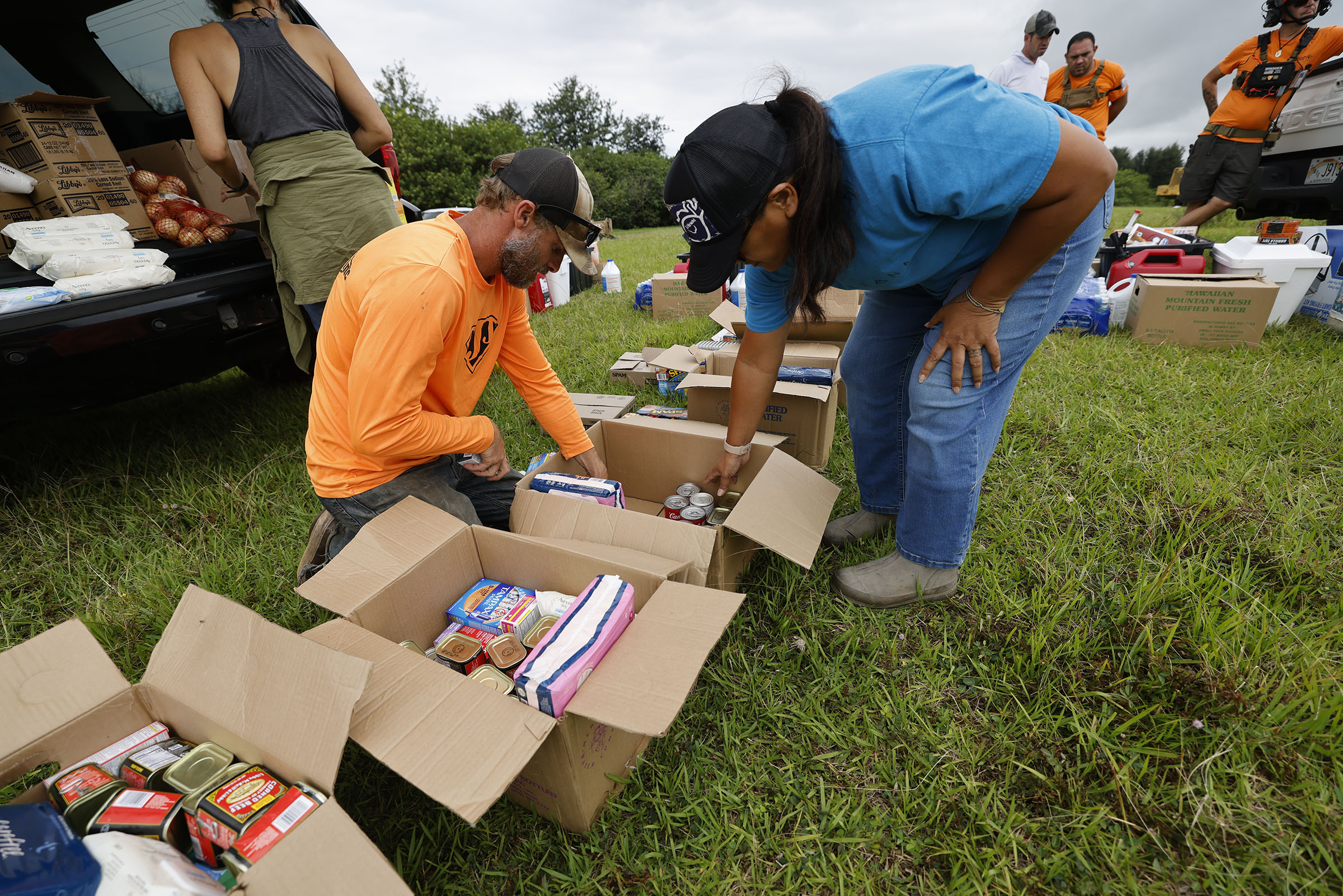
The Office of Hawaiian Affairs brought approximately 1,500 pounds of critical supplies to some of the most remote communities in Kaʻū on Hawaiʻi Island impacted by Hurricane Lala.
Working closely with the County of Hawaiʻi, Vertical Worx Precision Aviation Services, the Three Mountain Alliance, KTA Superstores, Home Depot and Kaʻū community members, the Office of Hawaiian Affairs (OHA) delivered essential supplies to Native Hawaiian community representatives in four isolated areas where storm damage, damaged bridges, waterways and landslides have severely restricted access.
The emergency deliveries included drinking water, hygiene water, fuel, perishable and nonperishable food, hygiene products, diapers, cleaning supplies, batteries, and other necessities. Supplies were entrusted to Native Hawaiian representatives in the affected areas for distribution to their communities.
“This operation was about responding promptly to an immediate need and using the relationships OHA has built in our communities to reach families who might otherwise remain cut off from assistance,” said Kaialiʻi Kahele, OHA Board of Trustees Chairperson and Hawaiʻi Island Trustee. “Our Kaʻū ʻohana have demonstrated tremendous resilience, and OHA is honored to assist them during this difficult time. We are deeply grateful to every partner and community member who helped make these deliveries possible.”
Vertical Worx, a Hawaiʻi helicopter operator specializing in remote utility and natural resource management services, received requests from Kaʻū communities for assistance in delivering critical supplies to isolated residents. After learning of OHA’s efforts, the company coordinated with OHA for relief efforts.
On Monday, OHA Hawaiʻi Island staff traveled to Kaʻū to join Vertical Worx, which had already commenced independent, self-funded relief efforts. Together, they conducted reconnaissance to identify severely impacted Native Hawaiian communities underserved by existing relief efforts.
Four priority areas were identified: Wood Valley, Kalaʻīkī/Makanau, Lower Moaʻula, and Haʻao Springs. OHA and its partners established a community point of contact and identified safe helicopter landing areas in each location, ensuring supplies could be delivered safely and distributed to those in need.
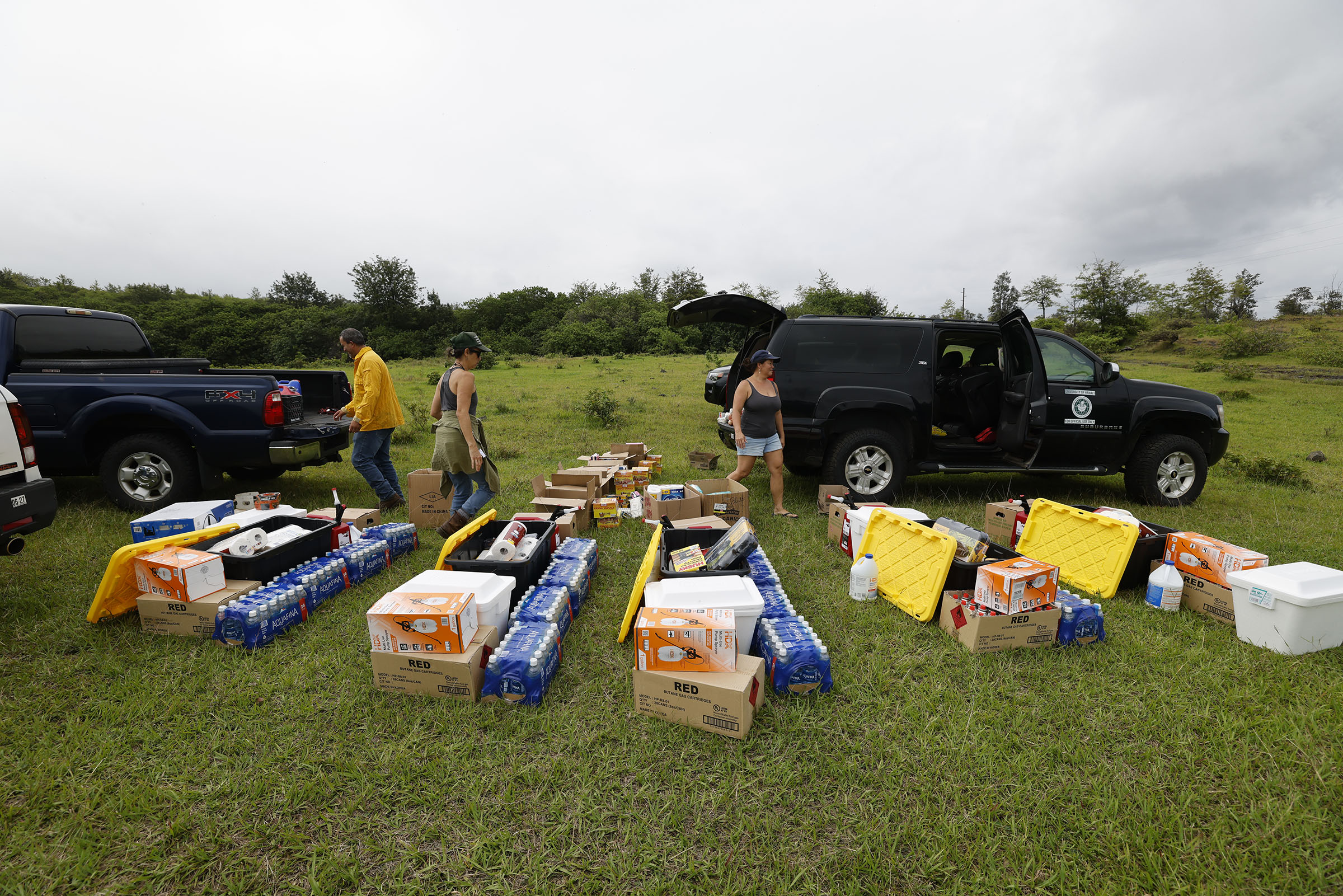
OHA staff coordinated with County of Hawaiʻi leadership to develop a plan using Board-approved emergency resources to purchase supplies and secure helicopter services for inaccessible communities.
By Tuesday, OHA had mobilized emergency resources to implement the plan. Hilo staff purchased supplies from KTA Super Stores and The Home Depot and transported them to Kaʻū with assistance from the Three Mountain Alliance.
OHA also secured helicopter services from Vertical Worx Precision Aviation Services. Kapaʻala Ranch provided its property as a base of operations and a helicopter landing zone.
Before the deliveries, OHA staff participated in an aerial reconnaissance flight to verify drop locations and assess safety conditions. Care bundles with critical supplies were prepared for the isolated communities.
“The impact of this work extends beyond the supplies delivered today,” said Kahele. “By reaching people in isolated areas, establishing connections, and restoring access, we support community members who can help their neighbors and the broader Kaʻū community recover.”
In Wood Valley, the helicopter transported an individual with equipment to help clear internal roads, improving access between isolated sections and relief supply locations.
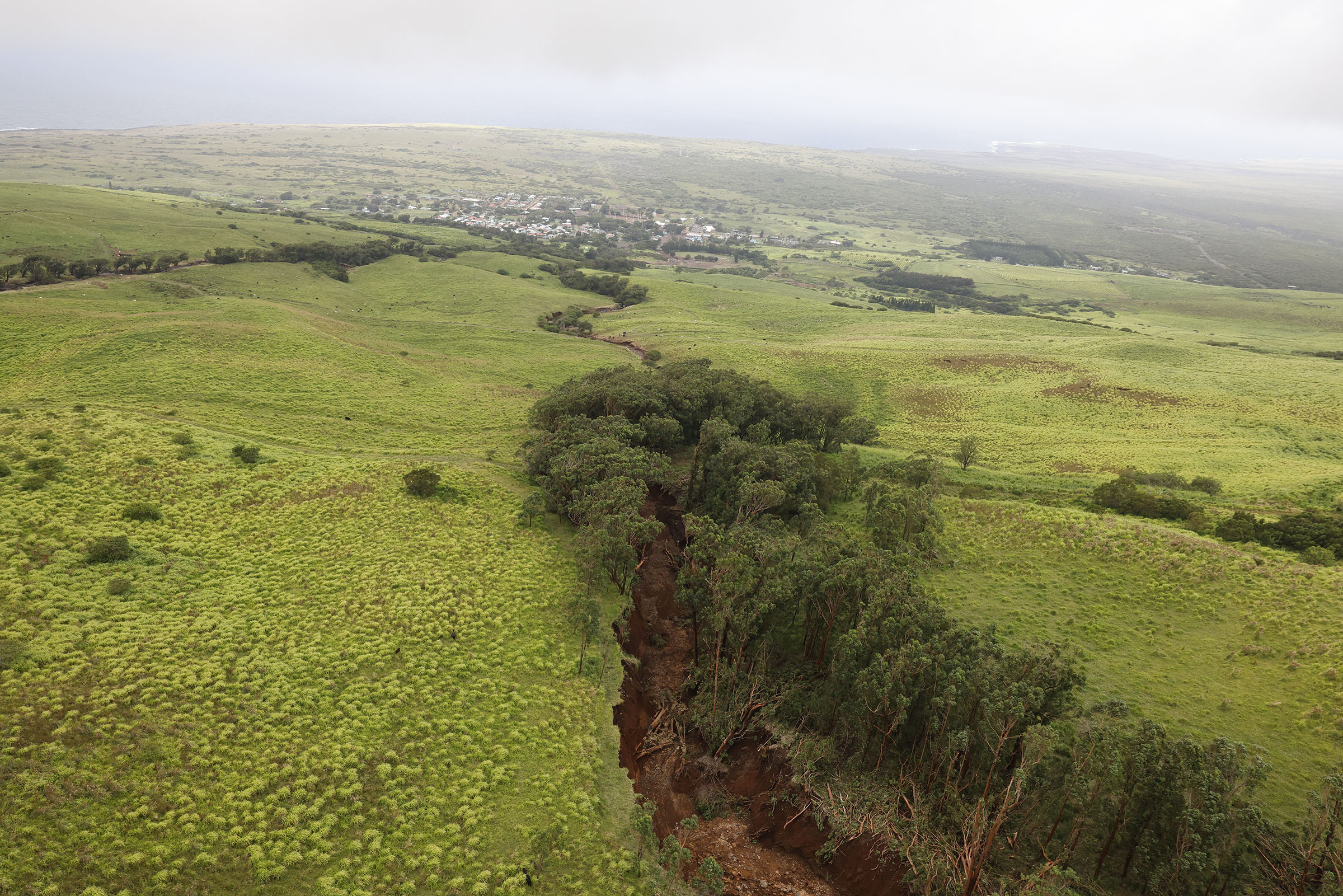
Aerial observations revealed extensive damage to the Kaʻū landscape and infrastructure. Heavy flows of water, rock, trees, and debris carved new channels, damaged roads, and altered the landscape, with some homes and properties severely damaged. Despite the devastation, community members remain hopeful and focused on helping one another.
OHA’s quick response was aided by relationships its Hawaiʻi Island staff developed with Native Hawaiian beneficiaries and community leaders throughout Kaʻū. These connections helped staff identify families in remote locations, assess immediate needs, coordinate safe landings, and deliver supplies to trusted community representatives.
“This work could not have occurred without our partners’ generous collaboration,” said Kahele. “When disaster strikes, our responsibility is to listen to our communities, understand the gaps, and act where OHA can make a meaningful difference. We appreciate everyone who ensured our most isolated ʻohana were not forgotten.”
OHA continues to work with organizations and residents on assessing immediate and longer-term needs, such as fuel for generators, access to electricity and generators, drinking water, and household supplies, alongside larger recovery needs as roads and infrastructure are restored.
OHA will use these assessments to determine how its resources and partnerships can have the greatest impact as Kaʻū transitions from emergency response to recovery.