


New zoning allows for 53 permitted uses in downtown Pāhoa, with guidelines maintaining rural, historic character
The Hawaiʻi County Council passed a voluntary rezoning bill that seeks to ignite business growth in Pāhoa and a bill that maintains the town's unique character.
In the past eight years, Pāhoa businesses have faced economic challenges initiated by the 2018 Kīlauea lava flow, followed by the global COVID-19 pandemic, which led to a decline in tourism and the permanent closure of many local businesses.
After several community meetings with residents and small business owners over the years, Hawaiʻi County Council member Ashley Kierkiewicz decided that allowing a broader mix of commercial, residential, cultural and creative uses could encourage sustainable economic growth and bolster community resilience.
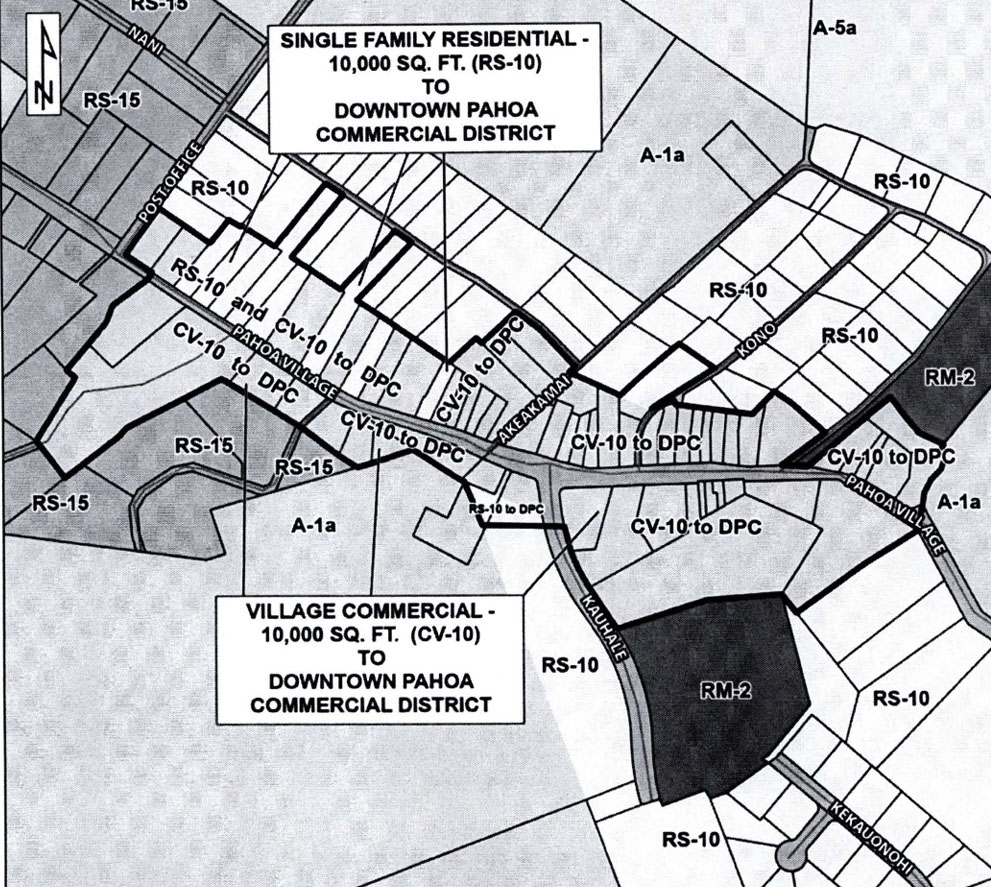
To make that possible, she introduced two bills that were recently passed by the Hawaiʻi County Council to create a new Downtown Pāhoa Commercial District.
Bill 126 rezones parts of downtown Pāhoa and providing clear standards for mixed-use development. The purpose is to support locally owned businesses, enhance housing opportunities, and promote a more walkable town center.
While the new zoning encourages development, she also introduced Bill 125 that ensures the character of Pāhoa Village remains intact.
Bill 125 clarifies and refines the procedures and duties of the Pāhoa Design Review Committee, which is responsible for reviewing architectural plans, public improvements and development guidelines to maintain the unique, rural-historic character of the village core.
In Bill 126, there now are 53 permitted uses within the new commercial district. They include:
- Agricultural processing facilities for transforming raw crops, livestock or dairy into value-added products.
- Co-working and innovation hubs for shared use among multiple businesses or individuals.
- Creative media spaces for producing content such as film, television, graphic design, website development, video games and other digital media.
- Cultural enterprise establishments focused on creating and displaying items and experiences related to Hawaiʻi’s cultural heritage.
“This new zoning is intended to help realize the vision of the Pāhoa Community Development Plan and the Kīlauea Recovery Plan and showcase Pāhoa’s role as a town center,” Ashley Kierkiewicz said. “I want to emphasize that there are no new taxes or costs on property owners. This just provides flexibility for those who invest in properties in downtown Pāhoa.”
Since the zoning change is voluntary, all properties located within the new Downtown Pāhoa Commercial District must apply through the County of Hawaiʻi Planning Department.
“The process is entirely voluntary, and everyone can maintain their current zoning, but if you would like to rezone, the Planning Department can help facilitate this process,” Kierkiewicz said. “This is a direct response to what the community has asked for over the last several years.”
She said the new zoning supports investment and adaptive reuse. It also reduces unnecessary costs and procedural burdens associated with zone change applications while remaining subject to legislative oversight through the council’s authority to designate eligible areas.
Improvements to the Pāhoa Village Design District guidelines under Bill 125 are necessary, Kierkiewicz said, because as property owners become encouraged by opportunities in the new commercial district, they need to know who to consult about design considerations before attempting to build or renovate.
“This is a tool that you can leverage when and if you want to,” she said. “You opt-in when you feel that you’ve met all the conditions to move forward on new developments or improvements on your property.”
After attending numerous community meetings and mailing out hundreds of surveys, she believes residents support efforts to retain Pāhoa’s “old-town feel.”
“I think people really want there to be a bit more cohesion in the look and feel of the buildings in Pāhoa, kind of maintaining our small-town charm and character,” she said.
The Pāhoa Village Design Review Committee meets within 10 days following any project review request from a prospective applicant or the Planning Department Director. Committee members are appointed by local community organizations, including the Main Street Pāhoa Association, Kōkua Pāhoa, and Mālama O Puna.