


New study reveals Hawaiian mantle plume temperature rise over 47 million years
Innovative 'geothermometer' sheds light on Hawaiian volcano history, reveals two heat surges with the first occuring 14 to 20 million years ago and the other from 0 to 6 million years ago.
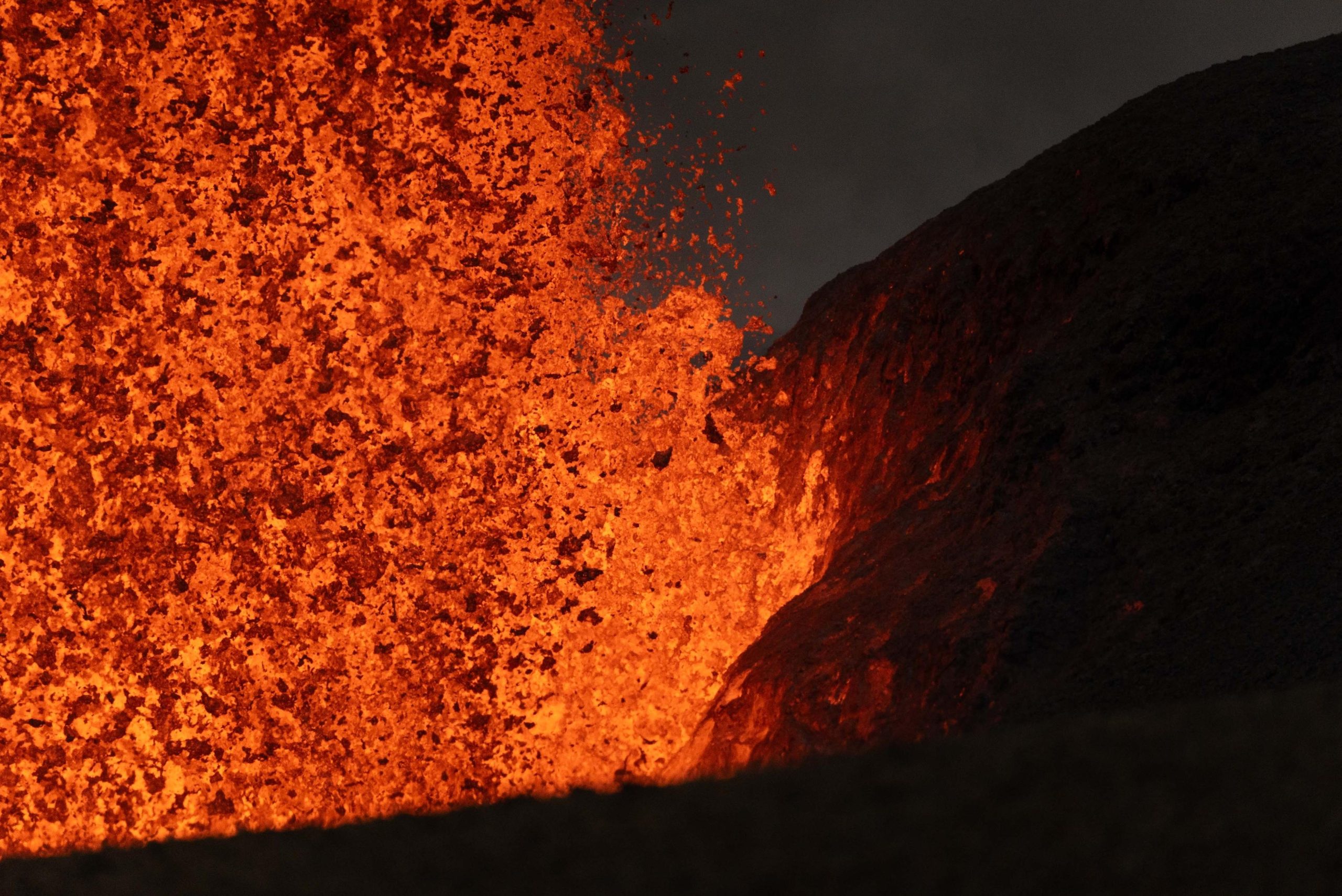
New research indicates that the Hawaiian mantle plume has increased in temperature by about 250 degrees Celsius (480 degrees Fahrenheit) over the past 47 million years.
A study led by Earth scientists at the University of Hawai‘i at Mānoa, published in “Earth and Planetary Science Letters,” challenges the long-held belief that hotspots begin very hot and gradually cool over time.
Researchers also discovered that heat surges produced the two largest volcanoes along the Northwestern and Main Hawaiian Island chain.
The Hawaiian Ridge is comprised of 65 volcanoes spread over 2,179 miles, formed over the past 47 million years as the Pacific Plate slowly moved over the Hawaiian hotspot, where a plume of molten material rises through Earth’s crust.
A research team led by Michael Garcia, emeritus professor of Earth Sciences at the University of Hawai‘i at Mānoa School of Ocean and Earth Science and Technology aimed to evaluate hypotheses that might explain the 100-fold fluctuation in lava volume along this ridge.
By examining olivine basalts from 16 volcanoes, the researchers assessed four testable causes: changes in lithosphere thickness, magma source composition, the rate of Pacific Plate movement, and plume temperature.
“It was a major surprise to find such a strong, direct correlation between mantle temperatures and volcano size,” Garcia said. “Other potential explanations simply failed to explain the data.”
To uncover this connection, the team developed an innovative “geothermometer” to estimate lava temperatures when they first formed deep within Earth’s mantle. They combined these temperatures with recent comprehensive ocean floor surveys to calculate more accurate estimates of volcano size along the Hawaiian Ridge.
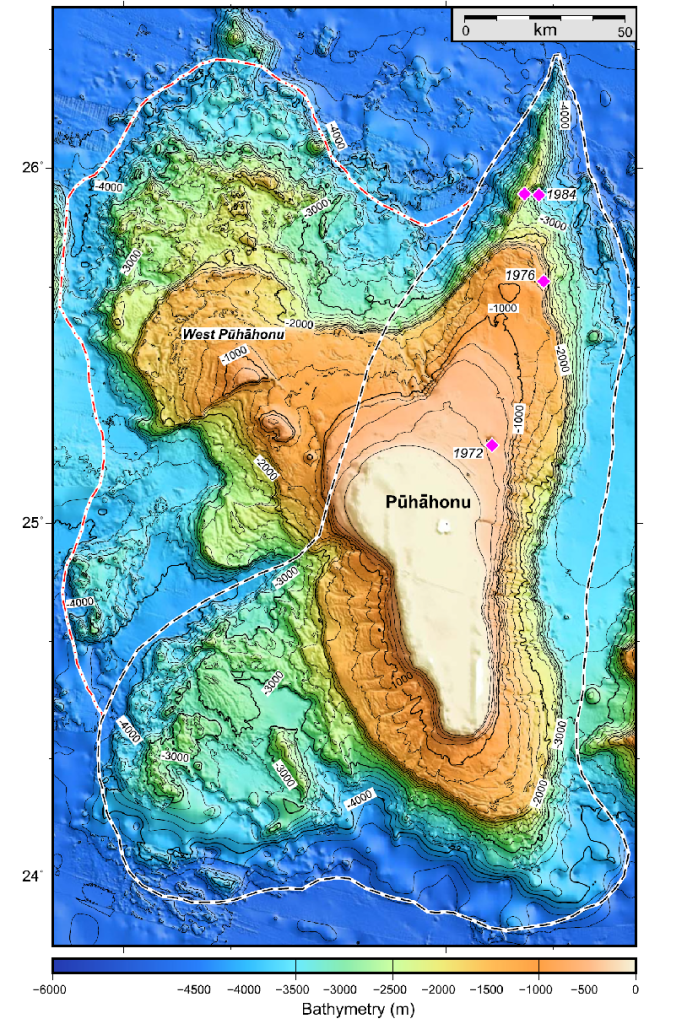
The results indicate an overall increase in lava temperature with two heat surges. The first surge occurred 14 to 20 million years ago and produced Pūhāhonu, the largest and longest-lived shield volcano in the past 60 million years. The second surge occurred 0–6 million years ago and formed the Hawaiian Islands.
“The development of the new geothermometer allows one to better understand the history of volcanoes and why some are larger than other volcanoes,” Garcia added.
The researchers suggest that the overall increase in the Hawaiian mantle plume temperature may be related to the drifting of dense, hot material in the lowermost mantle.