


Controversial Falls on Fire festival permitted to continue in Pāpaʻikou, but with conditions
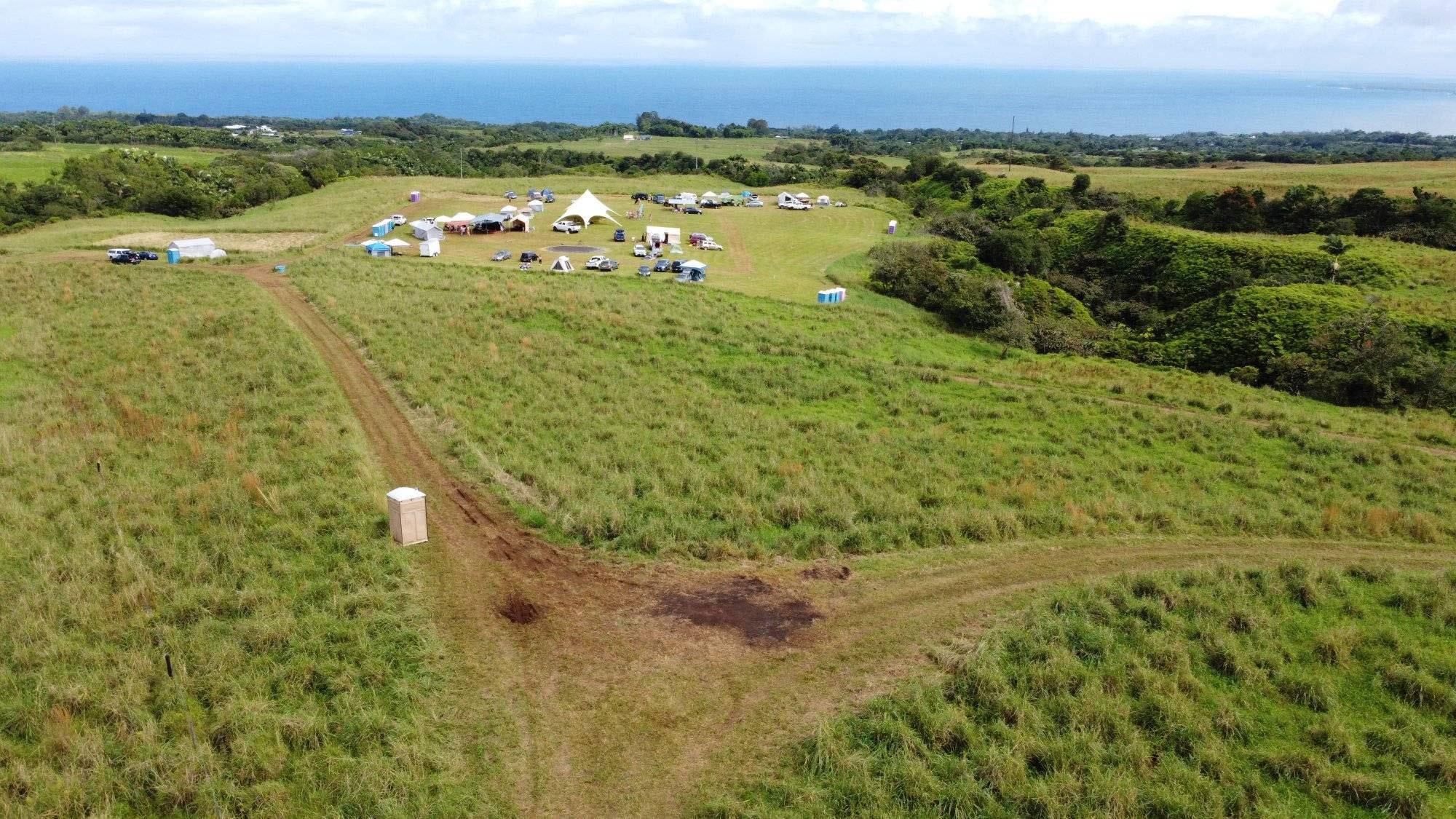
A controversial Big Island festival, which was inspired by the annual countercultural arts event in Nevada called Burning Man, was given the green light to continue to be held in Pāpaʻikou, but with a long list of conditions.
On Thursday afternoon, the Hawaiʻi County Windward Planning Commission voted 4-1 in favor of issuing a special use permit to Teppy Mountain LLC for its “Falls on Fire” festival.
For four days each year, 500 people can camp and attend the festival on a 15-acre portion of a larger 1,419-acre property in the state land use agricultural district.
The approval came after 18 months of contentious discussions, stemming from complaints about previous festivals, and an investigation that led to permit violations and a big fine.
To be able to hold the festival, Pennsylvania native Andrew Tepper, who owns the property at 27-476 Indian Tree Road and the company Teppy Mountain, agreed to more than 20 conditions, which include noise control, road management, fire and food safety, and cultural consultation.
The special use permit application also authorizes the storage of commercial vehicles on the property for a local rancher, Roger Uchima, who leases a large section of the land to graze cattle.
Uchima stores several commercial vehicles and pieces of heavy equipment on a half-acre section of the property, which he rents to others for various jobs.

Tepper, the co-founder of video game developer eGenesis, began holding Falls on Fire in 2023. He said the festival is a gifting event with no for-profit vendors. Attendees can listen to music, dance, make art and learn new skills from others. They also can participate in the burning of an effigy, similar to that at Burning Man, which is held in the Black Rock Desert.
“I think many people are worried,” Tepper said. “They don’t know me well, and the natural inclination is to put restrictions on this, but we can comply with these and have no problem doing so.
“I think we will get to a point where people see that this is not something that will cause problems. I have been holding these festivals for 20 years and I can do it safely and respectfully.”
When the festival was first advertised and held at the property, the County of Hawaiʻi Planning Department received numerous complaints from neighbors. An investigation was opened and it found that Teppy Mountain violated permitting laws in 2023.
In September 2024, Tepper hired Land Planning Hawaiʻi to apply for a special use permit to operate an annual festival event. He was unable to secure the permit in time and held the festival despite repeated warnings. The Planning Department fined the company $34,000 for violations.
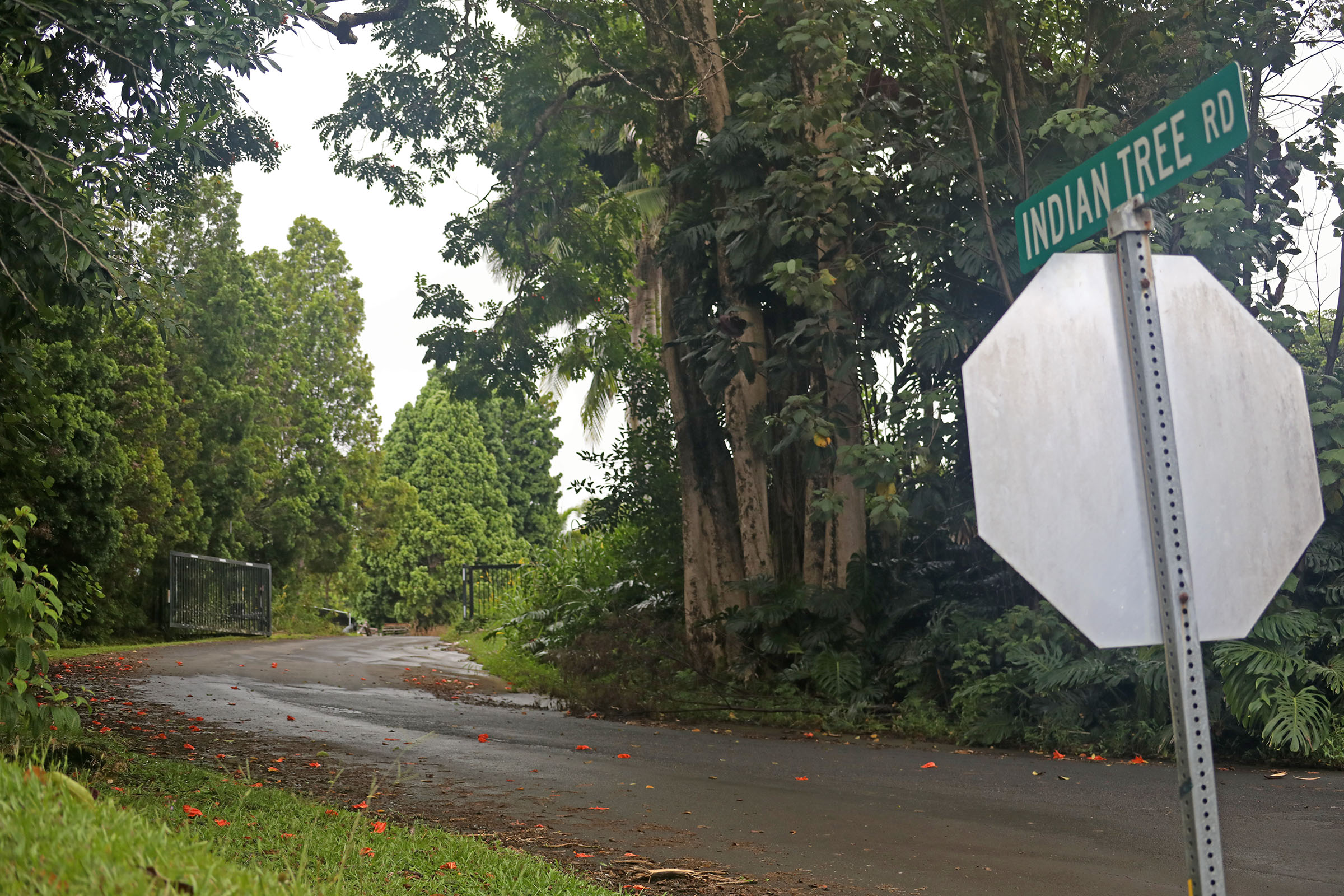
In 2025, Jim McMahon and his wife, Lichuan Huang, who live and operate a cacao farm on Indian Tree Road, filed for a contested case hearing in an attempt to stop the permit from being issued.
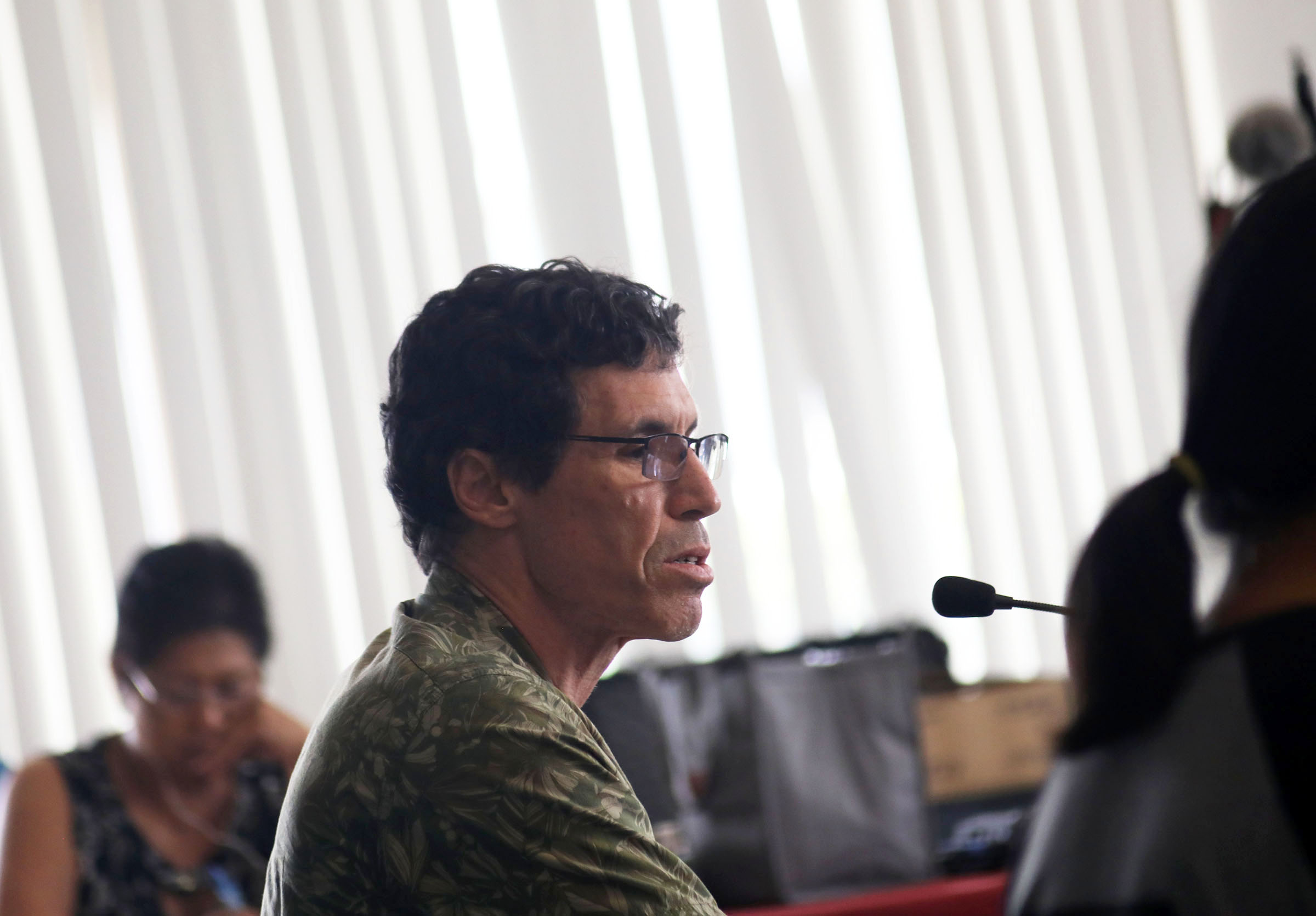
While McMahon and Huang cited issues with traffic and the environmental impacts of Falls on Fire, they mainly testified against the base yard rental business due to the large equipment that uses the private road daily.
“Falls on Fire event has overshadowed other use, for day-to-day use of the heavy equipment base yard,” McMahon said. “The same road that goes to the ranch is the same road that bisects our property, which is why we have concerns that this traffic is occurring in an area that is not suitable for these other uses.”
McMahon said the one-lane private road is several thousand feet long and not fully paved, needing maintainance.
“The noise and vibration show that the road is not properly engineered for this,” he said.
McMahon said the property owners bear responsibility for the private road and air pollution from the large equipment is already a concern, especially when it comes to their chocolate production.
According to the couple, some of the processing of the harvest from their 700 cacao trees takes place outdoors, which is threatened by the diminished air quality from passing trucks.
“There’s a reason for zoning,” he said. “There’s a reason why we separate agricultural, residential and industrial and commercial uses. We don’t usually mix them together, because often they’re not compatible with each other, and I think that’s part of the fundamental issue that we have here.”
In written testimony, McMahon also stated that the Teppy Mountain application is incomplete and there is a broad set of heavy equipment, including backhoes, bulldozers, a telehandler for heavy lifting, a roller for road work, and a large tractor-trailer, which are traveling back and forth on Indian Tree Road.
Jeffrey Darrow, director of the Hawaiʻi County Planning Department, gave an in-depth definition of a special use permit and why it is used with agricultural land applications.
“When we get a proposal, we have to see that it’s unusual, but a reasonable use of land that follows the county and state criteria and guidelines,” Darrow said. “We went through mediation for two days and a contested case hearing that provided a lot of testimony for input.”
He said the hearings officer took in all this information and provided her recommendation to approve with conditions with more than 600 pages attached to the record.
The initial contested case hearing was held on Nov. 13 in Hilo, and the case’s hearing officer handed down a “findings of fact” in February.
While the hearing officer recommended that the festival continue, she also wrote a list of 20 conditions that Teppy Mountain must meet before any festival can proceed. Some of these conditions include:
- Submitting a traffic management plan to the State Department of Transportation District Engineer before each event
- Documenting a pre-use roadway condition assessment and repairing any damages to the road caused by festival traffic
- Notifying the Planning Department, the Hawaiʻi Police Department, and the neighbors at least one month in advance
- Reviewing fire safety plans with the Hawaiʻi Fire Department and the State Department of Health and implementing water tanks used solely for fire
- Offering a sufficient number of portable toilets and ensuring that all food follows State Department of Health requirements
- Ensuring music direction is pointed away from residences and ends by 9 p.m.

While Tepper and his representatives agreed with all the conditions, they pushed back on the music ending by 9 p.m. and offered sound monitors at the edge of the property.
“I’ve talked to most of my neighbors over the last three years, and people had ear plugs and could still hear the bass at night,” Pāpaʻikou resident Linda Day said during public testimony. “I have also had the chance to talk with Mr. Tepper, who was kind enough to take the calls. Although he did change the direction of speakers, he noted that bass is nondirectional.
“These people are telling me their kids couldn’t sleep and had a hard time in school. They had trouble driving to work safely. That is my concern in the neighborhood.”
Casey Jedynik of Captain Cook has attended the event for the past three years and has been a festival lead, often volunteering extra time in preparation for the event. During the hearing, he testified in support of the festival, but also apologized for the impact the sound has had on the area.
“We want to be more courteous about all of it,” Jedynik said. “We can do listening tests and I would personally volunteer as a sound monitor, and I think many others would, too.”
For Sunny Arashiro, a lifelong Pāpaʻikou resident, her concerns stem from the pattern of turning Hawaiʻi into an exhibition, drawing in more visitors, exploiting the land, and continuing what she says is a pattern of colonization.
“We wonder if the unintentional effects of a large event taking place in a rural community are being considered. Events that attract so many act as a catalyst that may change the nature of Pāpaʻikou, which we’ve seen happen again and again across the island.”
Arashiro also shared a petition with nearly 550 signatures opposing the Falls on Fire festival in Pāpaʻikou.
During the hearing, the commissioners asked attorneys representing Tepper an extensive list of questions about the festival and heavy equipment storage. Several questions touched on public safety and road concerns as well as fire mitigation and food preparation.
After making a motion for a vote, Vice Chair Chantel Perrin asked Tepper to sit before the commission and offered him some advice.
“As you can imagine, as a Kānaka Maoli (Native Hawaiian), that was kind of hard because I know where my people stand on this,” Perrin said. “But I’m going to put it on you to steward the land and stand right with the people so that heaven will come down on you.
“Do it right, do it pono (responsible), stay open … please keep those doors open with your community, and if at all possible, please pour back into this community, too.”

When Perrin made a motion to approve Teppy Mountain’s application with conditions, she also added amendments to the special use permit. To put on Falls on Fire, there must be:
- Outdoor noise barriers
- Proof of liability insurance
- Height restriction on effigy to be burned
- Consultation with an established cultural practitioner
“Cultural consultants guide you through the land, which is important for this ahupuaʻa (traditional land division),” Perrin said. “The waterways go from the mountain to the ocean and you must be completely knowledgeable about how what you all do upstream affects downstream. There is an interconnectedness mauka (mountain) to makai (ocean), and this wisdom is necessary.”
For Tepper, he is happy a lot of the “legal stuff” is complete and is planning to host the next Falls on Fire in May 2027.
“The additional requirements are easy enough to do and that is fine with me,” Tepper said “We can pay a survey company, get proof of insurance, all of that, it just takes time.”
When asked about giving back to the community, Tepper said: “My kind of charity is not about giving money to another kind of organization. I like creating something like this that will hopefully make people’s lives better. I like starting new stuff that people find awesome.”