

Advocates call for justice, awareness for missing, murdered Indigenous women, girls and māhū
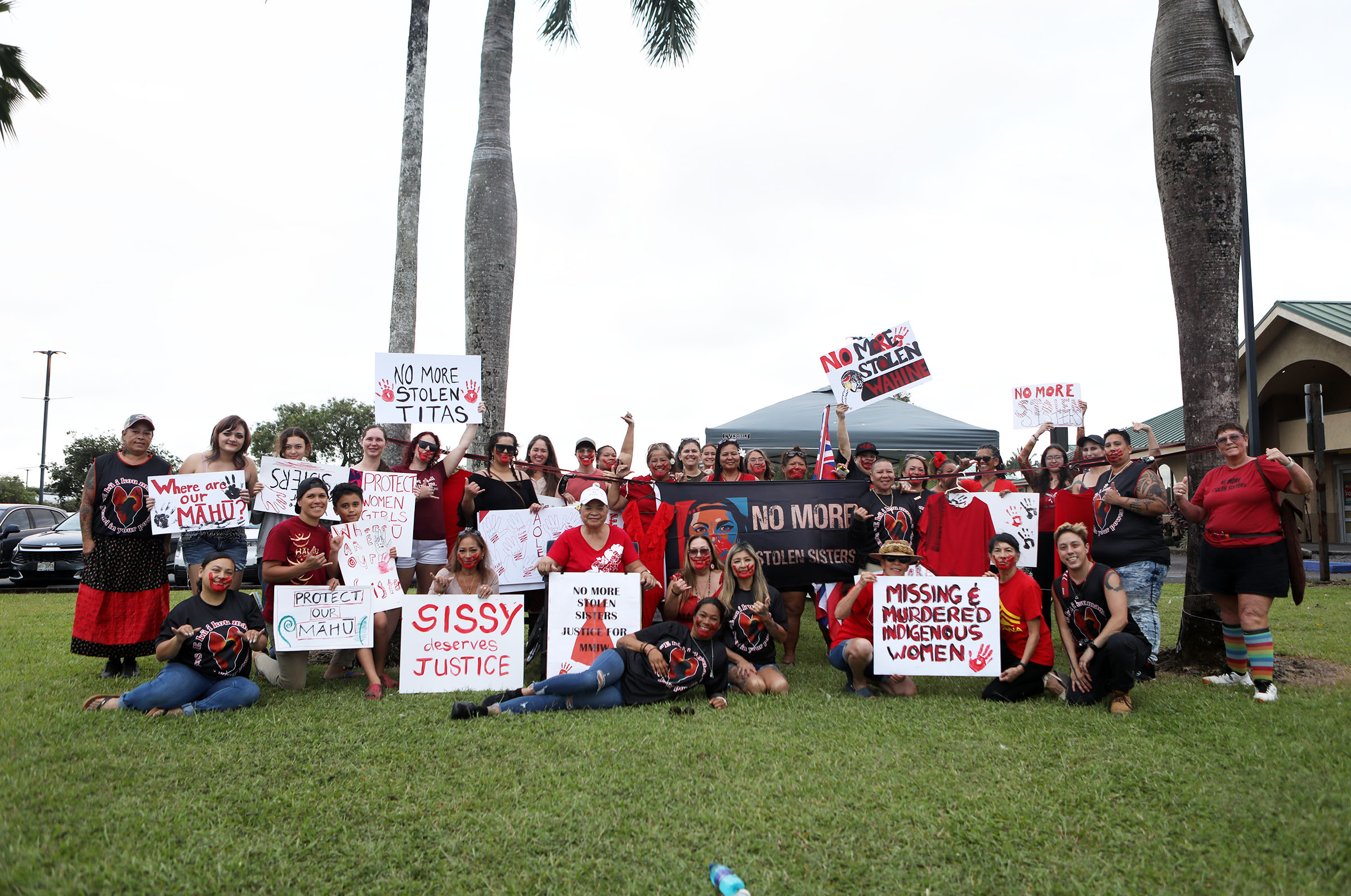
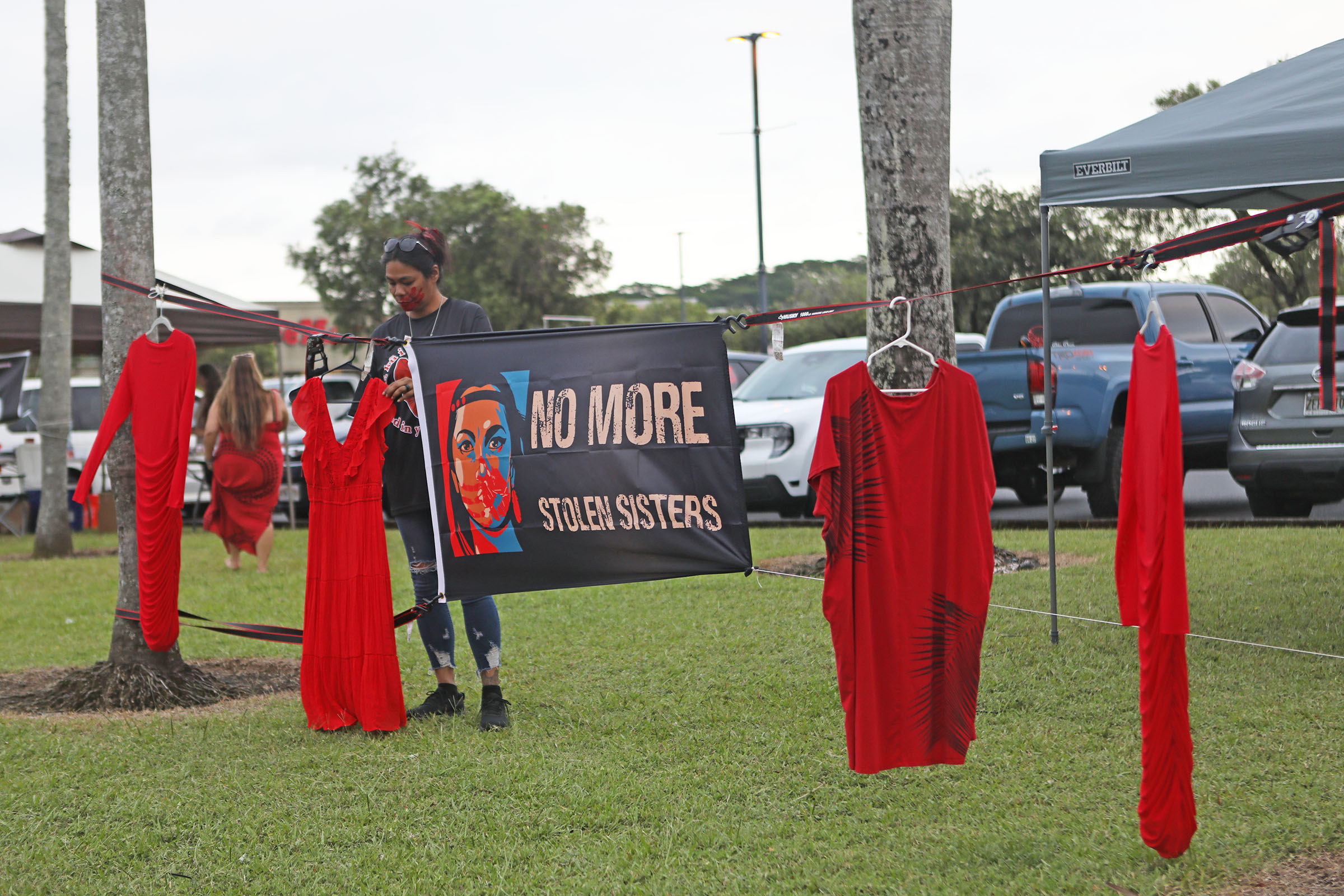
A clothesline strung between two palms held empty, red dresses swaying in the breeze Tuesday as advocates with red handprints painted on their faces honored the lives of missing and murdered Indigenous women, girls and māhū (respected third gender).
Nonprofits He Hoʻomaka Hou Ana o Puna and Kū Ānuenue hosted a sign-waving on the grassy strip outside Ross in Hilo during rush hour on Kanoelehua Avenue for the National Day of Awareness for Missing and Murdered Indigenous Women, Girls and Māhū.
This is the third annual gathering hosted by He Hoʻomaka Hou Ana o Puna, an organization dedicated to uplifting women through comprehensive behavioral health services and peer mentorship. The goal on Tuesday was to spread awareness about the disproportionate violence against Indigenous, Native Hawaiian, Alaska Native and Native American women and girls, as well as transgender and two-spirit people.
Community members, advocates, cultural practitioners, families directly impacted by the crisis, and supporters held signs reading “No More Stolen Wahine,” “Protect our Māhū,” and “Our Sisters Deserve Justice.”
According to a report on missing and murdered Native Hawaiian women and girls from the Office of Hawaiian Affairs, Native Hawaiian children ages 15 to 17 represent the highest number of missing children on Hawaiʻi Island.
“Missing” for this report is defined as women and girls under the age of 18 who are deemed as “runaways” by law enforcement, meaning they voluntarily or involuntarily fled from their parent/guardian and may or may not return. Missing also includes Native Hawaiian women and girls whose whereabouts are unknown, including those who are missing as a result of being trafficked and/or trapped in the military-prostitution complex, a form of institutionalized sexual exploitation of women around American bases.
The report stated that from 2018 to 2021, there were 182 cases of missing Native Hawaiian girls on Hawaiʻi Island, more than any other racial group.
Advocates emphasize that these incidents are a daily reality across the islands, affecting poor, rural and underserved communities with the greatest frequency. However, victims often face systemic gaps, with 95% of cases receiving no media coverage.
According to Renee Rivera, co-director of He Hoʻomaka Hou Ana o Puna, the high cost of living in Hawaiʻi makes people, especially keiki (children), more vulnerable as they struggle to meet basic needs.
“Too often, those needs are exploited by danger, trafficking and other harms disguised as ‘opportunities,'” Rivera said. “Missing women, children and māhū, along with rising violence, have become far too common in our island home.”
According to Dr. Dayna Schultz, lead mentor of He Hoʻomaka Hou Ana o Puna, this is due to rural isolation, high poverty rates, limited access to services, high rates of missing children, and a high volume of domestic violence calls.
“Puna and Kaʻū are repeatedly identified by service providers as high-risk districts, where Native Hawaiian women and girls face disproportionate rates of disappearance, domestic violence, trafficking and homicide,” Schultz said. “Unfortunately, we don’t have accurate statistics, and crime is underreported on Hawaiʻi Island. The police don’t have accurate data, because there are crimes that are ignored or unreported for deeply systemic reasons.”
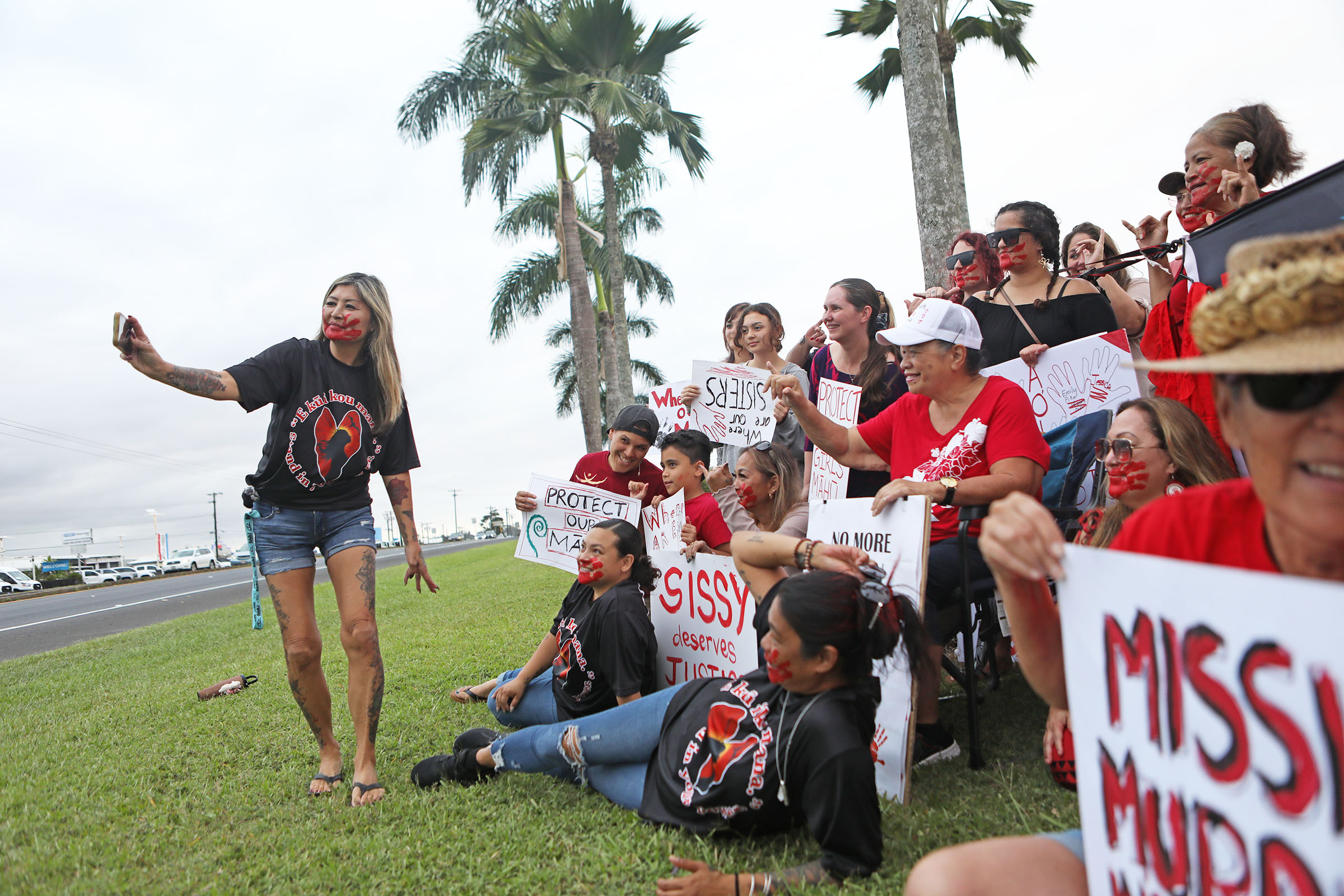
Organizers from He Hoʻomaka Hou Ana o Puna and Kū Ānuenue are calling for improved data collection, culturally grounded response protocols, and long-overdue justice for impacted families.
This year’s gathering centered on the multigenerational destigmatization of survivorship, addressing the historical blood and transgenerational trauma that continues to impact families across the islands.
For Aurora Leanillo, life has been challenging since she was 3-years old and her mother was murdered when they lived in Wisconsin. The case was never solved.
“My mom was of Aztec heritage and was 27 when she was murdered,” Leanillo said. “I face a lot of issues in my life that were tied to that. Some of my brothers and sisters were with Child Welfare Services, I was bounced around family members and would often gravitate toward people who felt motherly to me, which caused even more issues throughout my life.”
Over the last couple of years, Leanillo has found community with the women at He Hoʻomaka Hou Ana o Puna. When she began attending group gatherings, she found women who faced similar traumas in their lives.
“With He Hoʻomaka Hou Ana o Puna, the support that I have been given is phenomenal and something I am so grateful for,” Leanillo said. “The women in this group have opened me up to more opportunities to heal, and then I can help others in return.”
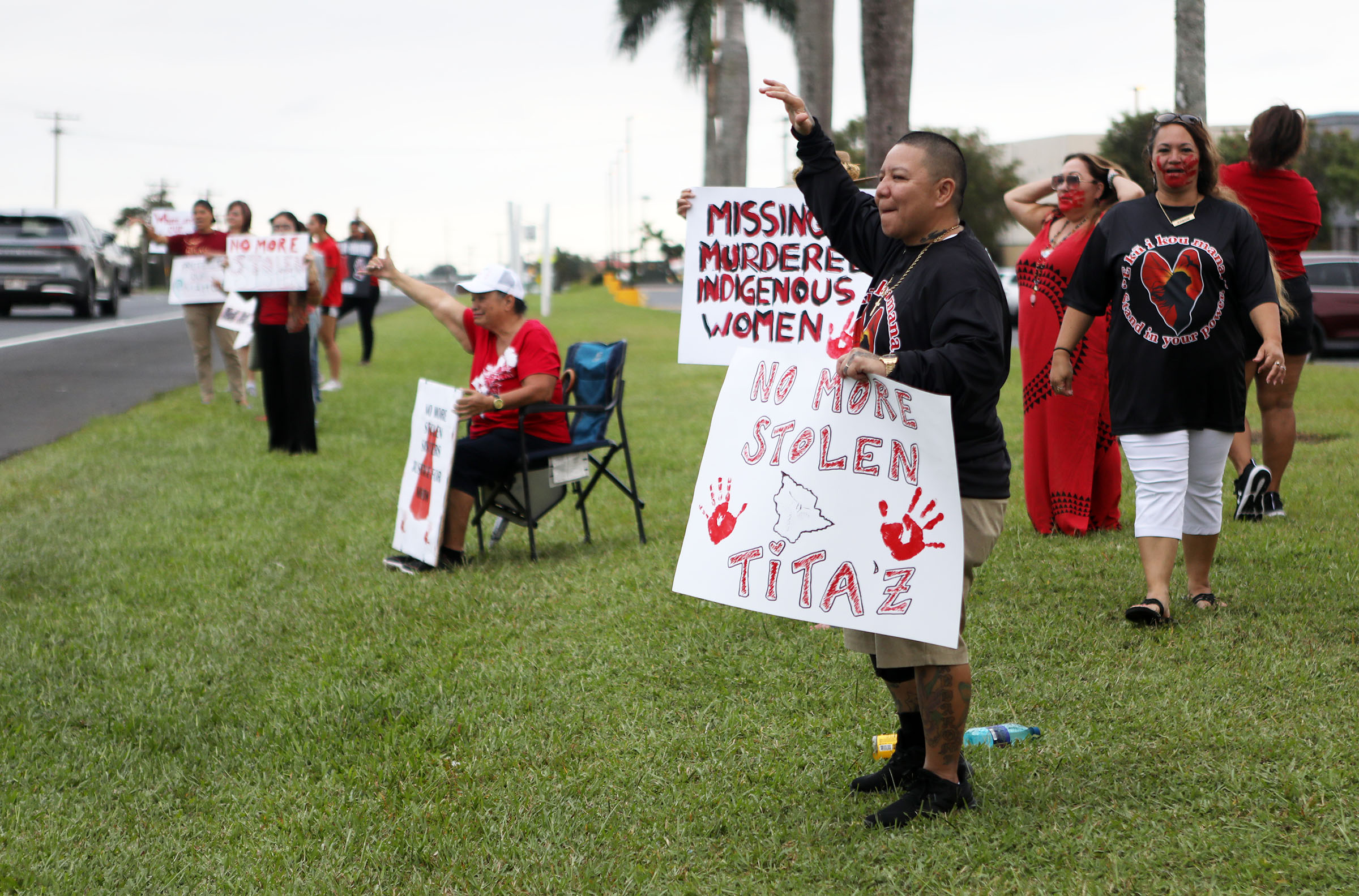
Rivera hopes that this annual sign-waving event continues to turn the busy roadside into a site of active resistance and solidarity, while helping to strip away the shame often attached to transgenerational trauma.
“I think a lot of victims, especially in Indigenous communities, have been silenced or don’t talk about these issues,” Rivera said. “But when we silence ourselves, the healing from trauma never comes. Our kūpuna (elders) went to the grave with secrets they carried. We want to unpack that and unpack what we as women have to walk through in this life currently. It takes a lot.”
Kū Ānuenue is a small grassroots organization located in Hilo that serves as a community of care for LGBTQIA2S+ people. Their offerings include support groups, a judgment-free closet, and alcohol-free social events to provide a sober space for the māhū and queer community to meet each other.
“This particular event … helps to put more eyes on the fact that there are so many missing māhū,” said Jessica Waiaʻu, founder of Kū Ānuenue. “There’s a lot of interpersonal and intimate partner violence in māhū relationships that don’t really get talked about, and this is an opportunity for that to come to the surface.”
When talking about Kū Ānuenue, Waiaʻu highlighted the importance of involving keiki to kūpuna when it comes to advocacy events.
“This is an opportunity to share what is happening to our people with our keiki,” Waiaʻu said. “The reality is that we have to teach them because we want them to stay safe, but to also carry on the work when they get older.”
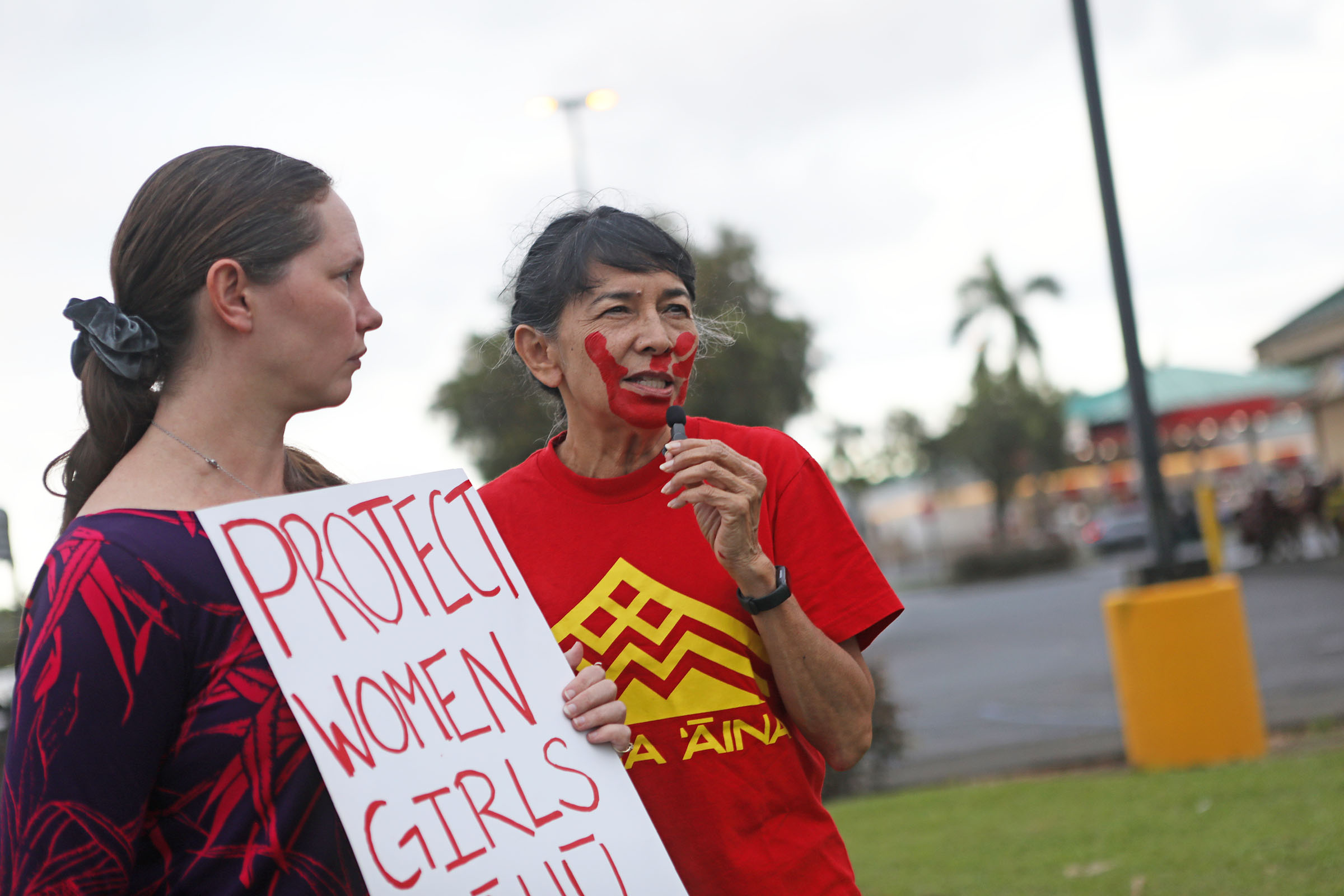
Hawaiʻi County Council candidates Shannon Matson, who is running for District 5, and Cyd L. Makanui Hoffeld, who is running for District 4, also waved signs and shared what they want to see for the future when it comes to missing and murdered Indigenous women, girls and māhū.
“Our keiki are so trusting, and I think that it would help to have required programming for our schools that teaches keiki about these issues in the world, how to stay safe and where to go for help,” Makanui Hoffeld said.
“I do think there is more that can be done as far as victim advocacy within the Prosecuting Attorney’s office,” Matson said. “When victims report crimes, they are often left without direct help and may stop pursuing justice for any reason.”
Leanillo asks that the community honor her mother and other missing and murdered individuals by approaching everyone with an open mind and heart.
“When you see something, say something,” Leanillo said. “That can be for reporting issues or if you notice a woman, or anyone, in your life going through something. Be an open, supportive ear for them. Help each other find community, because when you have the right people in your life, you can thrive.”
For women-centered programs and information about future events, visit the He Ho’omaka Hou Ana O’ Puna website, or contact Rivera at rrivera@hehoomakahouanaopuna.org.
To learn more about Kū Ānuenue or support their programs, visit the website, or follow the Instagram.