



Expansion of Hilo Benioff Medical Center making progress; clinic building to open in June
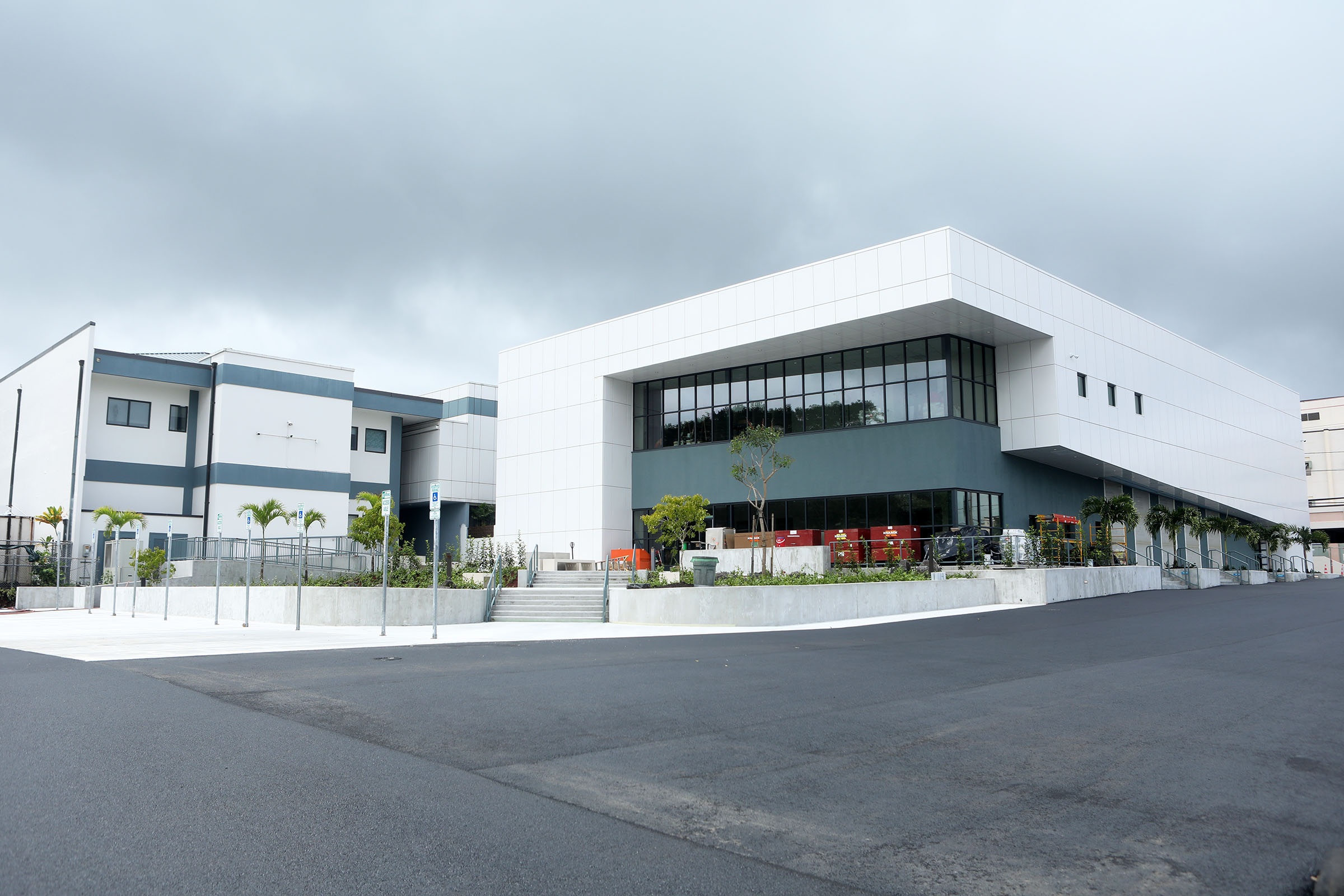
As part of the ongoing expansion of the Hilo Benioff Medical Center campus, a new 20,000-square-foot clinic building is preparing to open in June and a 55,000-square foot building with 55 patient beds is expected to be completed in early 2027.
The new smaller Medical Office Building 3 will be part of the East Hawaiʻi Health Clinics, bringing the total square footage of the clinics’ three buildings to 50,000. It will house urgent care, general surgery, plastic surgery, vascular surgery and neurology.
The new building will allow the East Hawaiʻi Cancer Centers located at Medical Office Buildings 1 and 2 to have more space for staff and patients. There also will be more room for off-campus specialties, such as dermatology, to move closer to the hospital campus.
Twenty-two parking spaces will be added around the new medical building, with a breezeway connecting all three clinic buildings.
The new larger medical facility on the hospital’s west side also is under construction. Recently, the facade and architectural elements matching the hospital were completed. The windows were installed and the walls are nearly complete.
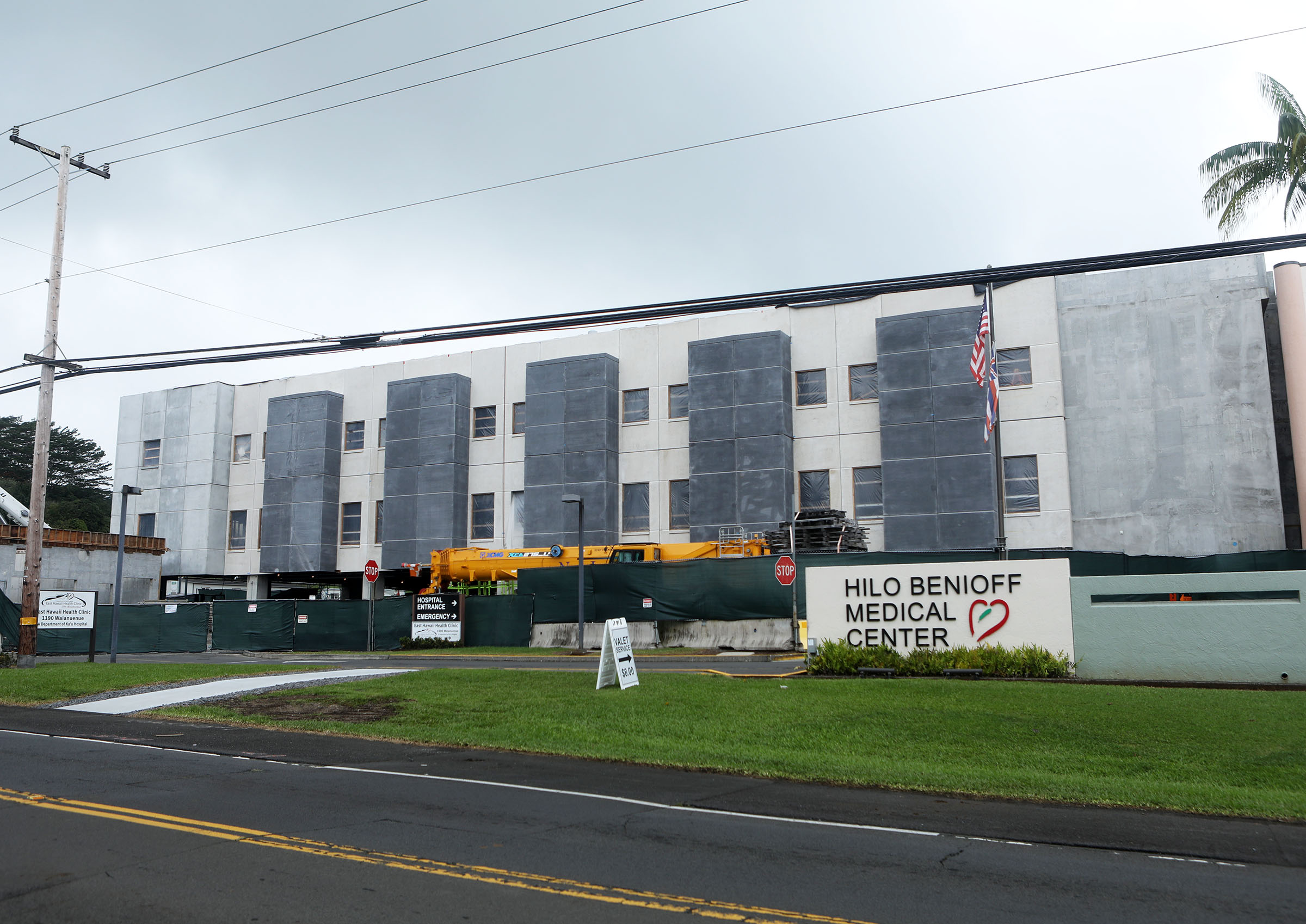
The ground floor will be a covered parking lot. The second floor will house a 19-bed intensive care unit, and the third floor will be a 36-bed progressive care unit for patients who aren’t in critical condition but require hospitalization during treatment and recovery.
“This expansion reflects what the quality of care is inside the building,” said Elena Cabatu, director of marketing, legislative and public affairs at Hilo Benioff Medical Center. “The new ICU, the new patient beds, and the improvements to the building parallel the improvements we make to care. This is the hospital our community deserves.”
Crews have been working on the new buildings since a groundbreaking took place nearly two years ago that was attended by Hawaiʻi Gov. Josh Green, a doctor who formerly worked on the Big Island.
“Today marks a great day for health care in our state as we break ground on this historic project to increase hospital bed capacity on Hawai‘i Island,” Green said at the time.
The new 55,000-foot-medical center, the new clinic and a new 12-bed birthing center is being funded through a $100 million public-private partnership with $50 million from the state and a $50 million donation by Marc and Lynne Benioff. The hospital was renamed after the couple.
The funding also addresses a gap in Hilo Benioff Medical Center’s neurosurgical services and supports a physician recruitment program.
Throughout the construction, Hilo Benioff Medical Center has been overcapacity, leaving medical staff to maintain flexibility with a limited amount of space. Several departments temporarily or permanently have had to move to different locations within the hospital.
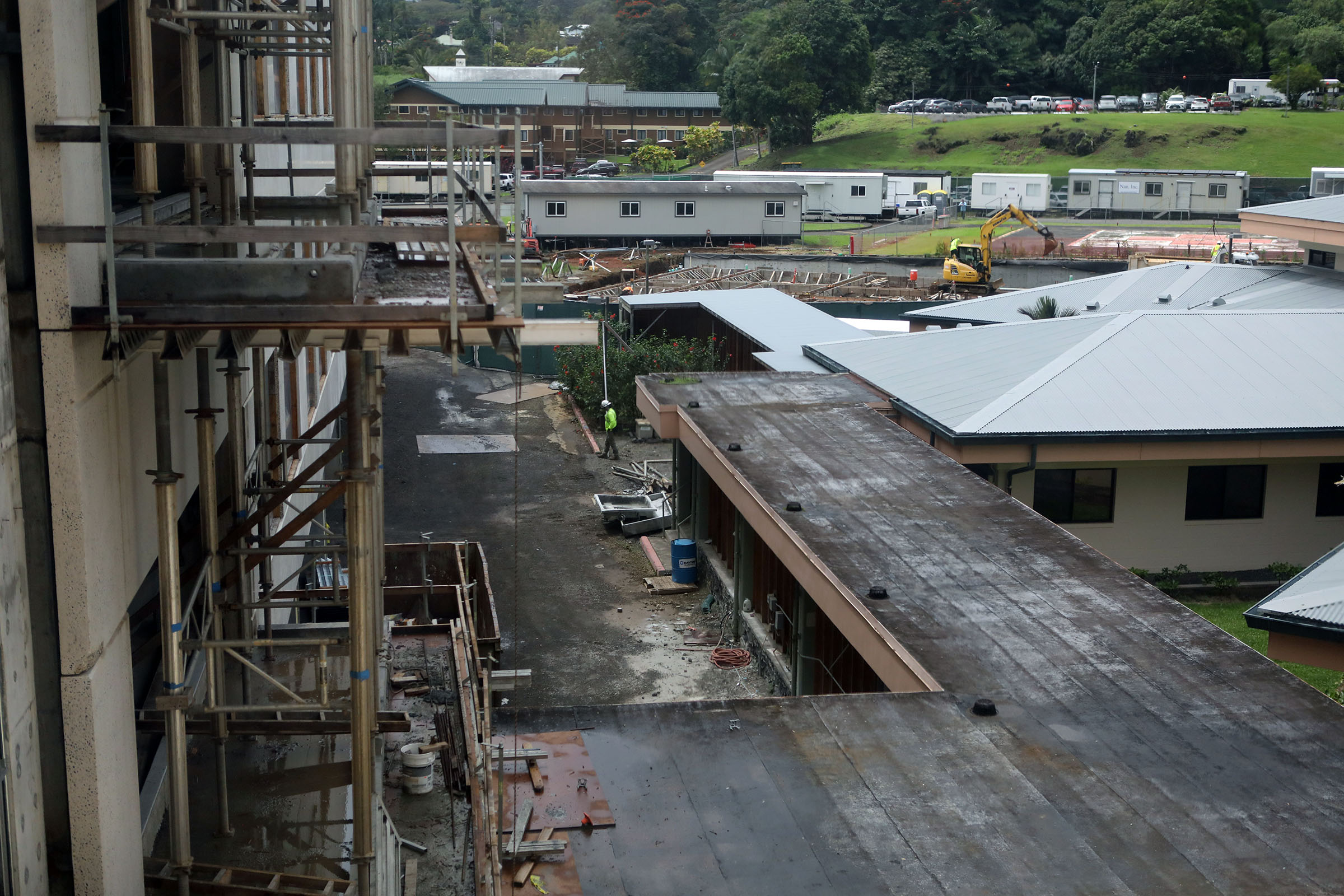
“I think what’s proven is that the patient census has been really steady and has been supporting, throughout the build, the need for more beds,” Cabatu said. “Everyone has been flexible with the moves, and it will be nice when we can make a permanent map and have every department close together.”
Currently, the laboratory that analyzes patient samples and a simulation lab for students are being moved to a new area on the ground floor of the hospital.
A new behavioral health clinic is now located in the old administration building next to the hospital, and administration has moved to a small house near the campus while they await a new building.
“Having our staff work through active construction is really tough, and they’ve risen to the occasion,” said Kris Wilson, chief information officer at Hilo Benioff Medical Center. “They’ve done really well to accommodate us to the best of their abilities. It’s difficult right now, but it’ll definitely be worth it in the end.”
The area formerly used for short hospital stays has moved to the first floor, while a specialized family birthing center is being constructed in its place on the second floor. This update to the facility will offer premium care to mothers and babies.

The East Hawaiʻi Region of the Hawaiʻi Health Systems Corporation, which oversees Hilo Benioff Medical Center and the East Hawaiʻi Health Clinics, has enough doctors and staff who will be ready to treat patients in their departments within the new medical office building, Cabatu said.
Currently, there are no plans for new departments to be added.
“Within the hospital, we have staff who are helping with overflow, and our clinics are well-staffed,” Cabatu said. “Of course, we are always recruiting for more, but we do have the doctors and nurses necessary to treat the constant flow of patients that keeps us overcapacity.”
She said COVID-19 sparked an exodus of health care workers, and the hospital had to focus on recruitment. However, there has been an investment in medical training programs that have been successful.”
Since it began in 2010, the nurse residency program has doubled in size in recent years. This most recent class of 27 is graduating in the fall, and many of them likely will stay on the Big Island.
“We have many nurses who choose to stay with us because they feel invested in the community and want to serve their hometown,” Cabatu said. “Through the certified nursing assistant training program, we have been able to fully staff the Honokaʻa Hospital, which impacts us at the hospital and our constant surge into the emergency room.”
Honokaʻa Hospital offers emergency, acute and long-term care with 77 beds supported by medical staff.
“We ultimately want to care for patients in a comfortable space that is closer to them,” Cabatu said. “We do get feedback about investing in preventive care through our rural health care clinics, so we have worked to increase access to care in Keaʻau and Pāhoa and have maintained the clinic in Kaʻū for years.”
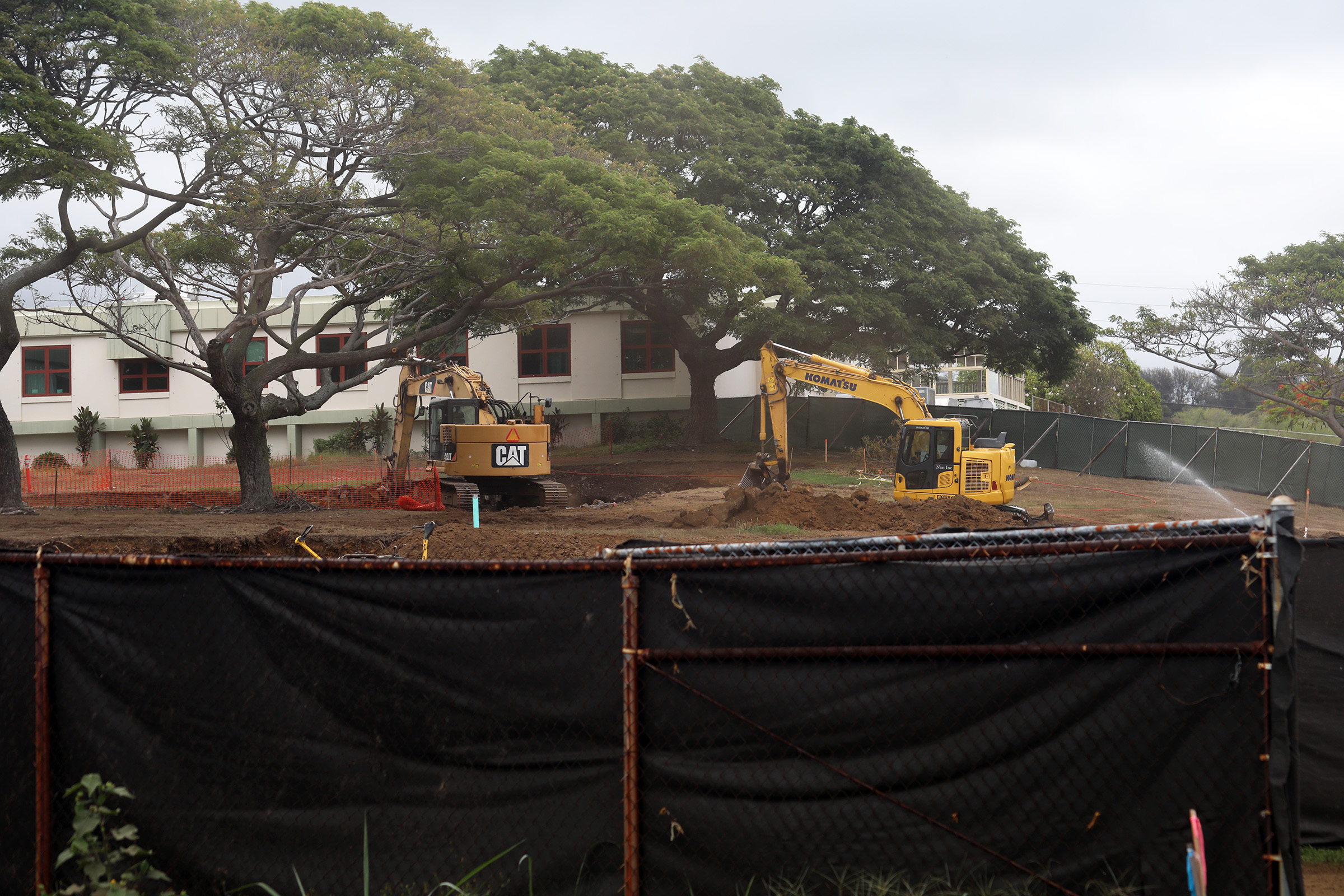
While Kaʻū Hospital has been undergoing consistent renovations, it has maintained a 24/7 emergency department, on-site family practice rural health clinic, inpatient medical and rehabilitation care, and X-ray and lab service for residents of the rural community who would otherwise have to travel 45 minutes to an hour to the nearest medical center.
Ka‘u Hospital’s enhancements include the addition of five new exam rooms, bringing the total to nine, as part of a 7,000-square-foot renovation of existing office spaces and a long-intended build-out of the facility’s backside below the main entrance level.
The Hawaiʻi Island Family Residency training program was designed to train patient-centered, culturally responsive family physicians to learn the full spectrum of care by working in Kaʻū and other rural Big Island communities. The program has helped staff hospitals and medical centers across the island.
Primary care patients of the East Hawaiʻi Health Clinics, located at 1285 Waiānuenue Ave. and 45 Mohouli St., who live in Puna are eligible for home visits if they meet certain criteria.
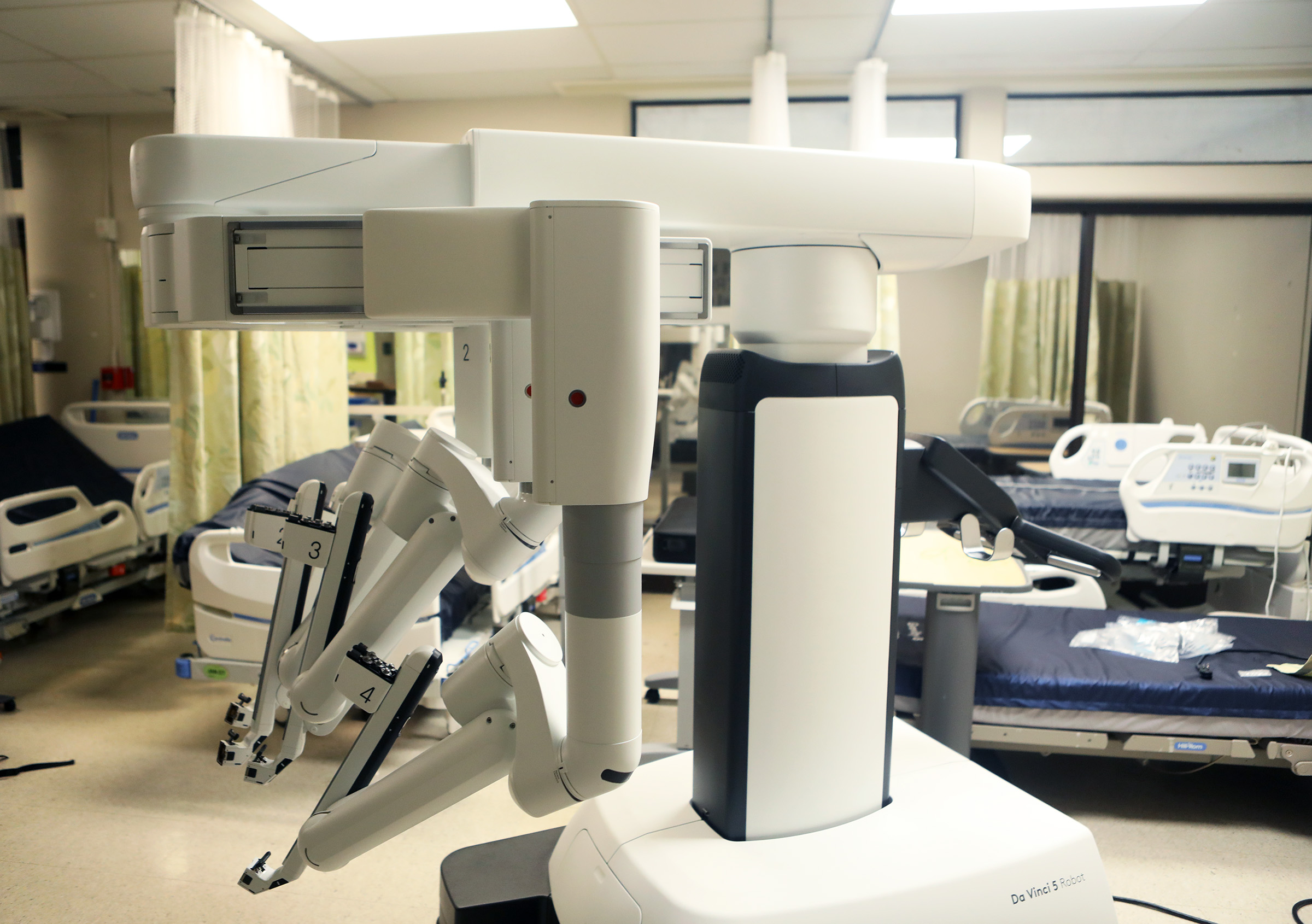
While the physical expansion has been the focus of the $100 million appropriation to the Hilo Benioff Medical Center, leadership is also dedicated to expanding the quality of care and investing in technologies at the hospital, especially with the recent acquisition of two surgical robots.
“These robots, which are the newest robots statewide, are for minimally invasive surgery and can only be used by surgeons who have been trained to use them,” Cabatu said. “Right now, we have qualified surgeons in general surgery, urology and gynecological surgery.”
Last year, the Benioffs pledged another $25 million for the new Keaʻau Benioff Medical Center, which will provide urgent care, primary care, behavioral health, imaging and a pharmacy to the consistently growing Puna District.
“Puna needs more access, and we want them to have a way to get their primary care without having to drive to Hilo,” Cabatu said. “This will also create 120 jobs in the area.”
According to Cabatu, the plans are set and construction can begin as soon as the proper permits are approved.
“We believe our patients throughout the island deserve quality care, which is why we are focusing on so many different things,” Cabatu said. “There is a lot going on, but this is a great time to be part of the hospital.”
Sponsored Content


Subscribe to our Newsletter
Comments