



‘Living laboratory’: University of Hawaiʻi at Hilo genetics students visit traditional Hawaiian fishpond in Keaukaha
Lab instruction in genetics at University of Hawaiʻi at Hilo is not limited to rooms filled with beakers and microscopes.
These students literally get their hands on and work in the biological systems they study.
One University of Hawaiʻi at Hilo genetics class and their geneticist professor, University of Hawaiʻi at Hilo assistant biology professor Natalie Graham, recently got out of the classroom and into the field — and water — at Kaumaui, a traditional Hawaiian fishpond, or loko iʻa, in the Keaukaha community of Hilo situated on the southern side of Hilo Bay.
The aspiring biologists and researchers teamed up with community stewards of the fishpond to collect water samples for DNA testing back at University of Hawaiʻi at Hilo’s ʻElala Biodiversity Laboratory, which was founded by Graham, as well as assist with preservation efforts of the fishpond’s rock walls.
“We have worked with the stewards of this place in spring and fall 2025 as well,” said Graham.
This type of active field work puts students in a living system where they see biology at work while learning how to conduct scientific investigations of fish and fisheries.
They also discover loko iʻa restoration practices and ways in which these traditional Hawaiian fishponds support sustainable food practices in the community.
The holistic approach of conducting science while recognizing, honoring and participating in Native Hawaiian cultural traditions is a hallmark of many University of Hawaiʻi at Hilo labs.
“Bringing Western science and Hawaiian culture together creates a powerful synergy that honors generations of kilo [careful observation] and the ancestral natural history preserved in ʻike kūpuna [ancestral knowledge],” Graham said, noting that Western science and cutting edge technology are resources the university is positioned to provide as needed for local stewardship and restoration.
Kaumaui is owned and managed by Hui Hoʻoleimaluō, a local nonprofit dedicated to Hawaiian fishpond restoration and community education that expanded its stewardship along the Keaukaha coastline in 2021 to include 3 acres of ʻāina, or land, and loko wai, or anchialine pools, at Kaumaui.
The loko wai at Kaumaui are a mix of fresh and salt water, creating a unique brackish, or waikai, ecosystem — an oasis that nurtures juvenile fish, endemic seaweed, seabirds and native plants.
It’s a perfect place for restorative action and use as a “living laboratory” for students of all ages, including keiki, older schoolchildren and, in this case, university scientists-in-training.
Graham, her students and their mentors worked alongside Hui Hoʻoleimaluō community leaders ʻElika Jardin and Manoa Johansen plus ʻElala Biodiversity Lab manager Hannah McKLamb as part of their stewardship and study the day of the field trip at Kaumaui.
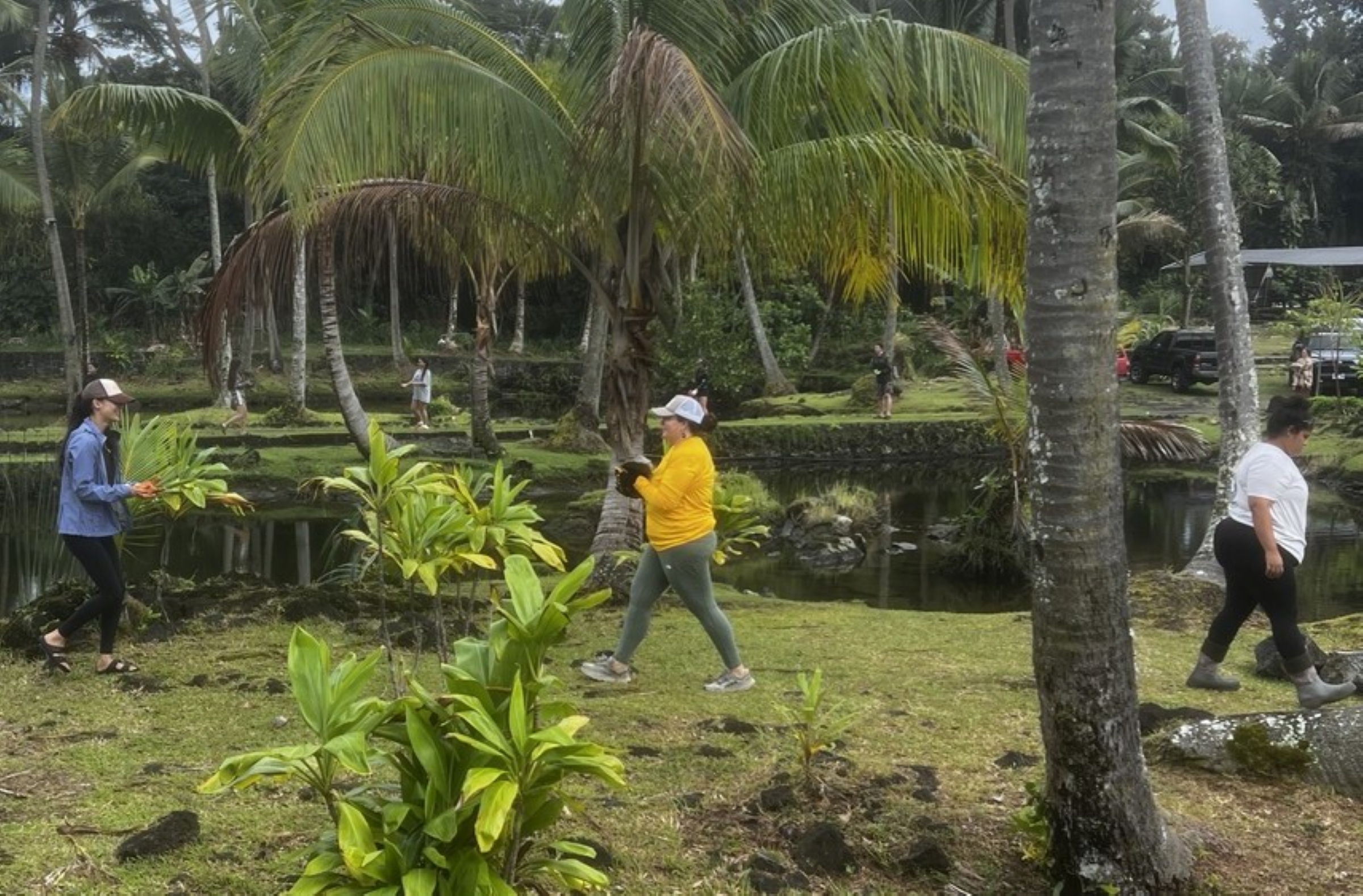
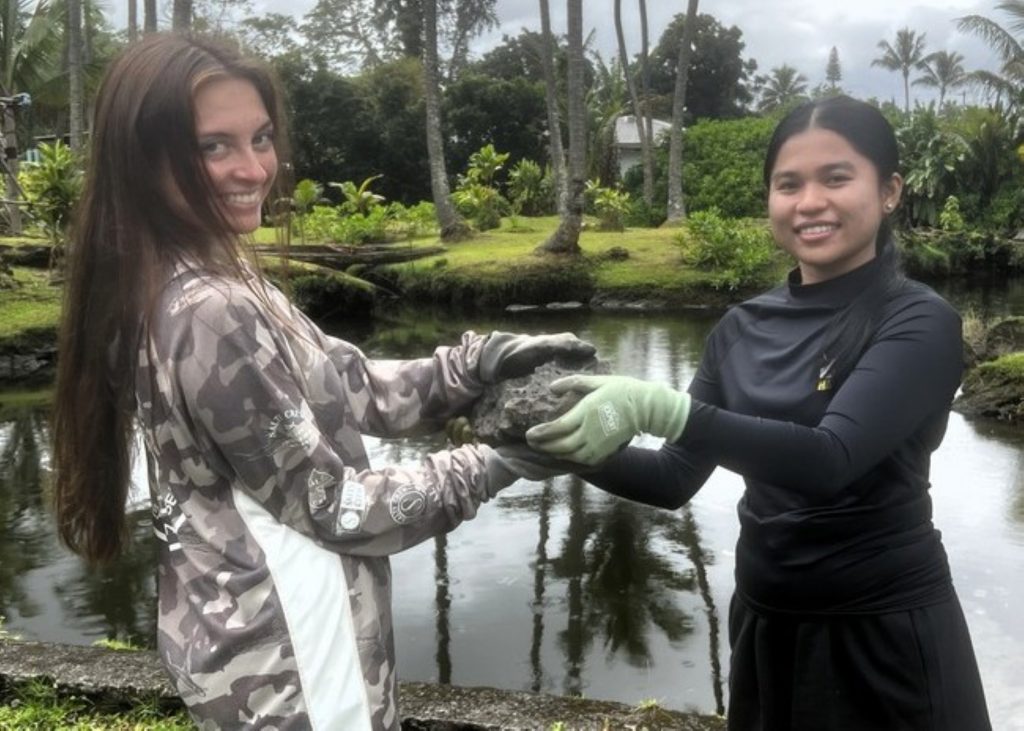
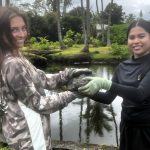
They formed what you could call a human conveyor belt, passing rocks from one person to the next to be placed in the fishpond’s rock wall as part of restoration efforts.
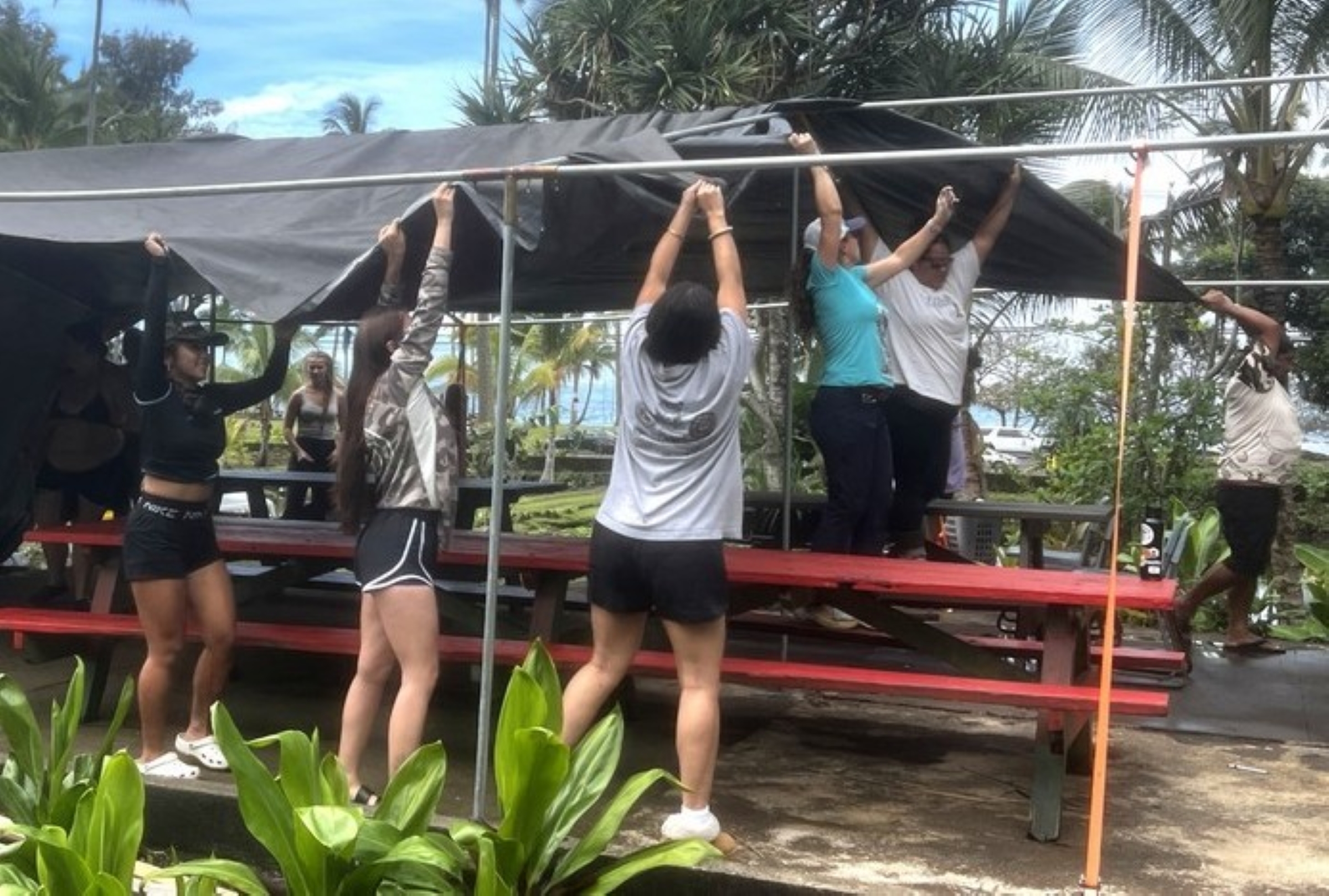
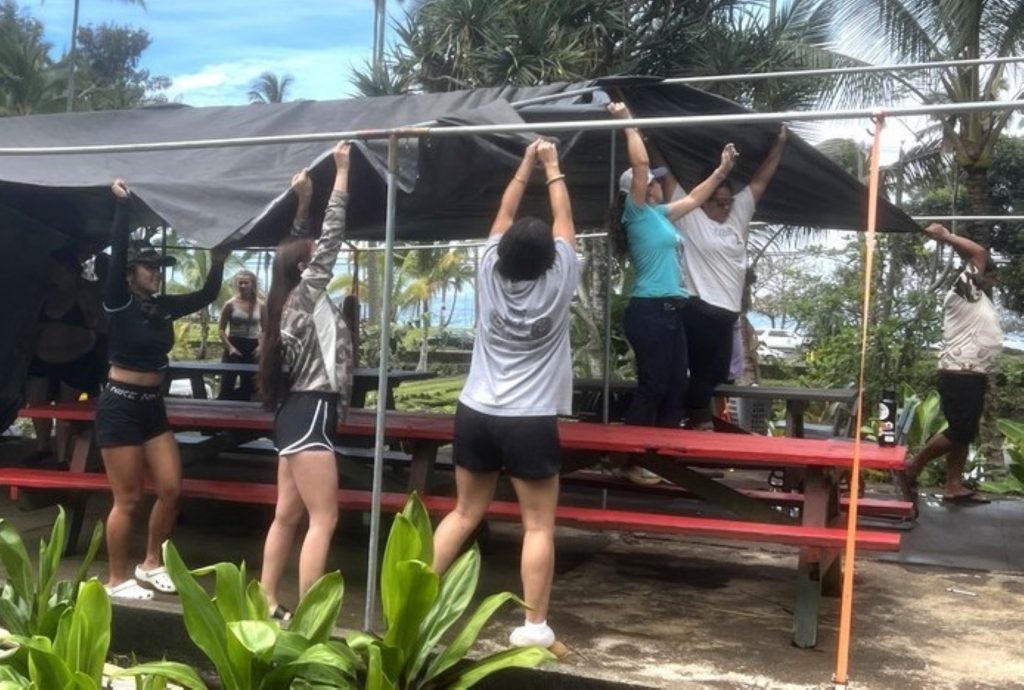
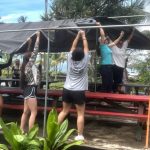
The students also helped secure land-based shelters after inclement weather the previous day — including heavy rainfall and blustery winds — that caused schools statewide to close, including the University of Hawaiʻi at Hilo campus.
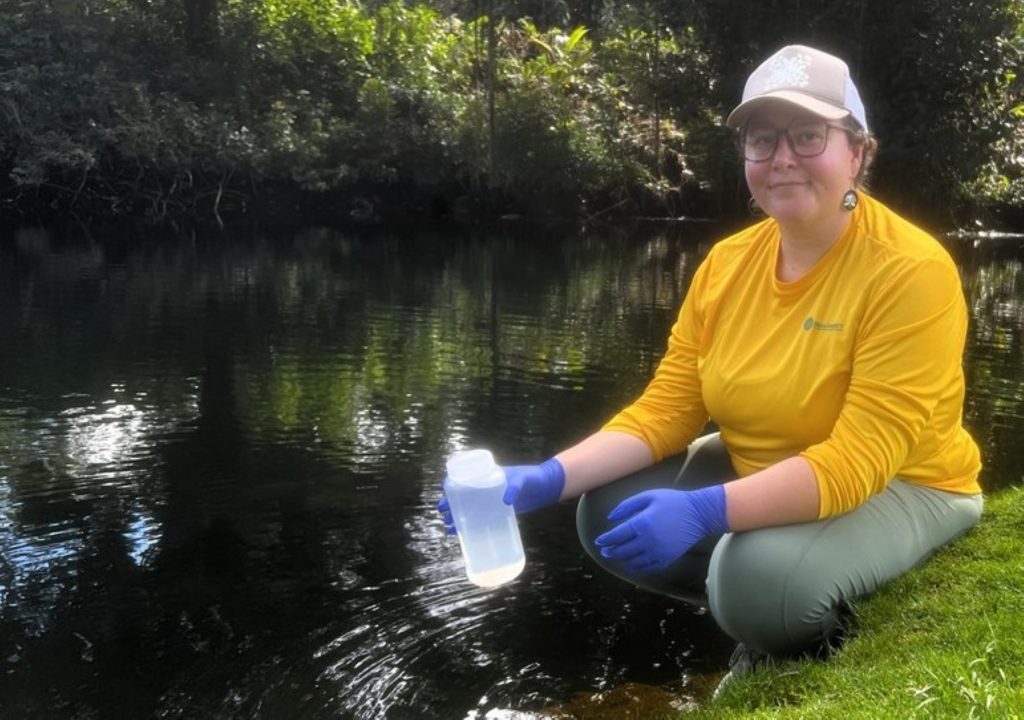
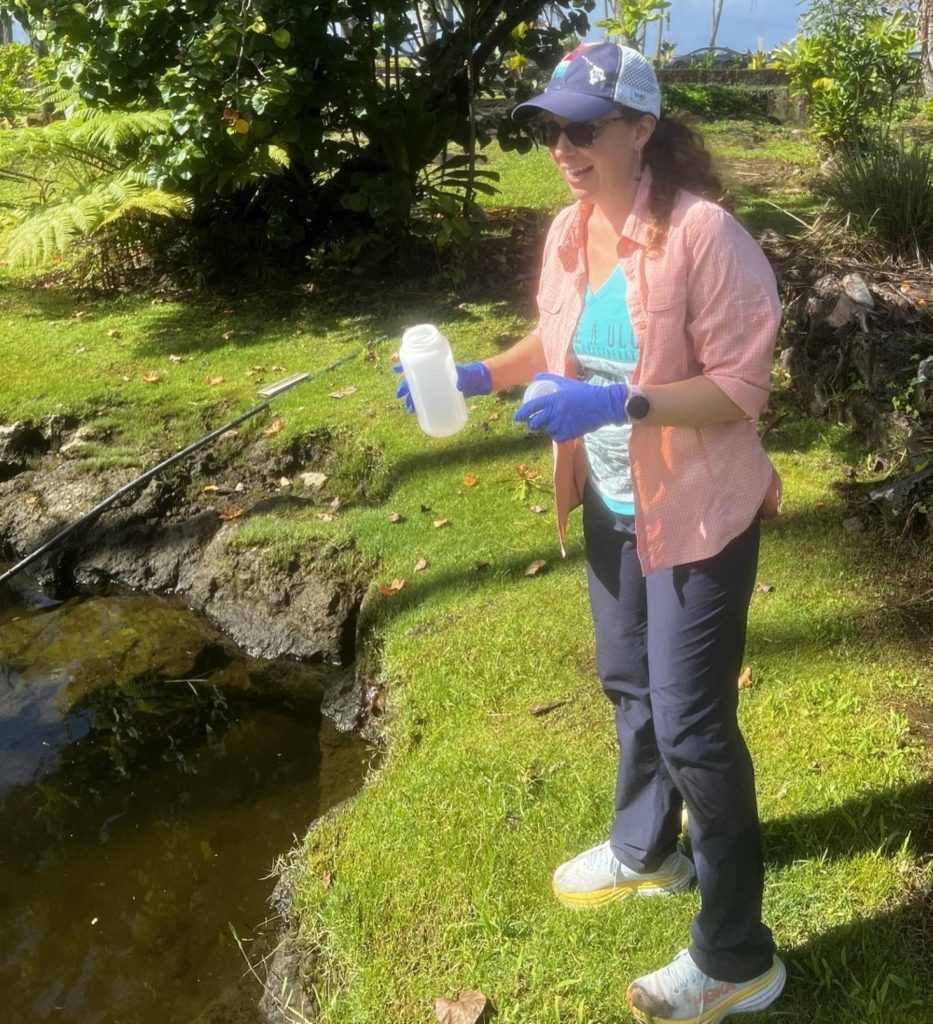
Bio students and their mentors also were able to collect fish DNA by means of water samples while they were at Kaumaui, which will be analyzed at ʻElala Biodiversity Lab.
“The samples are a semester-long experiment conducted by the Biology 376L Genetics Lab class,” said Graham. “The aim is to discover what the relative abundance is of the fish species in the ponds as well as the limu [a general term for all kinds of algae, seaweed and water plants] they feed on.”
 Hannah McKLamb, manager at University of Hawaiʻi’s ʻElala Biodiversity Laboratory, collects a water sample Feb. 10, 2026, during a student field trip to Kaumaui, a traditional Hawaiian fishpond, in Keaukaha.
- University of Hawai’i at Hilo students help repair a shelter at Kaumaui during a recent field trip to the traditional Hawaiian fishpond in Keaukaha in Hilo.
- Students pass a rock to be used for fishpond restoration at Kaumaui.
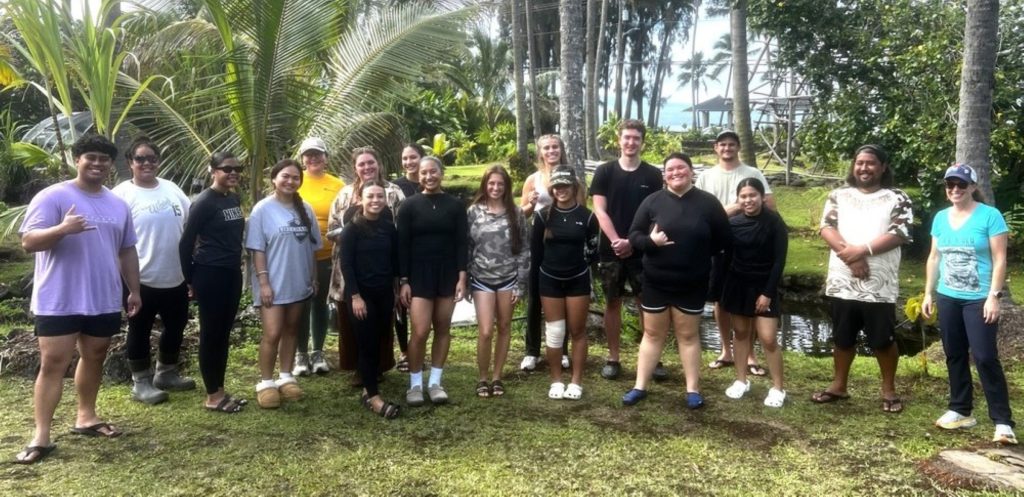
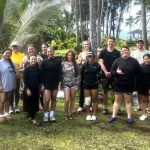
- A University of Hawaiʻi at Hilo genetics class along with their biology professor and geneticist Natalie Graham (far right) at Kaumaui loko iʻa on Feb. 10, 2026, in the Keaukaha community of Hilo.
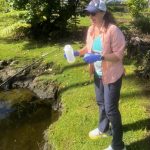
- Assistant biology professor Natalie Graham prepares to collect a water sample Feb. 10, 2026, at Kaumaui loko iʻa in Keaukaha.
This story and accompanying photos were produced by University of Hawaiʻi at Hilo philosophy major Zackary Walters and Big Island Now is sharing it after its original publication at the UH Hilo Stories website.
Sponsored Content

_1770333123096.webp)

Subscribe to our Newsletter
Comments