



Hundreds honor life, legacy of beloved kumu hula Nālani Kanakaʻole
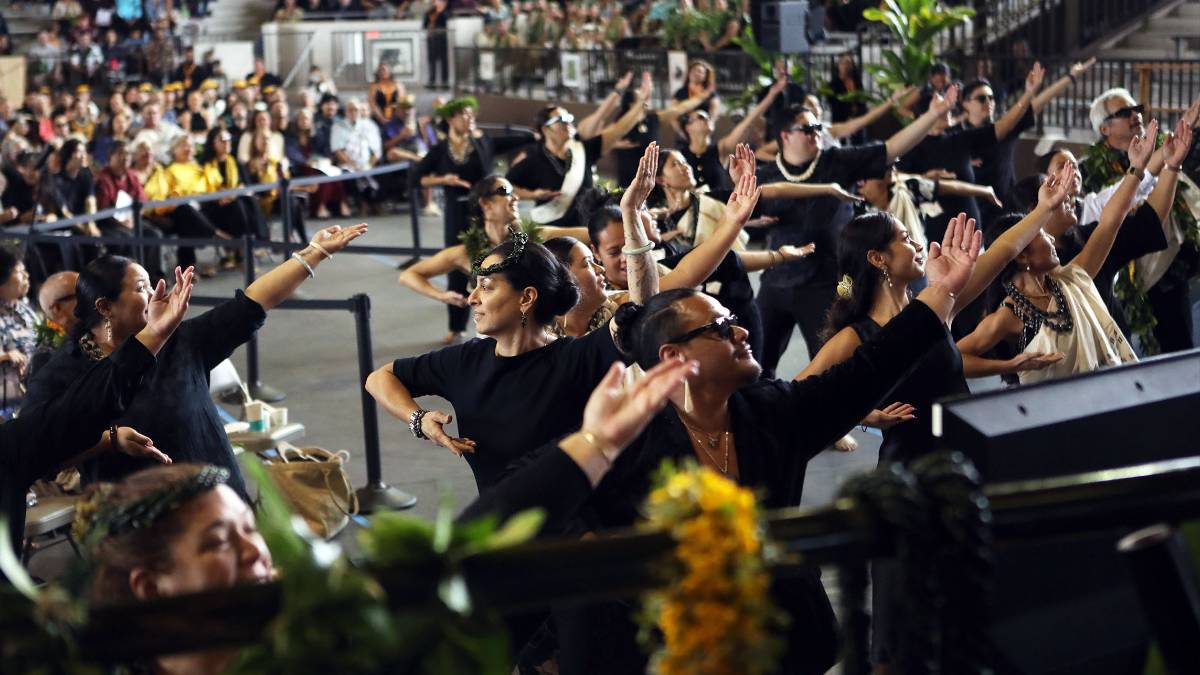
“When she was 5 years old, in her mind, she was kumu hula,” Pualani Kanakaʻole Kanahele said about her sister.
“She had an ʻipu in hand and she was ready for it at a very young age.”
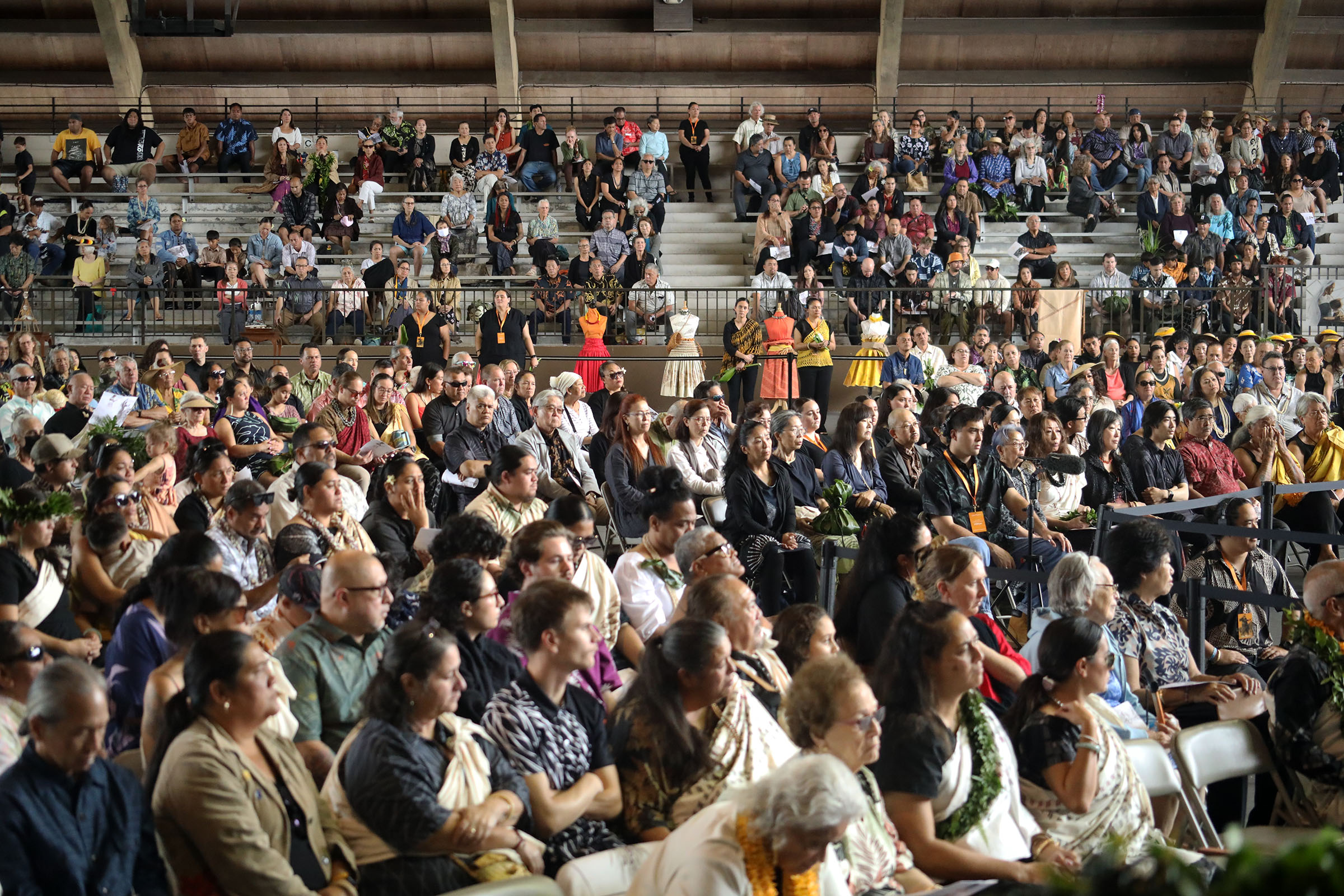
The young girl grew up to be the revered kumu hula Nālani Kanakaʻole. On Saturday, she was memorialized in Hilo at Edith Kanakaʻole Stadium, a place named after her mother.
The traditional Hawaiian hoʻolewa (funeral), services and protocol honored her life and legacy, with her impact visible by the hundreds of family, friends, hula students from the past and present and community members who attended despite light rain.
During the hoʻolewa, Kanahele said her sister continued the family tradition of hula and worked tirelessly to teaching her students at Hālau o Kekuhi until she died on Jan. 3 at age 79.
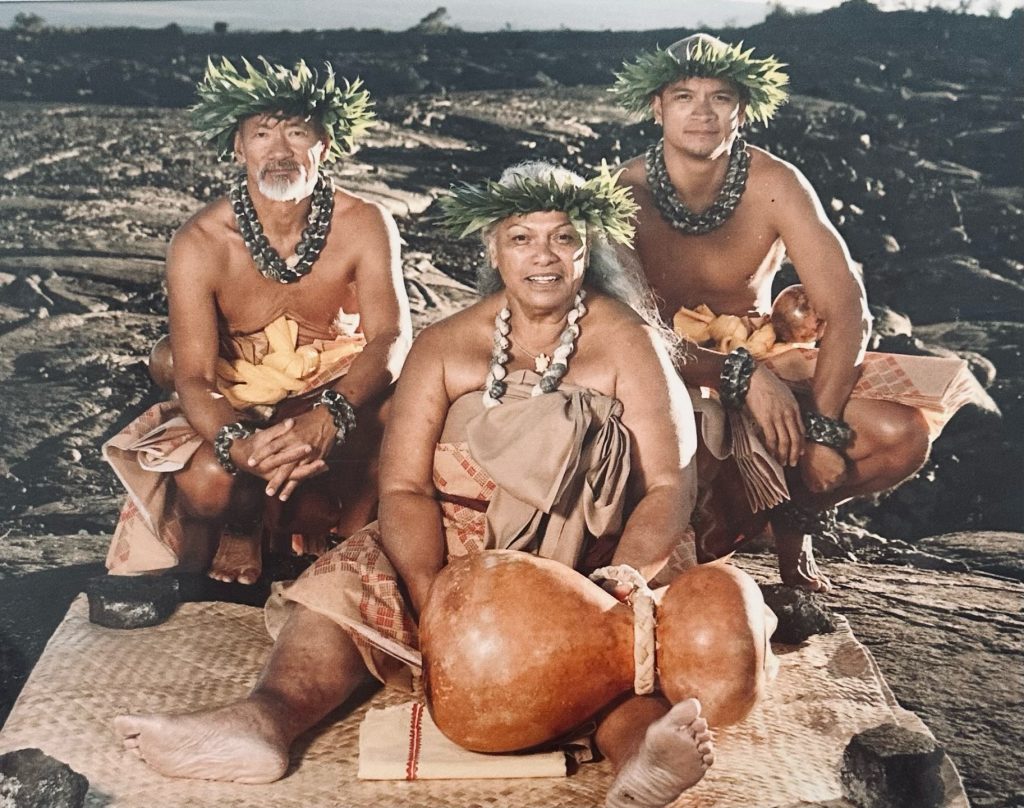
“Seventy-nine is a good many years to live and she lived it well,” Kanahele said. “She has done many things and she has left many things for many of us. She contributed so much to all of us, especially all things Hawaiʻi.”
Kanakaʻole and Kanahele learned hula from their grandmother, then their cousin and their mother. They spoke only ʻōlelo Hawaiʻi (Hawaiian language) in their home and learned a form of hula kahiko (ancient hula) called hula ʻōlapa, which is performed to oli (chant) rather than song and is accompanied by ʻipu (gourd) or pahu (drum).
Nālani Kanakaʻole began teaching hula with her mother at the age of 14 in 1960. Even when she left for the mainland and attended college, she kept up with her Native Hawaiian language and customs passed on from her ʻohana.
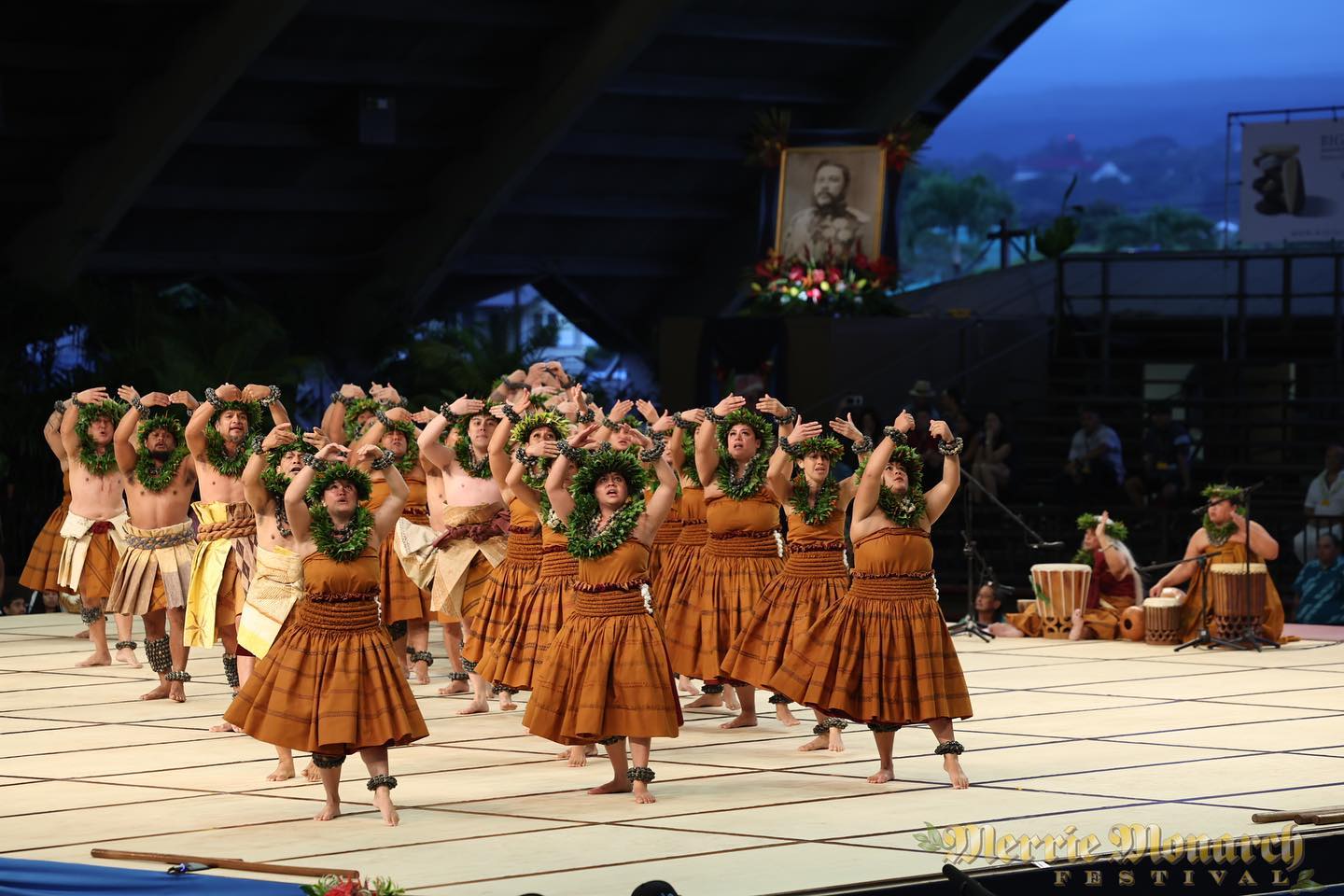
Kanakaʻole returned to Hawaiʻi Island and joined her mother as a kumu hula for Hālau o Kekuhi, known for the vigorous style of hula known as ʻai haʻa (hula danced with bended knees).
“We began teaching with my mother in the 1970s until she died,” Kanahele said. “We took over and Nālani was the main kumu. She kept up with it — teaching haumāna new mele, along with old mele from the traditional hula ʻōlapa we learned from our grandmother, cousin and mother.”
Nālani Kanakaʻole’s life’s work was dedicated to continuing the ancient traditions of hula kahiko, oli (Hawaiian chant) and ʻōlelo Hawaiʻi that she inherited from her mother. Through speaking and performing engagements, Kanakaʻole shared Native Hawaiian culture with people around the world.
“Our hula has taken us all over the place: Moscow, Ukraine, France, England, the Netherlands, Alaska, all over the United States, Mexico and Japan,” Kanahele said. “That was our life, and she was a big part of maintaining my love for hula.”
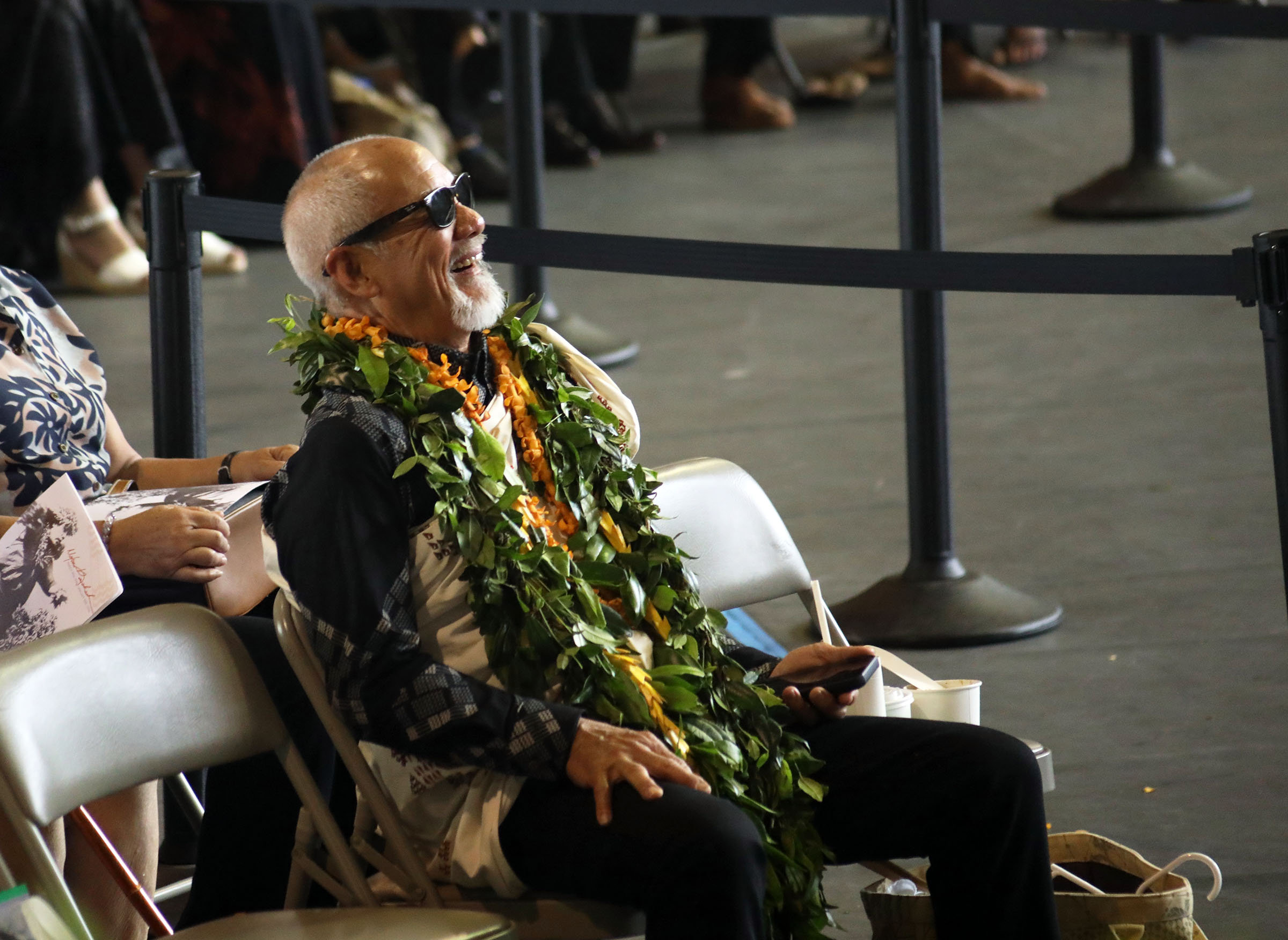
Kanakaʻole married Sig Zane in 1982 and gave birth to their son Kūhaʻo Zane. Three years later, she and her husband co-founded Sig Zane Designs, a clothing brand that has amplified Hawaiian culture and values through fashion and dressed many Hālau o Kekuhi dancers for performances over the years.
“Nālani met her life partner and it was a wonderful time for her,” Kanahele said. “Her husband was dependable and she needed that at the time. Then emerged another person she could depend on, Kūhaʻo. And then, thank goodness, she welcomed her grandbaby boy before her exit. She was happy about that.”
In 1993, the sisters were jointly named National Heritage Fellows by the National Endowment for the Arts, which recognized them as “Hula Masters”.
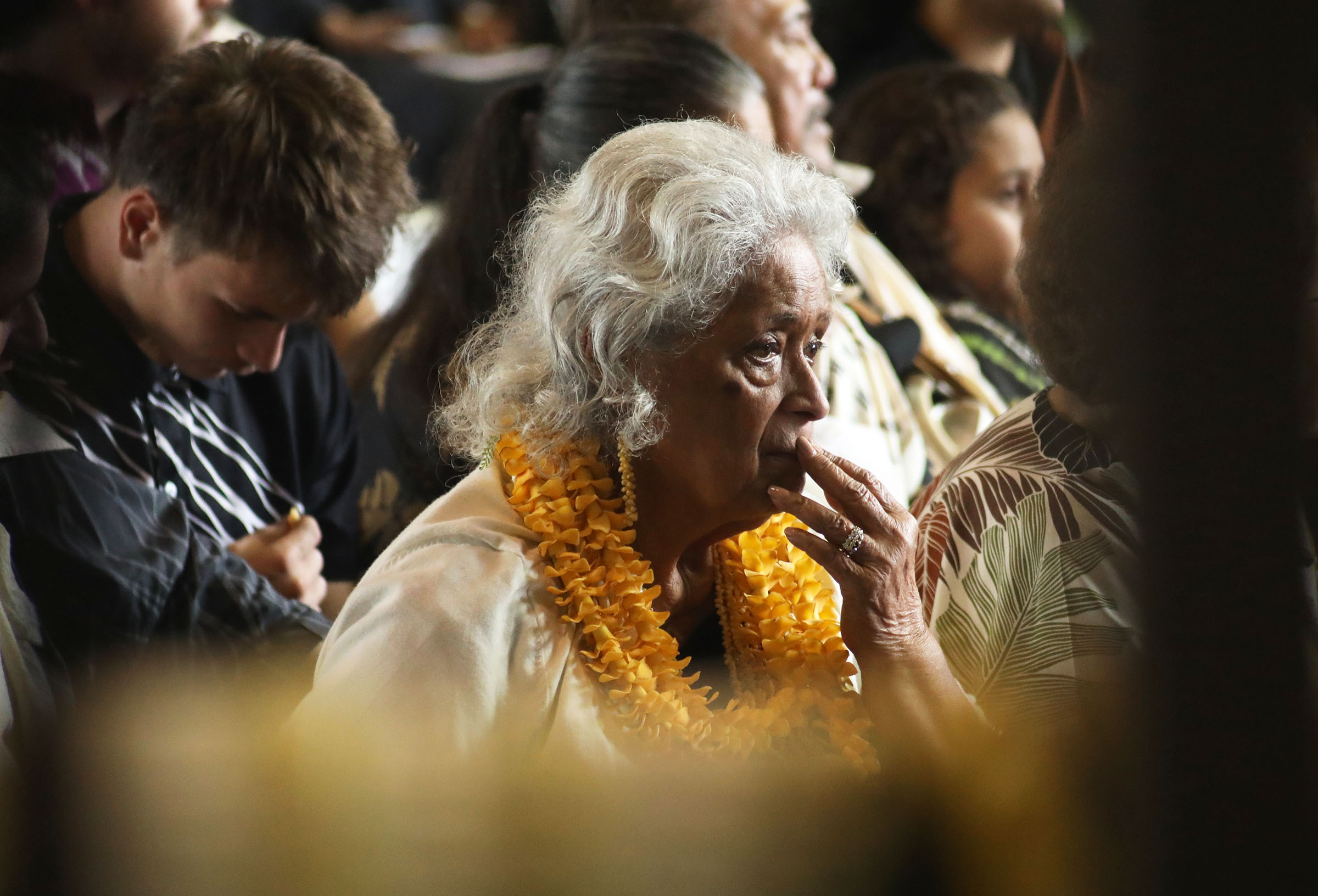
By 2007, Kanahele relinquished her position as kumu hula of Hālau o Kekuhi to her daughters, Kekuhi Kealiʻikanakaʻoleohaililani and Huihui Kanahele-Mossman. As she grew older, Nālani Kanakaʻole’s dedication never wavered as she never took a back seat or slowed down.
When she fell ill, her last cohort of dancers said they received instructions for the upcoming Merrie Monarch and other projects they’ve been working on. Kanahele-Mossman is now taking the lead in teaching her students at the hālau.
“The life I’ve lived with Nālani for the past 50 years has been an incredible ride,” Sig Zane said during the hoʻolewa. “How fortunate to have a partner that would feed with me purity and delight in an amazing way. How advantageous to live with source in practice and wisdom and how convenient to breathe alongside a being of immeasurable talent.”
Before the speakers, Hālau o Kekuhi started the hoʻolewa with oli and offerings to a kuahu, which is a sacred, temporary shrine that acts as a portal for divine inspiration and a physical, spiritual center for hula dancers. Her family then took part in an ʻawa ceremony, which is a sacred ritual to honor the deceased and create a bridge between the physical and spiritual worlds.
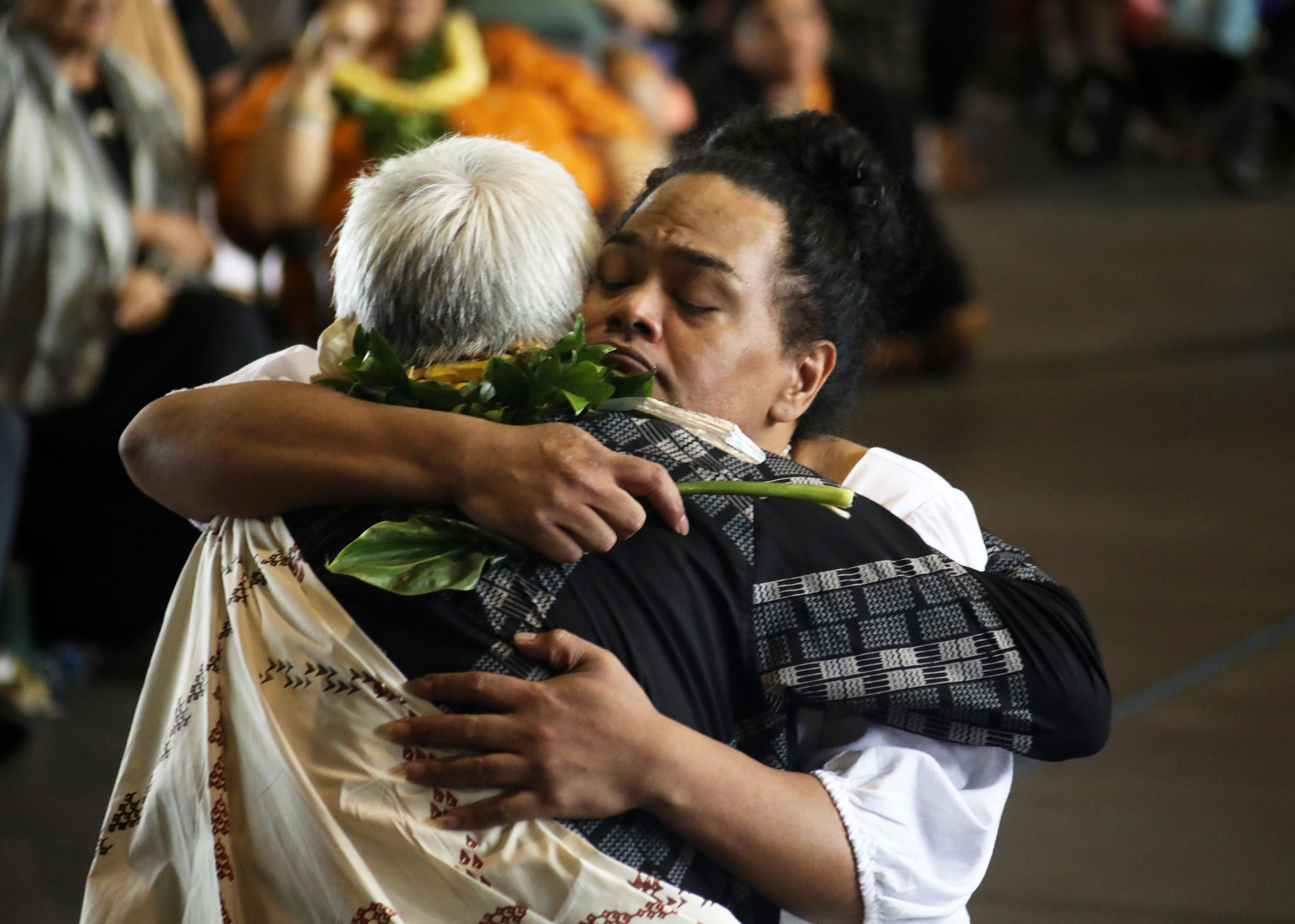
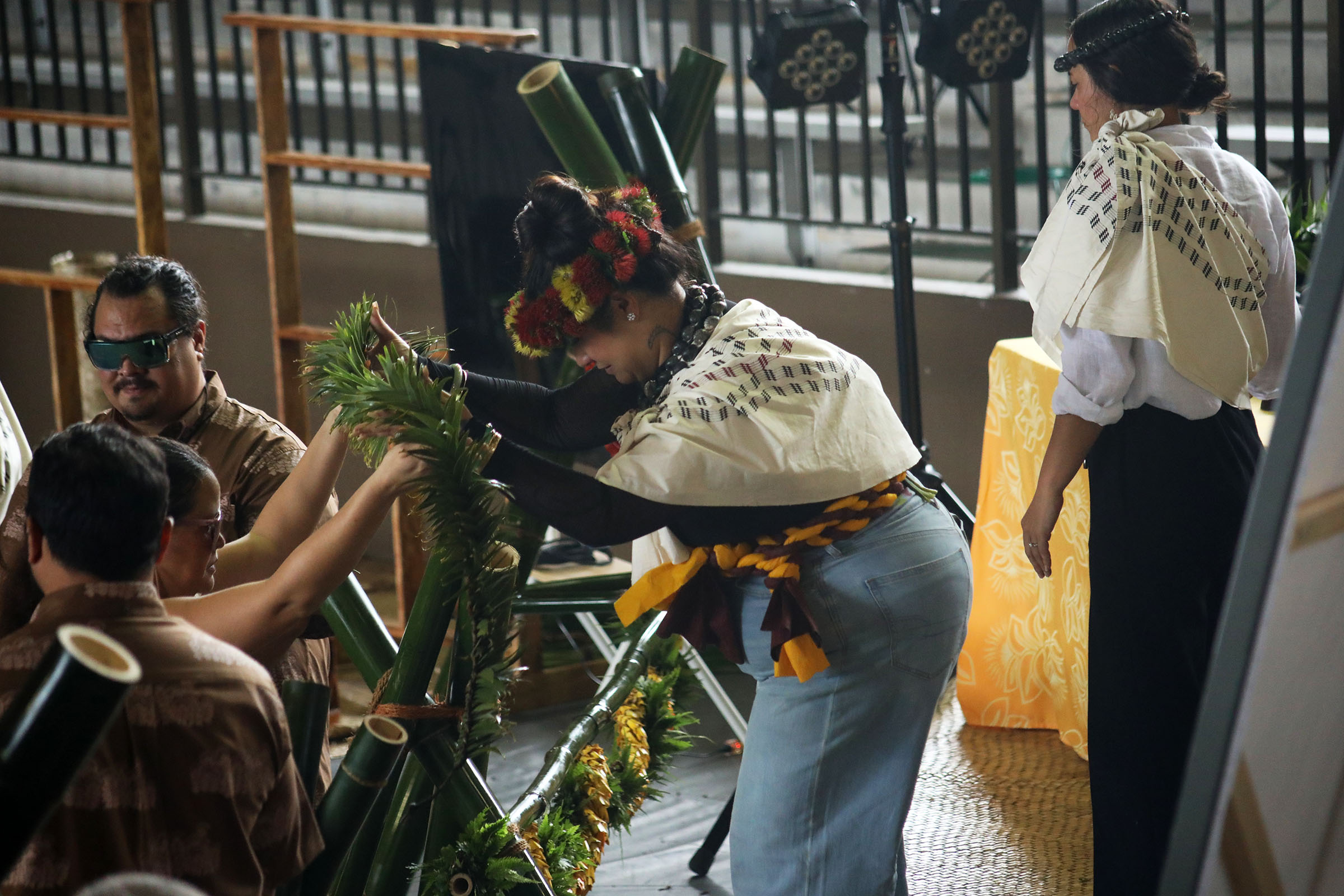
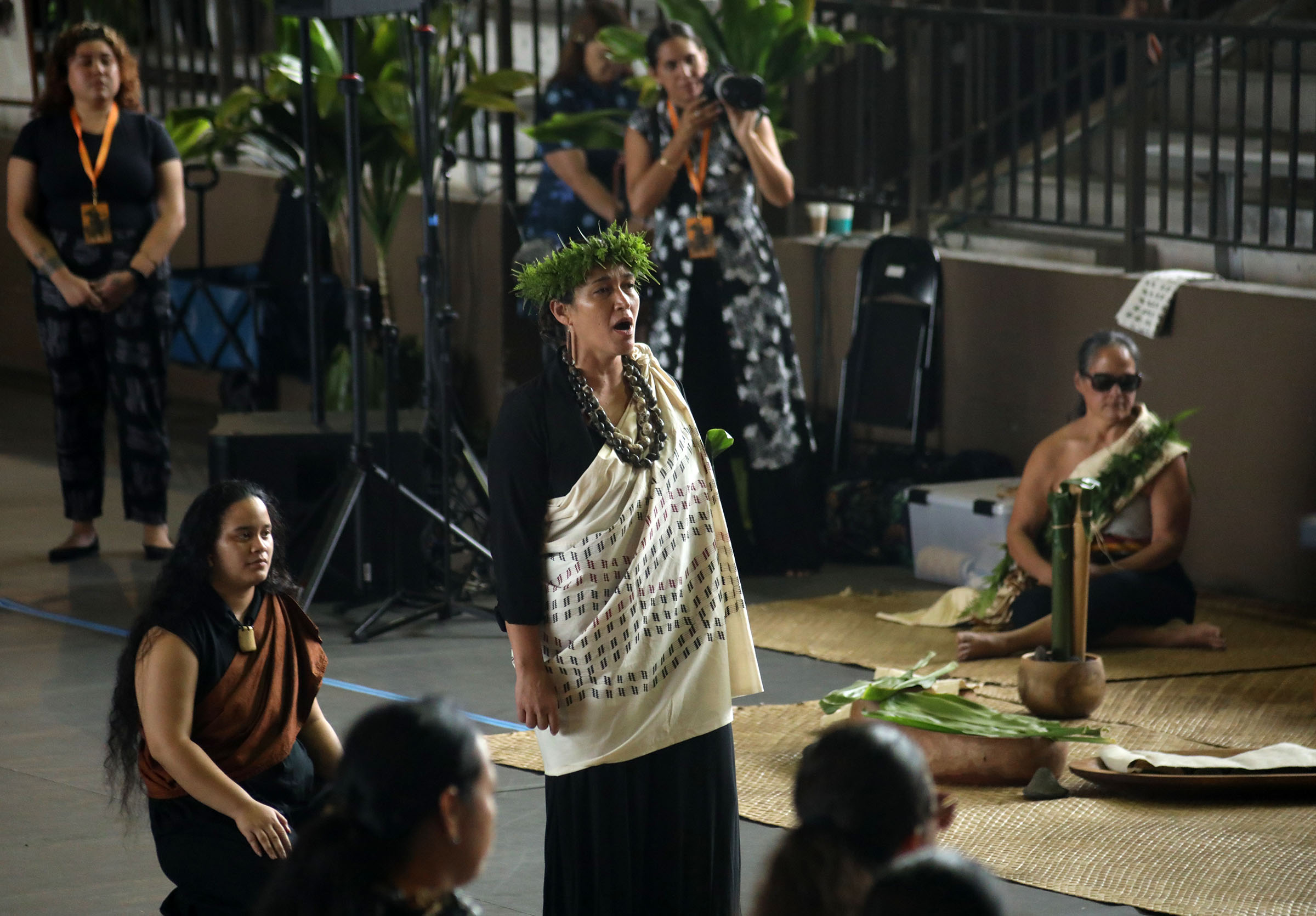
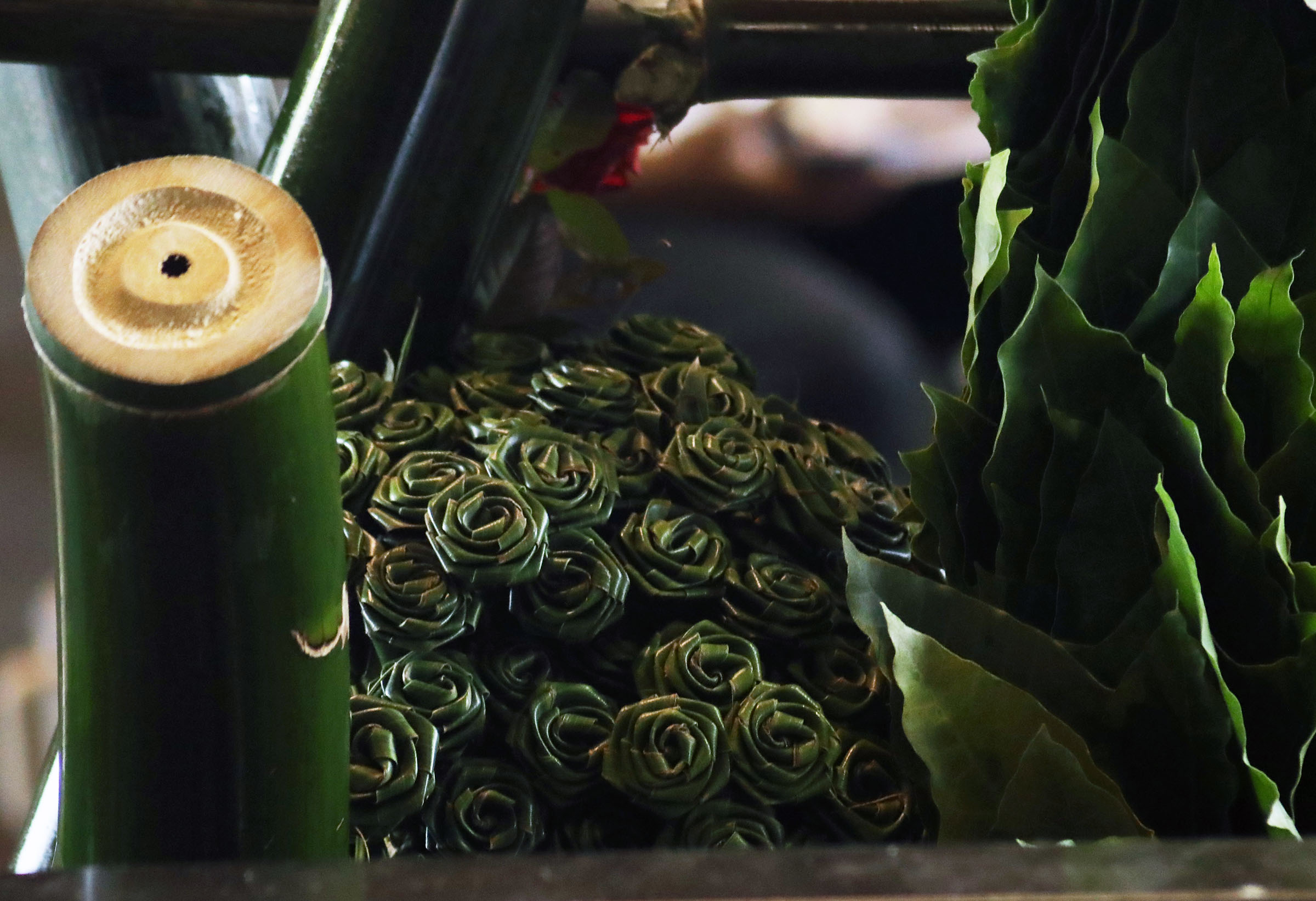
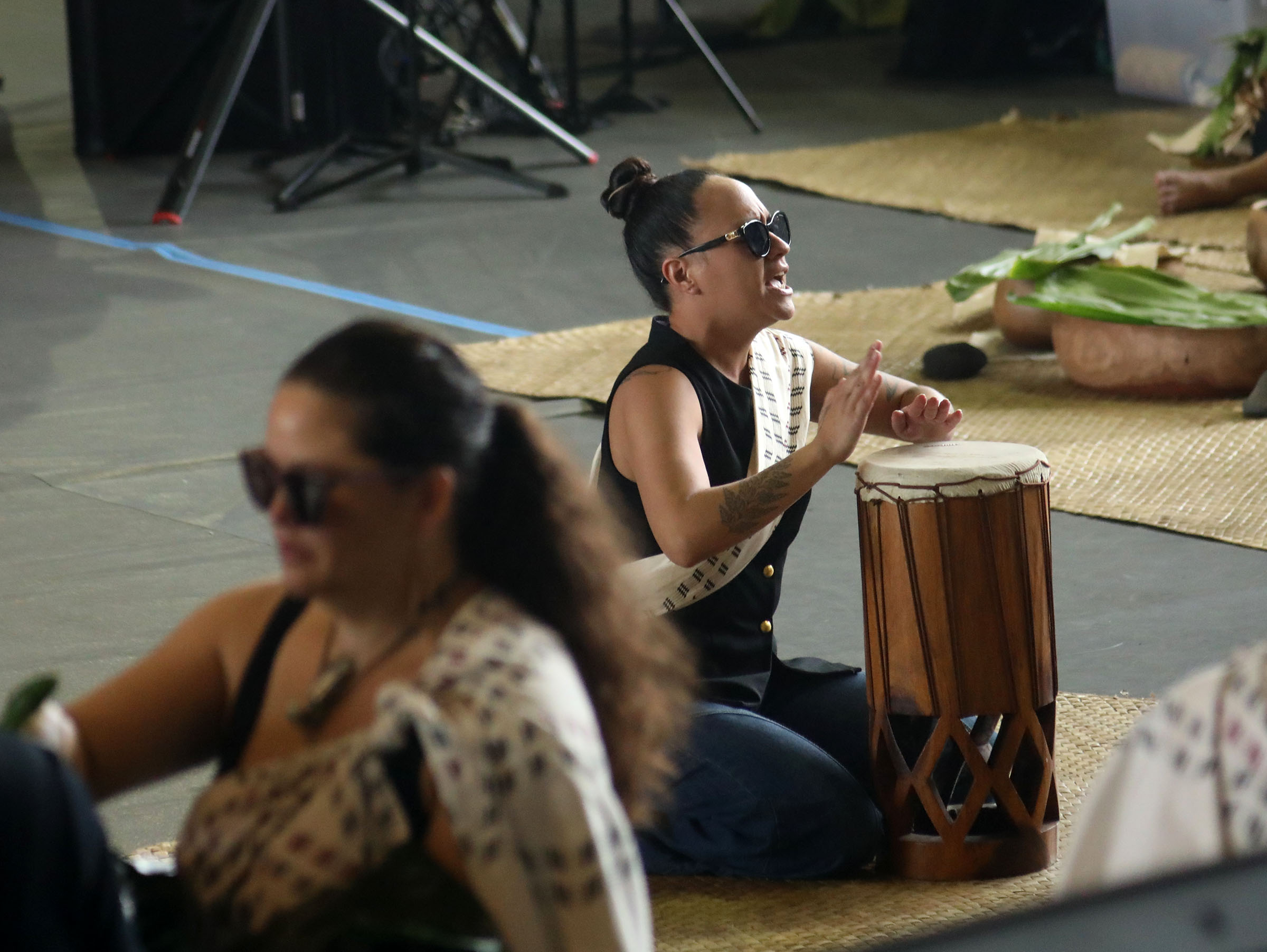
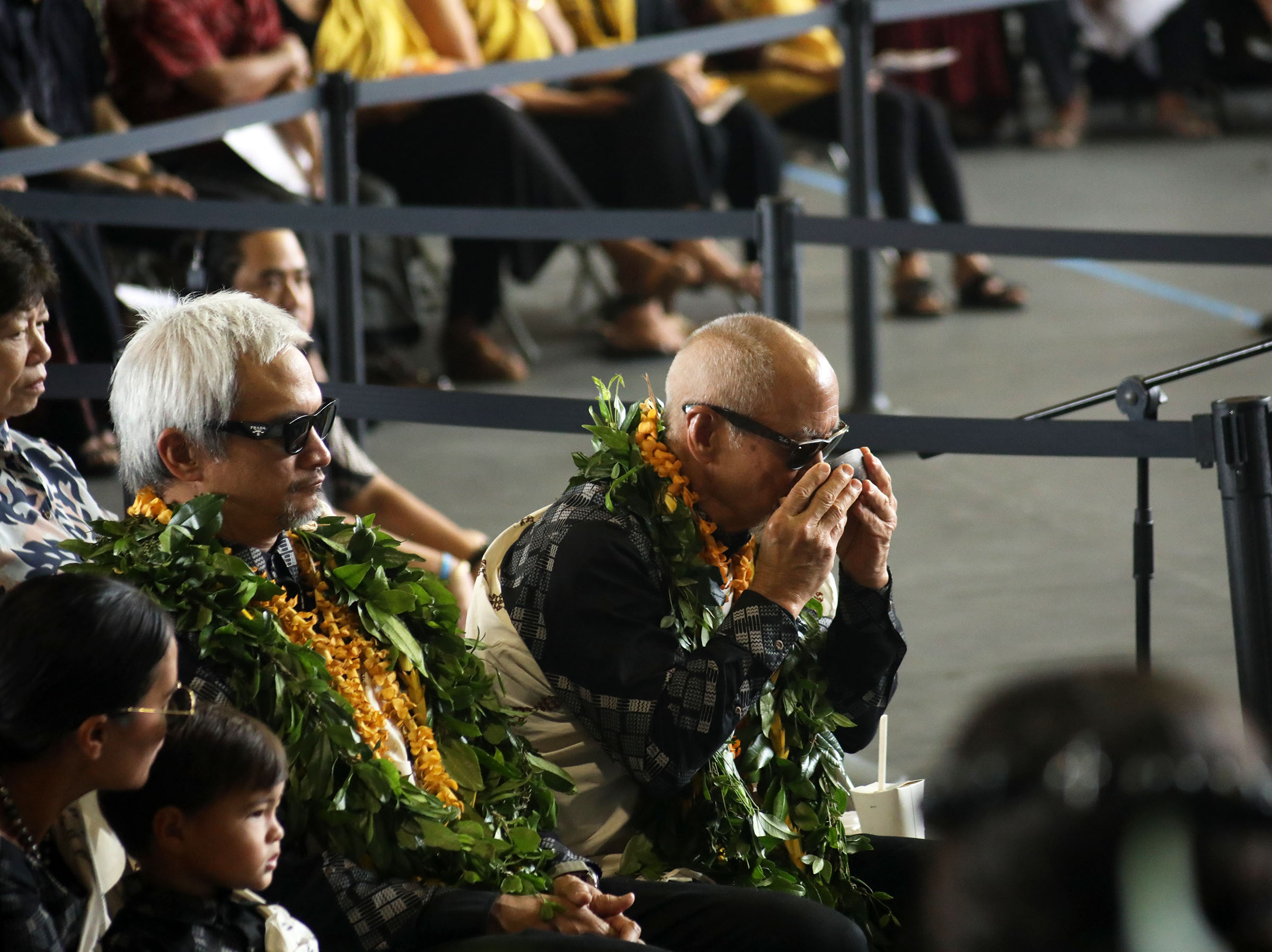
This was followed by a mele inoa (song composed to honor a specific person), a moʻokūʻauhau (genealogical story that connects individuals to their ancestors, land, and identity), and a kanikau (poetic laments or chants of mourning used to express deep grief and honor the deceased).
While closing the ceremony, Kūhaʻo Zane explained that the traditional protocol is necessary to transfer the knowledge from Kanakaʻole to haumāna (formal and informal students) and to the greater ahupuaʻa, which is the Hawaiian term for a large traditional socioeconomic, geologic and climatic subdivision of land.
Revered kumu hula, cultural leader, artist and entrepreneur Nālani Kanakaʻole helped reshape and revitalize the understanding of Native Hawaiian culture and traditions around the world.
“Whether it be hula, sculpture, design, her magic was always impactful,” Sig Zane said. “Now, the torch has been passed to each of us here. The responsibility is with all of us to pass her teachings, so that she lives on forever.”
Sponsored Content


Subscribe to our Newsletter
Comments