



Individuals facing barriers to medical access receive free eye care in Kona last month
Community members experiencing homelessness and other significant barriers to medical access received free vision exams in Kona on Jan. 22.
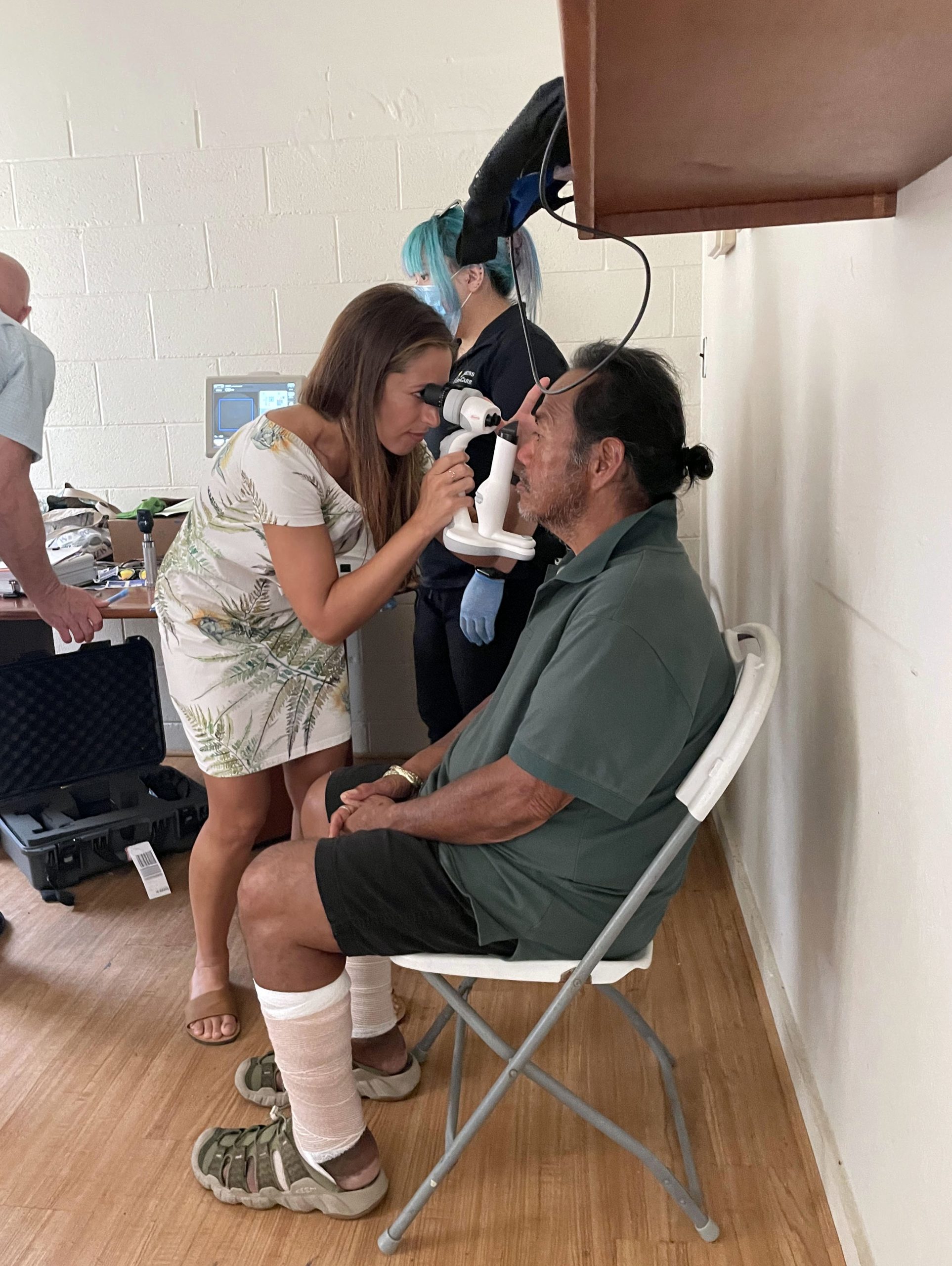
Jenkins Eye Care, a Honolulu-based surgical and specialty eye care practice, hosted a pro bono vision screening at The Friendly Place in Kona and delivered essential eye care to individuals who face significant barriers to accessing routine medical services.
“Access to quality vision care should be available to everyone,” said Dr. Neda Nikpoor, ophthalmologist and eye surgeon at Jenkins Eye Care. “Healthcare is a right, not a privilege, and many people face barriers even when they have insurance. Partnering with organizations that meet people where they are helps reach patients who otherwise fall through the cracks.”
The clinic was held in partnership with Project Vision Hawaiʻi and is part of an ongoing neighbor island outreach effort that began after the Maui wildfires.
The group organized an on-site vision screening at a large shelter serving people displaced and left unhoused after the fires. The experience became a continuing tradition of service, expanding to screenings on Kauaʻi and now Hawaiʻi Island.
While some underserved patients have insurance coverage, many still face barriers to accessing vision care, and day-to-day instability can make appointments difficult to schedule and keep. By bringing care directly to the shelter, Jenkins Eye Care and Project Vision Hawaiʻi were able to identify urgent concerns, provide prescriptions and help coordinate next steps for patients who might otherwise go without care.
Volunteers from Project Vision Hawaiʻi, the Jenkins Eye Care team, and eye care professionals from the mainland attending a national conference worked together to provide necessary care to 20 unhoused individuals in Kona.
Following intake and symptom screening, patients received on-site vision services including vision testing, refraction for eyeglass prescriptions, eye pressure checks, corneal topography for keratoconus screening, and non-dilated fundus photography to assess retinal health.
Jenkins Eye Care team members performed intake, testing, symptom screening, patient support, and coordination, adapting seamlessly to a nonclinical setting while maintaining the same patient-centered approach they bring to the clinic each day.
Dr. Nikpoor reviewed results with each patient, explained findings and provided guidance. Patients received prescriptions as needed, and those with potential sight-threatening issues were referred to specialists, including two retina referrals identified during the event.
Common needs included dry eye and refractive error, with many patients requiring glasses, particularly reading glasses due to presbyopia. The team also noted that for people living unhoused, lost, broken or stolen glasses can swiftly become a significant safety and quality-of-life barrier.
One patient experienced sudden vision loss roughly two weeks prior, which was most likely due to a retinal condition that often has better outcomes when treated quickly.
For upcoming vision screenings and other events, check the Project Vision Hawaiʻi Facebook or Instagram pages.
Sponsored Content

_1770333123096.webp)

Subscribe to our Newsletter
Comments