



Hawaiian Kingdom enters lawsuit against Kamehameha Schools
The Council of Regency, as interim government of the Hawaiian Kingdom, on Jan. 21 filed a motion to intervene with an accompanying motion to dismiss in the Students for Fair Admissions vs. Kamehameha Schools lawsuit filed in U.S. District Court.
Students for Fair Admissions seeks to dismantle the Native Hawaiian admissions policy of Kamehameha Schools — an institution created by Aliʻi Bernice Pauahi Bishop to uplift and educate Hawaiian children.
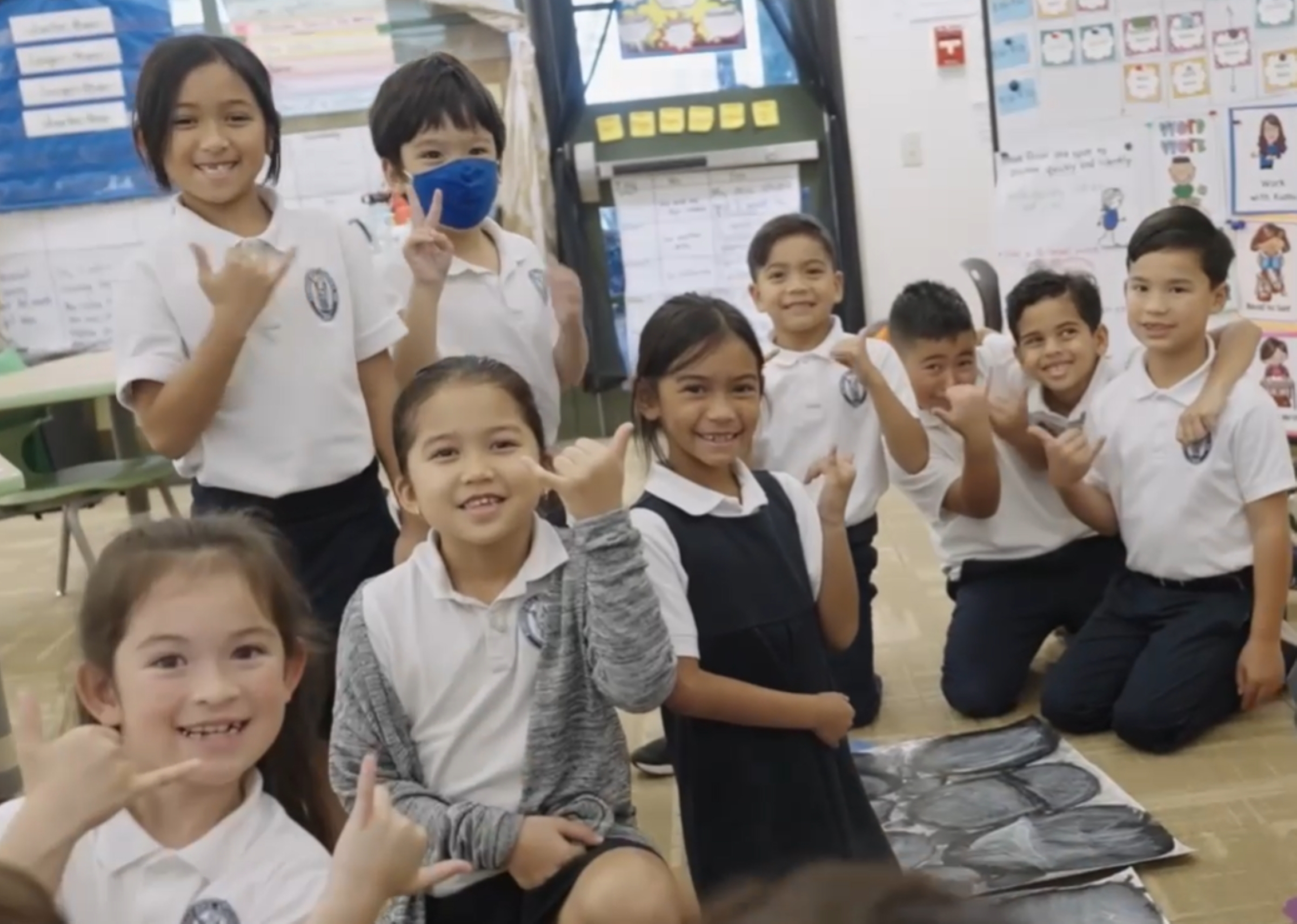
The organization claims that Kamehameha Schools policy violates U.S. civil rights law and is premised on the assertion that Hawaiʻi was lawfully annexed and fully absorbed into the United States more than a century ago.
Hawaiian Kingdom officials say that assertion is wrong.
This case has become even more significant now considering the recent American invasion of Venezuela, threat to invade Colombia, Cuba and Mexico and threat to annex Greenland.
Despite the unlawful invasion Jan. 16, 1893, of the Hawaiian Kingdom by U.S. troops and unlawful seizure of Hawaiian territory for military expansion, the Kingdom — as a neutral state — continued to exist under a prolonged American occupation.
The government was restored in 1997 as a Council of Regency under Hawaiian constitutional law and the legal doctrine of necessity.
In an international dispute that came before the Permanent Court of Arbitration at The Hague, Netherlands, in Larsen v. Hawaiian Kingdom, the Permanent Court recognized the continued existence of the Kingdom as a state under international law and the Council of Regency as its interim government.
At the center of the dispute was the unlawful imposition of American laws over Hawaiian territory.
See “Hawai‘i’s Sovereignty and Survival in the Age of Empire,” published in December 2024 by Oxford University Press in London, and the Hawaiian Kingdom’s Situation, filed Oct. 16, 2025, as a non-member state of the United Nations with the president of the General Assembly for more information.
The Council of Regency’s intervention in the Kamehameha Schools litigation is necessary because the case is built on fundamental historical and legal inaccuracies that neither party before the court can correct.
At stake is not only the future of Kamehameha Schools, but the integrity of Hawaiian Kingdom law, rights of the Hawaiian people and protection of future generations who were the express beneficiaries of Pauahi’s trust.
Kamehameha Schools was created under the laws of the Hawaiian Kingdom in the 19th century, at a time when Hawaiʻi was an internationally recognized sovereign state with treaties, diplomats and a functioning constitutional government.
Pauahi’s will was accepted by the Hawaiian Kingdom Supreme Court in 1885 — years before the illegal overthrow of Queen Liliʻuokalani in 1893. Those laws did not disappear with the arrival of U.S. troops.
The overthrow of a government does not extinguish the state itself under international law.
Hawaiʻi has remained under a prolonged and unlawful occupation since 1893. International humanitarian law is clear: occupation does not transfer sovereignty and the laws of the occupied state remain in force unless absolutely prevented.
U.S. domestic statutes cannot simply be presumed to override the civil, trust and national welfare laws of the Hawaiian Kingdom. Yet, the Students for Fair Admissions case depends entirely on that presumption.
This is why the motion to intervene is so critical.
It addresses the international law of occupation — an issue completely absent from Students for Fair Admissions pleadings and beyond the capacity of a private trust to litigate.
If the court applies U.S. law without recognizing applicable law under international norms, it risks violating international law by usurping Hawaiian sovereignty by applying American law regarding civil rights and not Hawaiian Kingdom civil rights law that has its own version of Hawaiian affirmative action.
The intervention also seeks to correct historical inaccuracies advanced by Students for Fair Admissions, including the claim that Hawaiʻi was lawfully annexed and therefore fully subject to U.S. civil rights statutes.
Annexation by joint resolution was unconstitutional and unlawful under international law. In a 1988 legal opinion, U.S. Justice Department legal counsel in 1988 examined in a legal opinion that the purported annexation of Hawai‘i by a joint resolution and concluded it is “unclear which constitutional power Congress exercised when it acquired Hawaiʻi by joint resolution.”
The opinion further states: “Only by means of treaties … can the relations between states be governed, for a legislative act is necessarily without extraterritorial force — confined in its operation to the territory of the state by whose legislature it is enacted.”
No treaty of cession was ever ratified.
The Hawaiian Kingdom never surrendered its sovereignty and the Hawaiian people never consented.
 Screenshot Image Courtesy: Kamehameha Schools Hawaiʻi website
- Screenshot Image Courtesy: Kamehameha Schools Kapālama website

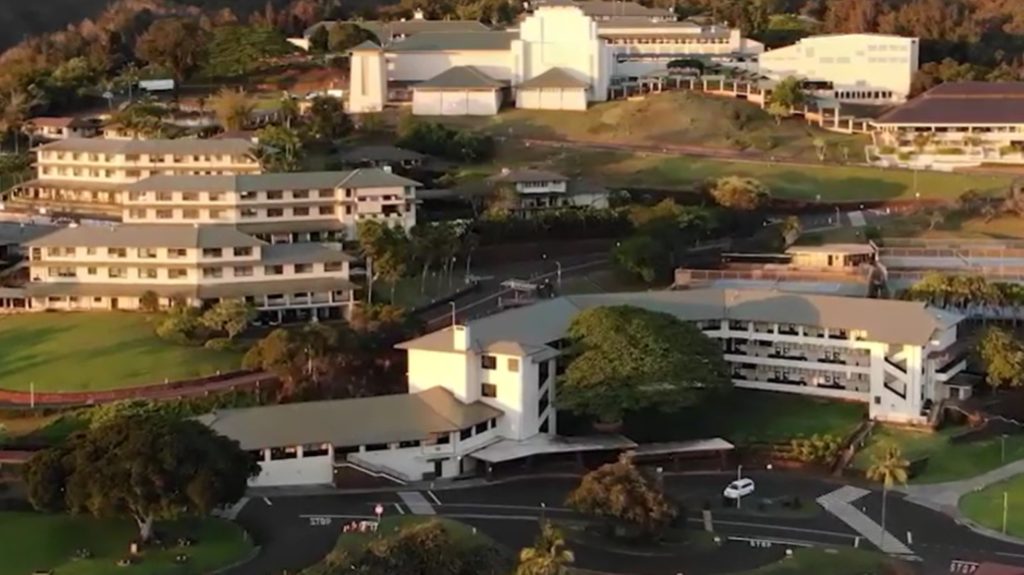


Addressed in the accompanying motion to dismiss is the Hawaiian Kingdom’s jurisprudence that expressly recognized special legislation and remedial measures favoring aboriginal Hawaiians as lawful and necessary for national welfare.
Kamehameha Schools admissions policy is consistent with that legal tradition and Pauahi’s intent — not racial discrimination as defined by a U.S. constitutional framework that did not exist at the time in Hawaiʻi.
Neither Students for Fair Admissions nor Kamehameha Schools can represent these broader interests.
Students for Fair Admissions seeks to erase Hawaiian history to advance its claims. Kamehameha Schools — as a defendant fighting for its survival — cannot speak as a government charged with protecting a people, their laws and their future.
Only the Council of Regency, as the interim government of the Hawaiian Kingdom, can do that.
This intervention is not about asking the court to decide sovereignty because international law already settled that. It is about insisting on a fair and lawful process.
Courts have a duty to avoid interpretations that place the United States in continuing violation of international law. They also have a duty to ensure cases are decided under the correct governing law.
If this case proceeds without addressing occupation law, Hawaiian Kingdom law and the true historical record, the harm will extend far beyond one school.
It will strike at the survival of institutions created to remedy the harms of usurpation of Hawaiian sovereignty and dispossession — and at the rights of Hawaiian children yet to be born.
“The future is shaped by the past,” a Hawaiian proverb teaches.
The Motion to Intervene is about making sure the court sees the past clearly, applies the law correctly and does not allow historical falsehoods to dictate the future of the Hawaiian people.
The Council of Regency is represented by Hawaiian attorney Edward Halealoha Ayau with the Law Office of Edward Halealoha Ayau, international human rights attorney Natali Segovia of the Water Protector Legal Collective and the International Association of Democratic Lawyers.
Click here to find the motions and additional filings by the Hawaiian Kingdom in the lawsuit.
Sponsored Content


Subscribe to our Newsletter
Comments