



Update: Lava fountaining at Kīlauea predicted to occur as early as Thursday
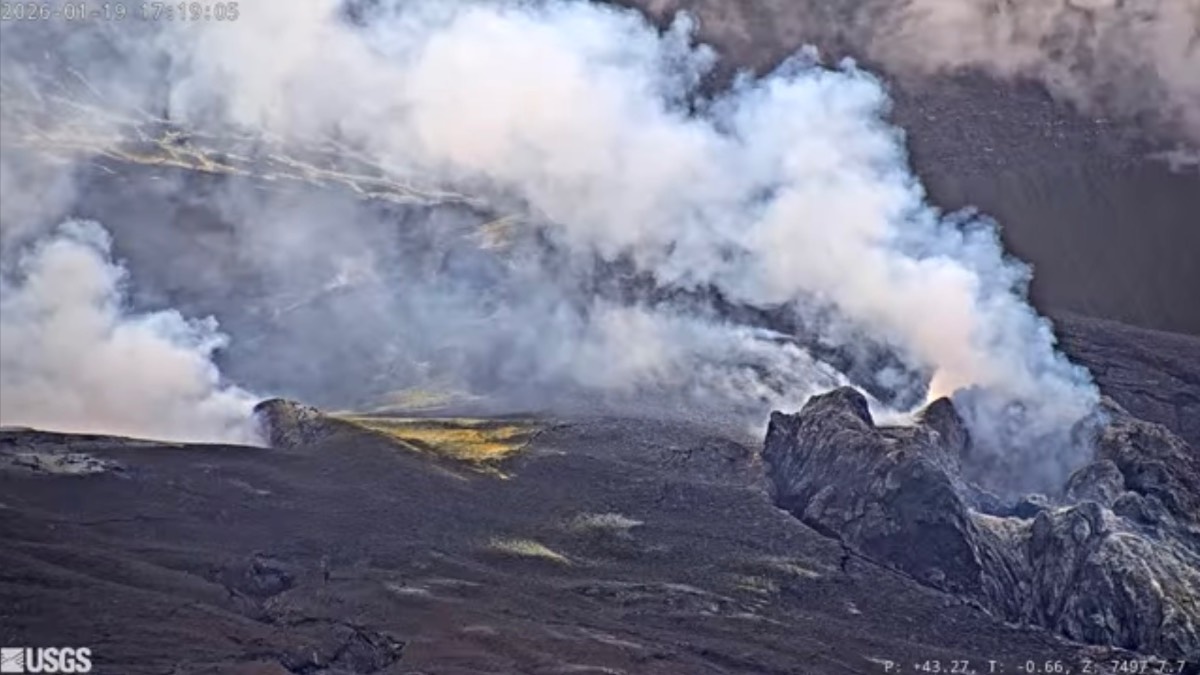
Update 10:20 a.m. Jan. 20: The forecast for the onset of the next lava fountaining episode at Kīlauea is between Jan. 22 to Jan. 26, based on current inflation models.
Overnight webcam views showed a consistent glow from both the north and south vents. Constant low-level tremor continues this morning.
According to the daily update from the Hawaiian Volcano Observatory, earthquake swarm activity continues with two clusters again on Monday.
Locations of the swarms continue to be spread fairly widely beneath the southeast part of Halemaʻumaʻu. The swarms are related to migrating magmatic pressure within the summit region but their impact on the next episode of fountaining, if any, is unknown at this time
No significant activity has been noted along Kīlauea’s East Rift Zone or Southwest Rift Zone.
Original post: Volcanic activity at Kīlauea’s summit remains paused. However, based on current monitoring models, scientists forecast on Monday that the next lava fountaining episode could begin within 48 hours.
The potential eruption, centered within Halemaʻumaʻu crater, has been episodic since late December of 2024. Kīlauea has remained in a quiet phase since episode 40 started and ended on Jan. 12.
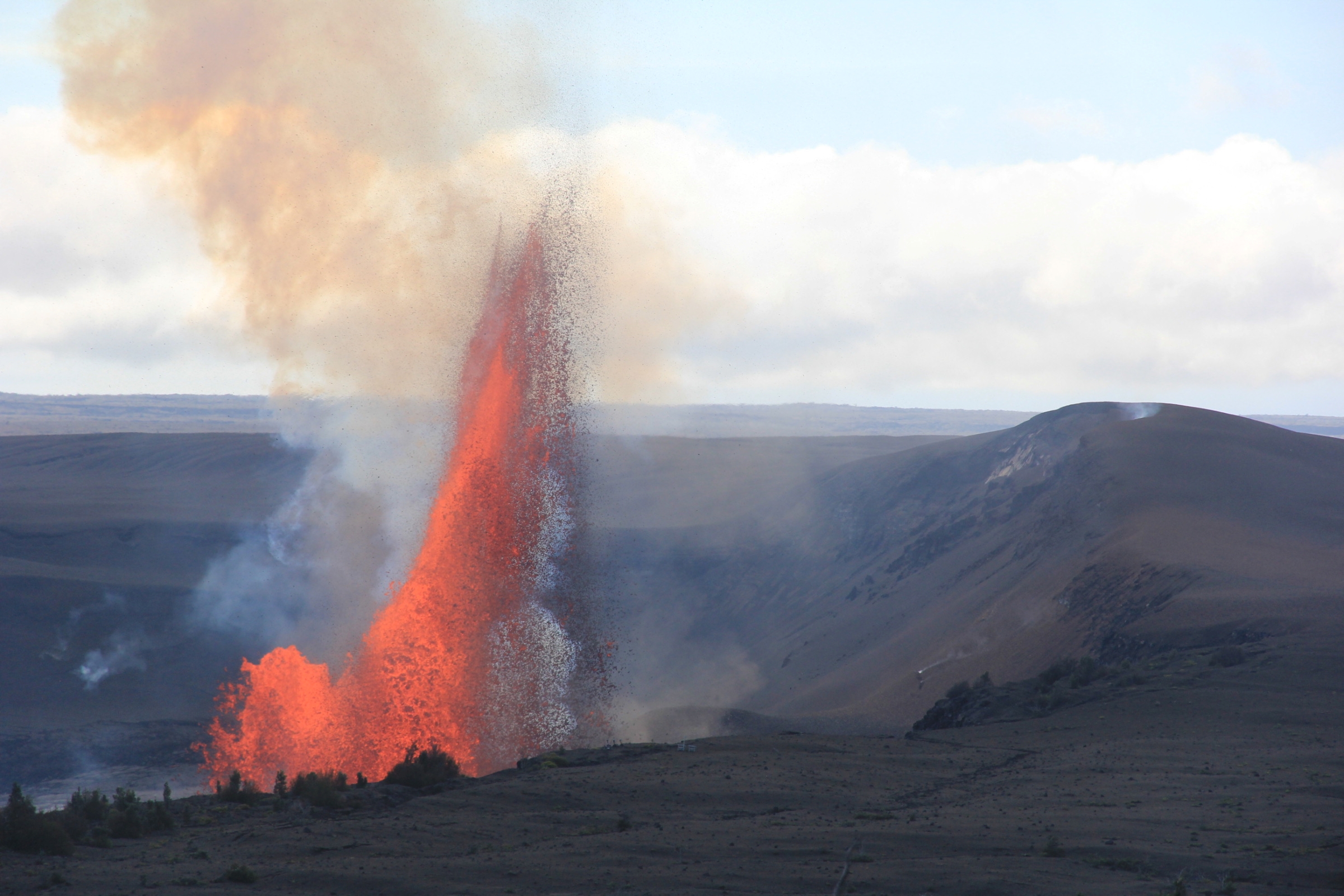
The Hawaiian Volcano Observatory reported continued low-level volcanic tremor early Sunday, Jan. 18, along with persistent glow from the crater’s south vent and intermittent, weaker glow from the north vent visible on overnight webcams.
Earthquake swarm activity continued over the past day, with two distinct clusters recorded beneath the southeastern portion of Halemaʻumaʻu.
One swarm began at approximately 3:49 p.m. on Saturday, Jan. 17, followed by a second around 3:58 a.m. on Sunday, Jan. 18. Scientists said the earthquakes are linked to shifting magmatic pressure within the summit region, though it remains unclear whether the activity will influence the timing or intensity of the next eruptive episode.
Kīlauea has been erupting intermittently since Dec. 23, 2024, primarily from two vents within Halemaʻumaʻu. Individual eruptive episodes typically last fewer than 12 hours and are separated by pauses that can extend for more than two weeks.
The Hawaiian Volcano Observatory said it continues to closely monitor the volcano and remains in coordination with Hawaiʻi Volcanoes National Park and the Hawaiʻi County Civil Defense Agency to assess and communicate potential hazards.
You can check out the U.S. Geological Survey-Hawaiian Volcano Observatory Interactive Earthquake Map of Hawaiʻi for additional quake information.
Short updates also could be posted — as necessary — on the Hawaiian Volcano Observatory website.
Sponsored Content

_1770333123096.webp)

Subscribe to our Newsletter
Comments