



Business Monday: 40 years after reforestation, Kona Cloud Forest Sanctuary brings people back to nature
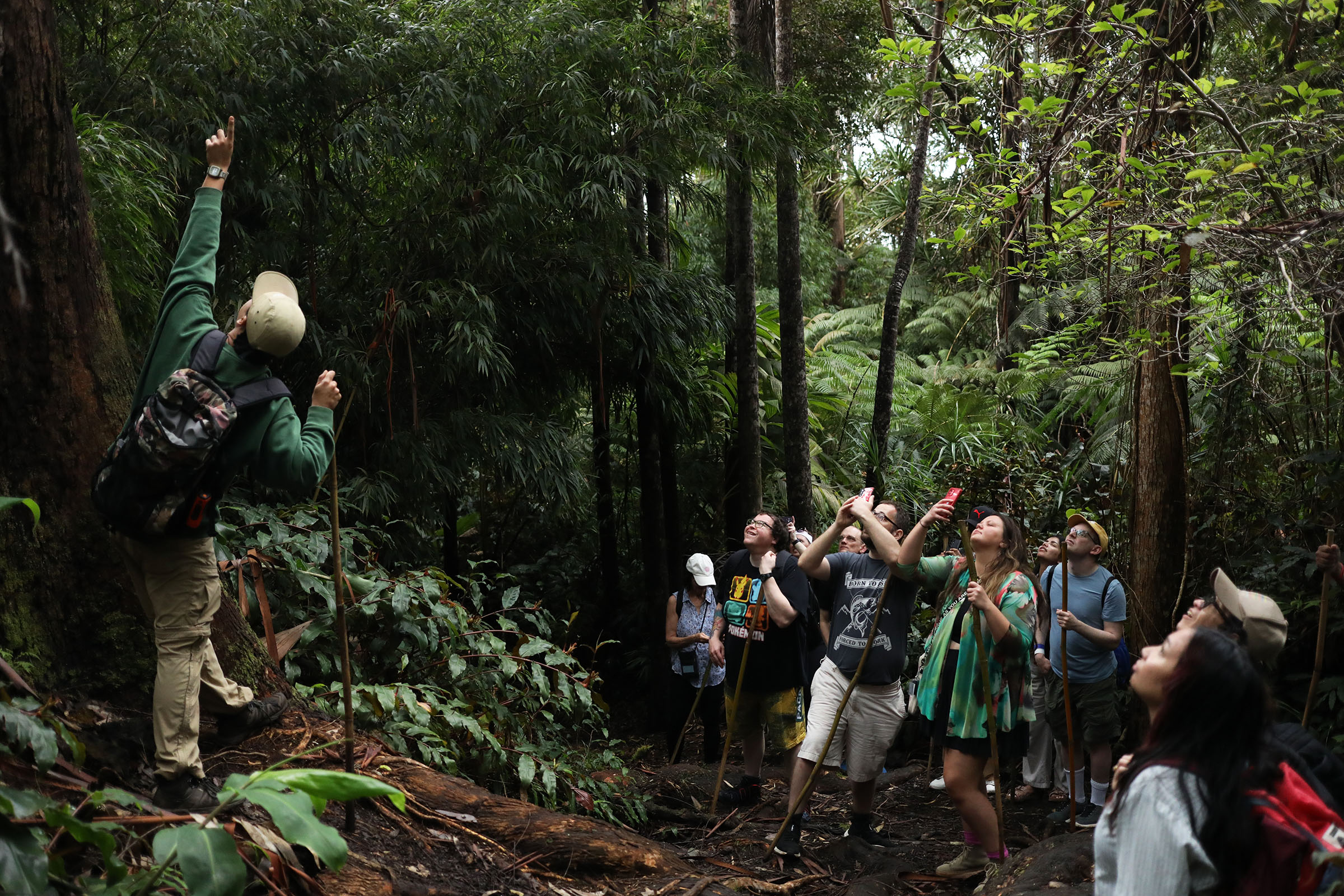
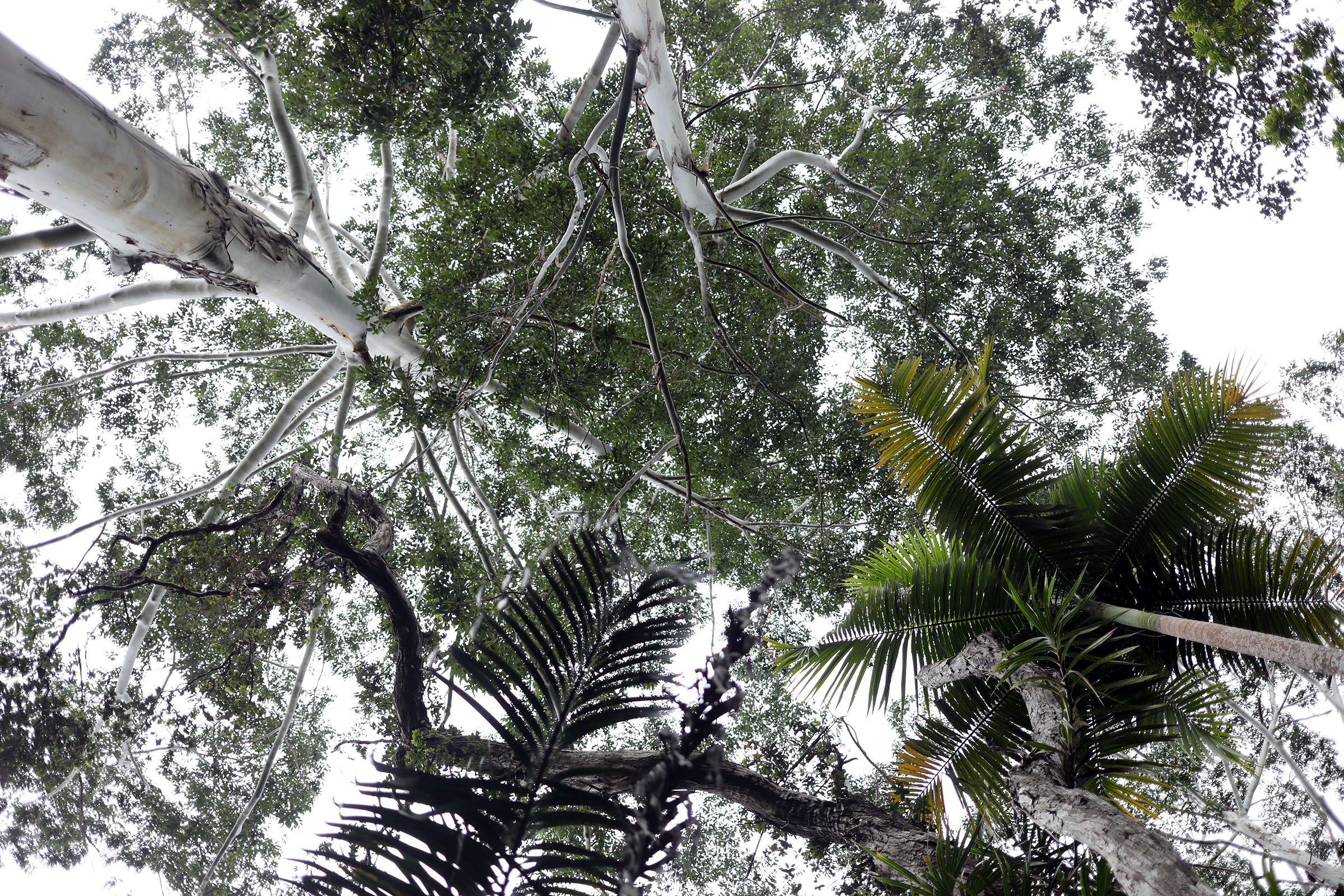
Fourteen visitors from Minnesota craned their necks to see the top of canopy trees soaring more than 100 feet tall, in awe upon learning most of the trees were planted about 40 years ago.
The group took a break from the warm Kona shoreline to travel up the slopes of Hualālai on Saturday afternoon for the cool mist of the Kona Cloud Forest, where naturalist guide Daniel Hirata took them on a 90-minute tour through the family-owned 15 acres of pristine forest.
Hirata told them just a few decades ago, the mountain slope was nearly lifeless, the result of being cleared for cattle grazing. But Norman Bezona, a professor of horticulture, recognized action could be taken to save the forest and the watershed ecosystem of the region called Kaloko ahupuaʻa.
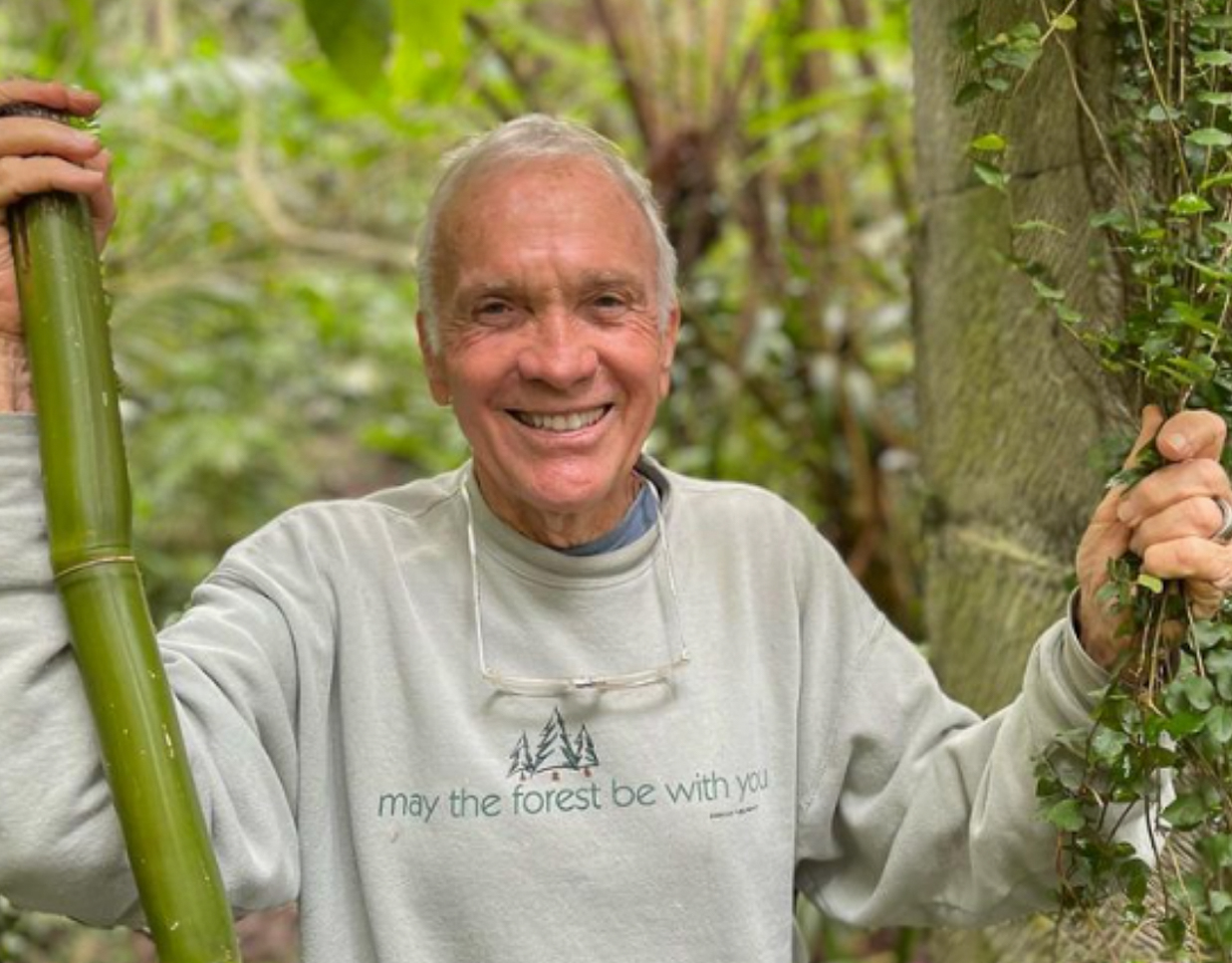
Bezona envisioned proving that reforestation could occur within one’s lifetime. Working closely with his colleagues at the University of Hawaiʻi, the Hawaiʻi Division of Forestry and Wildlife, the International Palm Society, the American Bamboo Society and others, he began reforesting the land plant by plant, tree by tree, all by hand
“Every day, he would bring his students, family members and friends to help him plant saplings across the entire 15 acres,” Hirata said. “It took dedication, time, trial and error, but he had the passion and knowledge to make it happen.”
The result is the Kona Cloud Forest Sanctuary, which has been offering guided wellness and educational nature experiences since the beginning of the reforestation project in 1982, and now also features forest eco-tours, sound baths, yoga and day retreats.
Bezona used native and introduced species of plants to mimic the original cloud forest that once blanketed the slopes of Hualālai. Now, more than 100 species of trees thrive here and have formed a canopy sustaining countless forms of life, including birds, orchids, native ferns, insects, unseen soil microbes and mycelium networks that all help rebuild the ground.
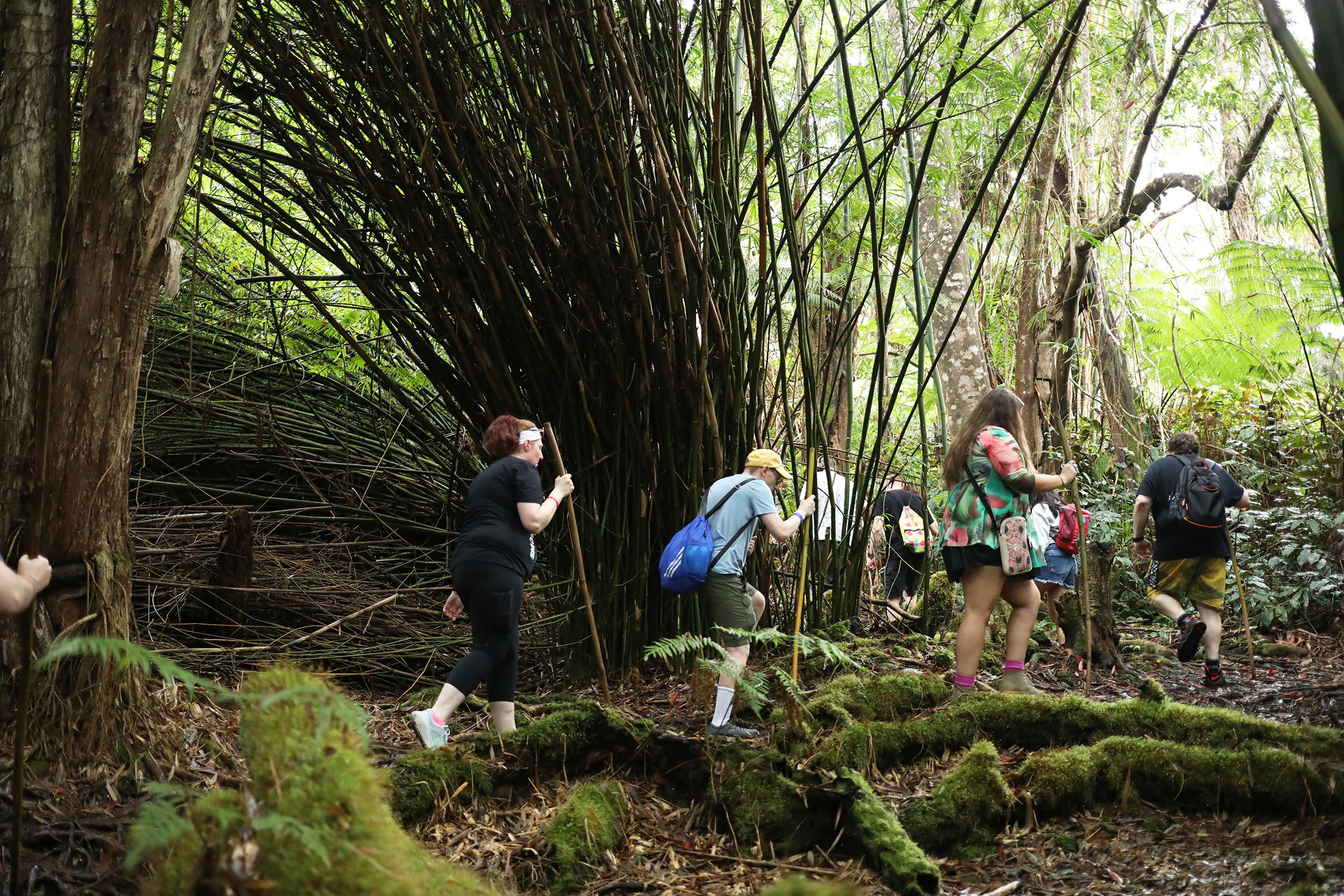
“Professor Norman was intentional in choosing the trees that would be planted in the forest,” Hirata told the group. “He picked plants that he knew would be resilient to lava rock, that don’t need much soil to survive, and are fast-growing.
“The trees would grow tall enough to pull moisture from the air and bring it down from the canopy to benefit all the plants underneath.”
When the trees began to grow tall, native plants that weren’t explicitly planted by Bezona came back to life. Hāpuʻu ferns, a threatened species, have grown consistently and were never planted by hand, according to Hirata.
Now 87-year old Bezona has left most of the daily operations and decisions regarding the Sanctuary to his children and grandchildren, however, he continues to contribute blog posts on various topics related to horticulture to the Kona Cloud Forest Sanctuary website.
Some of the species protected and thriving in the forest include Rainbow Eucalyptus, Blue Marble Trees, coniferous redwoods, about 200 species of palms and 100 species of bamboo. There are also other threatened species such as ʻōhiʻa lehua, amaumau ferns, ʻio (Hawaiian hawk), pueo (Hawaiian short-eared owl) and honeycreepers.
Once the water is pulled from the clouds, the forest acts as a natural sponge that captures it, filters it, and replenishes the aquifer supplying fresh water to the Kona district and coastal areas, keeping reefs and coastal waters clean.
With increasing human development, more groundwater is being withdrawn from the aquifer system, which could threaten ecosystems dependent on groundwater discharge, located several thousand feet below the cloud forest.
Educating students, residents and visitors about these important watershed systems and reforestation has helped Bezona and his family open the unique ecosystem as a living classroom, offering botanical tours and creating a forest management program for college students.
While guided tours have been part of the mission since the early ’90s, in 2005 the Kona Cloud Forest Sanctuary website expanded its reach to visitors from around the globe, further solidifying one of Bezona’s core purposes of connecting humanity back to nature, according to Nadara Rose, owner of Kona Cloud Forest Sanctuary.
“We are really rooted in education and the idea that reforestation can happen in one lifetime,” Rose said. “While developing these tours through the forest and spending time with people from around the world, we saw that many people yearn for a moment to intentionally slow down and really connect, learn and take part in the Hawaiian practice of kilo (observation).”
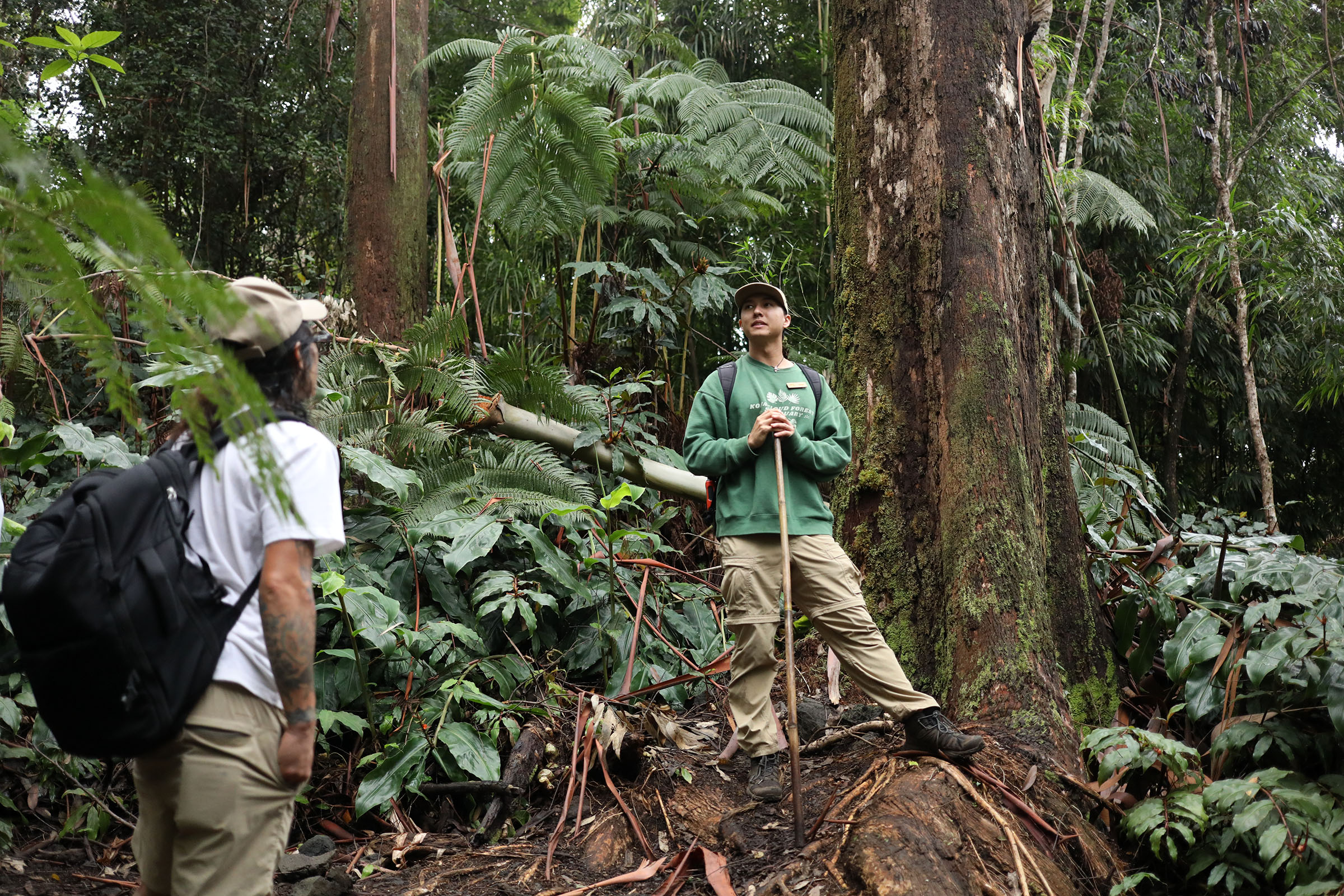
Over time, the Sanctuary began offering private tours, wellness experiences such as yoga and sound healing, and cultural workshops like lei-making, which feel especially important as more people crave to be in nature and away from the noise, Rose said.
“When people come out of the forest feeling refreshed and renewed, that’s when I know we’re staying on mission,” Rose said. “That’s why we use guides on all our eco-tours. It feels more intentional. Visitors can take their time and let their genuine curiosity allow them to ask questions and learn something new.”
Hirata has been working for the Sanctuary for about a year and said he is still learning something new from his tours.
“I have a lot of fun on every tour because everyone on tour wants to be here,” he said. “They ask good questions and are truly amazed by the fact that this incredible place only took 40 years to fully grow.
“Education is the reason this forest has been brought back to life, and now plants that came back from nothing grow well and easily. I don’t think there is any other place like this in the world.”
In 2025, the Sanctuary was awarded the Better Business Bureau Torch Award for Ethics, recognizing its commitment to ethical leadership, environmental stewardship and community-centered business practices.
The Kona Cloud Forest Sanctuary is open every day from 8:30 a.m. to 2 p.m. Forest tours or wellness experiences must be purchased in advance.
To find a calendar of events and tours, visit the Kona Cloud Forest Sanctuary website.
Sponsored Content

_1770333123096.webp)

Subscribe to our Newsletter
Comments