



How to solve the wild pig problem in Puna? Leaders promote eating them in local cuisine
For years on the Big Island, Amedeo Markoff and his son, Jacob, have trapped wild pigs for the tasty meat, which is eaten by their family.
But Amedeo Markoff has always questioned why there isn’t more interest from restaurants or grocery stores in the abundantly available wild pig meat.
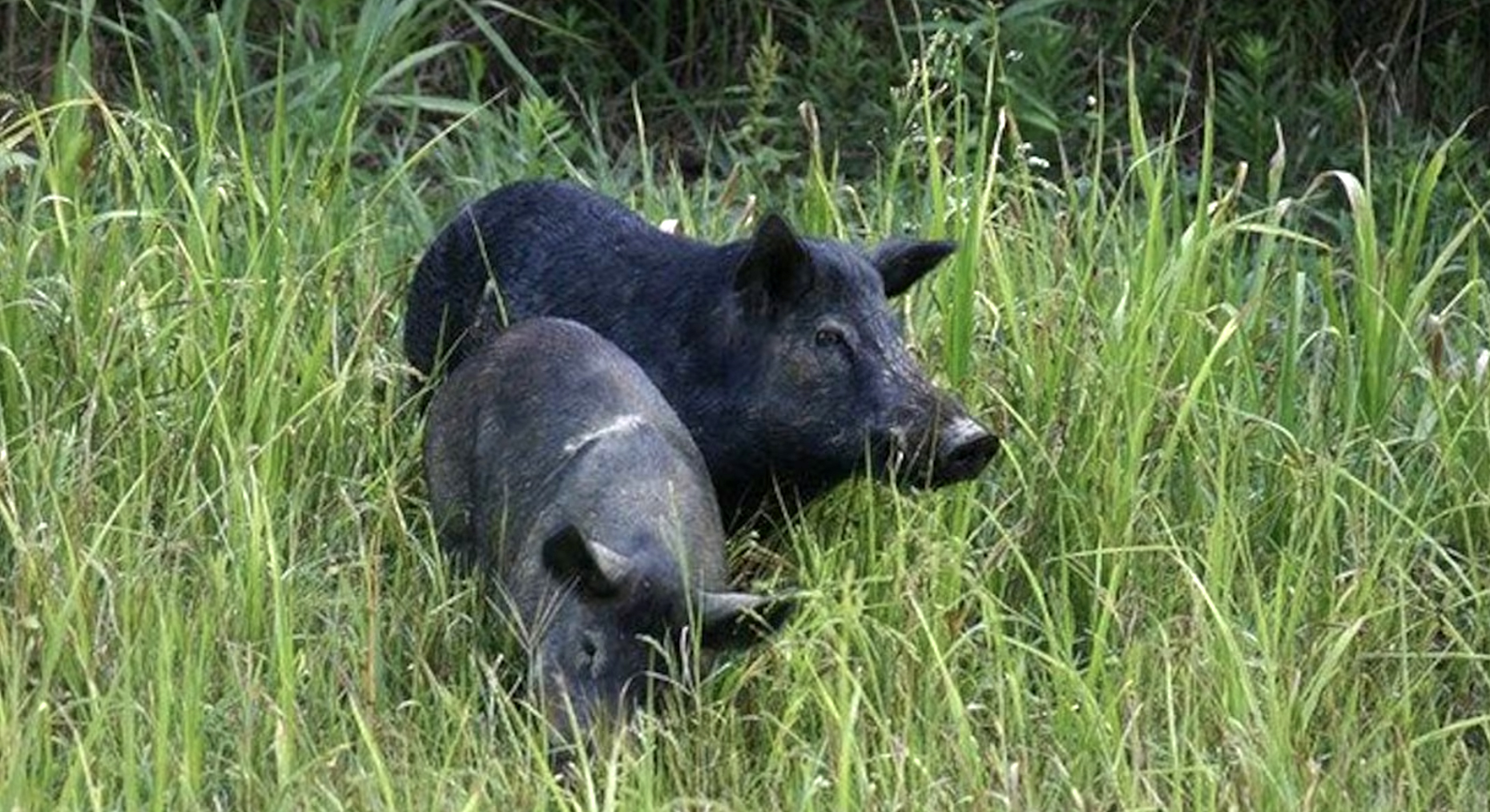
Markoff, director of the Pāhoa Lava Zone Museum, and other community leaders have been investigating the potential of using feral pig meat in local cuisine and working to change the landscape of wild pig management in Puna.
In April 2022, the nonprofit organization Mālama O Puna began efforts to control the growing feral pig population, which is prevalent in some Puna subdivisions. The animals have caused significant damage to farms and gardens while in search of food.
With funding from the County of Hawaiʻi’s Department of Research and Development, the nonprofit constructed individual traps and acquired a pig brig for capturing multiple pigs. It also developed a list of hunters specific to the Puna area, and contributed to best hunting practices, a hunter’s code of conduct, and an educational video on the Mālama O Puna website.
Mālama O Puna has successfully lobbied the state Department of Land and Natural Resources to change hunting rules in the Lower Puna forest reserves — Keauʻohana, Nanawale and Mālama Kī — to allow hunting seven days a week and to increase the bag limit from one to two pigs.
Despite these efforts, challenges remain in utilizing trapped pigs.
To address this, Mālama O Puna Director Eileen OʻHara, Markoff and County Councilmember Ashley Kierkiewicz created the 4-Point Feral Pig Control Project to develop a plan to promote consumption.
“We have excess supply on this island, and we need to ramp up demand,” OʻHara said. “A lot of meat is being wasted, and we have many food-insecure communities. Newcomers do not value feral pigs for eating, yet it is valuable and nutritious. While some are not okay to eat, many of them are excellent.”
Kierkiewicz, OʻHara and Markoff are ultimately working together to streamline inspection processes for wild animals, including feral pigs. To combat the perception that wild animals are not fit to eat, they organized the first annual Smoke It Up Festival in October, which brought together local chefs representing 13 kitchens to create dishes using feral pig meat.
“Everyone loves a competition, especially with a cook-off,” said Kierkiewicz, who conceived the festival to encourage people to create a value-added product from the abundant but problematic feral pigs.
“The festival showed us that we can strengthen food security and use our problems as opportunities,” she said.
Recipes included smoked meat carnitas tacos with homemade ʻulu tortillas and mole rojo from Chef Jess Devedorf of the Temple Bar, wild pork pastele with ʻulu and keawe smoked ash salt by Chef Jayson Kanekoa from Waikoloa Beach Marriott, and smoked meat/smoked sausage mac and cheese bites, smoked meat dip and ʻulu smoked meat/smoked sausage croquettes by the competition winners – Big Island Smokehouse.
The Hawaiʻi Community College’s Culinary Arts program also participated and created three dishes — ʻono smoked pork with Portuguese pickled onions, pork mustard cabbage soup featuring mustard cabbage grown and harvested by the college’s agriculture program, and Hawaiʻi homemade Scottish bangers.
“The Smoke It Up Festival demonstrated the potential of the cuisine, and the dishes were outstanding,” OʻHara said. “Now, we are in the process of publishing a cookbook with all the recipes.”
The festival, funded by a Hawaiʻi Community Foundation grant and funds from Kierkiewicz, showcased how the meat can be used and the current limitations of processing feral pig meat in the county.
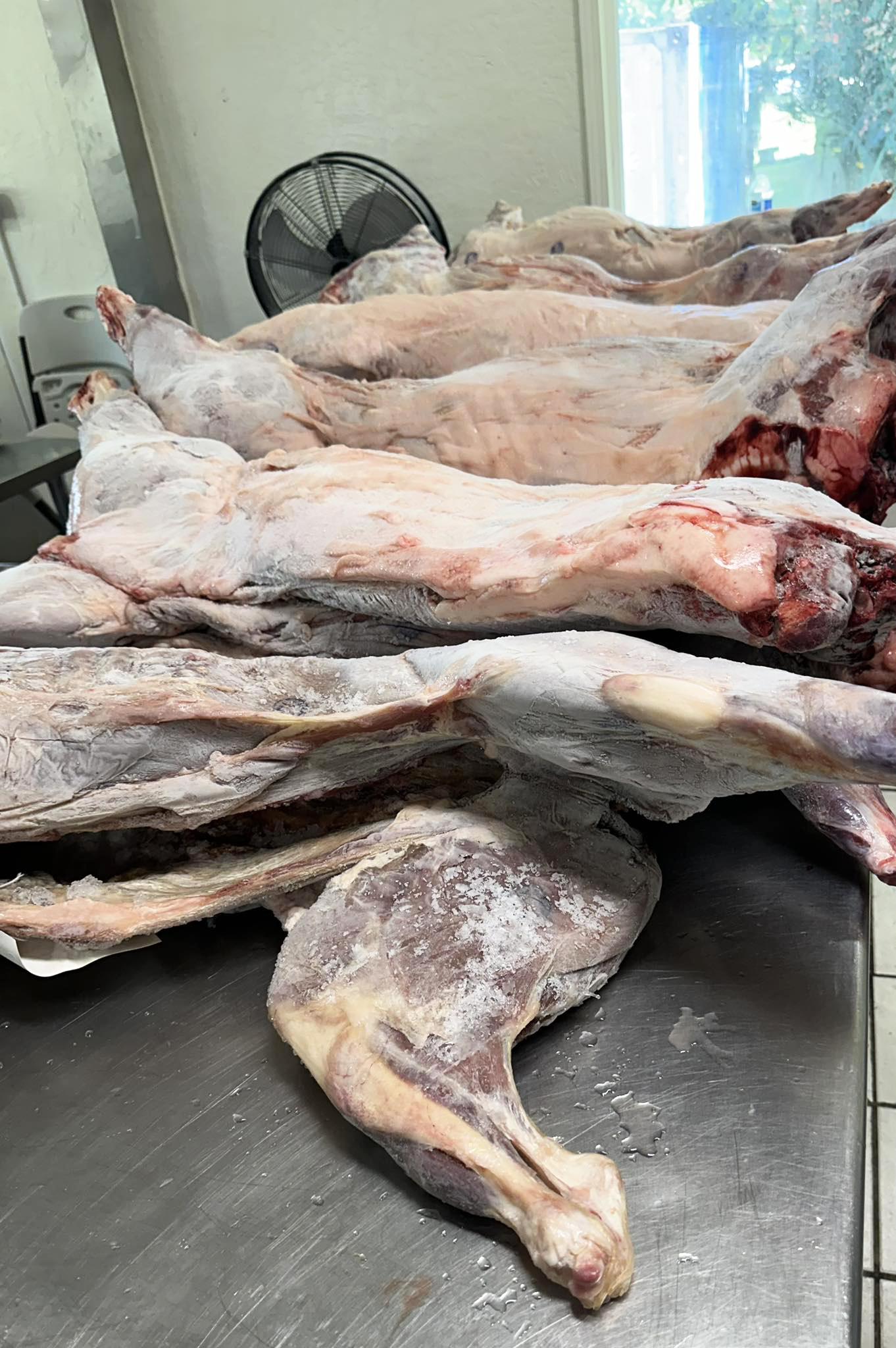
Markoff participated as a chef during the Smoke It Up Festival. He represented the Pāhoa Lava Zone’s mobile kitchen, Pōhaku Cafe. The menu often includes USDA-inspected wild pork that was trapped on the Big Island by him or local trappers.
“This kind of head-to-head tasting is a fantastic way to highlight wild pork as a solution to the invasive problem in Hawaiʻi, especially if marketed as unique, premium and ecologically responsible,” Markoff said. “Every chef elevated our local meats. Participating inspired me to experiment further with wild pork meat at Pōhaku.”
For the festival, each chef used wild pig meat inspected by the U.S. Department of Agriculture and processed by a USDA-certified butchery. But the only available facility open to working with the program is a mobile slaughter unit in West Hawaiʻi operated by the Hawaiʻi Island Meat Cooperative.
This required Markoff to transport pigs over the Daniel K. Inouye Highway to the west side and back with processed meat. OʻHara said more processing facilities are needed for a larger-scale wild pork industry.
“One of the takeaways from the Smoke It Up Festival was that it is not cost-effective to travel back and forth from Puna to Kona,” OʻHara said. “To be economically viable, there must be a mobile slaughter unit in Puna that can be set up at sites in other districts as well. In addition, the unit needs to process all types of domestically raised livestock.”
But she said it is difficult to find locations that meet all the criteria of being on the electric grid, having access to county water and following all USDA food laws.
Another big hurdle for opening a mobile slaughter facility is meeting the requirements for wastewater and nutrient management by the state Department of Health. Changes need to be made at the state level before it is possible to use land to set up a slaughter unit or other value-added processing facilities.
OʻHara said state Rep. Gregor Ilagan plans to address easing requirements for the use of state lands for agricultural processes in the upcoming legislative session.
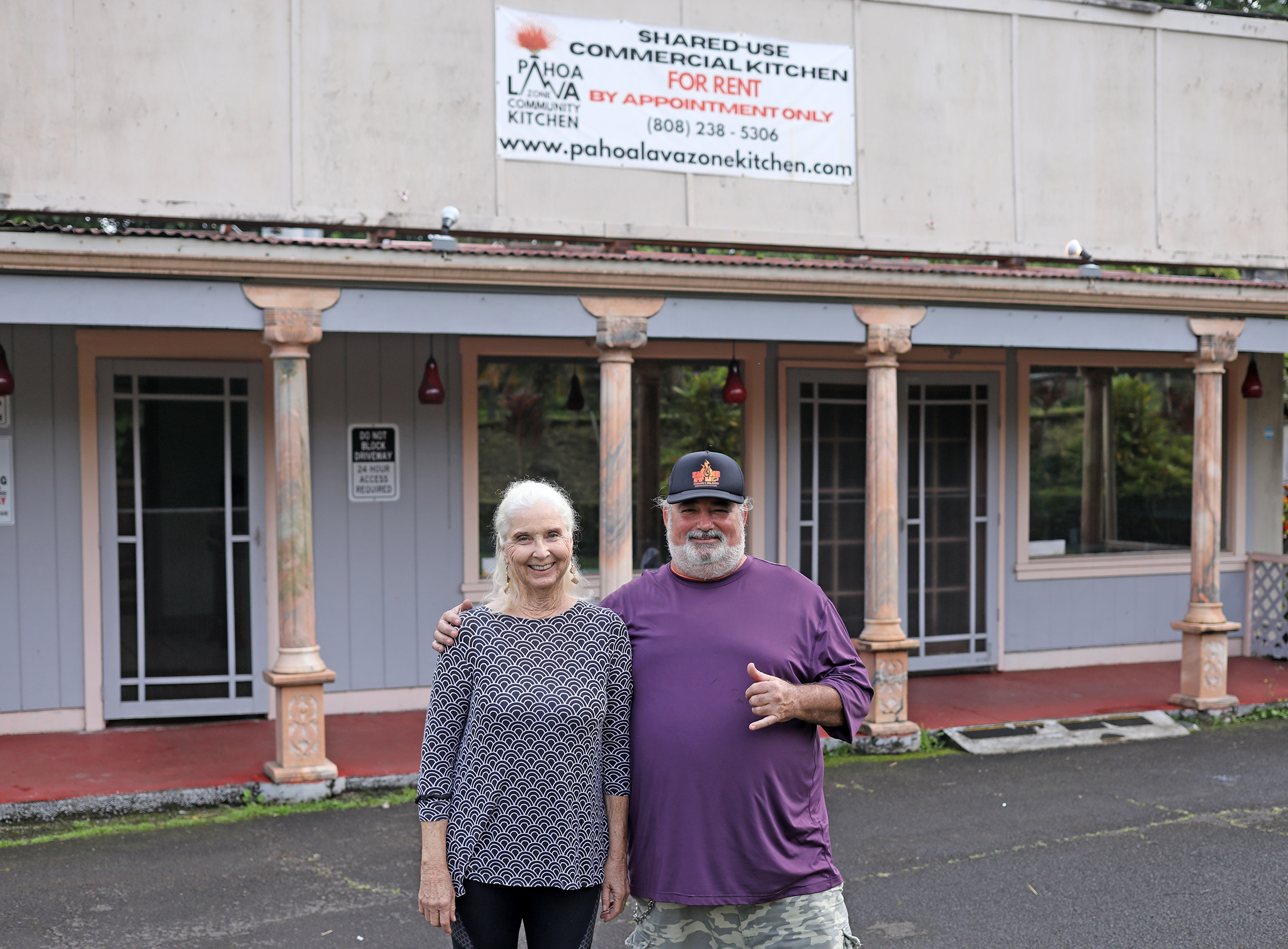
For now, the Pāhoa Lava Zone Museum and Mālama O Puna are working together to expand a current facility to include a USDA-certified processing hub that would work like a cut-and-wrap facility, where food producers can break down animal carcasses into specific retail cuts and package them.
The cut-and-wrap facility would be a component within the Pāhoa Lava Zone Museum Commercial Shared-Use Kitchen, a community kitchen that has open availability for aspiring chefs, existing food business owners, as well as nonprofits and charitable organizations.
The certified kitchen provides the public with a professional food preparation space that meets strict health and safety codes, where they can prepare and package their locally sourced and produced food products to go to market. It includes facilities for locally sourced and produced food products to market.
The eventual expansion of the kitchen would allow cooks and entrepreneurs to prepare USDA-inspected meats and other locally produced products to sell to retail stores, restaurants or individuals.
“We need to upgrade the current kitchen to make it a certified cut-and-wrap facility,” Markoff said. “This includes add-ons like a walk-in freezer and modifications to the kitchen. However, non-meat processors are also encouraged to use it for their businesses. It’s the first of its kind in Pāhoa.”
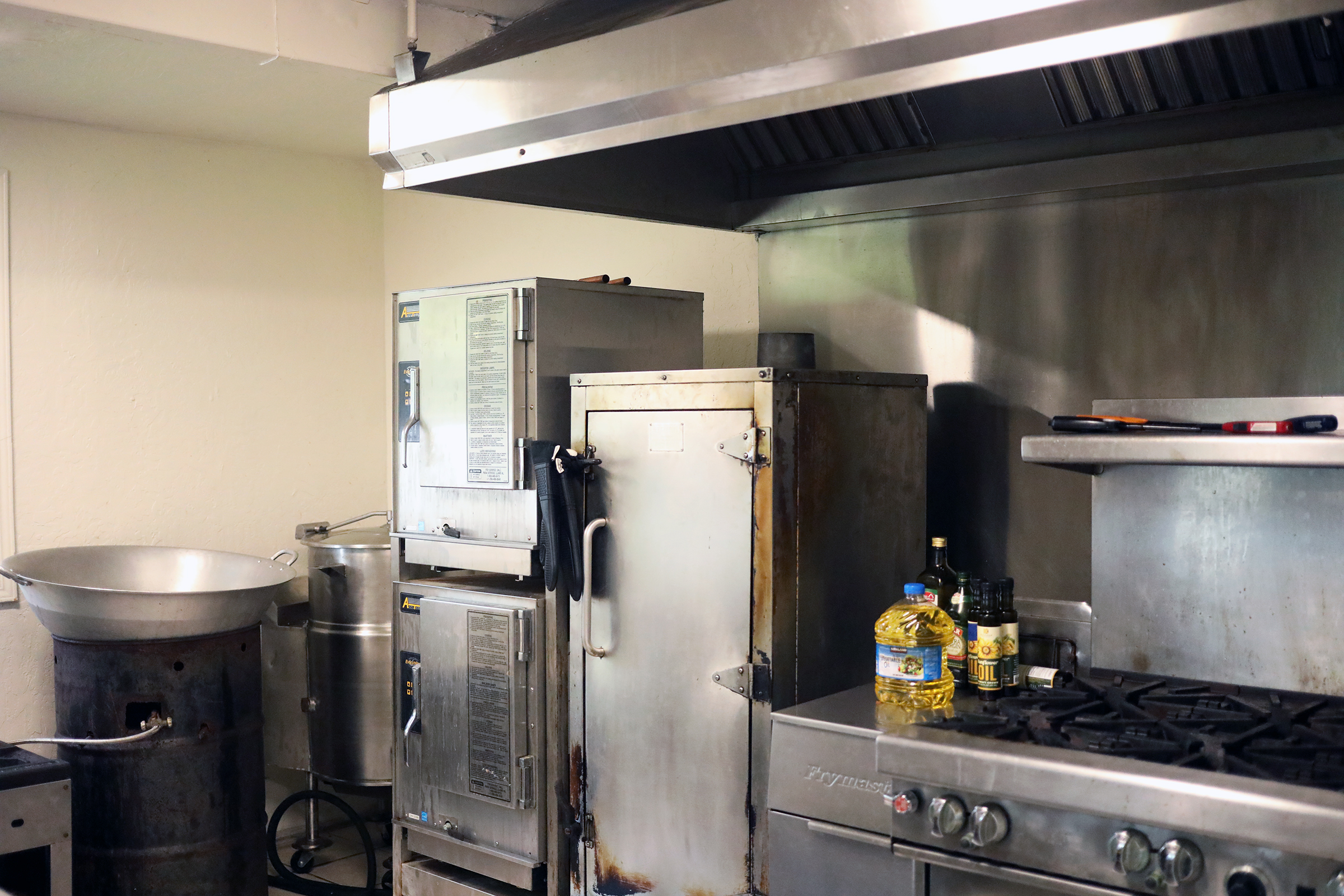
Pāhoa Lava Zone Museum uses the commercial space for everything on the Pōhaku Cafe menu. While wild pigs may not be processed for wholesale, Pōhaku Cafe can prepare and cook the meat they sell from the food trailer as long as they used the Hawaiʻi Island Meat Cooperative slaughter unit.
“We understand some folks may be apprehensive about eating invasives, and we still include farm-raised pork on the menu,” Markoff said. “But we want to promote invasive species management and to encourage people to try it if it sounds like something they would eat normally.”
Recently, Mālama O Puna received a $200,000 Kīlauea Recovery grant to help upgrade the kitchen and provide funding for critical programs needed by aspiring and current local food producers and additional equipment used for cut-and-wrap applications and value-added production.
“Developing this project with Mālama O Puna and Ashley (Kierkiewicz) has been an incredible experience,” Markoff said. “We’ve made strides as a team, and we’re excited to maintain momentum. It will benefit food sovereignty, keep forests healthy, and sustain agriculture.”
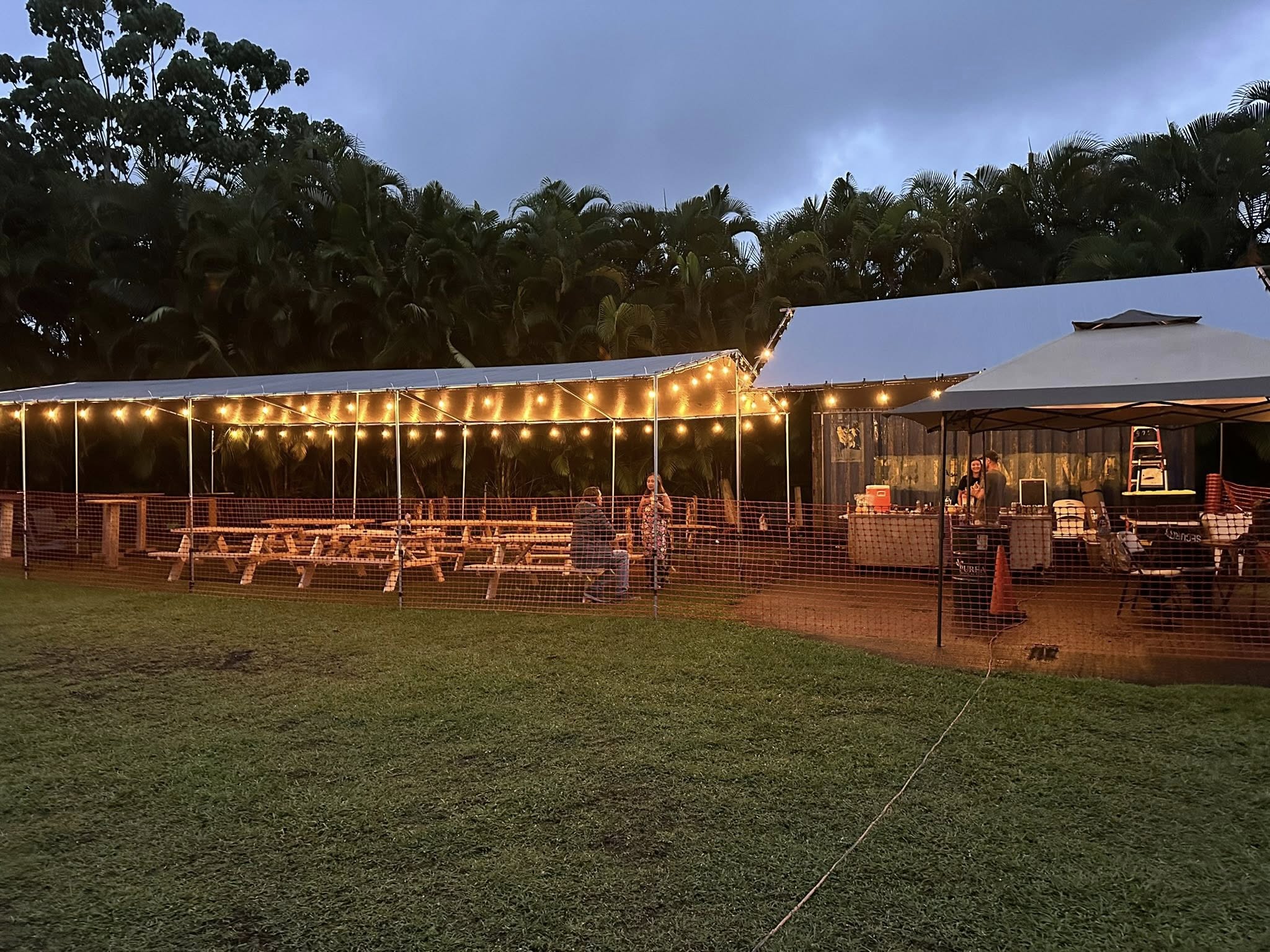
The public can try wild pig meat, as well as other local favorites, at the Pōhaku Cafe.
The Pāhoa Lava Zone Museum recently launched the Pāhoa Friday Night Market with the goal of bringing the community together to showcase local artists, musicians, food producers and craft vendors. The market, located at the old Akebono Theater lot, will feature live entertainment and a beer garden from 3 p.m. to 11 p.m. every Friday.
Sponsored Content


Subscribe to our Newsletter
Comments