



Neighbors try to stop construction of 1,400 mailboxes near Native Hawaiian burial cave
Over the past two years, the Hawaiian Paradise Park Owners Association has been working to construct four mailbox parks in the subdivision, which is the second largest private subdivision in the country with over 8,800 lots covering 12 square miles.
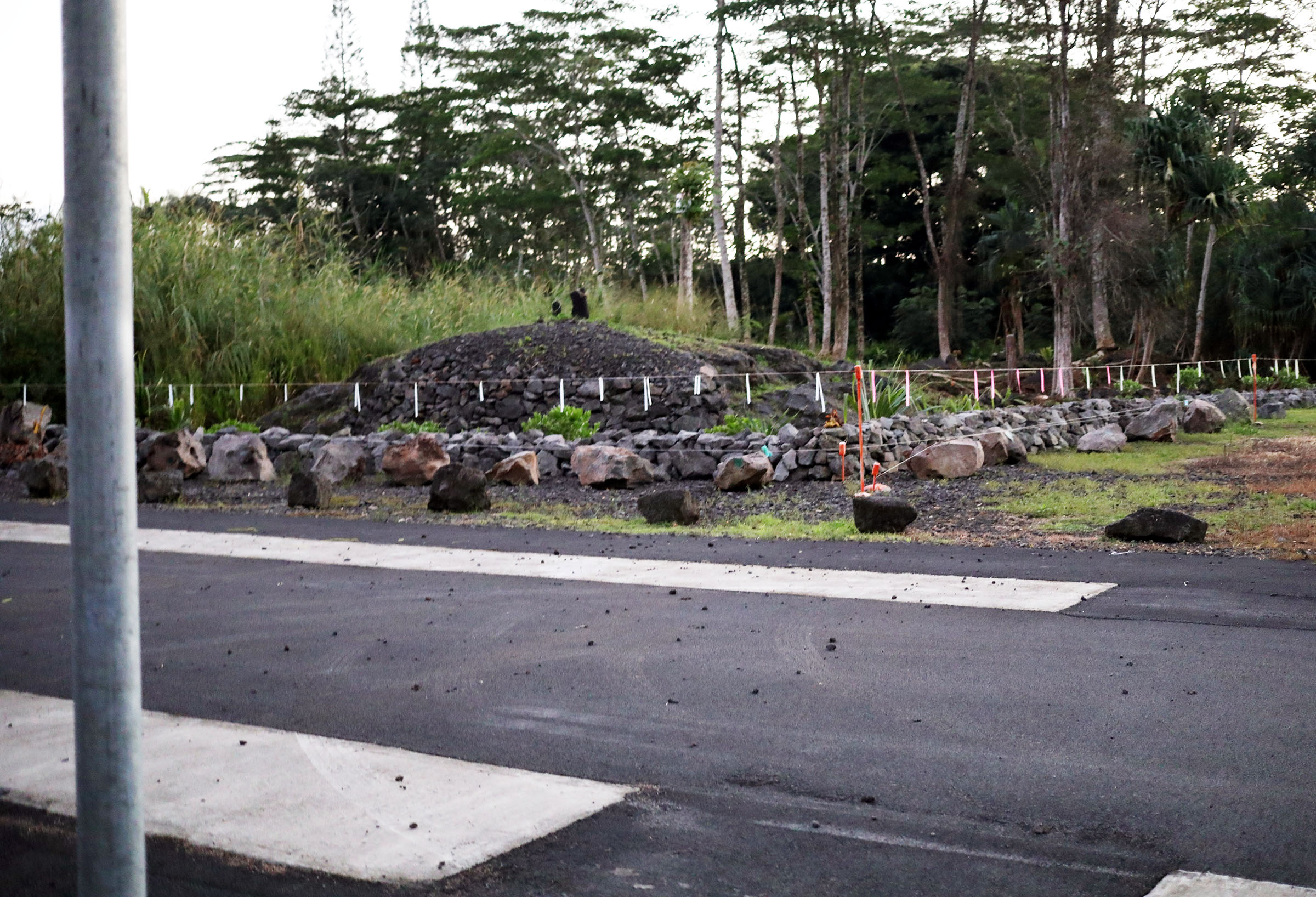
But at one of the planned sites for 1,400 mailboxes, workers accidentally uncovered a lava tube opening in July 2024 and found iwi kūpuna (ancestral bones).
The discovery at Makuʻu Drive and 16th Avenue — and after the land had been cleared and a concrete slab had been poured — has led to more than a year of contentious discussions between owners and the association’s board with some meetings abruptly ending when they became too heated.
Some residents think the mailboxes should not be built near the sacred area, while the association’s board has said it would cost hundreds of thousands to build it at a different location.
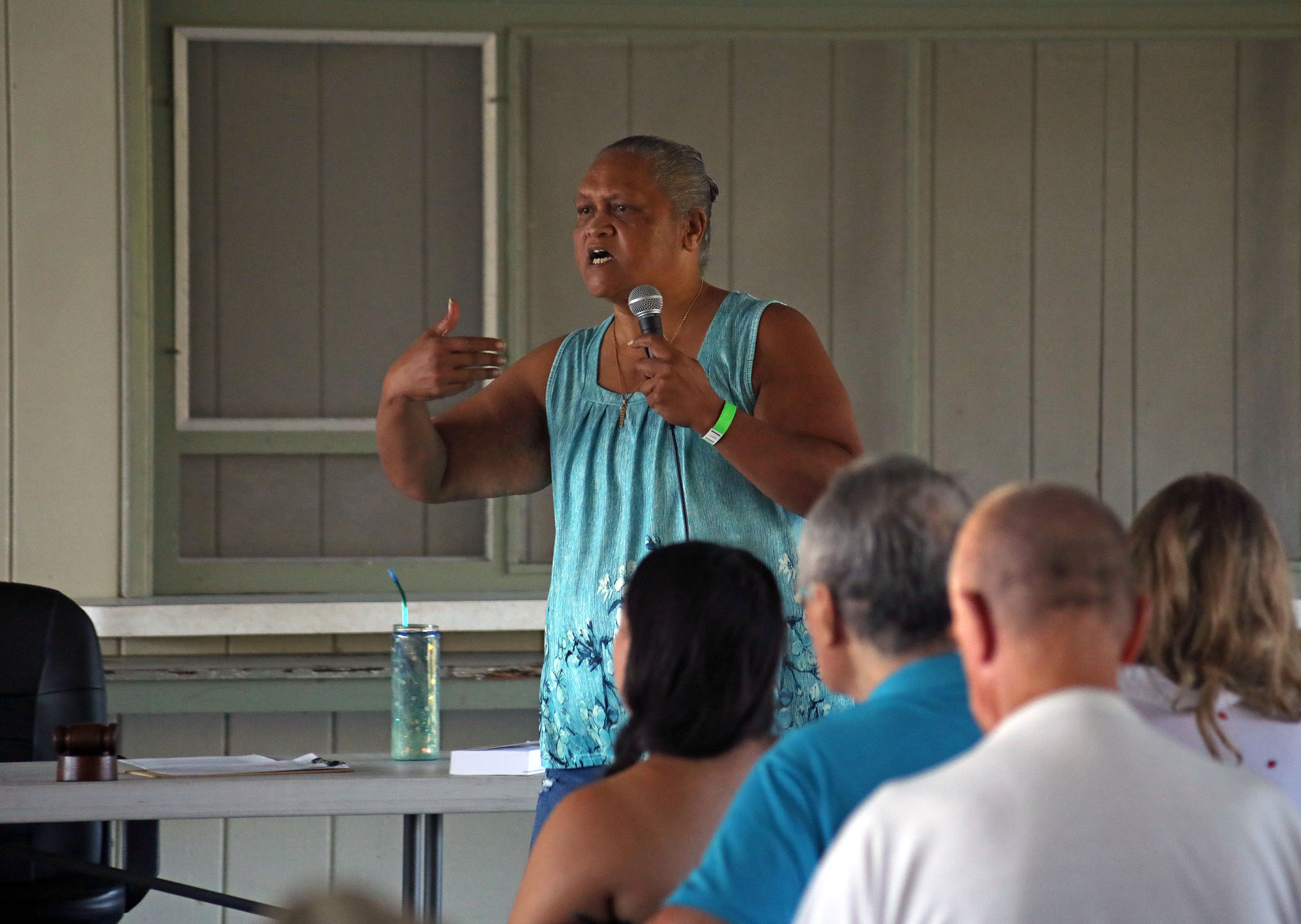
But at the final meeting of the year on Dec. 14, consensus was reached, with 46 of 56 members in attendance voting in favor of the resolution brought to the association by Lanell Lua-Dillard, a member and chair of the association’s Cultural Preservation Committee.
The resolution halts a controversial stewardship agreement the association’s board entered into in July with Keoni Alvarez, a recognized Native Hawaiian burial expert.
“Keoni is not on the Hawaiʻi Island Burial Council and he does not work for the State Historic Preservation Division, so he does not have the authority to give the ʻgo-ahead,ʻ” Lua-Dillard said.
The resolution agreed to in December by the owners prohibits anyone from handling, removing or altering the burial site until there is direct approval from the State Historic Preservation Division and a burial treatment plan approved by the Hawaiʻi Island Burial Council.
As a result, the association cannot alter the site and could face civil fines of up to $10,000 per violation per day if they do.
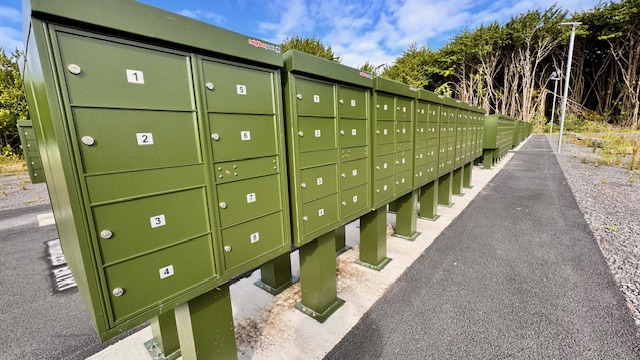
There are now 3,000 occupied homes in the subdivision. Only one of the four mailbox parks is complete, at Kaloli Drive and 4th Avenue. It is the same size as the one planned for near the discovery of the bones.
The association plans to install all four of the cluster mailboxes by next year, with ones holding roughly 3,000 each at Kaloli Drive and 4th Avenue and Makuʻu Drive and 6th Avenue.
Now, most homeowners receive their mail through a P.O. Box or through family and friends that live outside Hawaiian Paradise Park.
Historically, kūpuna (ancestors) would inter loved ones discreetly in burial caves, sand dunes, stone platforms and other areas guarded by ʻohana (family). This practice allowed kūpuna to complete their life cycle as the iwi kūpuna enriched the ʻāina (land) and spiritually sustained the community.
For Native Hawaiians, a profound connection to kulāiwi (ancestral lands) exists as the same mana (energy) that flows through the land also courses through their iwi and koko (blood).
To protect these unmarked burial sites, enhanced safeguards have been implemented at the state and county levels, including the State Historic Preservation Division Archaeology Branch, which assesses projects for potential impacts on historic properties.
Some projects require an archaeological survey before beginning, however, the project area for the mailboxes did not because it covered only about 0.9 acres.
Upon discovering the remains at the mailbox park location in 2024, Nicole Mello, a lead archaeologist with the State Historic Preservation Division, examined the site with cultural historian Christian Omerod and ethnographer Noah Gomes.
In the report, Mello noted skeletal remains and inferred that the newly discovered lava tube is likely part of an interconnected cave system with a burial cave documented by the state on Oct. 16, 2023. That cave was discovered on the same parcel about 65 meters from the mailbox construction project and comprised four individuals with approximately seven to eight distinct areas of human skeletal remains.
“Based on our inspection, there appear to be three sections of lava tube leading from the new construction area to the previously identified lava tube,” Mello stated. “Since the new lava tube was within the footprint of additional ground disturbances proposed for the mailboxes, additional work could cause harm to the area.”
At that time, the State Historic Preservation Division advised the association to stop construction activities, create a buffer of 10 feet around the exposed lava tubes, and seek further guidance from them before proceeding. At that time, the cave entrance was sealed and the association halted all work.
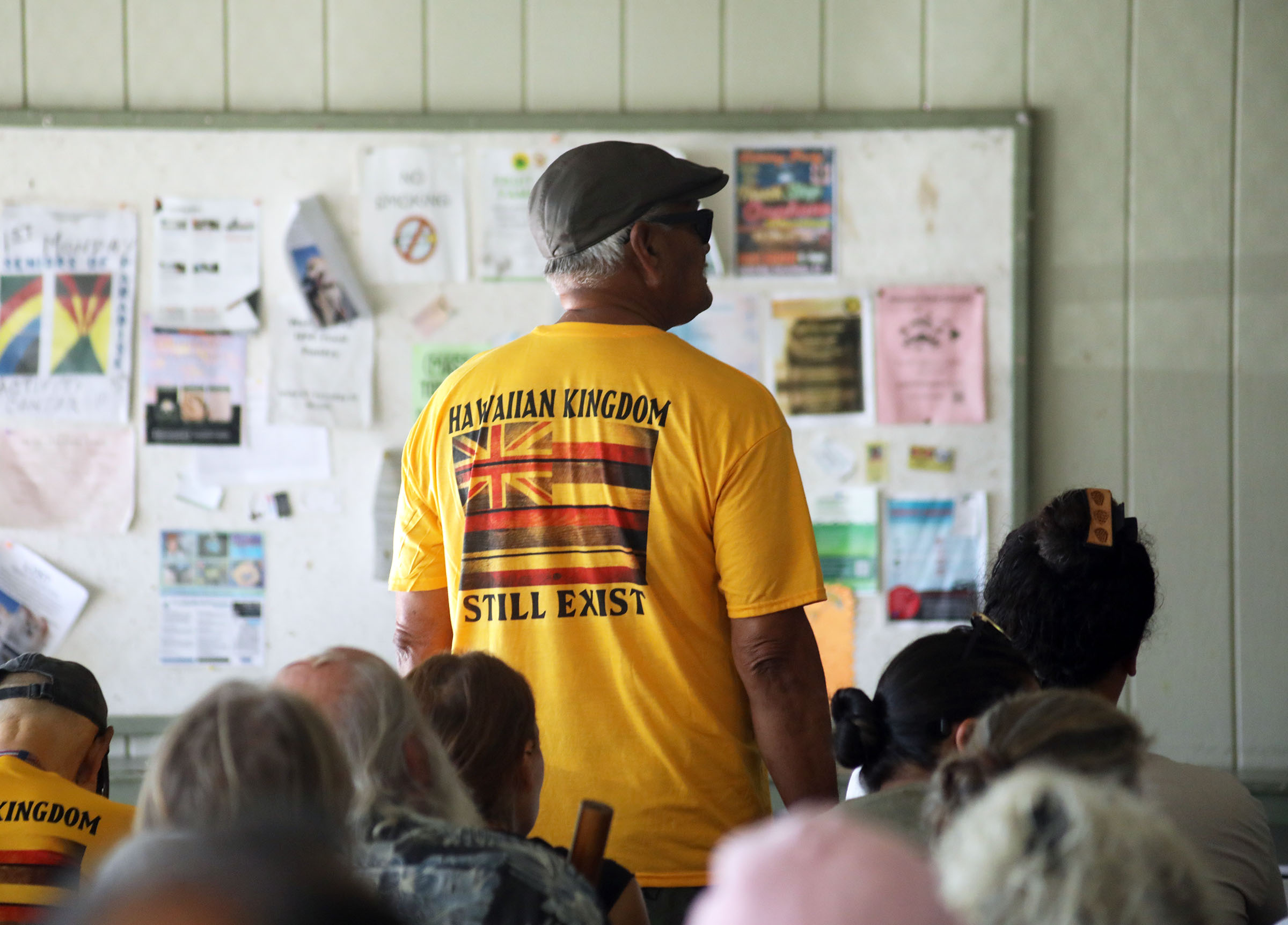
Kari Hoffman, treasurer for the association’s board of directors, said at the December meeting that the State Historic Preservation Division and the County of Hawaiʻi have signed off on permits to get the remainder of the work done.
The State Historic Preservation Division does not approve or disapprove of projects and does not control permit issuance. The County of Hawaiʻi holds that authority, taking into consideration the state’s comments.
But when homeowners pressed for proof of the permits at the meeting, Hoffman could not produce them.
The association’s board repeatedly has cited the depletion of the $600,000 budget for the project, which covers all four mailbox parks, as a reason for not relocating the mail park at Makuʻu and 16th.
The board also has often suggested that residents who want a different site “come up with $200,000 for a new acre to clear.”
“Every time people express concerns, it is met with financial issues and the suggestion to fund it themselves,” Lua-Dillard said. “We were all told there are $3 million in annual funds, so that response is inappropriate.”
Lua-Dillard said protecting the iwi is personal.
“It is my kuleana (responsibility), and I know you all don’t understand it,” she said.
Before the subdivision land was purchased by businessman William Herbert Shipman, it belonged to Lunalilo, “who is royalty and my family,” Lua-Dillard said. “My kūpuna are here, and that’s why I fight. We will always fight for things that many don’t understand, and that won’t stop Hawaiians from fighting.”
She contined: “For some reason, you moved here, and it has become your paradise. You can thank the Hawaiians. When you got here, you felt welcomed and at home. You can thank the Hawaiians.”
While Alvarez is Native Hawaiian and has experience preserving burial sites, he has not submitted a burial treatment plan for approval, so he cannot work at the site.
“There haven’t been many moments this year where we could relax and not worry about someone starting work on the mailbox park again,” Lua-Dillard said. “I’m proud of every one who came to every meeting to fight for our kuleana.”
For more information on ongoing priorities and issues in Hawaiian Paradise Park, visit the association’s website.
Sponsored Content


Subscribe to our Newsletter
Comments