



Big Island nonprofits granted $6 million to decrease islandwide homelessness
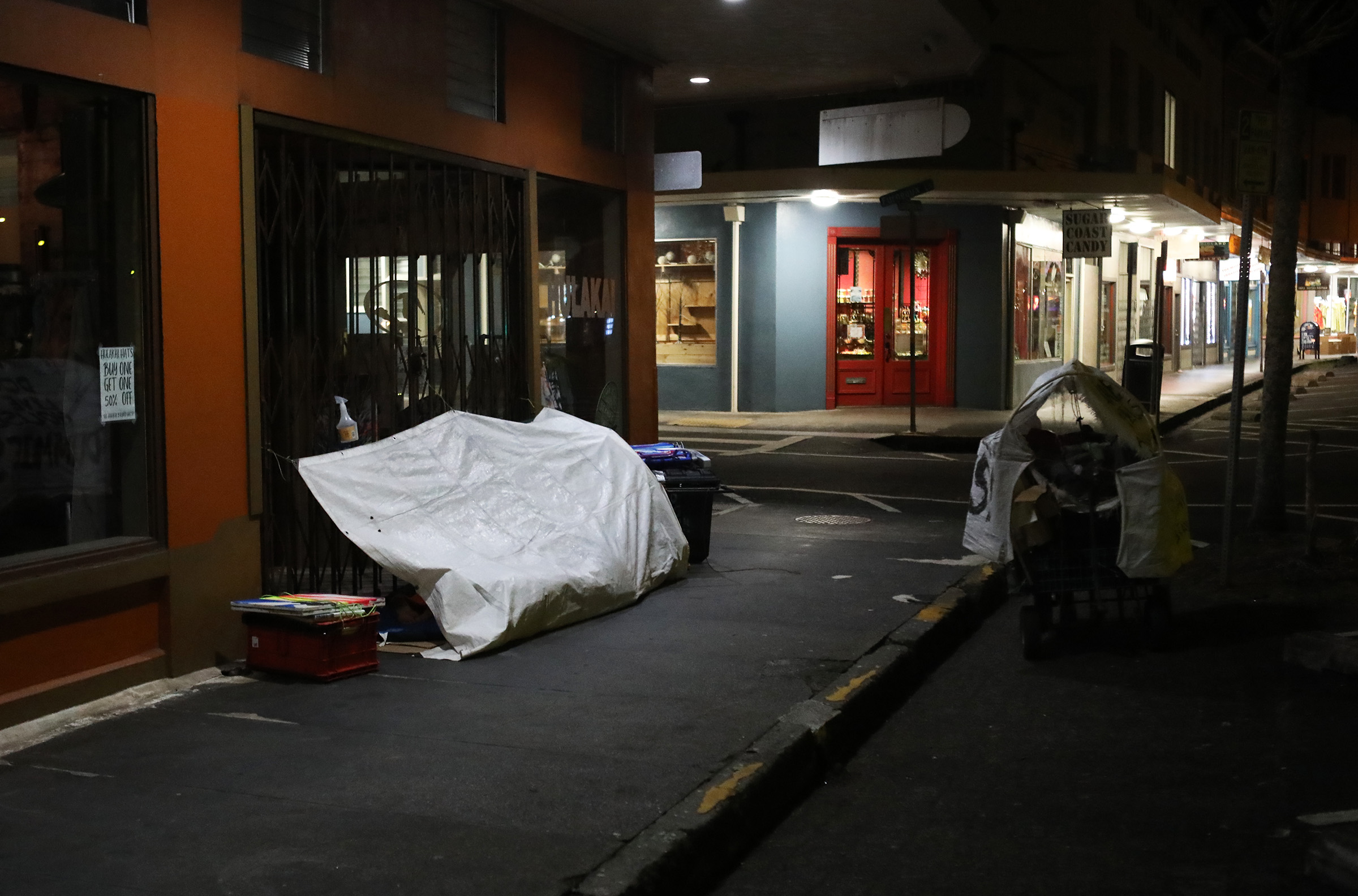
The Hawaiʻi County Council passed a $6 million resolution Wednesday to fund 12 programs from eight nonprofits despite ongoing discussions about inefficient spending and confusing results from the service providers.
The grants are part of the county’s Homelessness and Housing Fund, which directs 75% of Residential Tier Two property tax revenues to programs addressing homelessness and housing in Hawaiʻi County. The fund will expire in 2027.
The Office of Housing and Development issued a request for grant applications on July 23 and received 23 applications seeking approximately $18.3 million for the fourth round of funding under this directive.
A panel of five county employees selected the final awardees after evaluating projects individually while considering the broader network of programs within the community. The awardees focused on outreach and long-term housing or support programs, according to county Housing Administrator Kehaulani Costa.
The organizations and programs selected in this round include:
Outreach:
- Going Home Hawaiʻi: $80,000 for a Justice Navigator
- Neighborhood Place of Puna: $400,000 for the Family and Youth Street Outreach Program
- Project Vision Hawaiʻi: $340,000 for street outreach from Hilo to Kona
Long-term Housing:
- Bridge House: $430,000 for recovery and family housing
- Going Home Hawaiʻi: $790,000 for reentry and recovery housing
- HOPE Services Hawaiʻi: $900,000 for long-term housing
Support Programs:
- Big Island Substance Abuse Council: $600,000 for “Hulihia Ke Ola: Detox and Stabilization Program” and $200,000 for Mohala Family Resource Center
- Hale Kipa: $450,000 for Transitional Living and Housing Stabilization Program
- HOPE Services Hawaiʻi: $600,000 for support programs
- Lōkahi Treatment Centers: $260,000 for Recovery and Housing Stability Program
- Neighborhood Place of Puna: $950,000 for Neighborhood Place Resource Center
The council received a funding breakdown for each program, with a limit of 10% for administrative costs and requiring the rest to be spent on program costs.
Wages for employees working on specific programs are recorded as program expenses, with some salaries accounting for nearly 90% of the funding, an issue highlighted by Councilmember Matt Kanealiʻi-Kleinfelder during the last funding cycle in January.
At that time, he requested that Diane Nakagawa, director of the Department of Finance, assist in preparing clearer guidelines distinguishing between administrative and program expenses.
The Office of Housing and Community Development has not issued its own comprehensive guidelines for program and administrative costs. Standards were developed with Corporation Counsel and the Department of Finance and were posted in the grant application request.
“I have had my concerns on the return on investment due to what I see in the community,” Kanealiʻi-Kleinfelder said. “Without being able to break down exactly how the funds are used and how they have helped, it is difficult to know what the $6 million will accomplish.”

While the impact of the Homelessness and Housing Fund from last year has not been recorded, data from 2024 is available on the Office of Housing and Community Development website.
From Jan. 1 to Dec. 31, 2024, the fund supported 1,818 households. Of those, 418 households moved to stable housing, and 81 at-risk households were prevented from falling into homelessness.
During the finance committee meeting on Dec. 2, Council Chair Holeka Inaba questioned the possibility of “double dipping” by nonprofits awarded for more than one program.
“Part of the application process involves prescreening for completeness and breaking down each budget line item,” Costa said. “The Office of Housing and Community Development also reviews each nominated program for duplication. At the end of October, we conducted a third review of program budgets and a side-by-side analysis for organizations awarded dual projects.”
She said each cost charged to a Housing and Homelessness Fund project corresponds to a separate and distinct expense.
Councilmember Jennifer Kagiwada pushed back on fellow council members “casting dispersions” on providers without proof and expressed concerns about discussions on return of investment from nonprofits receiving grant funding.
“While I agree that we need to scrutinize where the dollars go, it’s important to remember that ROI isn’t always quantifiable,” Kagiwada said. “These are human services we need to provide, like meals for kūpuna, education for keiki, and housing for the homeless. It’s the right thing to do for the community.”
Councilmember Ashley Kierkiewicz reminded council members and the public that the Homelessness and Housing Fund contributed $33 million in property taxes to providers for this issue, compared to $2.5 million from the annual Waiwai grants and $1 million from the Department of Research and Development allocated to each council member.
“The Office of Housing and Community Development has the kuleana to justify each taxpayer dollar,” Kierkiewicz said. “However, they inherited a program and must build the plane as they fly it. Data tells one story, but I am concerned whether the story aligns on the ground. This faucet for the Homelessness and Housing Fund will eventually dry out as it was never designed to be permanent.”
Some providers supported the original ordinance, believing that in five years, the fund would solve homelessness, Kierkiewicz said.
“I don’t think we can solve homelessness, but also, with the money spent, it’s hard to say if we’ve made an impact,” Kierkiewicz said. “Ultimately, it is up to the Office of Housing and Community Development to maximize the remaining fund.”
The $6 million total in funds decreased from previous years due to concerns about transparency and accountability from nonprofit awardees. To address these concerns, the Office of Housing and Development opted to allocate the remaining $5.1 million in program funds to essential services through separate requests for proposals, including:
- West Hawaiʻi Emergency Shelter and Resource Center
- Permanent Supportive Housing Project, West Hawaiʻi
- East Hawaiʻi Emergency Shelter
- Overnight Cot Sleeping Programs, East and West Hawaiʻi
During the council meeting, Costa said this year’s reduced funding led previous grant awardees to cut back on or eliminate programs and services.
“Reducing the Homeless and Housing Fund significantly cuts grants, and we’ve already seen services reduced,” Costa said. “Providers struggle to continue programs, and we’ve seen emergency shelter beds, outreach programs and services reduced.”
On Tuesday, the Hawaiʻi Island Community Health Center announced the conclusion of its Street Medicine Outreach program for unhoused individuals at year-end because it did not receive county funding for 2026.
In 2023, the Hawaiʻi Island Community Health Center, formerly the West Hawaiʻi Community Health Center, was awarded $25,000 from the Homelessness and Housing Fund for the street medicine program. In 2024, the program was not funded. It is unclear where last year’s funding came from.
Although staff will be absent from the field, Hawaiʻi Island Community Health Center will ensure community-based organizations have clear pathways to refer patients to its clinics. Partner agencies will receive a packet with:
- Designated referral phone lines for medical, behavioral health, and substance use disorder services
- Direct access to primary care, medication management, MAT services, and integrated behavioral health
- Clinic locations and hours across Hawaiʻi Island
Former Councilmember Aaron Chung introduced the ordinance in 2022 as a temporary solution, with providers tasked with finding other revenue streams to continue their work after the fund ends in 2027, according to Kierkiewicz and Vice Chair Dennis Onishi.
After reviewing the 2024 impact report, Kanealiʻi-Kleinfelder asked the Office of Housing and Community Development for clear data to show the public exactly how the fund has impacted homelessness.
“When 50% of police calls relate to homelessness, and the number of homeless people rises despite continued spending, we are doing something wrong,” Kanealiʻi-Kleinfelder said. “If we can’t demonstrate a decrease in homelessness, extending the fund in the future could be challenging.”
The resolution to allocate $6 million to the 12 nonprofits passed 5-4, with councilmembers Inaba, Kanealiʻi-Kleinfelder, Kierkiewicz and Rebecca Villegas voting no.
Sponsored Content


Subscribe to our Newsletter
Comments