



Back home on the ranch: Two cows returned under new agriculture crimes law in Hawaiʻi

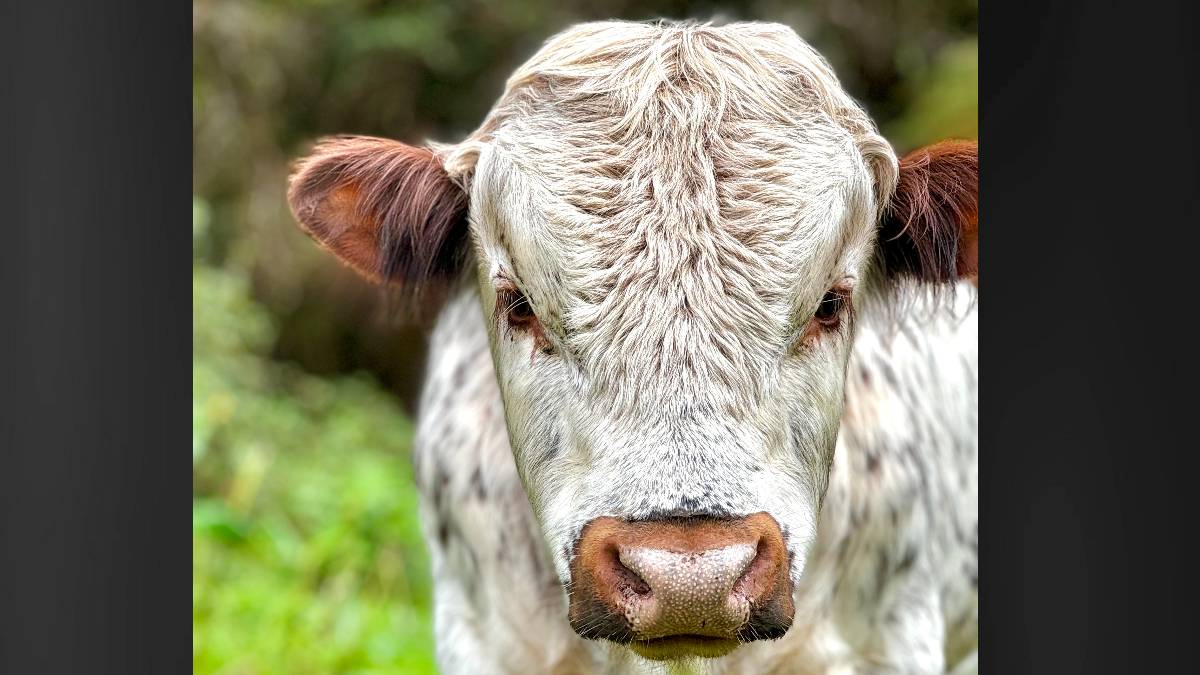
Wendy Hickock said the past six months have been “literal hell” as she worked with law enforcement to prove her prized miniature jersey-Panda cow Daisy and her months-old calf Justice should be returned to her ranch.
But last week she got them back with the help of new state legislation called Duke’s Law, which established an agricultural crimes task force to address statewide agricultural crimes and increased penalties for property crimes committed on agricultural property.
Duke’s Law was named in memory of Cranston “Duke” Pia, the O‘ahu rancher who was shot and killed in 2024 after confronting trespassing hunters on his farm.
Under the law, the state attorney general’s office obtained a warrant that was executed on a Pa‘auilo property and Daisy and the calf, named Justice because of the ordeal, were taken to Hickock’s Rosie Rainbow Ranch in Laupahoehoe.
Sen. Tim Richards, a Big Island rancher and an author of Duke’s Law, said this is the first time a search warrant was executed to find and recover missing cattle in the state’s history.
“That’s a big deal,” Richards said. “We collectively, as a state, recognized that agriculture is important. This is about protecting people and agriculture, and falls in line with food security.”
Since Duke’s Law was enacted in July, the Department of Law Enforcement has received 26 agriculture calls from residents on Hawai‘i Island and O‘ahu. Many of the 10 calls from the Big Island related to hunters trespassing on private property. There also was a report of someone tampering with water supply lines and water troughs.
With the success of the search warrant and ongoing investigation, Richards said action is being taken to protect the agriculture community.

“The Department of Law Enforcement is taking this seriously now, and that’s a huge shift,” Richards said.
Because the incident is under investigation, authorities did not release the name of the individual who was holding Daisy and her calf.
Hickock’s case began more than a year ago, when she had been collaborating with Walter’s Farm in Volcano to breed Daisy with a miniature highpark-Dexter bull named Peter Pan. The calf was for Hickock’s petting zoo.
Hickock said she has spent more than $30,000 on Daisy, who was born on the Big Island. Peter Pan’s heifer calves in the past have gone for $15,000 within days of being born, she said. Hickock believes a calf born to Daisy and Peter Pan would sell for at least that same amount.
Last October, Daisy was in Volcano with Peter Pan, but drought conditions in the Ka‘ū community forced Hickock to look for another spot for the pair to graze and breed for the winter.
A friend of Hickock’s offered to take Daisy and Peter Pan to his pasture in Pa‘auilo until Hickock and Mary Naggs, owner of Walter’s Farm, were ready to bring their animals back to their own properties.
Peter Pan went home to Volcano in January, but Hickock’s attempt to bring Daisy back to Rosie Rainbow Ranch in May failed. She said her former friend refused to give her cow back as well as the calf she bore while at the farm.
Hickock met Justice for the first time when she was returned last week. And while she is grateful to have the calf home, its original purpose was to be in her petting zoo but that cannot happen because the calf is feral because she was not bottle-fed, which creates the bond with people.
“He said he didn’t have any intention to return (Daisy) or her calf and not to contact him again,” Hickock said. “This whole thing has been unnecessary and avoidable.”
Hickock said she offered cows that she had bred from her own herd as appreciation for her former friend’s help, on top of the money and gifts he received for retrieving Daisy and Peter Pan from Volcano and keeping them in his pasture.
Not knowing what to do, Hickock said she contacted Richards for guidance, and he advised her to reach out to law enforcement.
“I had no other option other than to advocate for myself,” Hickock said.
Mike Lambert, director of the state Department of Law Enforcement, said Hickock kept “impeccable” records, which allowed the task force to establish probable cause to move forward with a warrant.
Hickock said law enforcement needed to be sure, beyond a reasonable doubt, that she was being deprived of her property by looking at all her records and text messages involving Daisy and Justice.
“Going through that process felt like I was on trial,” Hickock said.
But she felt vindicated when her cows were returned, saying she also was “grateful for the legislation. It feels like hope for others and the future.”
While no arrests have been made, Lambert said the incident is being investigated as a first-degree theft due to the value of the livestock. If charges are filed, the case will be prosecuted by the state’s Department of the Attorney General.
Hickock said there was no confusion as to the ownership of Daisy and Justice and believes the former friend who was holding her cows was motivated by greed because of the cows’ unique and valuable genetics.
Since Duke’s Law has gone into effect, Lambert has been visiting agriculture communities on the Big Island in the Puna, Hilo and Hāmākua Districts and places on O‘ahu. He said he has learned there is a lot of trespassing and illegal hunting, which is occuring three to four times a year and in some cases daily.
Lambert encourages people to call 911 if there is an agricultural crime in progress.
“If it’s after the fact, we’re asking people to use the ag reporting system,” Lambert said.
Now, Lambert said the task force is seeing agricultural crimes committed throughout the state. On Hawai‘i Island, the incidents are occurring in the north and south areas.
“At the heart of this is building trust with the ag community so they actually report,” Lambert said.
The feeling surrounding ag crime varies from casual all the way up to organized theft groups that are ripping farmers off and selling their product at markets, Lambert said.
Lambert added that people outside of the agricultural community do not know these types of crimes have a negative impact on sustainability. Additionally, farmers and ranchers “don’t understand the domino effect it has when they don’t report it.”
“Your local rancher or farmer, they’re living crop to crop,” Lambert said. “One tractor being set on fire or cattle stolen could be the nail in the coffin for them, and you lose that farm and what it offers.”
By supporting agriculture in the state, Lambert said it bolsters the state’s resilience in food production.
In talking with the agricultural community, Lambert said, ranchers and farmers tend not to report because response time in rural areas is delayed, and local police aren’t necessarily trained on the nuances of ag crime. The director also found that people are discouraged from reporting because they’re being intimidated.
While Lambert has more than 20 years of experience with the Honolulu Police Department, he said he’s been humbled learning about the nuances of agricultural crime and working with the Department of Agriculture and Hawai‘i Farmers Bureau on training officers in those nuances.
Some of those nuances, Lambert explained, included learning about the sale and transfer of commerce, the rules about moving cattle on a roadway and receipt requirements for produce confirming where they came before they can be sold at a market.
Hickock and Naggs have collaborated over the years on breeding cows, goats and bunnies for Rosie Rainbow Ranch’s petting zoo and pony rides. The animals at Hickock’s ranch are also used for meat and milk.
Hickock said it’s common for ranchers and farmers to send cows and horses to neighbors’ pastures to graze. She said never before had someone refused to return her animals.
But Hickock said she has witnessed other farmers and homesteaders who have struggled with loss of sheep or cattle from trespassing hunters.
Hickock said most farmers and ranchers on Hawai‘i Island follow an honor system. Duke’s Law, she added, is for those who fall outside of that honor system.
Hickock’s advice for others is to have faith in the system and report these crimes.
“Justice isn’t a race, it’s a marathon,” Hickock said. “This could be anyone, whether it’s one mini cow or two mini cows or a herd sold without a brand inspection or a horse stolen.”
Naggs said most everyone on the Big Island understands that as an integrated community, the farmers and ranchers rely on each other.
“A big part of this win is knowing it’s not a crime going unanswered,” Naggs added.
Richards encourages anyone in the ag community who has suffered from a crime to report it, by text or voicemail, through the Department of Agriculture tip line at 808-427-3323.
Click here to report an agriculture theft with Hawai‘i Island police.
“With that comes data, comes talking points to seek more funding to grow the program,” Richards said. “We’re already talking about refinements for Duke’s Law to make it easier to seek convictions.”
Sponsored Content

_1770333123096.webp)

Subscribe to our Newsletter
Comments