



Steady glow continued overnight following Kīlauea eruption
A steady glow continued overnight at Kīlauea at Hawai‘i Volcanoes National Park following a magnificent lava fountaining over the weekend.
At 10 a.m., livestream cameras from the U.S. Geological Survey showed smoke billowing out of the Halema‘uma‘u Crater.
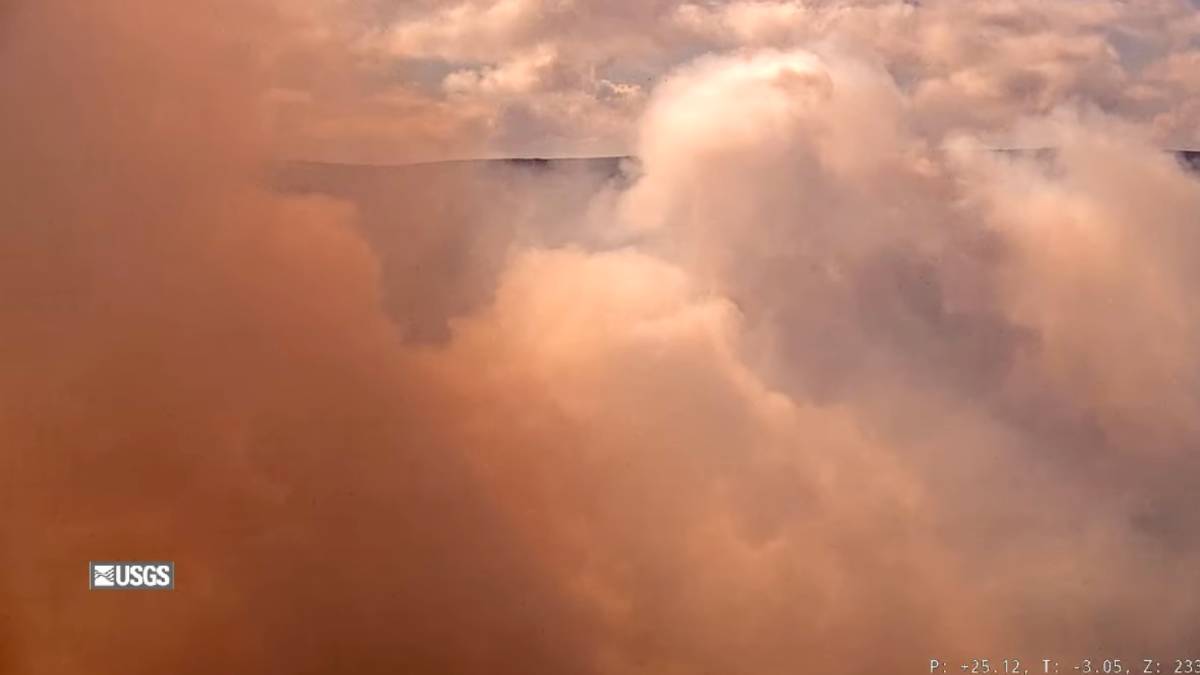
Episode 38 began on Dec. 6 at approximately 8:45 a.m., where there were 12 hours of sustained fountaining. The onset of episode 39 is likely to occur between December 20 and 30, according to a daily update from the Hawaiian Volcano Observatory.
Volcanic gas emissions have decreased with the end of the eruption and are back in the normal range of 1,200 to 1,500 tonnes per day of SO2. Rates of seismicity and ground deformation remain very low in the East Rift Zone and Southwest Rift Zone.
SO2 emissions from the East Rift Zone remain below the detection limit.
“The rapid rebound of inflationary tilt, continued tremor, and moderate glow from both vents overnight all indicate another fountaining episode is likely,” the observatory’s daily update states.
The south vent produced a fountain of up to 1,000 feet, spraying the south wall of Halemaʻumaʻu crater. According to the daily update, hot pumice and molten spatter destroyed one of three streaming cameras of the volcano.
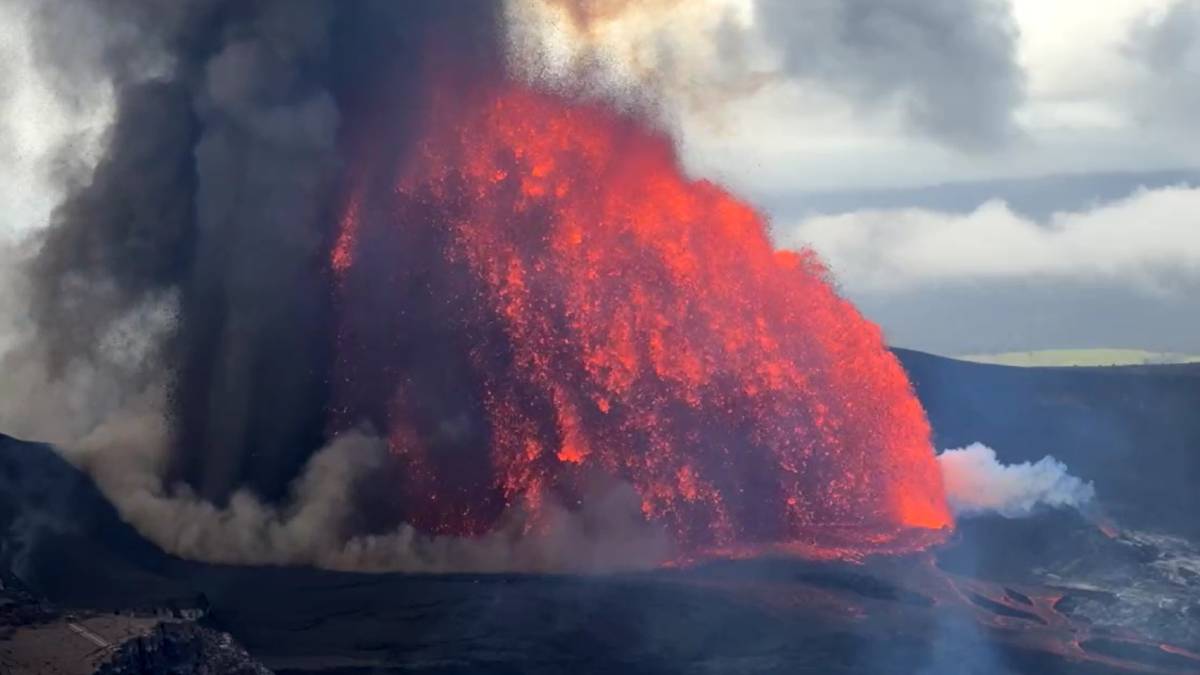
Kīlauea has been erupting episodically for almost a year, starting on Dec. 23, 2024. According to the observatory experts, lava has primarily been flowing from two vents (north and south) in Halema‘uma‘u.
Eruptive episodes, which can last up to 12 hours, are separated by pauses that can be as long as two weeks.
Visit the Hawaiʻi Volcanoes National Park website for visitor information at: https://www.nps.gov/havo/index.htm.
Sponsored Content

_1770333123096.webp)

Subscribe to our Newsletter
Comments