



From Lava to Java: East Hawai‘i residents absorb Indonesian culture, share aloha
East Hawaiʻi Cultural Center’s bronze gong orchestra has returned from a two-week study tour to Surakarta in Central Java, Indonesia, fortified with new musical skills and brimming with stories about their cross-cultural adventure.
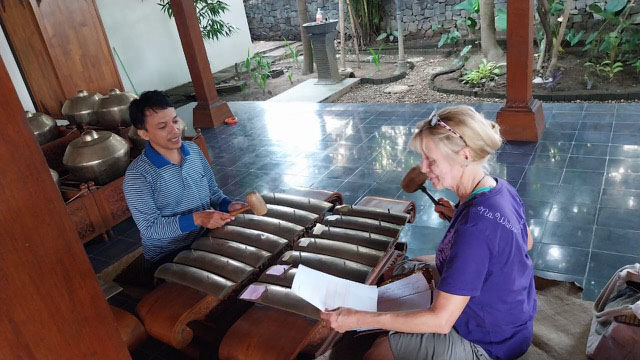
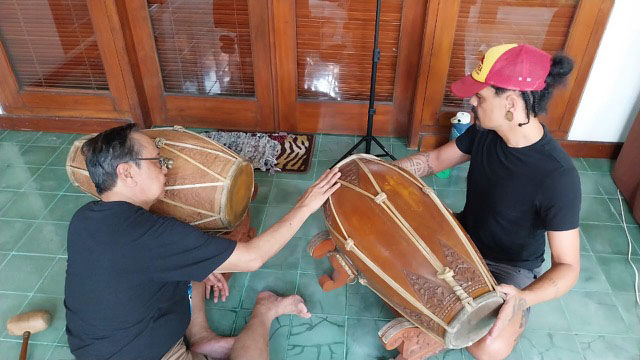
Named in honor of Big Island’s volcanic activity, the Gamelan of the Molten Blossom traveled to Surakarta to study several techniques used in gamelan playing. The six members focused on ciblon (a sophisticated drumming form), suling (bamboo flutes), gerongan (singing), and more.
Students learned through daily individual and group lessons with professional musicians at Griya Seni Ekalaya, an arts center that offers students from around the world instruction in dance, music, wayang (puppetry), and Indonesian and Javanese languages.
While music was at the core of the program, students experienced many more aspects of artistic and daily life in the cultural heart of Java. They then returned the favor with insights into Hawaiʻi during conversations with curious locals.
Typical days started with lectures and instruction at 9 a.m. and ended long past midnight with performances of dance, music, and wayang kulit (shadow puppetry).
During one experience, students took a trip to Museum Radya Pustaka, which showcases treasured royal family heirlooms. The visit coincided with the museum’s 135th birthday celebration and a rare chance to hear an ancient, revered gamelan, played only once a year.
They also had the chance to participate in ruwatan, or ritual purification, performed by renowned dhalang (puppet master) Ki Purbo Asmoro. The ceremony began with a wayang performance recounting the legend of Batara Kala, a troublemaking giant with the power to disrupt the lives of people vulnerable to his cruelty.
Derrick Barnicoat, Terry Eckland, Donna Grabow, and Tāpai Mataoa took part in the ruwatan and offered a blessing that frees participants from the misfortune Batara Kala inflicts. Wayang performances typically last deep into the night and include interludes in which the dhalang interviews audience members – in this case, focused on the Molten Blossom players.
In what was almost certainly a unique occurrence for wayang performances, Mataoa transfixed the audience with the oli “E Ho Mai.”
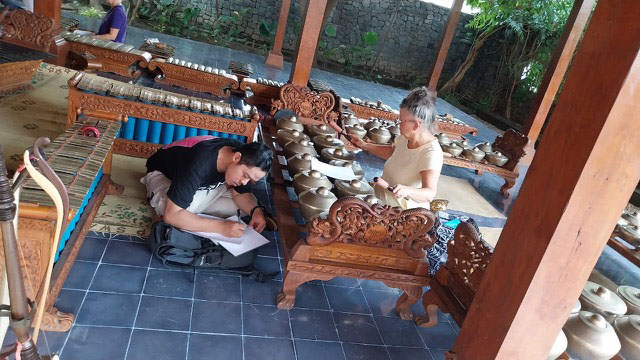
Now that they’re back home – eager to expand Molten Blossom’s musical skills – the study tour participants hope that by adding new music to the group’s repertoire, additional members of the East Hawaiʻi community may be intrigued enough to join.
“We learned vocal parts we never knew before. They range from back-and-forth joking between male and female singers to haunting, sophisticated melodies,” said member Tim Buehrer. “It’s fun and relatively easy to learn songs like ‘Ayo Ngguyu,’ which means ‘let’s laugh together.’ Our group would be delighted if anyone wants to come sing with us.”
Molten Blossom currently meets from 4 to 5:30 p.m. Tuesdays and Thursdays in the small building behind the East Hawaiʻi Cultural Center. Classes are free and open to all regardless of prior musical experience, with additional meeting times possible on request.
More information is available on the East Hawaiʻi Cultural Center website, or by contacting the director at cwalker@ehcc.org.
The East Hawaiʻi Cultural Center is located at 141 Kalākaua St. in Hilo with hours from 10 a.m. to 4 p.m. Tuesday through Thursday, noon to 6 p.m. Friday, and 10 a.m. to 2 p.m. Saturday.
Sponsored Content

_1770333123096.webp)

Subscribe to our Newsletter
Comments