



Hawaiʻi County agency created to improve animal control already seeking new administrator
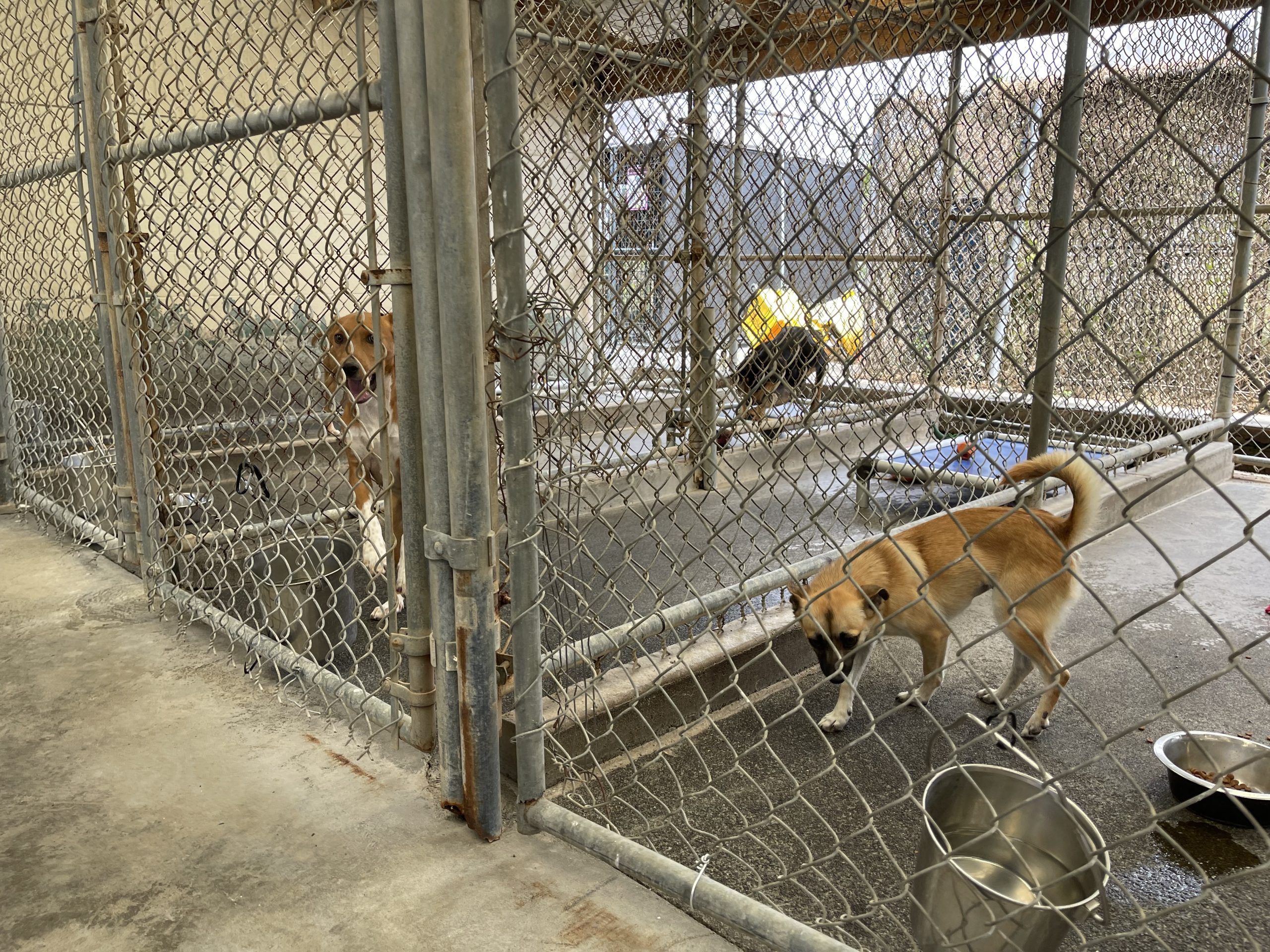
In 2023, Hawaiʻi County created a new agency to handle animal control out of desperation.
The Hawaiʻi Island Humane Society did not renew its longtime contract in 2020, another nonprofit had difficulty starting up and lasted only a year, and a two-year pilot program run by the police department received many complaints and public outcry for change.
The County Council listened and created the Animal Control and Protection Agency, which launched on July 1, 2023. Just two months later, the need for improved animal control was highlighted when 71-year-old Robert Northrop was mauled to death by a pack of dogs while walking in Ocean View.
But building a new agency basically from scratch has not been easy. Last month, Matthew Runnells, the agency’s first administrator selected by former mayor Mitch Roth’s office, was quietly reassigned to a veterinarian technician position at the county-owned Pana‘ewa Zoo at the behest of current mayor Kimo Alameda.
“I told him he gave us a head start, and he did a good job with the skills he had,” Alameda told Big Island Now.
But Alameda said he looks at his job as mayor similar to a head coach who needs to put people in the best position for their skill set. Using a basketball analogy, he said: “Matt was positioned as a point guard, and I felt he was better suited for half guard.”
Alameda said they mutually agreed that the position of veterinarian technician was a good fit for him because of his background working in zoos, including Disney’s Animal Kingdom Theme Park in Florida.
Runnells declined to address why he no longer works for the agency. But he said he thought his team did an “amazing” job considering it was new, and that he didn’t “regret anything as far as my performance.”
Runnells also received good marks for his work from Daylynn Kyles, chief executive officer for Aloha ‘Ilio Rescue, and Lauren Nickerson, chief executive officer for the Hawaiʻi Island Humane Society. Both nonprofits partner with the county agency to find homes for impounded animals that are adoptable.
“He wasn’t given a loose leash to lead or enough time to correct a system that has been decades in the wrong,” Kyles said.
Nickerson said she thought moving Runnells was premature because he seemed to have good intentions about running an efficient agency.
“I think he could’ve been the right person for the job,” she said.

Runnells started with a $3.4 million budget and 45 full-time positions, but all of them had to be filled. Under the pilot program run by the police, all the animal control positions were contracted and not by civil servants.
During his tenure, 32 of the 45 positions were filled.
Runnells also inherited a growing problem on Big Island that requires much more than an agency to solve. Rescue organizations say there are too many people neglecting and abandoning more animals than the county can handle without resorting to euthanasia.
Since launching two years and four months ago, the county agency has received 680 reports of dangerous dogs or bite incidents. It also has impounded 7,912 animals, including dogs, cats, birds of various species, goats, sheep, cows, horses, pigs, rabbits, guinea pigs, turtles and tortoises through October, said interim administrator Charyse Emmons.
Of those animals, 3,405 were euthanized for medical reasons, behavioral reasons and at the owner’s request. Many have also been put to sleep because there is no space to house them.
Kyles said it’s not the animal control agency’s fault that intake numbers are high or that so many animals are being euthanized.
“They have these wonderful animals looking at them through a cage, tails wagging, and they have to euthanize them because they don’t have space,” Kyles said. “This is not animal control’s fault. These animals are not at fault. It’s the community’s fault for breeding them.”
Nickerson said the roles of rescues versus animal control are sometimes confused.
“Our role is to bring in animals and help get them adopted,” she said. “Animal control’s primary goal is public health and public safety, such as tracking down dangerous dogs, animals running in the street.”
Nickerson said the Humane Society, which had the county contract for 30 years, did not “step away because we couldn’t do the work or didn’t want to.” She said it was because “we didn’t feel supported by the county.”
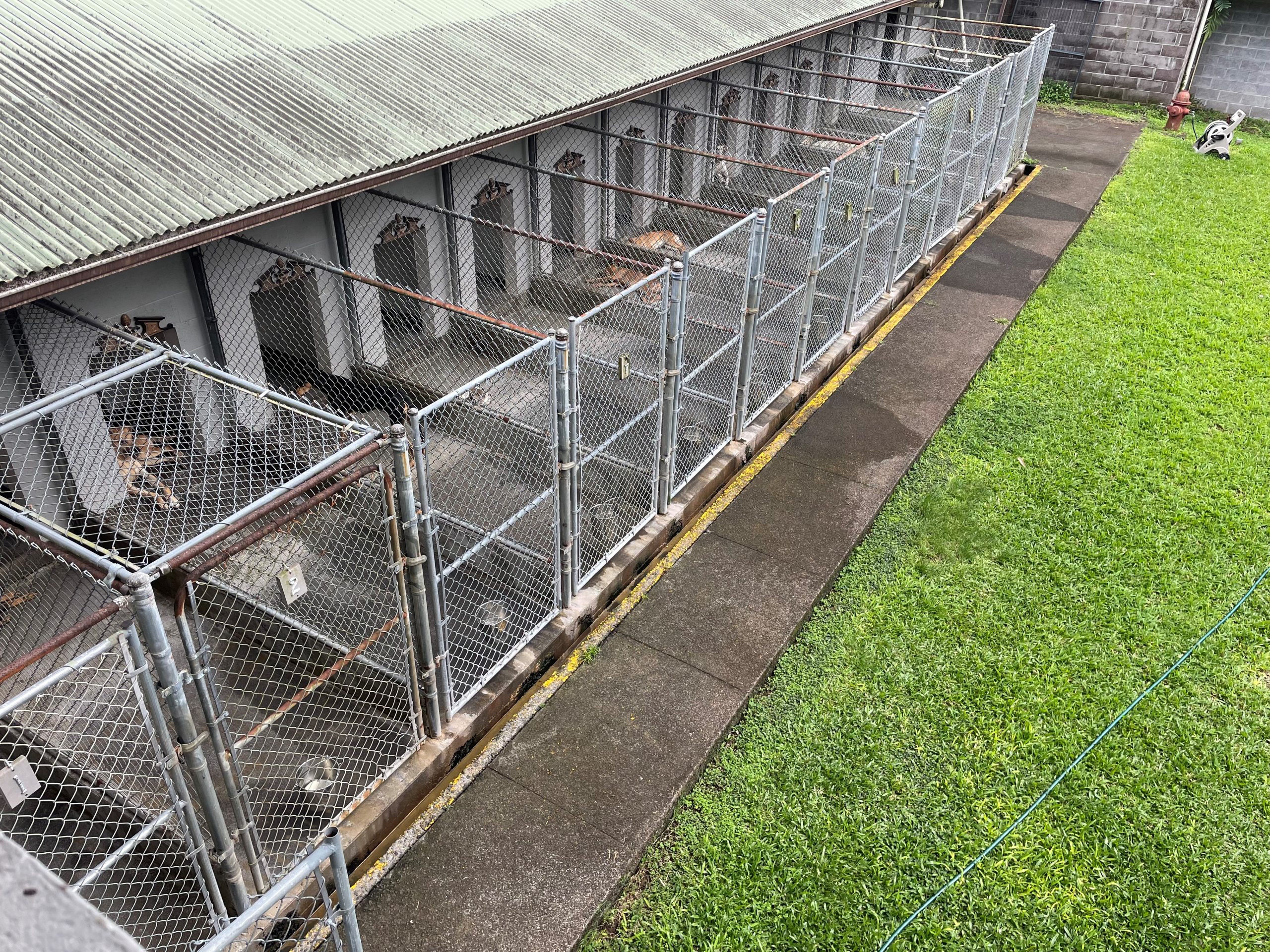
Nickerson described the last few years the Humane Society ran animal control as “dark days for people and animals.”
“Three to five dogs were living in one kennel,” Nickerson said. “It was a stressful situation for staff and animals. And, we found we could do more meaningful work with the community and their animals on our own.”
The county scrambled to replace the Humane Society with the nonprofit Hawaiʻi Rainbow Rangers, but it took months to get off the ground and a slew of complaints led to its contract not being renewed after only one year.
Next, the county decided not to outsource animal control and tried a two-year pilot program led by the Hawaiʻi Police Department. But it also didn’t go well, with public complaints and outcry on social media about the way stray, neglected and vicious animals were being handled, especially in rural communities.
The county animal control agency now has a $4.5 million operating budget for the 2025-26 fiscal year.
On Nov. 16, the county posted the agency’s administrator position, with salary ranging from $82,656 to $117,468. The closing date for the position is Nov. 25.
Emmons said the agency is continuing to grow and hopes to fill all vacant positions as soon as possible, with many of them on the west side of the island.
But there are only four animal control officer positions posted on the county site with annual salaries ranging from $52,656 to $64,056.
Kyles said county animal control officers have a difficult job, especially when it comes to euthanizing animals. He said it takes an emotional toll and people quit.
Alameda said animal control is the county’s hardest department because it’s the newest.
Two months after Alameda was in office, the mayor said he went to animal control’s main facility in Puna and asked what they needed. At that time, staff requested motion detectors, lighting, and new holding facilities in Ocean View and Waimea.
Alameda said the county is in the process of securing a $400,000 home in Ocean View that is used to board dogs and cats, with 20 commercial dog kennels.
The county also is hoping to use the old Hawai‘i Island Humane Society in Waimea as a holding pen for dogs. Currently owned by Parker Ranch, Alameda said the county is talking with them about getting the building operational.
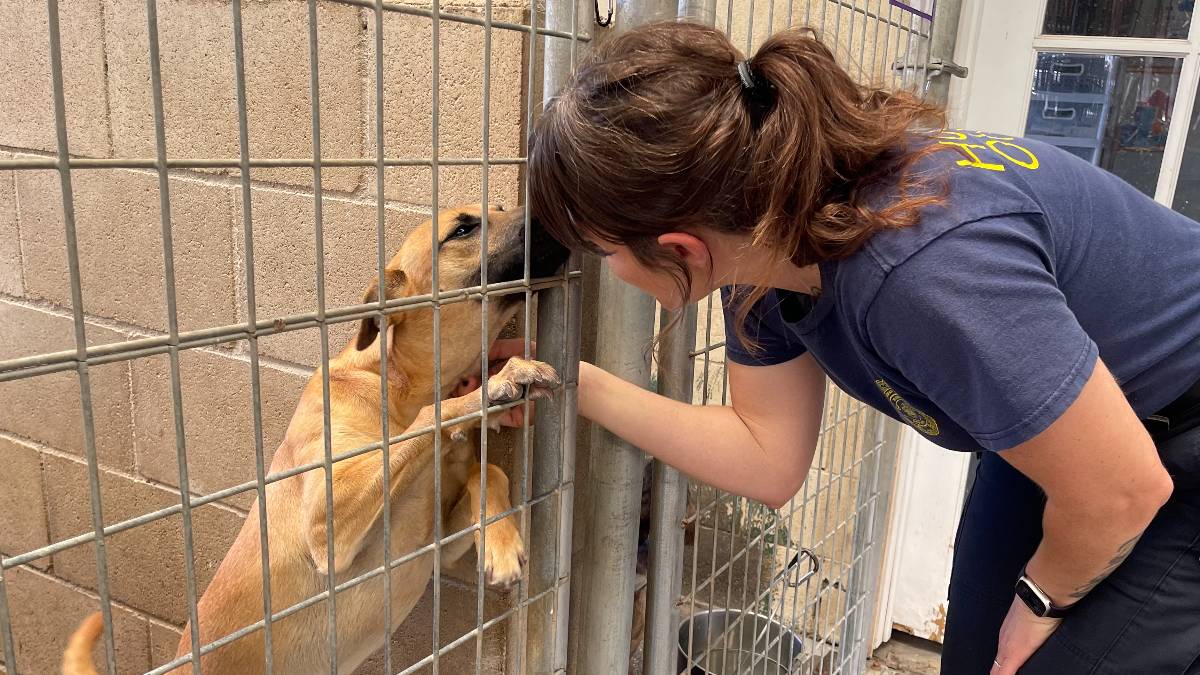
He added that the animal control facility in Kona likely needs to be demolished and a new one established. It’s not compliant with the Americans with Disabilities Act. Most of the structure has unpermitted wiring and plumbing, and most of the main building is termite-infested and eaten. The covered, outdoor kennels are unsafe for housing dogs due to the heat.
“I want to pay attention to [animal control] just like I do any other department,” Alameda said. “They are the most in need.”
While it’s been a struggle getting the department up and going, Alameda said, he’s seen progress in terms of staffing as well as improvements to facilities. Specifically, Alameda said the county has worked on providing appropriate lighting for the facility in Pāhoa.
With more attention focused on the agency, Alameda said it has boosted morale: “It has helped them gain confidence with the administration. It feels better (within the department) than it did two months ago.”
Kyles said the county needs to implement more laws that have consequences for pet owners not taking care of their animals.
“There are some states that put mandatory spay and neuter in effect,” Kyles said. “If we could stop people from making them, we could get a handle on it.”
Kyles said people also need to stop buying puppies on the side of the road. If someone is breeding, she said they should have a permit and a business license.
“Something has to give, and the laws will help,” Kyles said. “I think whoever they pick is going to have a hard time running the organization without laws that back up what they do. It’s a cycle of animals coming in and being put down because nothing stops the cycle.”
Alameda said more public education is needed to keep the agency successful.
“Pet owners, they need to up the ante on knowing how to take care of their animals,” Alameda said. “The (animals) need to be chipped. They need to be spayed and neutered.”
Alameda is hoping to organize a summit with some of the animal nonprofits to talk about the animal control issues and what everyone’s role is in this work to better care for animals on Hawai‘i Island.
“Right now, we need to get on the same page on who is providing the most restrictive care,” Alameda said. “Where do we fall on that continuum of continued care and that everyone is working in the best interest of the animals.”
Alameda said the shelters in Kona and Pāhoa are at maximum capacity. Because the locations are not open to the public, the county works with a variety of nonprofit agencies to rehome animals that come into the county’s care and are adoptable.
Since 2021, Nickerson said the Humane Society has accepted 2,496 animals that were impounded by the county.
Hawai‘i County Council Member Ashley Kierkiewicz said it’s “not easy work” to build an agency from scratch, adding it can be overwhelming when there aren’t enough workers or space to care for the animals brought in.
Kierkiewicz said she had a positive working experience with Runnells, saying he was responsive to her questions and was working with him on addressing county codes that would empower his department.
There was a lot of discussion surrounding how to educate the community on spay and neuter programs as well as teaching homeowners about the importance of securing pets on their properties.
“There was always more work to do than time in the day,” Kierkiewicz said of animal control. “I felt like they were working in a reactionary mode.”
Emmons said Animal Control and Protection officers respond to reports received from all areas of the island. They also perform weekly sweeps of problem areas that include Ocean View and Puna.
Sponsored Content


Subscribe to our Newsletter
Comments