



Services return inside Kona’s historic Mokuaikaua Church after a 6-year restoration

For six years, services at the Mokuaikaua Church, the oldest Christian sanctuary in the State of Hawai‘i, had to be held outside while the historic building nestled in the heart of Kailua-Kona along bustling Ali‘i Drive was being restored.
Now, in time for the 205th anniversary of the congregation, the work is done and will be marked by a three-day Ho‘olaule‘a (celebration) with services resuming inside on Sunday.
The church “will be a lighthouse again for the people lost to come and find God,” said Joe Chee, a member of the Mokuaikaua Church for 25 years.
In 1837, Mokuaikaua Church was built for the congregation, which was founded in 1820 by Reverend Asa Thurston. The church is listed on the National Register of Historic Places and documented as part of the Historic American Buildings Survey, according to the National Trust for Historic Preservation.
For nearly 200 years, it has defined Kona’s landscape with its stone walls, crushed coral mortar and a steeple that stretches 112 feet toward the sky.
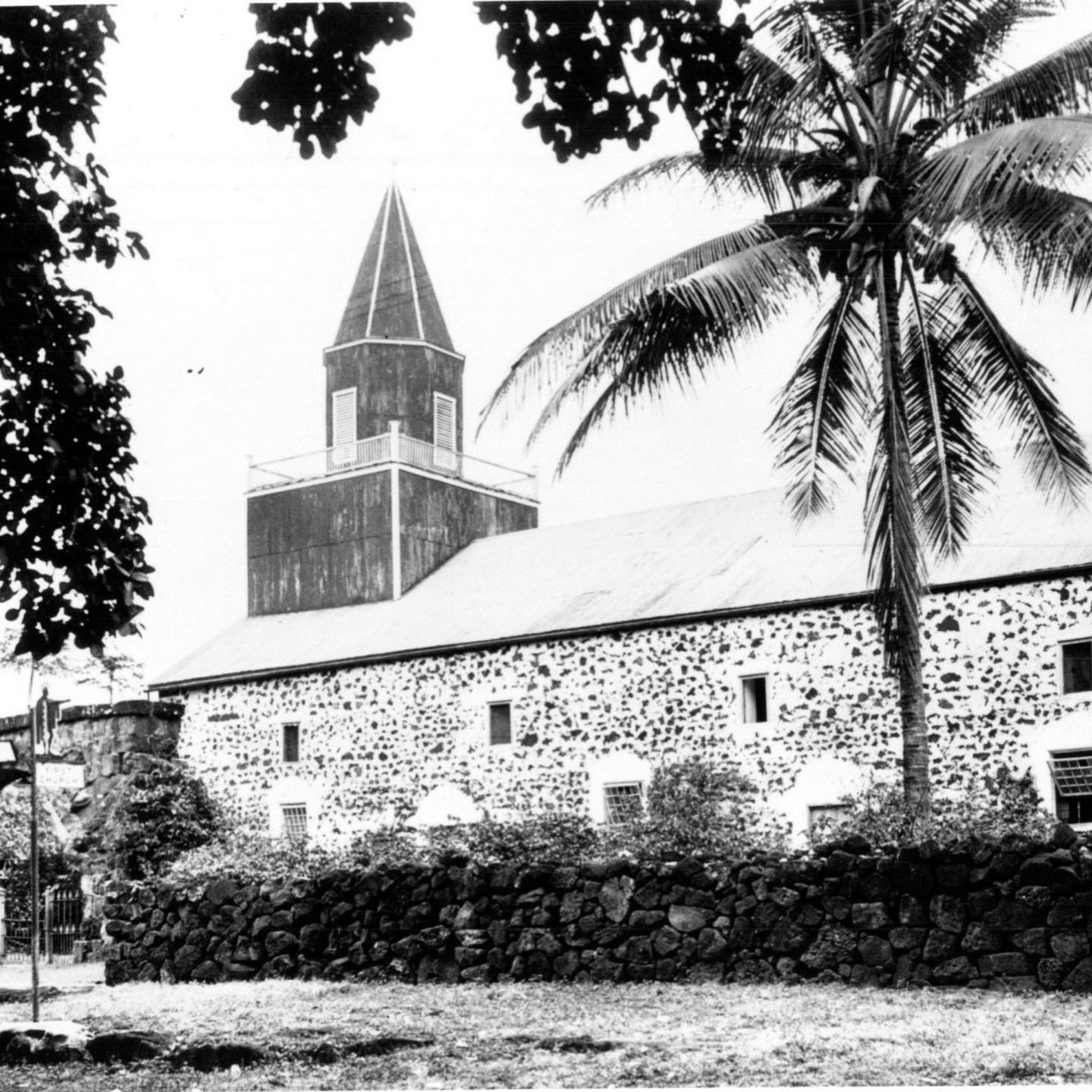
The unique church — built by using lime made of burned coral to bind the lava stones together — has withstood earthquakes and tsunamis over the decades. But its structure was weakened in 2006 by a 6.5-magnitude earthquake. By 2014, deterioration and the earthquake damage landed Mokuaikaua on the National Trust for Historic Preservation’s list of America’s 11 Most Endangered Historic Places.
“We were probably another earthquake from severe damage,” said Senior Pastor Kahu David DeCarvalho on Tuesday. “We had to begin the plans and make the decision to save the church, and that’s when we began the whole preservation plan.”
In 2017, the congregation of a few hundred people committed to repairing the church, using $20,000 it had in a bank account that was set aside for repairs. But DeCarvalho said they knew they were going to need more than that.
By 2019, the church had raised just enough to restore the roof that had termite damage and rotted wood. That’s when they closed the inside for repairs.
But what was meant to be four months of renovations turned into six years and $6.5 million after the COVID-19 pandemic forced all work to stop.
“It was one hurdle after another,” Chee said.
DeCarvalho said they couldn’t find people to talk to about permits. And when they did, the county wanted new plans. The price of materials also skyrocketed during the supply chain shortage.
“We began with a budget of $2.5 million, but the cost of everything went up,” he said. “A sheet of plywood went from $7 to $14, and there are easily hundreds of pieces of plywood used to repair the roof.”
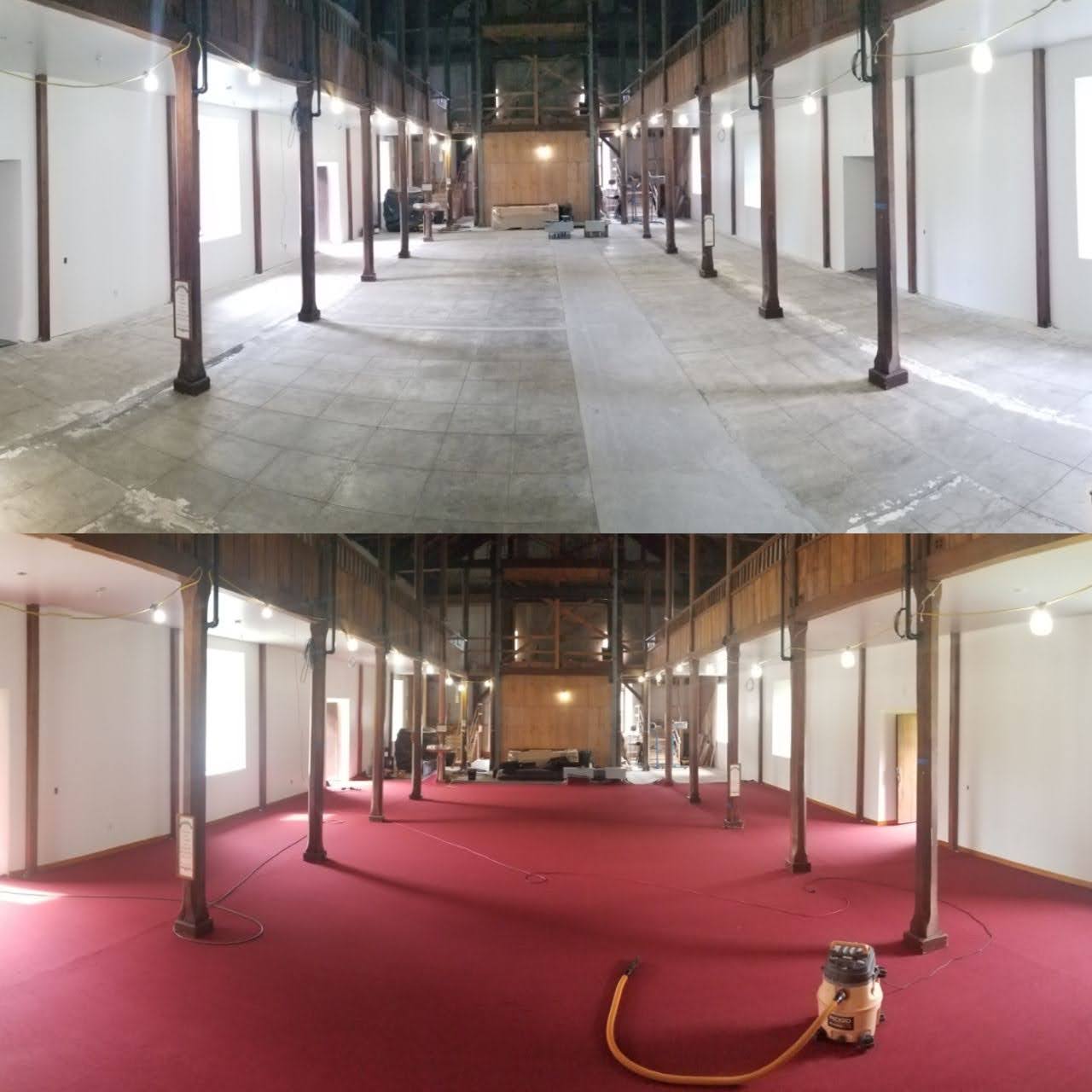
The restoration work came in three phases, with work that included attaching the roof to the building with brackets, reinforcing the walls, putting in steel beams on the north and south ends, and replacing the flooring and electrical. Plus, the steeple had to be redone with steel.
“Through grants and the generosity of good people, we were able to fund the preservation,” DeCarvalho said.
Nancy Sakamoto, vice president for the Kailua Village Business Improvement District, said Mokuaikaua Church is iconic to the historic village: “From any photograph or historic article, it revolves around [Hulihe‘e] Palace and Mokuikaua Church.”
Sakamoto grew up attending the church with her mother in the 1960s. She said her first donations to the restoration went toward the steeple fund. Other members of the congregation stepped up strong with donations, and brainstormed various fundraisers, she added.
One of those good people was a philanthropist from Canada who, after attending one service while visiting the Big Island in 2018, decided to help fund the restoration. Over the course of the project, he gave more than $3.45 million.
Personnel at the National Fund for Sacred Places also reached out to DeCarvalho, informing him that the church qualified for a $250,000 grant which they helped the congregation secure.
Chee said it was the hand of God that led people to the church and provided in ways they couldn’t imagine.
“We’ve managed to achieve this expense of rebuilding without any debt,” said Chee, who also contributed time and finances to the restoration.
While the church was closed, the congregation met on the grounds at by the activity center.
“We have a good, loving God who loves the people of Hawai‘i,” DeCarvalho said. “The church is his message. We make sure to preach the gospel every Sunday.”
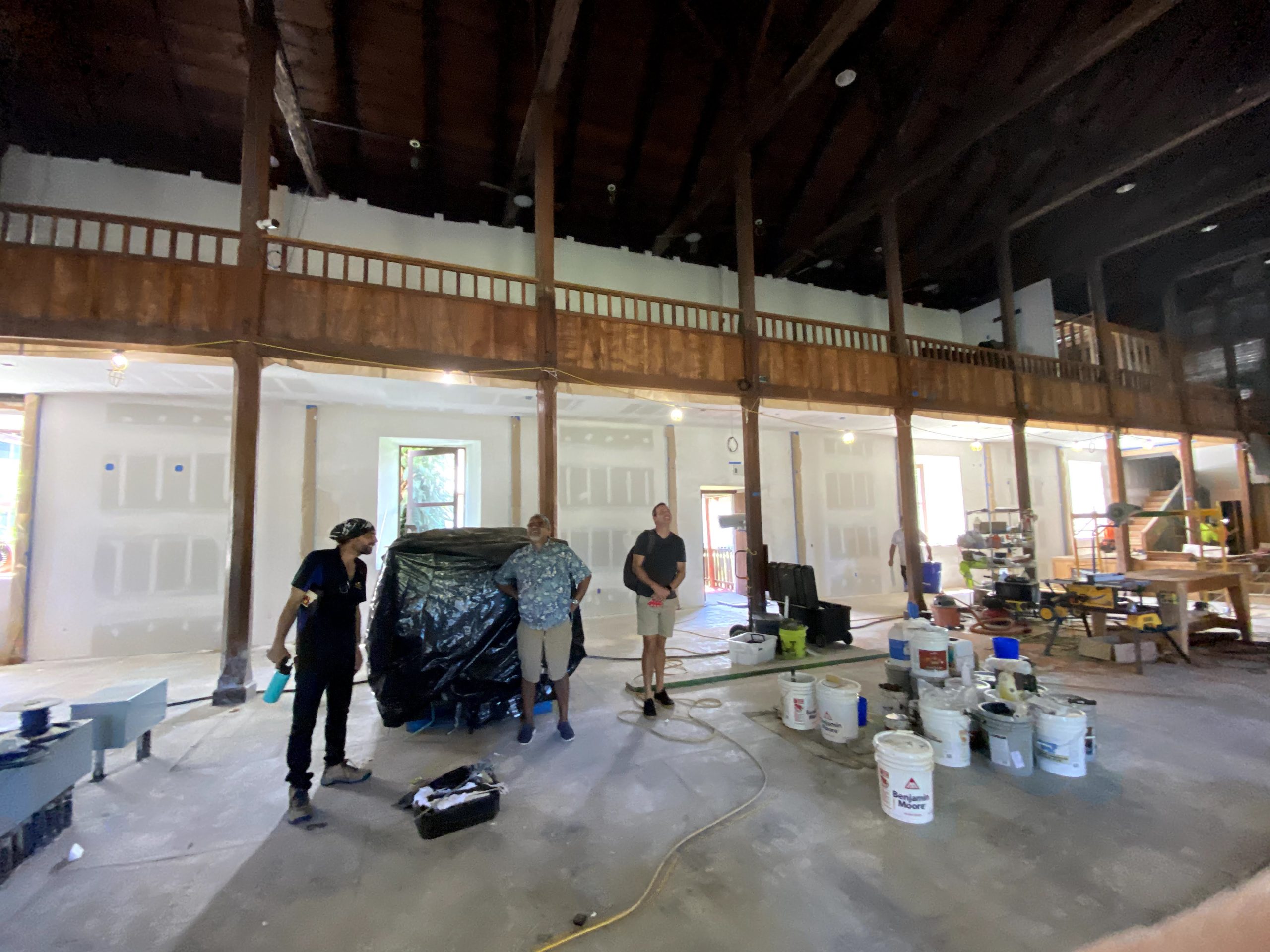
Chee said the congregation is anxious to get back in the sanctuary: “It’s long overdue.”
Christian missionaries who arrived in Kona in April 1820 were given permission by Hawaiian leaders Queen Ka‘ahumanu and Kamehameha II to build churches and schools. That was the beginning of the Mokuiakaua congregation and the greatest revival of Christianity in the islands, DeCarvalho said.
About 4,000 Hawaiians brought the stone and wood from the Mokuaikaua forest, located on the western slopes of Hualālai volcano on Hawaii Island, to build the church where it stands today. The sanctuary is held up with the original ohi‘a pillars and wooden pegs.
“God could’ve taken this church down, and it’s still standing, declaring his love and grace,” DeCarvalho said. “The building is an icon in Kailua-Kona. It’s the tallest structure on Ali‘i Drive.”
The pastor said the church was designed after places of worship in New England, where they looked like a barn, which was the style at the time.
Chee said when he first started attending Mokuaikaua Church, there was a congregation of about 400 people. Over time and with the closure of the sanctuary, that number has dropped to about 150 to 200. However, he’s hopeful that with the reopening will draw people back.
Festivities kick off at 5 p.m. as the congregation will honor the past with a torch run opening ceremony starting at the birthplace of Kamehameha III in Keauhou. The seven-mile torch relay will be done by runners from Mokuaikaua and sister churches, following the historic route to the Kailua Pier where missionaries first arrived.
A service will take place following the torch arrival at 7 p.m.
On Saturday, there will be a ribbon cutting and prayers of dedication and blessing at 10 a.m.
Following the blessing, there will be an open house featuring sanctuary history tours, a bouncy house, face painting, hula workshops, lei making, and celebratory presentations. Later that evening, at 6:30 p.m., there will be a service.
On Sunday at 9:30 a.m., there will be a celebratory bell ringing before the 10 a.m. service, “Mokuaikaua to the Nations,” followed by coffee and refreshments.
DeCarvalho said those returning to the sanctuary this weekend shouldn’t notice too much of a difference, with the exception of fresh paint, new light fixtures and an extended stage.
“The goal,” he said, “was to do all that work without anyone noticing a difference.”
Sponsored Content


Subscribe to our Newsletter
Comments