



Episode 36 of the ongoing Kīlauea eruption expected in next few days
Overflows of degassed lava continued from Kīlauea’s south vent until midnight this morning while three small overflow episodes occurred from the north vent into the early hours, according to the U.S. Geological Survey’s Hawaiian Volcano Observatory.
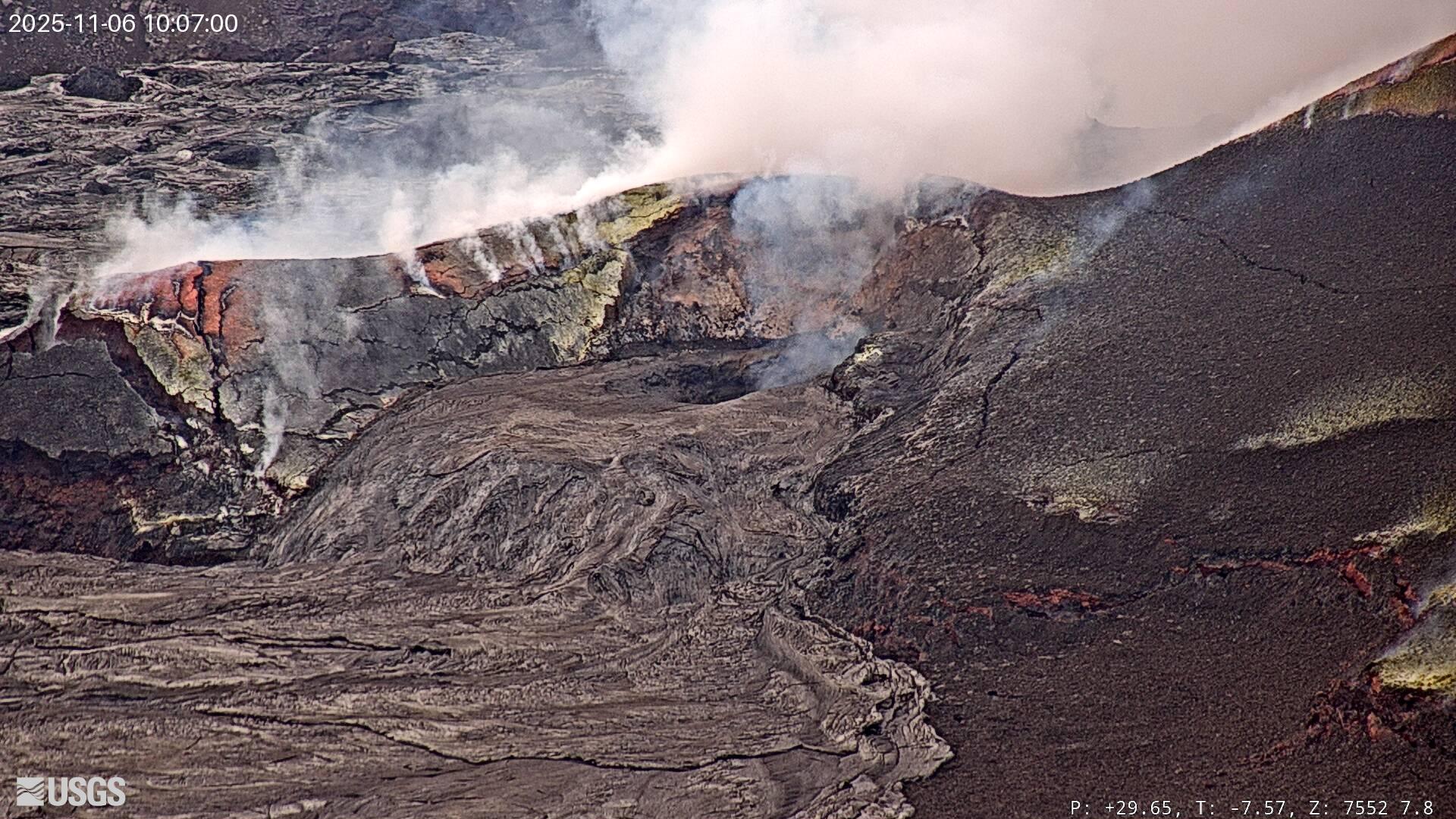
Both vents showed a strong glow and minor spattering overnight, with the last overflows coming from the north vent near 4 a.m. Overflows and the dome fountains had very little spattering until drainback, indicating that mostly degassed magma is being erupted at this time.
Kīlauea’s summit inflation has stalled; however, repeated overflows in the last day from the north and south vents indicate the start of episode 36 will likely begin between Nov. 6 and Nov. 11.
After 1 a.m., tremor patterns — a measure of underground volcanic movement — changed and have been more constant and higher, with small, one-minute spikes of high tremor occurring sporadically.
Plumes of gas continue from both vents this morning, and sulfur dioxide gas emissions remain at background levels, typically between 1,200 and 1,500 tons per day. Yesterday, wind conditions were favorable, and the sulfur dioxide array southwest of the vent detected “puffs” of gas related to drainback events, as is expected during gas pistoning events.
The Hawaiian Volcano Observatory continues to closely monitor activity at Kīlauea. For more information:
- Eruption resources, including the most recent map and a timeline of eruption episodes since December 23, 2024: https://www.usgs.gov/volcanoes/kilauea/science/eruption-information
- Learn more about gas pistons in a Volcano Watch article here: https://www.usgs.gov/observatories/hvo/news/volcano-watch-so-what-earth-or-least-kilauea-a-gas-piston
- Three Kīlauea summit livestream videos that show eruptive lava fountains are available here: https://www.youtube.com/@usgs/streams.
- Summit eruption webcams: https://www.usgs.gov/volcanoes/kilauea/summit-webcams
Sponsored Content


Subscribe to our Newsletter
Comments