



Hawai‘i governor proposes $10 billion in investments from federal government for military land lease extensions
Hawai‘i Gov. Josh Green sent a letter to Secretary of the Army Dan Driscoll proposing $10 billion in federal investments for infrastructure, housing and environmental remediation as part of lease negotiations to allow the U.S. Army to continue using thousands of acres of state land for training and other military uses.
The nine-part framework was outlined in a letter sent Oct. 29.
“Hawaiʻi’s people have stood shoulder-to-shoulder with the Nation’s armed forces for generations,” Green stated in the letter. “Our shared duty now is to ensure that this partnership evolves with integrity, balancing readiness with respect for our land, our culture and our future.”
The timing of the letter also comes with the threat of the Trump administration trying to take the land by eminent domain because of its importance to national security.
“A negotiated settlement, rather than a protracted contested condemnation, offers the clearest, most efficient path to achieving these goals,” Green said in the letter. “It will secure the Army legal and mission certainty and deliver justice for Hawaiʻi.”
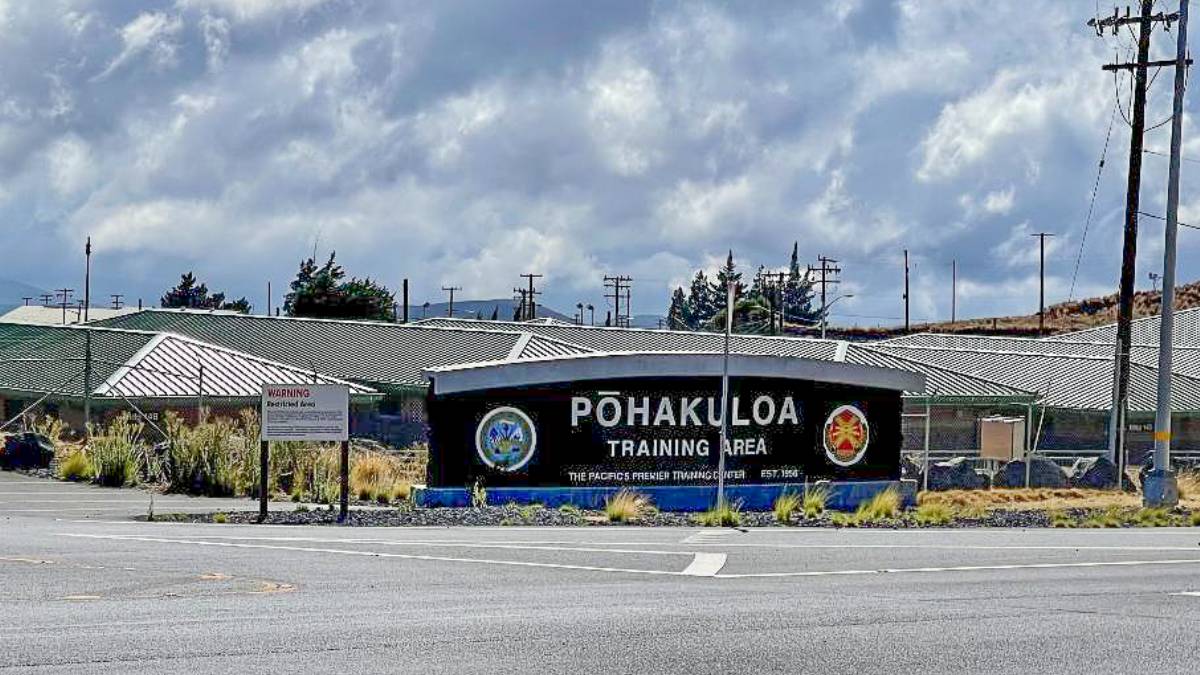
While the letter didn’t specifically address the lease of Pōhakuloa Training Area, which after 65 years is set to expire in 2029, it did outline investments specific to Hawai‘i Island, including funding for the Daniel K. Inouye Highway Extension.
Other requested investments include funding for the Skyline Extension and Kolekole Pass Improvement project on O‘ahu, as well as a military roads initiative and bridge rehabilitation.
The Army paid just $1 for the Pōhakuloa Training Area land lease in the 1960s.
Green also wants funding for cleanup and remediation of Hawaiian lands as well as transferring Mākua Valley on O‘ahu back to the state.
He wants the state to partner with the Environmental Protection Agency and the Federal Emergency Management Agency to accelerate cesspool conversions and groundwater protection.
The letter also calls for supporting 6,500 new housing units, modernizing on-base housing and releasing Lot 9A near Schofield Barracks for workforce housing.
GOV Letter to Hon. Dan Driscoll Secretary of the Army by Tiffany De Masters
Kaiali’i Kahele, chair of the Board of Trustees for the Office of Hawaiian Affairs, said the office has no comment at this time because they have not been consulted regarding the proposed path forward for Army training lands in Hawaiʻi.
“We note with concern that Native Hawaiians — the original descendants and caretakers of these lands — are not explicitly referenced in the Statement of Principles outlining collaboration between the State of Hawaiʻi and the U.S. Department of the Army, nor in the nine State Integrated Priorities identified within it,” Kahele said.
For several months, the Office of Hawaiian Affairs has requested to be included in discussions and decision-making with the Army regarding the future of these lands. To date, the office officials stated in an email they continue to wait for a response to that request.
“Decisions of this magnitude — affecting lands that carry the ancestral and cultural legacy of the Native Hawaiian people — cannot move forward without their meaningful inclusion,” Kahele said.
The Hawaiʻi Board of Land and Natural Resources voted in May not to accept the U.S. Army’s Final Environmental Impact Statement for the military’s retention of Pōhakuloa Training Area.
In September, the Hawaiʻi County Council unanimously passed a resolution urging the U.S. military to cease bombing at Pōhakuloa Training Area.
The Office of Hawaiian Affairs was one of many groups that provided written testimony urging the land board to reject the U.S. Army’s Environmental Impact Statement for the continued use of state-owned land at the Pōhakuloa Training Area.
Currently, Tropic Lightning Soldiers from the 25th Infantry Division are leading a large-scale readiness training exercise, the Joint Pacific Multinational Readiness Center, which is ongoing till Nov. 17.
The joint training includes thousands of participants, including U.S. joint forces and military personnel from seven partner nations: Singapore, Thailand, Malaysia, Maldives, France, New Zealand, and other multinational partners.
In Green’s letter, he also proposed convening a Joint Negotiation Team within 10 days to define settlement parameters. The governor also suggested establishing a Technical Working Group co-chaired by a representative for the federal government and the state’s designated lead agency to develop detailed scopes for each of the agreed-upon community benefits.
Sponsored Content

_1770333123096.webp)

Subscribe to our Newsletter
Comments