



University of Hawaiʻi study shows benefits of kalo in poultry feed
With rising costs of imported chicken feed, poultry farmers may now have access to a locally grown alternative: kalo.
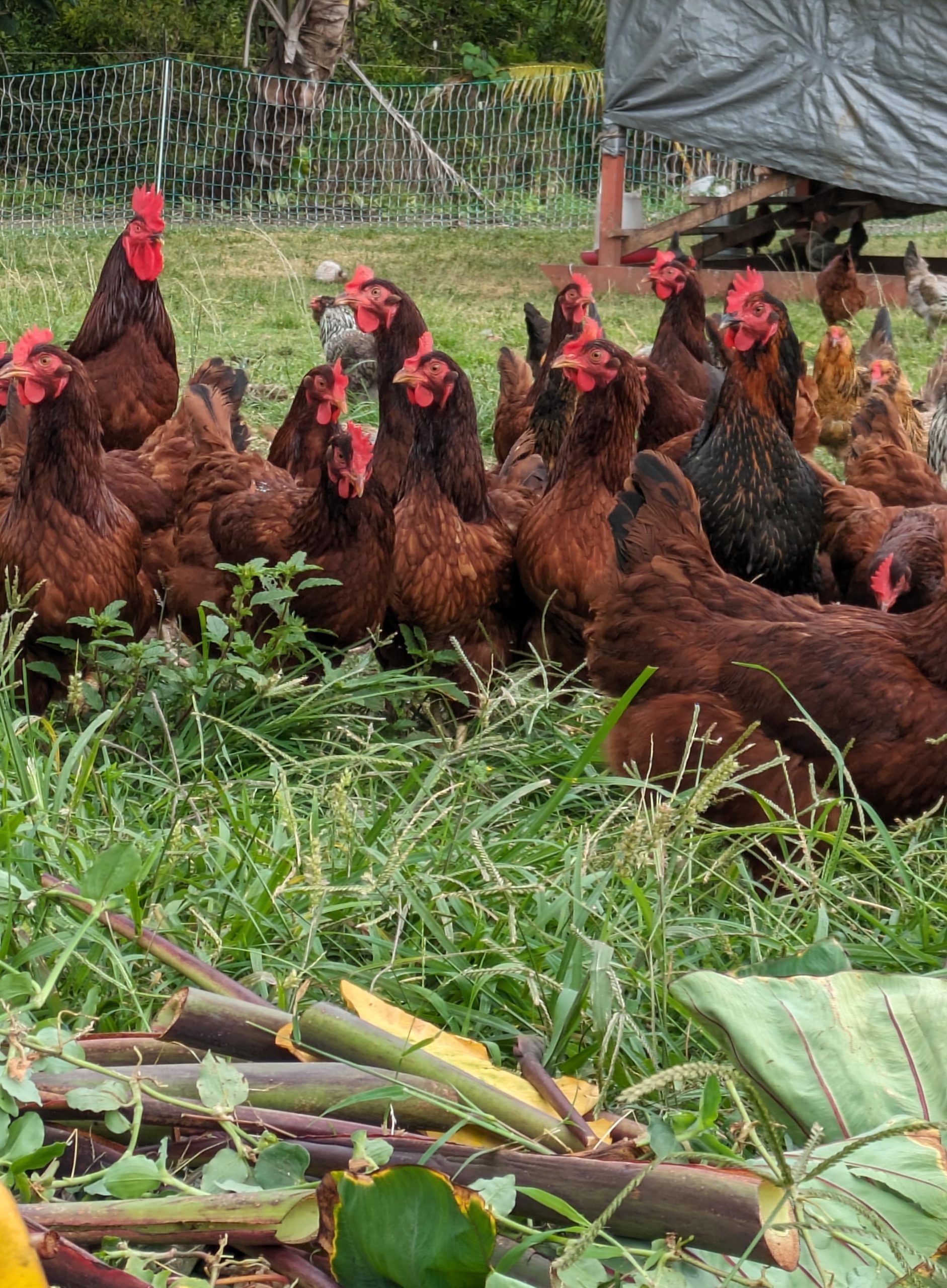
Assistant Livestock Extension Agents Yunuen Bustamante and Melelani Oshiro, researchers at the College of Tropical Agriculture and Human Resilience (CTAHR) at the University of Hawaiʻi at Mānoa, have been evaluating kalo (also known as taro) as a viable food source by observing their poultry.
“When I joined the CTAHR team, a poultry farmer reached out to me asking, ‘Could my chickens eat kalo leaves and kalo corm?’ That was the first idea,” Bustamante said. “The second came from a kalo fest around the same time. I thought this was something that could be useful to our stakeholders.”
The researchers’ literature review indicated that kalo leaves offer high protein content, essential vitamins, and are easily digestible by poultry.
“I think a lot of folks use kalo as feed for livestock because on your farm you’re going to use what you have, but I don’t believe there have been detailed studies about kalo as a food source for poultry here in Hawaiʻi,” Oshiro said.
The review concluded that replacing 5 to 7 percent of soybean meal with kalo leaf meal can support poultry growth, enhance nutrition in their feed, and potentially save money for farmers.
According to the review, kalo leaves provide essential nutrients beneficial to poultry, including:
- Proteins: Crucial for the growth and development of chickens.
- Carotene: A precursor to vitamin A, essential for vision, growth, and immune function.
- Trace Minerals: Includes iron (Fe), zinc (Zn), and copper (Cu), vital for metabolic processes.
- Vitamins: Contains vitamin C, which supports immune function and overall health.
- Digestible Fiber: High in soluble fiber, promoting nutrient absorption and digestion.
- Ash Content: Indicates a good supply of minerals essential for poultry nutrition.
Much of the work at CTAHR is to increase the state’s agricultural self-sufficiency and reduce dependence on imported goods. By utilizing locally available resources like kalo, farmers can achieve greater resilience and maintain culturally relevant methods for raising poultry and livestock.
“Given Hawaiʻi’s high feed costs and food security concerns, utilizing kalo leaves as a sustainable feed source could provide economic and nutritional advantages for local poultry producers,” they stated in the study.
The next steps for Bustamante and Oshiro involve researching locally grown ʻulu (breadfruit) as feed for Hawaiʻi livestock.
More information on research done through the department can be found on the CTAHR website.
Sponsored Content


Subscribe to our Newsletter
Comments