



Undeveloped beachfront parcel in Waikōloa Beach Resort returned to native Hawaiian descendants
Previously planned for resort development, 27.38 acres of culturally significant shoreline in North Kona are now permanently protected and returned to native Hawaiian descendants.
Marking the district boundary between Kona and Kohala, this land is a wahi pana (legendary, storied place), featuring Keahualono and Hi‘iaka heiau (places of worship), wai ‘ōpae (anchialine ponds), petroglyph fields, and ancient trail networks.
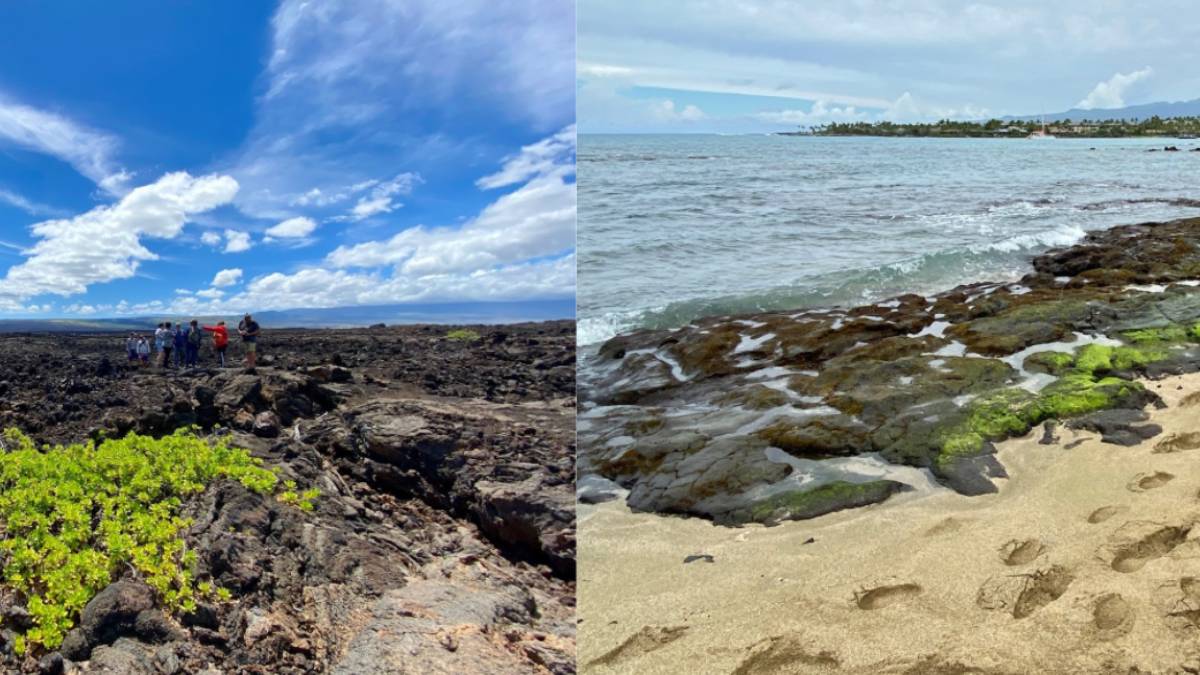
The land is now owned and stewarded by Nā ‘Ōiwi O Pu‘uanahulu, a Native Hawaiian descendant-led nonprofit. The County of Hawai‘i holds a conservation easement over the property, protecting it in perpetuity.
‘Anaeho‘omalu Kapalaoa was the last remaining undeveloped beachfront parcel in Waikōloa Beach Resort, according to a news release from the national nonprofit Trust for Public Land.
Trust for Public Land led and facilitated the acquisition and the Kona community united to raise the public funds to protect the land and convey it to Nā ‘Ōiwi O Pu‘uanahulu. The land was purchased with public and private funds.
The County of Hawai‘i’s Public Access, Open Space and Natural Resources Preservation Fund put in $4.4 million, and $3 million came from the State Legacy Land Conservation Program.
“It’s hard to know what to say in this moment. This is for my Dad. This is for kūpuna,” said Lehua Alapa‘i with Nā ‘Ōiwi O Pu‘uanahulu. “Kapalaoa is for all Hawaiians who love their ‘āina and know they belong there. The challenges are long and plenty, but ‘āina and kūpuna will rise up to meet you. Never give up. Mahalo to all who answered the call.”
The project also received a $250,000 grant from the Dorrance Family Foundation through its Marine Conservation Initiative to improve ocean health and biodiversity.
Waikōloa Land was a critical partner in this conservation effort, forgoing proposed resort development to return the lands to descendant families for stewardship and community access, the release stated. Under Nā ‘Ōiwi’s stewardship, the site will function as a kīpuka (an oasis in a lava bed) where the community can perpetuate traditional ecological knowledge through educational programs, restoration work, and cultural practice.
“‘Anaeho‘omalu Kapalaoa will serve as a lasting legacy for our organizations and family, embodying our deep-rooted commitment to the stewardship of Hawai‘i’s precious cultural and environmental attributes. For us, this effort represents a step towards giving back to the land that has given us so much,” said Cary Boeddeker Egan, President of The Waikōloa Foundation, representative of Waikōloa Land & Cattle Co. and the Boeddeker family.
Egan added that Hawai‘i holds a special place in the family’s hearts, and the preservation of this land is a way for them to express their gratitude.
“This sacred shoreline tells stories of generations of ‘ohana who cared for these lands and waters,” said Reyna Ramolete Hayashi, Aloha ‘Āina Project Manager for Trust for Public Land. “We are humbled to learn from these families—fishermen, paniolo, and culture bearers—and help restore their long legacy of aloha ‘āina.”
Hawai‘i County Mayor Kimo Alameda said he was proud to partner with the community to protect these coastal resources so that future generations can continue to benefit from and enjoy them.
“The protection of this very culturally significant and environmentally important land, in perpetuity for the benefit of today and tomorrow’s generations, is the goal of the DLNR’s Legacy Land Conservation Program. Our mission is to preserve and protect natural and cultural resources in partnership with private and public sectors to ensure that more communities across Hawai‘i can steward special places like this,” shared Dawn Chang, Chair, Board of Land and Natural Resources.
Carrie Ostroski, Executive Director for The Dorrance Family Foundation, said the land is a critical place, not only for learning, but also for community and cultural renewal, and for the recovery and regeneration of coastal and nearshore ecosystems and the imperiled species they sustain.
“This effort and accomplishment affirm the vital importance of community-led stewardship in preserving places of enduring cultural and ecological value,” Ostroski said.
Sponsored Content

_1770333123096.webp)

Subscribe to our Newsletter
Comments